








PBS Wisconsin Passport
Watch this video with
PBS Wisconsin Passport
Become a member of PBS Wisconsin, support your local community, and get extended access to PBS shows, films, and specials, like this one.
Door County's Quiet Side
03/21/19 | 26m 46s | Rating: NR
Quiet must be a relative term since the Lake Michigan side of Door County was pretty loud and active when John was there in October of 2018. Then again, maybe it was John who was loud and active!


Copy and Paste the Following Code to Embed this Video:
Door County's Quiet Side
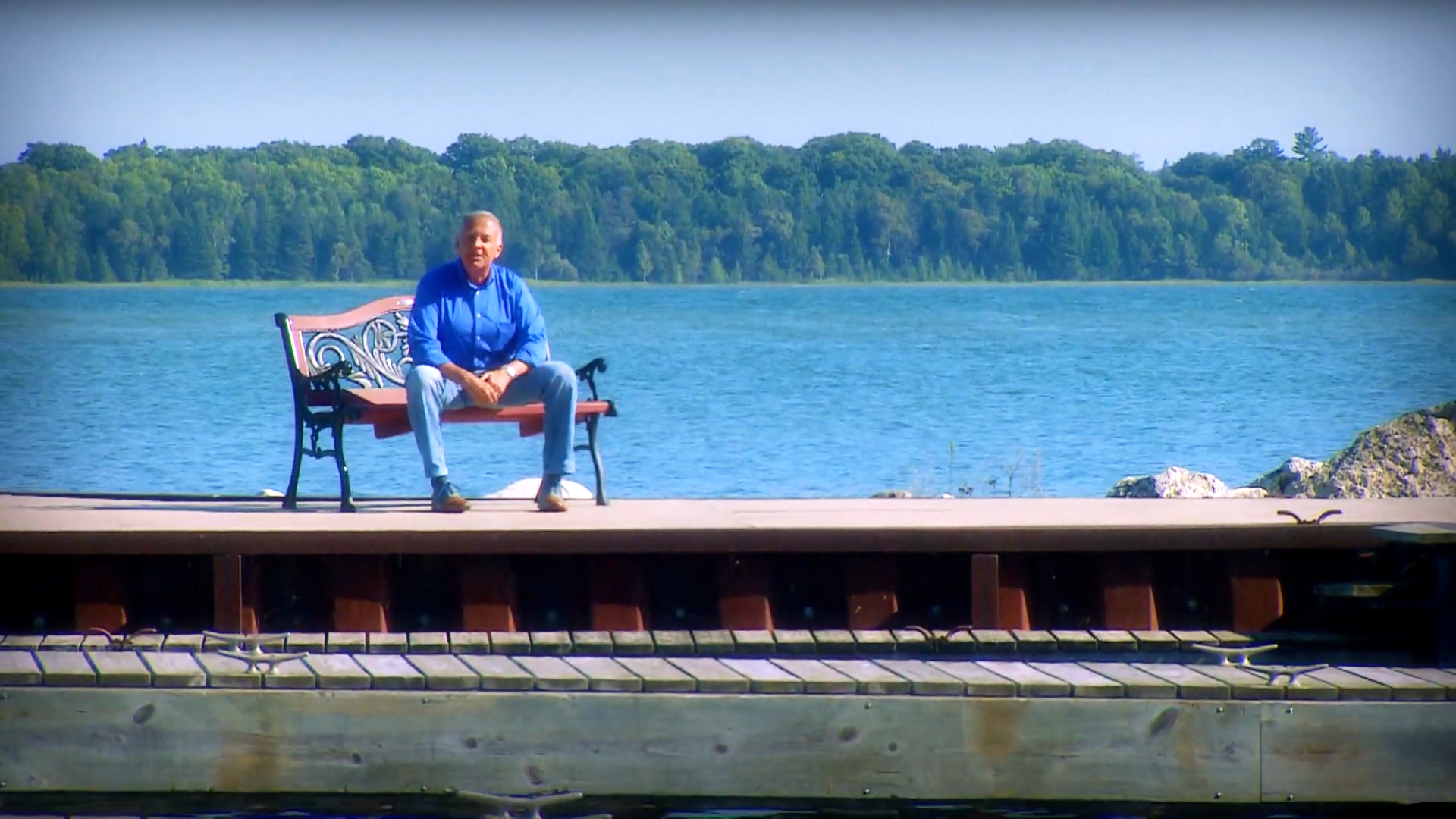
I am in Baileys Harbor. This is one of the communities on the quiet side of Door County. (upbeat music) -
Woman
Sugar. We are so thrilled to be back in Door County. We're on the Lake Michigan side which is called the quiet side just so you. (bicycle bell ringing) Hey John. Hey John, how are ya? So what makes this side so quiet? First kind of a relative term John. The lake side has a lot of tourism. But this is the side less traveled. And some people say it's the colder water on this side but I think the major reasons are geology and history. Okay. The Door peninsula is a narrow finger of rock that slopes gently from the west to the east and is part of the much larger formation called Niagara dolomite because it goes underneath Michigan and comes up again at Niagara Falls. So because you have that slope here, you have more cliffs and more high ground on the Green Bay side and more wetlands and fewer harbors here on the Lake Michigan side. So you could say this side comes by its quiet naturally. -
John
Naturally. That's geology, what about history? In the 1800s John when everyone traveled by water, the main shipping lanes in this area were on the Green Bay side because you have the Fox River at the foot of the bay that provided access to the heart of Wisconsin. So Green Bay town became a major port. And other harbors developed on the western side of Door County. Sturgeon Bay especially but also Egg Harbor and Fish Creek and Ephraim. So there was more business on the bay side. And tourists followed the same path. What was going on on this side? Quite a bit early on a lot of it right here. Back in 1848 a schooner captain named Justin Bailey here in Baileys Harbor, he was looking for protection from a storm so he set anchor here. When the waves went down he went ashore and he found dense cedar forests which was the beginning of a big lumber industry. Before long there were some maybe three piers here. Very long that shipped out lots and lots of firewood and railroad ties and fence posts. So this was one of 'em. This was one of the original piers and now it's a public park. So Baileys Harbor was so busy that for a while it was Door County's seat until Sturgeon Bay outgrew it and wrestled that away back in 1857. -
John
Wow, what about the other towns on the quiet side? Same story smaller scale. Jacksonport south of here was a lumber town that turned to farming and fishing. Rowleys Bay farther north was even smaller but back in 1871 the harbor there shipped out 60,000 cedar fence posts and 16,000 telegraph poles. So when the logs were gone so was the town. So this side became even quieter. By 1910 Baileys Harbor had a little over half the population of Egg Harbor on the bay side. What was the attraction? -
John
Pretty much the same as they are now John. Because there was less development here, the emphasis was on nature. So right across the bay here you've got The Ridges which has one of the most impressive displays of wildflowers in the entire state. You've got Cave Point, Whitefish Bay Dunes, Newport State Park, other natural landmarks. But there are still plenty of places here to eat, and drink, and shop, and spend the night. -
John
Eat, drink, shop, and spend the night. That's what it's about. -
John
It is. -
John
Population? -
John
I'm surprised. The townships on the Lake Michigan have only around 6500 year round residents. Number of that grows certainly in the summer time. -
John
Yeah, location? -
John
It runs from Rowleys Bay on the north to the Sturgeon Bay Canal on the south and Baileys Harbor is smack dab in the middle. This is still the quiet side and people would not have it any other way. -
John
People love this side. -
John
They sure do. Yeah and you're bikin'? Great bike trails and boy these beautiful fall days. I wish we could bottle this weather. -
John
And you've been here before haven't you? -
John
I have. -
John
Yeah thanks John. -
John
See you John. You want to know how to get to the quiet side of Door County? This is what you do. Take 42 up through Sturgeon Bay. When you get just north of Sturgeon Bay, you'll see a sign 42 straight, 57 to the right. Follow 57 to the right because guess where that's gonna take ya? To the quiet side of Door County. 57. This is a family farm. -
Jeff
It is, it is. -
John
And your last name is Lutsey. -
Jeff
Yeah Lutsey. -
John
Who are the Wasedas? -
Jeff
That name was brought forth by the priests of the Sacred Heart. They were here from a few years before mom and dad, Sharon and Tom really started here so. -
John
So you kept the name. Mm hmm, got a great history to it. The priests were the stewards of this land before us. They were organic before organic was a term and a certified term 'cause they weren't using chemicals. They weren't using anything artificial as a fertilizer. They weren't using genetically modified seeds. And that helped us get started. -
Matt
Being an organic farm. So good right? -
Matt
We mow the grass a lot 'cause that's what keeps the dandelions down and everything else. So they know that there is grass nearby in all likelihood they might get a little shot of candy. -
John
How many acres do you have here? -
Matt
Almost 1400 acres under management. They'll run around to get grass that they wanna get to. Those cows are being moved into this field because the grass is this high and they're hungry. I know how they feel. When I get hungry this is how I sound, listen. (cows mooing) And we distribute to in the middle of the summer probably 40 different restaurants. A dozen different stores. Our eggs go as far south as Chicago. -
John
You have beef, pork? -
Matt
Yup. -
John
Eggs? -
Matt
Yup. -
Jeff
Zucchinis and cucumbers and tomatoes. -
John
And it ends up in a store right here on your land. People can stop in? -
Jeff
Yeah yeah they can stop in anytime. We stay open year round. 'Cause we live here year round. We wanna make sure that our community has good food to eat. -
John
Is there fresh stuff in there all year? Mama Sharon loves to can so it's not fresh fresh but it's preserved in the old fashioned way. So you always got some good food. This is the store for the Waseda farms and they have the best bone in pork chops in the world. Sorry, temporarily out. Those must be good. I'm in the middle of Kangaroo Lake. No really in the middle, which is the largest inland lake in Door County. I'm in the middle of it why? Because back in the early 1900s, they built a causeway which is now County Road E to get from the west side a quick trip to Baileys Harbor. I'm on that causeway right now. Or the road, county road E. Kangaroo Lake. Who taught you? It's a tradition in my village that has been passing on for generations. So I learned from my grandfather. My father, my older brother. And then I at age 14 I got a scholarship to go to school in Mexico City. A weaving school. -
John
Oh you did. -
Wence
Which I learned a different technique of weaving. -
John
This is your gallery? You display here, you sell here. You work here. -
Wence
And we make it all here. -
John
And you make it all here. -
Wence
Everything here. Pieces mostly go on the floor. -
John
Go on the floor. -
Wence
Yeah they're really tough. They last forever. -
Sandra
The only thing dyed in here is the red. Those are all straight off the sheep. -
John
Oh they are? Yeah. So you're down here mainly? Yes. And you're upstairs mainly? Yes mainly yes. Meet on the steps you two is what it needs to be? -
Sandra
Oh yes. (laughing) -
John
Describe your art. I make primitive style imagery. It's not lifted from other cultures. These are personal simple drawings that are a meditative tool. And then Wence and our daughter and son in law weave those things into weavings. -
John
Talk about the business of art. There's so many incredible people that come to Door County. It's wonderful to be able to welcome them into the working studio and work with them one on one and explain and show them how all of this stuff gets done 'cause it's kind of mysterious to most people how art gets made. So it collects a really interesting group of people who are comfortable here. And comfortable with the cyclical nature. You've got beautiful people coming in to look at your finished work and then in the winter in the snow when it's cold you get your work done. So it's lovely. What is this? This is our rescue boat. That we have at the Jacksonport Fire Department. What makes it unique, it's amphibious. So our shoreline is very diverse here. We have sugar sand beach and then we also have pretty good cliffs. Cave Point's a big draw. So we go from 30 foot cliffs over there to the beautiful beach we have here. At one point they figured over 40,000 kayaks go from Schauer Park, past Cave Point, to Whitefish Dunes or in the opposite direction. It's spectacular. But Lake Michigan is very dangerous. It's very big comparable in size to a sea. Can be flat as glass out here where we are. Out there you can get two to three footers. So this boat being amphibious gave us the I'm gonna call it the luxury, of essentially launching almost anywhere. It can take a pretty good incline. It can get through the sugar sand so, it makes it very versatile for us. -
John
How big is the force? -
Aaron
About 28. -
John
Volunteer? -
Aaron
We're volunteer here. -
John
Yeah, are there many of these boats around? -
Aaron
Not that we're aware of. The majority of our rescues comes in very dangerous conditions so we approached the community. They helped fund the boat. Community's always been very supportive of the department. So we got the boat. -
John
Nice. This is the Ridges Sanctuary. It's a real testament to volunteerism. 250 volunteers who share the mission to protect and to conserve the ecology right here on this side of Door County. It's beautiful. There is a language called Walloon. What is the language? Where is it from? And how did you learn it? And who still speaks it is what I wanna know. We still speak it very much in my area. And it's, Walloon is really a Belgian language. Is there still a big Walloon population in Belgium? No not very big. Not very big. Because there's no written. They teach us French because that's the only written language. There is no Belgian written language -
John
There isn't. -
Arlene
So that's what our group is trying to do. -
Theresa
That's why we saved this church. To save our heritage, our culture. And we work so hard to keep it. -
John
Did you speak it at home growing up? Of course. Most of the children didn't know how to speak English when they came to school. And then they had to learn it and they were actually punished if they spoke Walloon. -
John
It's an immigrant story. -
Theresa
It is. It's just that this area is the largest Belgian settlement in the United States. These three counties. -
John
Do we know how many Walloon speakers there are in this area? I'd probably say between 50 and 60. That can speak well and understand. 'Cause you need to be able to do both. (speaking in a foreign language) Did you have soup and beer? Is that what you just talked about? Yes. In any language I know soup and beer. (laughing) -
Krista
Do you want to flip an egg? -
John
Should I flip an egg? -
Krist
Yeah. -
John
This is really a destination place. People know to come here if they're on this side. You did it! -
John
When did Town Hall Bakery start? It's called Town Hall because this was the town hall. -
Krista
Correct. 1990 we purchased the building. We just stuck bakery under the old town hall sign. But we do everything from scratch and from the very beginning we sourced things locally. My grandmother owned a grocery store and was a baker. She made the sticky buns. There they are and her recipe. Here's our most famous product, skorpa. Skorpa. Which is the sticky buns sliced thin, sugared and then toasted to a perfect moment. We do brownies, revel bars, raspberry crumble bars, every day we try to make something new. -
John
This was done today, this morning? What have we got? -
Arlene
Yes just came out of the oven. Limpa, fresh limpa. -
Don
Swedish rye. -
John
Fresh limpa? -
Don
Yeah hardly anybody makes it anymore. -
John
Do you use this on your menu? -
Arlene
We make all our own breads. All our own toasts. -
Don
The smoked whitefish salad sandwich goes wonderful with limpa bread. -
Arlene
And then people kind of fight over the limpa. -
John
They do. -
Arlene
Because it's only 12 loaves and if you don't get here early uh oh. -
John
Yeah sorry. And you guys are only open spring to late fall. -
Arlene
Yeah we try to, we hang in there 'til December and do granola and I send out cookie boxes. We are definitely seasonal. In the winter I make art and I sell antiques on eBay. -
John
You're a songwriter. Singer. On the very last track which doesn't even show on there is her scone recipe. Oh yeah people ask me for my scone recipe. And she narrates at the very end. So this is how they have to get it? Uh huh. (playing "Frre Jacques" on the piano) -
John
We're in your home. -
Dan
Yes. -
John
And you're a musician? -
Dan
Yes. -
John
And you're a songwriter about Door County. -
Dan
About Door County. Morning is waking Morning is waking On the lake Michigan -
John
You're set up here for an audience. Who is your audience and how do they make their way here? The audience tends to be senior citizen groups that are taking a tour and their tour just happens to be to lovely little Door County. They'll stop here and they'll listen to a show for an hour. What I've concentrated so much on is hymn tunes. Praise to the Lord the almighty. The hymn tune, it's music that I grew up with. And then I'll improvise music around that hymn tune. But weave it in and out of the improvised music. -
John
Dan let's talk about this house. Because it's not really a house is it? -
Dan
Well no it's a schoolhouse. -
John
It's a schoolhouse. -
Dan
It was a school from 1930 until 1964. And then my mom bought it and so this was our home for a number of years. -
John
This is your home now and you love living here? -
Dan
Yes I do. -
John
Do you? -
Dan
It's a sweet little building. (playing slow melody) We're at Cave Point. It's a beautiful park on the quiet side except it's anything but quiet. What? -
Jon
One of the things I love about Cave Point. It's different every day of the year. -
John
Isn't that great? It's just spectacular. -
Jon
It's a neat spot and it's great to be able to share it with people and really having them understand how special of a place this is and just to enjoy the beauty. The sunrises here are spectacular. I love coming out here for the sunrises. And just to see the waves crashing. The waves are relentless. So over the last couple thousand years, they've carved out some really neat caves along the shoreline. -
John
So if people don't know Cave Point, let's talk about where is it? What is it? It's a county park so it's free, doesn't cost anything to get here. It's located along Door County's eastern coast. About halfway up the peninsula. It's actually surrounded by Whitefish Dunes State Park on three sides. So the dunes at the park, while they are the highest sand dunes in Wisconsin, you can't actually get on them. There's only a couple spots. I mean we're in the park now. We're in the dunes now. But that's all Whitefish Bay and you look at this tree. Isn't that amazing? -
John
Remarkable. -
John
'Cause they're literally growing out of the rock. I definitely suggest getting your camera and coming here for a sunrise. It's just amazing. Other stuff they have some hiking trails along the shore you can do. They do have some grills, some picnic tables. They have a wedding gazebo. So they actually do a lot of weddings here. -
John
Do you ever come out here in the winter? -
Jon
Absolutely. -
John
You do. It's magnificent in the winter. You get so much ice formations especially after a big storm. The ice will get up on the trees. The spray that we just got. That freezes and it freezes to all the stuff along the shoreline maybe 15, 20 feet above the water level if not higher. And I'll tell ya the sculptures that Mother Nature makes here in the winter time. -
Jon
Just pretty amazing. And it changes every day. I can't tell people that enough. How cool Cave Point is every day of the year. So Michael we're at Sevastopol High School, home of the Pioneers. So in Door County there's how many high schools? There's three. Gibraltor. Which we did. Sevastopol, which we did, and Southern Door. Which we did as well. Which we did as well. And we talked football with all of them because it is really a good football community. Eight man football. -
John
Eight man why? -
Michael
And it's really important to talk eight man right now for the first time in WIAA history they're gonna name a eight man state champion this year. And Sevastopol, they're in the conversation. -
John
If there's 200 kids of less in the school you can play eight man football. -
Michael
Yes. Here at Sevastopol there's 190 kids. So to play 11 man is very difficult. They have 23 kids on the roster. Football is a total numbers game. So who has the most numbers a lot of times will win. -
John
And how many schools are there that are playing eight man? -
Michael
30 throughout the state of Wisconsin. 30 in the state, how many in their division? It's the MONPLC conference. Don't ask what that stands for. Okay. Eight man. And it is they've got seven. And it continues to grow each year John. Nine and one last year. They're three and one right now. And they have a chance to be in that top eight to get in the tournament with the WIAA to win a state championship. -
John
Do you like watching it? -
Michael
I do. It's really kind of fun to watch. It's a little bit different. It's almost like arena football a little bit but played on a field. We know how to support our team. If you're wondering what to do on the quiet side of Door County find it right here, The Pulse. Yeah, you'll find this everywhere too. There's mom. My mom and my sister came over here to Rowleys Bay Resort to rent one of the buildings for our youth group at church. And the gentleman at the office says well sure I'll rent you the building but do you wanna buy the resort? (laughing) I'm gonna bring you in the main entrance first here. Where you can see the original paintings that were commissioned in 1948. -
John
Oh nice. Yeah we came in 1970. We started building. There's 30 vacation homes. Some of them, they're all privately owned. We rent some of them that choose to rent. We have 70 rooms here in the main lodge so altogether we have 90 some units. And we have the little restaurant and mom would make these delicious rolls and breads for the buffet. So this is our breakfast buffet. We serve our breakfast buffet daily. -
John
And really like the first buffet ever, wasn't it? -
Jewel
Yeah yeah I know. I have family up here. They would come to this buffet which nobody had ever heard of it before. So this is what we serve every day. We don't do menu. Breakfast and dinner buffet. And we didn't really plan on having a bakery but people would say well can I buy some of those delicious rolls? These are the cherries. -
John
This was made here. -
Jewel
And it's all made from scratch which is really unique and next thing you know Grandma's Swedish Bakery was born. So I grew up in the bakery. This is where the magic happens. We've been here almost 50 years now. So like on weekends, we'll need about 12 or 13 of these. 12 or 13 of these. -
Woman
Yeah. -
John
Yeah. -
Jewel
And by the time the caramel comes on top and the frosting on the cinnamon rolls then it's the half pound. -
Woman
Oh it's for sure a half pound. -
Jewel
So the pecan rolls are what we're famous for. That's the thing that people come here for. And they're still made the same way we always did. -
John
Whose recipes are those? -
Jewel
My mom's recipes. -
John
Your mom's recipes. -
Jewel
Yeah it's all the stuff I grew up on. -
John
Yeah mm. -
Jewel
It's my favorite. We find that people come here as a retreat. Just even a personal retreat. Or a family. Just the idea that they can get away and kind of regroup. Because it's a quieter place. -
John
And this is as far north as you can get? -
Jewel
Pretty much. So we're in Door County you think we're having a fish boil? No you're wrong. We're at the Harbor Fish Market & Grille and we're having a lobster boil. This is extravagant. Wonderful. It's really good. Thanks and this is what you do? Every day. Yeah every day. -
Karen
Every day we have lobster. I usually start with the claws. -
John
You do, you're from the East Coast? -
Karen
I am. -
John
Does this feel like Connecticut to you? -
Karen
In a way it does. A little strolling village. Lots of trees, lots of great food. -
John
Oh and those mussels are great. -
Karen
They are really good. -
John
How long have you had this place? -
Karen
Oh we're going on 20 years now which is crazy. -
Man
He's not camera shy. -
John
He's not. -
Man
One, two, three. -
John
So what's served with your lobster boil? -
Karen
Sure we start off with a wonderful cup of our creamy Maine lobster bisque. Then it's a two pound live Maine lobster with baby red potatoes, fresh corn on the cob, New Zealand mussels, steamed clams, and we finish with a piece of our homemade Door County cherry bread pudding. Setting the plate, taking the rubber bands off. -
John
Can you talk a minute about the menu here? -
Man
Two of our most exquisite specials are Kobe Wagyu beef and on the other side it's our Chilean sea bass. (laughing) -
John
Very nice. -
Man
Traditional New England lobster boil. We'll serve 'em on Wednesday, Friday, Saturday, and Sunday evening. And this time of year we're still doing about 35 to 50 a night. -
John
That's really great. -
Karen
It's a lotta lobsters. -
John
It's a lotta lobster. -
Karen
Yes. Did I hit your lens? -
Cameraman
OHHH! (laughing) -
Karen
We started out just doing dinner. And it became popular to do lunch as well. So now we do breakfast, lunch, and dinner. -
John
There you go. -
Karen
Seven days a week. -
John
And is it seasonal? Do you close up? -
Karen
We close from January first through Easter basically. It's a feast but it's a lot of fun and people come back again and again just because it's entertaining to eat and it's delicious. -
John
Let's talk about first of all the history in this place? -
Mark
Yeah so the place goes actually back to 1928 when a couple from Highland Park in Illinois, Carlton and Winifred Vale were looking for a place to build their summer home and paid $2000 for 325 acres. Over a mile and a quarter of shoreline. And this is where they came to every summer. I'm glad you could see this chapel. It was built in 1939. Every roof joist ends in a dragon head and then the next eight years is when she spent designing and painting and carving the inside. -
John
Are there services here? -
Mark
We have chapel tours, weddings, and baptisms in here. -
John
And I can see through the window that there's about 40 people coming. They must think it's time for chapel. They're ready, that's right. And actually the chapel is the reason that Lawrence University ended up with the property. Winifred felt so strongly that this chapel needed to be seen by anybody forever that it wasn't left to her family. Wanted to leave it to an institution. -
John
This was built when? This was built in 1996. So now we're able to have every weekend the Lawrence University students and faculty come up and do whatever academic pursuits they're doing. We also have athletic teams come up. Student organizations, so it gets used a lot. We're also able to expand our adult summer education program from mid-June through end of October. We have two or three seminars a week. A wide variety of classes. Week long seminars tag lined vacation with a focus. -
John
Good. So they come here in the morning, take the class, and then they spend the rest of the day exploring beautiful Door County. Our lifelong learners come here and this gives a, this is a place you can do it. -
John
And Door Shakespeare is on your grounds right? Door Shakespeare performs. There's something magical about a place like this. To try to describe the beauty of the place. Of course being here in the daytime is so different but the magic of nightfall, it's pretty stunning. -
John
And is Shakespeare what you want to do? In terms of programming, we've done Shakespeare, we've done Molire, and we've done contemporary work. But this being our first season it was Shakespeare. -
John
And then who's the audience? Who shows up here? -
Michael
We have people who are devotees of this place. They've come for years. They walk by the main drag in Baileys Harbor and see our sign and come in to see what we're about. It's a real smorgasbord of people that come and find us and then of course the Door County residents as well usually find time to squeak in a show or two. -
John
Do they have to bring their own chairs? -
Amy
No. -
John
Okay good. Do they bring their own blankets? A lot of people do bring blankets. They do. Yeah. And if they don't we have a concession stand and we sell merch. Yeah. -
John
They don't bring like their lunch though do they? -
Amy
Sometimes people will bring a picnic before because the waterfront is beautiful. -
John
And they can do that. -
Amy
Absolutely. We do have events. Once a week a wine night where we provide a meal and some wine tasting for folks that come beforehand for a little extra. -
John
Can you talk about challenges when it comes to playing outside? Oh I was once on stage with a squirrel in the grape bowl. So that was fun. That kind of wildlife occasionally happens but not regularly. This was our fourth time in Door County and I'm so thrilled we got to experience the quiet side. We're gonna do this a little different this week. This is Randy Halstead. How are you sir? Fine. You're the Town Chairman of Jacksonport. Yup. Sevastopol's Town Chairman. How are you sir? Hi. Dan, Dan Woelfel. That is correct John. You have 30 seconds to tell us why Jacksonport, Wisconsin. Why Sevastopol, Wisconsin is the best place in the world. To live work and play. You can start right now. Okay well Sevastapol's home to Whitefish Bay Dune State Park. Clark Lake Park, the most well visited park in the entire county. Starts right here in Lakeside Park. This is the first view of Lake Michigan from highway 57. We also have some terrific accommodations in our town. We have some great civic groups and organizations that really support the town. Nice places to eat that are very easy on your pocketbook. Nice. And you have good quality food. Jacksonport Polar Bear Plunge right here. Shoreline on both sides of the town. Five. And plenty of beach. Four. Next year is our 150th anniversary. Five, four, three. -
Randy
And we're gonna have a big celebration next year. -
John
One, that's it, perfect. (laughing) You are trying to trick me! (laughing) Coming up. (laughing) Stop. This episode of Around the Corner with John McGivern would not be possible without the generous financial support of all of our underwriters. Underwriters, thank you. -
Announcer
The Greater Milwaukee Foundation's Ernest C and Florence M Schocke Fund. And by the David A & Nancy E Putz Fund. The Greater Milwaukee Foundation. Inspiring philanthropy serving donors and strengthening communities now and for the future. -
Man
Michels Corporation. Serving the energy, transportation, telecommunications, and utility industries. Michels, constructing North America's infrastructure for our future. -
Woman
We Energies Foundation and Wisconsin Public Service Foundation are proud to support public television. Together we create a brighter future for the communities we serve. ATC moves electricity from where it's generated to communities where it's needed. American Transmission Company. Helping to keep the lights on, businesses running, and communities strong. (waves crashing)
Search Episodes

Donate to sign up. Activate and sign in to Passport. It's that easy to help PBS Wisconsin serve your community through media that educates, inspires, and entertains.
Make your membership gift today
Only for new users: Activate Passport using your code or email address
Already a member?
Look up my account
Need some help? Go to FAQ or visit PBS Passport Help
Need help accessing PBS Wisconsin anywhere?

Online Access | Platform & Device Access | Cable or Satellite Access | Over-The-Air Access
Visit Access Guide
Need help accessing PBS Wisconsin anywhere?
Visit Our
Live TV Access Guide
Online AccessPlatform & Device Access
Cable or Satellite Access
Over-The-Air Access
Visit Access Guide




Follow Us