








PBS Wisconsin Passport
Watch this video with
PBS Wisconsin Passport
Become a member of PBS Wisconsin, support your local community, and get extended access to PBS shows, films, and specials, like this one.
Caledonia & Wind Point
03/29/18 | 26m 46s | Rating: NR
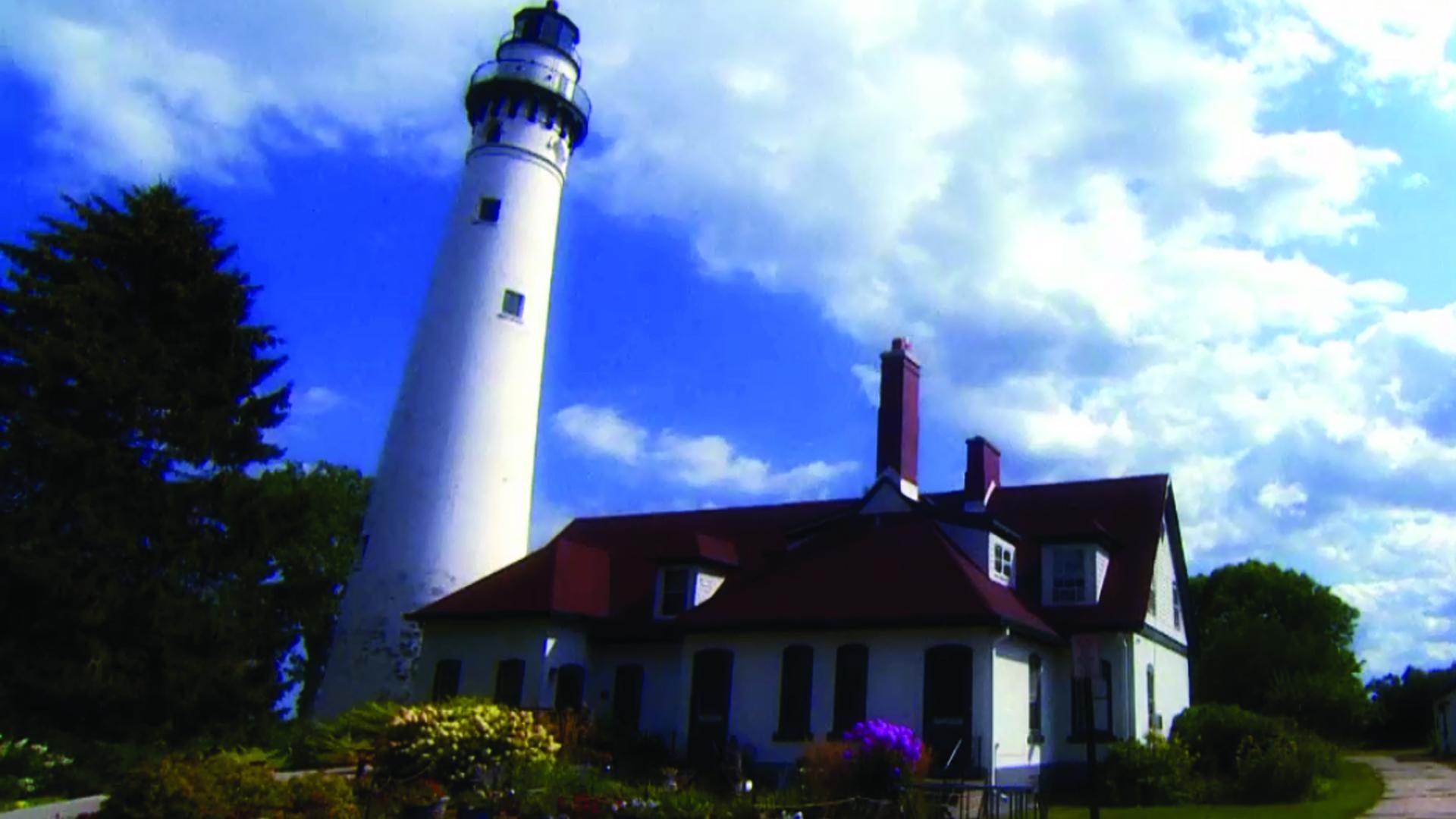
So Caledonia and Wind Point cover a lot of ground in southeast Wisconsin. This big area is home to big animals, and big companies, big bugs and one big Wurlitzer organ. It’s also home to people with big talent and places of big beauty. There’s big fun to be had, and you can satisfy your big taste buds. Yep. Caledonia and Wind Point are a big deal!


Copy and Paste the Following Code to Embed this Video:
Caledonia & Wind Point
I am on top of the Wind Point lighthouse. This is Caledonia and Wind Point. (upbeat music) (organ music) I'm in Linwood Park, which is part of Caledonia, just like Wind Point is part of Caledonia, which is exactly where John Gurda said, "Meet me." Hey, John. Hi John. Here we are, downtown Caledonia. Not exactly. Okay. but we are near the very center of one of the biggest villages in the entire state of Wisconsin. Caledonia sprawls across 49 square miles and six zip codes. There are whole countries that are smaller than Caledonia. The character is part of the urban where it blends into Racine's north side, partly upscale around Wood Point, a lot suburban, and a whole lot rural, as you can see all around us in Linwood. -
John
How did this happen? How did it begin? Unincorporated town, back in the 1830's, settled by Yankees from New York and New England, and the name probably came from someone from Caledonia Vermont who wanted to recall his old home. This was really good farm land, easy access to market in Racine, so pretty soon you have immigrants buying up those old Yankee claims. Germans in the north sections, Irish in the south, and to the east you have what was one time the biggest rural community of Bohemians in the entire state, Czechs, as they're also known at churches, schools, and a cemetery, still active just down 5 Mile Road, here. And do these groups have anything in common? A couple things. Town government, very simple town government. Here is the 1877 town hall, which once stood on the farm right across the road. Right over here? That was moved here, again, the center of things, trying to be near the heart of things. It was moved here in 2005 by the Caledonia Historical Society. This was once the town dump, and the society has made this a really nice historical park. Something else that they had in common is what they grew. The main cash crop here, for years, was cabbage, which mostly went into the sauerkraut factory in Franksville, Franks Pure Foods is what it was called. And also kraut juice was what they advertised as a help filter and a corrective. (laughter) Still is. So the kraut plant's gone, but there's still a lot of cabbage grown here. -
Interviewer
This town then became a village? -
John
It took a while. Things changed after World War II. Racine annexed town land as it grew. Wind Point declared it's own independence back in 1954, became a village, and lots of Caledonia farm land became subdivisions. The result was the population soars from roughly 3,000, during the farm period, to 20,000 in 1980. That made Caledonia the biggest, unincorporated town in the entire state. -
Interviewer
What happened then? -
John
There was kind of a movement to incorporate, but they lacked the population density to sort of meet the qualifications. They changed those rules, or relaxed them in 2005, and Caledonia became one of the largest villages in the entire state. And since then, it's kept on growing. The attractions are pretty clear. A rural atmosphere, low taxes, and a location that allows people to commute in both directions on interstate 94. Population? About 25,000 all told. -
Interviewer
Shall we talk boundaries? -
John
Think of Caledonia as the northeast corner of Racine County. It goes from I-94 to the lake, and from the Milwaukee County Line all the way to Mount Pleasant. -
Interviewer
It's half Milwaukee size, but it's Caledonia. -
John
Caledonia. And Wind Point. Thanks, John. See you, John. You know what this guys gonna say, "Raid!" We're really excited to be here, just so you know. Where are we going? -
Tom
Into the insectory, that's kind of the heart of the institute. Little black specks you can see on there, those are all eggs, mosquito eggs. -
John
What's your job? What do you do? -
Tom
Down here we have these mosquito larves. I'm an Medical Entomologist, so that means I work on the insects that can transmit diseases to people. I primarily work on mosquitoes. They're very small, but they're the most deadly animal in the world. So in your backyard, if you have a little water in a bucket, you'll have these things. If you dump it out, they won't survive to be adults. They can transmit things like malaria, dengue, Zika, West Nile virus things like that. Here is a cage full of probably about 5,000 mosquitoes. We're definitely working on how our products that we make, because we know that they do work well against mosquitoes, we're trying to see how they could fit into the greater public health strategy, so how they can fit into disease prevention. -
John
What is the element that is keeping the mosquitoes away? -
Tom
In our products, we have deet or picaridin, and those are two chemicals, and they way they kind of work is they form a vapor barrier at the skin surface level, and the mosquitoes will come in and not land on you because of that kind of vapor barrier. These are one of the cockroach rooms. We are a global company. We are interested in making products that are relevant for all over the world. A lot of work goes into it to make sure that we have a large body of evidence behind them. That they actually do what we say they do, and that they are going to be effective at keeping insects, and mosquitoes, and other things off of you and away from you. -
John
At this center, how many people work? -
Tom
It's probably 18 to 20. This called the Blaberus Giganteus Giant American Cockroach. I live that it lives here. How many are here in this room, do we know? -
Tom
Oh, thousands Thousands? - Thousands of them. At the institute, as a whole, every year we raise about 15 million insects, so that's why we have a dedicated staff back here to do all that. We have three scientists back here who do this full time. It's a seven day a week, 365 a year job We're in the American cockroach room. Right. Rather than the German cockroach room. Correct. - The difference? The language, you idiot. Exactly. (laughter) -
John
Norco, how long's that been around? -
Dave
Since 1962. -
John
Who started this? -
Dave
A fellow by the name of Norman Peterson. He invented a potato slicer, making french fries. And loved to fly, had a plane, and thought, "I can "build a better hanger door than what's out there." These are the doors they make. We are the largest industrial hanger door manufacturer in the country. -
John
In the country? -
Dave
Yes, we have built doors that are relatively small, 40 feet wide, 20 feet high, to hanger doors that are the size of a football field. -
John
Is that right? -
Dave
What this is is a blast resistant door. It goes on a munition bunker in the island of Guam, and the purpose of this door is to restrict an accidental blast inside the bunker. -
John
Your doors are everywhere in the world? -
Dave
Saudi Arabia, Egypt, we have doors in the Arctic Circle, China, the Middle East. South America, Canada, even Waukesha. -
John
Is that right? -
Dave
Texas. Texas is a great market for us. There's a lot of wealthy people down there, who own a lot of private hangers, a lot of corporate hangers. -
John
From the time somebody orders it, to the time it's installed, how long a process is that usually? -
Dave
About six months. -
John
How many people are working for you guys? -
Dave
We have just under 50 right now. Business continues to grow. -
John
So this is going to be your home. This is going to be a business park, right? Correct. What we actually did was we bought enough land to double the size of this building. We'll need the extra space. -
John
What is that? -
Bill
Oxygen and acetylene, basically just gas that makes a really, really hot flame. This is what they look like when I'm making them. Step on that middle - That's perfect. -
John
These pedal cars, like people know you for that, don't they? -
Bill
Yeah. -
John
Like in the parades for that? -
Bill
Yeah, we've done the parade pretty much every other year. I have one pedal car from '98, that's my oldest one, so that's about 20 years old. -
John
This looks like paper mache. -
Bill
It is. -
John
Oh, it is! And are they all paper mache? -
Bill
No, this is the only one. -
John
Oh, the other ones are metal. -
Bill
Yeah. -
John
Metal's what you do. -
Bill
Metal, steel, welding, and a lot of painting, too. I'm more into paint, I mean I mostly, it's about making things, but I love painting, too, the painting aspect. -
John
This is your shell phone. -
Bill
It's a shell phone. -
John
In the course of a year, how many sculptures do you work on? -
Bill
That's another question kids ask me a lot. I figure roughly a hundred, but some of them are really small. That's a hammerhead light. I've been doing this like 40 years, so I've probably made about 4,000 sculptures. -
John
And do you have a studio somewhere? -
Bill
Well, I do a lot of work here, and I do some at Prairie School, which is just a mile away right along the lake here. -
John
This is you? -
Bill
This is the art room. -
John
Do you teach there? -
Bill
I'm called artist in residence. It's very nice. -
John
And when it opened, in what year? -
Nathan
1965, it started with kindergarten and went all the way through, at that point, to sixth grade. -
John
And the classroom surrounds the courtyards? -
Nathan
Right, it's really fun, because of the international businesses bases here, we have a number of relocations every year. We've got a lot of great kids from all over the country and all over the world. Part of the funny thing, since it's 365,000 square feet, for 620 kids, it's one teacher for every six kids. -
John
That's good. And the architect is who again? -
Nathan
Charles Montooth. -
John
Who was the last apprentice for Frank Lloyd Wright. -
Nathan
Right, and went on to become the head of the Taliesin Firm. -
John
It does look like a barn. -
Chuck
It is not a barn. -
John
The Caledonia Historical Society Mini Village. -
Chuck
We call it our historical village. -
John
Everything that's on this property was all brought here, yes? -
Chuck
It was all brought here. We're 100% volunteers. 100%? - Volunteers. We've got 1877 town hall. It was the original town hall for the Village of Caledonia. The Milwaukee railway station, I used to actually catch the train to Chicago at that station. -
John
Is that right? -
Chuck
About an 1840's Mira cabin. And then we have a museum. The museum is the one building here that's not an original building. The most recent addition was the big red building back there, which looks like a barn, but it's not. It's not a barn, it's a machine shed. For a lot of machinery. For a lot of machinery. -
John
A garden that can't be beat. -
Chuck
We're open dawn to dusk. The buildings aren't open, but the rest of the facilities are open. We have a lot of people come by and walk around, and a lot of pictures get taken here. (laughter) -
John
You are a chain saw artist. Chics With Chainsaws. -
Sherry
I'm the chic. -
John
You're the chic. (laughter) And you spend some time here on these grounds? -
Sherry
Every day. I'm a resident, this is where my studio is. -
John
You're a resident artist. -
Sherry
I give them a percentage of everything I make. That's my room and board. -
John
Give me a high ten on that one, that's really good, isn't it? I love it. I love it out here, and lot's of people come to visit me. You want to see the secret garden? -
John
Do you have a secret garden? -
Sherry
I have a secret garden. This is a blessing from God. I get to sit and watch the river, the herons fly in. You can hear the river, oh yeah. I am on Lighthouse Drive. Have you ever dreamt of having a house on the lake? How about having a house in the lake? Seems kind of close to me. Hurry, before we get yelled at. (laughter) -
Susan
Because of the way Wind Point just sticks a little bit out into the lake, you could not see around this point in order to see into Racine Harbor. So that was the original purpose of putting the lighthouse here. -
Mike
These are the original stairs. -
Susan
1880 is when the lighthouse was built. The light, itself, is still a working aide to navigation, and it is under control of the Coast Guard. -
Mike
But if you look out, you can see where the water changes color. That's the reef. - That's part of the reef. -
Susan
We've had so many people tell us this is one of the prettiest lighthouses that they've seen. -
John
And you feel responsible for that. -
Susan
Absolutely, 100%. In 2007, you took over as being caretakers of this iconic property. How many acres? -
Susan
4 1/2. -
John
How many buildings? -
Susan
Six. It's been a tremendous pleasure. It's been an honor, and really, who else gets to say that they live in a lighthouse? -
John
In truth, what you are is really public servants. -
Susan
Yeah, had a great time. People who are lighthouse enthusiasts, they're fabulous. If they want a private tour, if they want to go up the tower, they do have to make reservations in advance. If people want to rent the grounds, for example, for a wedding, of course it's a completely different process. We have people who come down here to take family pictures and wedding pictures. -
John
And they're allowed? -
Susan
Oh, absolutely, it's a public park. -
Mike
The police department is here in the building as well. -
Susan
As well as Village Hall is here, but it's also where a court is. (laughter) So what I tell people is, if you get caught speeding in the Village of Wind Point, this is where you're going to end up, because you're coming back for court. -
John
So, speed. -
Susan
Yeah, exactly. We are directly across the street from the Wind Point Lighthouse. This is Jay Hammes, and we are in front of his house, his farm house, that was built when? 1839, almost 30 years before the Civil War. President Martin Van Buren was president, 8th president of the country at the time. This is where the back door was? This is the original back door. Built by who, do we know? Gentleman's name was Thompson. He was a logger. The floors are all original. So he cut down trees and took them to the harbor, in Racine. -
John
Did this information come with the house? -
Jay
Yes it did. It came in a diary that we found. -
John
Unbelievable. -
Jay
To go to Racine, it took him, in time six hours in the rain. There were no roads. -
John
And sizable, they had some size here. -
Jay
Exactly. He'd spend a night in a motel, and the motel bill was 13 cents. (laughter) How long does it take you to get downtown to Racine? About 10 minutes. -
John
How long have you been in this house? -
Jay
25 years. It's a wonderful place to live. It's lake living. You can hear the boats in the summer, and the people are the best. The residents is what makes Wind Point so special. What a sight this is. With the house on the back end of the property, and all of this land in front, it's really beautiful. How many acres? I think we have 80 now. 80 acres. 80 acres, we were looking for 10. -
John
Did you know this area> Very much, yeah, I've been here 30 years. I fell in love with it and stayed because of the horse trails and the horse neighborhood. -
John
Because it's connected here. -
Libby
It's fabulous. Horses are something you don't want to do alone. It's a lot more fun together. -
John
How does it work? The Caledonia Conversancy is a land trust, but it mainly owns and has conservation easements on trails. So we have maybe 40 miles of horse and pedestrian trails. It's a unique combination of private landowners allowing people to ride horses across their land, and conservancy owned trails. And right through that hole is your land. Exactly. So if you'd be sitting in your kitchen, can you watch people come through your land who are your neighbors? -
Fran
I just love that. We love to see people ride around the pond and wave, and we like to host some of the neighborhood events. -
John
How many horses on property? -
Libby
Just four right now. -
John
Four? Yeah. (horse whinnies) That's Nova, the rescue pony. He want's his peppermints. -
John
And how long have you been riding? -
Libby
Since the first thing I can remember. -
John
Is that right? -
Nicolle
Yeah, but just trail riding, nothing fancy until my husband said, "You've "always been interested in side saddle," so I thought, "Okay, I will." Now this one, it's a bit different than your regular saddle. Don't put your foot in the stirrup and swing over. It's kind of a lost art, and since Downton Abbey, they kind of brought it back as a revival. And I got started on a whim. You're gonna bring your right leg over, there you go. -
John
It's interesting that it feels secure. I mean, it really does, that this is how you stay on. -
Nicolle
Yeah, it's surprising how secure you feel. -
John
So now you're side saddling. -
Nicolle
Side saddling. -
John
Side saddle horse riding. -
Nicolle
Riding side saddle. -
John
Riding side saddle. -
Nicolle
A side. What do you think? -
John
I like it. So in seven years of doing this show, there are many unexpected, amazing things that I've seen, but this has got to be on top of the list, what goes on in this place. It's amazing. How did this happen? -
Fred
They start taring down all these beautiful movie palaces all around the country, as you may recall, so I started collecting all this stuff from different theaters throughout the Midwest over a period of years. -
John
When was this house built? -
Fred
1959. -
John
1959. (organ music) -
Fred
This is the reason we built the house. -
John
Of course. I bought the organ from the Michigan Theater in Detroit. The whole thing weighs about 25 or 30 tons. It took two years of reconditioning, because this organ has about 3,000 pipes in it. What kind of organ is this? It's a Wurlitzer. It's a Wurlitzer. It's the biggest bi manual organ Wurlitzer ever built. -
John
That's big sound! -
Fred
Yeah, well, a theater organ is designed to replace an orchestra, you know that? -
John
Yeah. -
Fred
It's designed to fill a theater with 5,000 seats. -
John
How many seats in your theater here in your basement, Fred? -
Fred
Downstairs 101 seats. -
John
Upstairs? -
Fred
About 35. Do you play this every day? I would say every day, yeah. -
John
You do, everyday. -
Fred
At least five or six days out of the week. And you do that because you don't want an organ sitting around not getting used. -
John
So my question to you is when you stop playing, who's gonna be playing this? I ain't gonna stop playing, that's what I tell them. (laughter) There's nowhere else to put it. -
John
So, Michael, we're at Prairie School. Probably the best soccer facility any high school in the state of Wisconsin. -
John
It's beautiful. These kids come to school because of the academics, and what happens is they become athletes as well, and get involved in soccer, cross country. If you think about it, there's 250 kids in this school, 125 boys, 125 girls probably. 45 boys in the soccer program. 30 in the girls program, and Corey Auckland, who's the head coach, John, coaches ball. -
John
He coaches ball. -
Mike
He's done really well. They've won six state championships on the boys side with him, one on the girls side. It's a really good story. So it's the Prairie School, they are the Prairie Pups. Aww, I was gonna say Dogs. Yeah, that would be fun. I'm sure I'm not the only one who would have said that. The Prairie Pups, in Wind Point, Wisconsin. -
Mike
You bet. (team cheer) Caledonia, do you know what it means? It's modern usage is as a romantic, or poetic, name for Scotland as a whole, or for a village on the east side of the highway near Milwaukee. Where are we right now? -
Christina
We are at Gorney Park, in Caledonia. -
John
And do you play here a lot? -
Christina
Yes, we play here every Friday. -
John
Every Friday. Can you talk about the actual sport of kickball? (cheers) What's the key to being good? -
Christina
You know, it's not over thinking it. Where are you in the order? It's me? Oh, it's actually me right now. We'll wait for you right here. Don't make me nervous! Usually we do six girls and five guys, so it's coed, so you have to at least have five guys and five girls, usually a team of 11. -
John
What's the age range here? -
Christina
I would say we're probably late 20's, 30's but there are older people who play with us. -
John
How many teams are in the league? -
Christina
This year it's only four. We play each other a lot. -
John
You do. So you know this team. We do know this team, and for whatever reason, we can not beat this team this year. -
John
It looks fun. -
Christina
It is fun, it's fun. -
John
And in the winter, do you get together? We do, but that's mostly just impulse. That's a whole different ball, isn't it? -
Alex
This is supper. -
John
Oh, my Lord, this is your family's business, isn't it? -
Alex
Yup, my grandpa started it in 1975. -
John
And how many animals here all together? -
Alex
Approximately 300. -
John
Does he get out of here? -
Alex
Yeah. -
John
Does he ever throw those quills? -
Alex
That is a myth, they do not shoot their quills. These guys are full grown, stubborn is not a rumor. -
John
How did they get here? Actually, a lot of our animals are drop offs. Was this one dropped off? -
Alex
Yes. -
John
These are from people who got them as babies, thinking they're the cutest thing, and then it's like, "What have I done?" Yes, yes. So once they fully grow up, then they realize, "I can't take care of them," and they try to find somewhere to give them to, and obviously an animal shelter isn't gonna take in a goat, or a bobcat. -
John
Do they stay here forever? -
Alex
Yes, we try to give every animal a home for the rest of their life. -
John
Can anybody come here? -
Alex
Yes, anybody can come here. We are open seven days a week, from Memorial Day Weekend all the way through Halloween. -
John
You said that some of them work, and when you say you take them out, what do they do? -
Alex
We do different types of camel rides, pony rides, petting zoos, all sorts of different places. Racine County fair is one where we do pony ride, camel ride. -
John
He looks like family. -
Alex
Our motto has always been Animals and People Working Together. We try to have an interaction, try to have an education for people that allows people to learn about the animals, and not go and buy this bobcat as a pet, because they learn that it isn't a pet. It is a wild animal. -
John
These aren't the ones that spit at you, are they? Actually, camels do not spit. They don't spit. They vomit. Okay. -
John
You guys are here to surf. -
Blaise
Oh yeah, absolutely. I learned here. This is where I primarily surf, and I love it. -
Burton
These Great Lakes are unbelievable to surf. Last frontier in the surfing world out here. I've been surfing 32 years, I was born and raised in Newport, California. I've been out here 11 years, and I surf all winter throughout here. There's more coastline than the east and the west coast combined, out here on the lakes here. So we have plenty of water and plenty of places to surf. Luckily, though, here in Racine, we have a lot of good breaks. There's Wind Point right here, where we're at. -
John
No matter how cold it is? -
Blaise
Oh, if there's waves, we're out there. -
John
And it's not just you two guys who do this, I hear. -
Blaise
No. -
Burton
No, there's about 1,500 surfers throughout the whole Great Lake system. -
John
And that community's growing. -
Burton
Oh, yeah. It's never gonna be like California, it's never gonna be like Florida because of the cold and how cold these lakes do get. We've surfed -51 degree wind chill, and it's the coldest ever recorded surfing out on Lake Superior. It's honestly not as bad as people picture it to be, you know, I suit up, I put a 5 millimeter wet suit on, I put mittens on, booties on. The only thing that's exposed is this part of my face. I have a hood. So this part's pretty cold? It is cold, till it goes numb, then you don't feel it no more. (laughter) This is our fireplace room, so this is the most requested room during the wintertime. I think it's really nice, and cozy, and warm. -
John
Let's talk about the restaurant. The building itself was actually built as a restaurant in 1950. So your family - No not our family. It was The Spinning Wheel, we took over as Sebastian's in 2000. As far as cuisine goes, fine dining with Midwestern sensibilities, if you will. What are we making? We're making sea scallops. -
Cory
Emphasis on quality of products, providing good food that you want to eat. This is served with smoked tomato butter sauce, with our locally grown, organic tomatoes, corn. The menu's maintained seasonally. We have local farmers that source to us, organically. So a lot of the produce, and things like that, change throughout the summer and fall months. As far as our staples go, our beef is amazing. We do all our own butchery in house, so any of the steaks that you have on the menu are top, top notch. All of our seafood is brought in almost every day, people come here for those scallops. We cook them perfectly. -
John
Who's recipes are these? -
Scott
Basically, my recipes. -
John
See, that's delicious. I might not be the one making them every day, but they pretty much have generated from me. -
Cory
There's certainly have been a lot of things that have changed, but it's really important to keep the core values the same. -
John
I almost feel bad that the viewers can't smell, oh God, it's so good. People have such high praise for you. Oh, thank you, that's good to hear, and it's great working with your family every day. -
Cory
I love this job and the people. Caledonia and Wind Point, they may not have downtowns, but these communities have something for everyone. This is Bob Bradley. He is the Village President of Caledonia. How are you, sir? My pleasure. So, we're sharing an episode, Caledonia, Wind Point. Now this week, you've got 20 seconds to tell us why Caledonia, Wisconsin is the best place in the world to live, work, and play, and Village President, you an start right now. John, one of the unique things about Caledonia it's 48 square miles, the largest village in the state of Wisconsin. Caledonia has a lot to offer, if you want to be a farmer, if you want to ride horses, if you want to live in a conservation neighborhood, it's all here. We also have an I-95 corridor that's being developed right now. If you want to bring your business to Caledonia, we'd love to have you. So fix time and see Caledonia. One. We're glad to be here. Thanks, bye. Susan Sanabria, how are you? I'm well, John, thank you. You're the Village President of Wind Point. I am. So this is the deal, we're sharing the episode, so you've got 20 seconds this week to tell us why Wind Point, Wisconsin is the best place in the world to live, work, and play, and Village President Susan, you can start now. It's a beautiful setting for wonderful people. We have a great lighthouse, with grounds that can be rented for parties, we have a great K-12 academic institution, we have a nine hole public golf course, we have property, of all types and all prices, we have a great tax rate, and the (faded words). -
John
What was my last thing I was supposed to say? How did it begin, yeah, how did it begin? (laughter) I'm sorry. Your close. We want you to play something, is there something that you'd love to play for us? Who said I could play the organ? (laughter) This episode of Around the Corner with John McGivern would not be possible without the generous financial support of all of our underwriters. Underwriters, thank you. -
Narrator
The Greater Milwaukee Foundation Ernest C. and Florence M. Schocke Fund, and by the David A. and Nancy E. Putz Fund. The Greater Milwaukee Foundation, inspiring philanthropy, serving donors, and strengthening communities now and for the future. And by (upbeat music) -
Narrator
What Good Will can do with your donations is pretty amazing. -
Narrator
And by -
Narrator
The We Energies Foundation is proud to support Milwaukee PBS. Together we create a brighter future for the communities we serve. (fading music)
Search Episodes

Donate to sign up. Activate and sign in to Passport. It's that easy to help PBS Wisconsin serve your community through media that educates, inspires, and entertains.
Make your membership gift today
Only for new users: Activate Passport using your code or email address
Already a member?
Look up my account
Need some help? Go to FAQ or visit PBS Passport Help
Need help accessing PBS Wisconsin anywhere?

Online Access | Platform & Device Access | Cable or Satellite Access | Over-The-Air Access
Visit Access Guide
Need help accessing PBS Wisconsin anywhere?
Visit Our
Live TV Access Guide
Online AccessPlatform & Device Access
Cable or Satellite Access
Over-The-Air Access
Visit Access Guide




Follow Us