

 Passport






This video is no longer available.
Grilled Steak and Ceviche
01/11/22 | 24m 44s | Rating: TV-G
Test cook Lan Lam makes Bridget Grilled Mojo-Marinated Skirt Steak. In the Equipment Corner, equipment expert Adam Ried reviews boning knives. Test cook Keith Dresser and host Julia prepare Red Snapper Ceviche with Radishes and Orange.


Copy and Paste the Following Code to Embed this Video:
Grilled Steak and Ceviche
-Today on "America's Test Kitchen," Lan makes Bridget the ultimate grilled mojo-marinated skirt steak, Adam reveals his top pick for boning knives, and Keith makes Julia a classic Peruvian ceviche. It's all coming up right here on "America's Test Kitchen." -I'm pretty sure most steaks taste great right off the grill. In fact, I know it. But it seems like skirt steak was made for the job. It's got a flat, wide shape, and that provides plenty of surface area for picking up beautiful char-grilled flavor. Now, Lan's here, and she's going to set us up for success and show us the best way to cook the steak. -You are so right about skirt steak being fantastic on the grill. Let's get started. -Sounds great. -I'm working with 2 pounds of skirt steak here. Now, there's only one thing you really need to know when you're going to the market to pick up your skirt steak. You want to look for the outside skirt steak. It's going to have a shorter grain. This is about 3 to 4 inches long, and there's actually another muscle that's also sold as skirt steak, but it's much wider, and it's also a little bit tougher. -Okay. -I'm just going to clean this up a little bit. You don't really need to do too much to this. It comes pretty clean. I'm just taking off any of the silver skin, and I'm actually going to leave most of this fat on. It's going to come right off when we grill it. I'm just going to cut them in half. We're looking for 6- to 8-inch long steaks here. -Okay. -And then we're going to make a little marinade. I have 1/2 cup of orange juice here and 2 tablespoons of lime juice. This particular mojo is Cuban-inflected. You'll find mojos across Latin America, and some of the other ones feature vinegars or just lemon juice, just lime juice, but we wanted sour orange here. We also need some garlic -- 6 garlic cloves minced, and then to flavor this, I've got a teaspoon of ground cumin, a teaspoon of dried oregano and 1/4 teaspoon of red-pepper flakes. And now I'm going to kind of go off book a little bit. I've got 2 tablespoons of soy sauce here. The soy sauce has glutamates that are going to make that steak taste especially meaty and beefy, and this is 3/4 teaspoon of salt. Just a quick mix. So, now we're just going to add the steaks, and I'm going to flip them over to make sure they're coated on both sides. You'll notice I'm doing this in a 13x9 baking dish instead of, say, a bowl or a bag, and that's because these guys tend to flop over on each other, and then this inner bit here doesn't get marinated evenly. So, I'm just going to wrap this in plastic wrap, and it'll marinate in the fridge for an hour. Halfway through, I'm going to go and flip them over to make sure they're marinating evenly. -Okay. Well, now we know that skirt steak is the perfect choice for grilling, and it all has to do with the physiology of the cow. Let's take a look. When a cow breathes in and out, both the inner and outer skirt steak come into play. Now, the outer skirt steak is actually the diaphragm, and the inside skirt steak is the transverse abdominis. When the cow breathes, the muscles expand to pull in the air and contract to push out air. When they expand, the muscles stretch and smooth out, and when they contract, the muscles pull together and form ridges. Those ridges on the skirt steak allow the marinade to come in contact with more meat. The more surface area the marinade has to cling to, the more flavor. -So, it's been an hour, and I've removed the steaks from the marinade, but instead of throwing this out, we're going to repurpose this. We're going to turn this into a sauce. I'm going to add it to this small pot. We just need to make sure it's food-safe. I'm just going to bring this to a boil over high heat, and we'll let it boil for 30 seconds, and that's it. So, it's been 30 seconds. I'm just going to turn this off, and we're going to transfer this to a bowl. Now, we want to brighten these flavors just a little bit, and I'm going to add 1 teaspoon of lime zest, 1/2 teaspoon of orange zest. I've got 2 tablespoons of lime juice just to punch it up, and then, to bring everything together, 1 tablespoon of extra virgin olive oil. -Okay, little bit of a sauce marinade, almost a vinaigrette. -Yeah, all of those things, really, and that's it. That's our sauce. -Alright. -Now, before we go outside, there are a couple of things we need to do to prepare the steaks. I'm going to start by patting them dry. It's really important to get really great browning. If you leave moisture on the surface, it's just going to make the steaks steam. So, one last thing to ensure great browning, I've got a tablespoon of extra virgin olive oil and a teaspoon of baking soda, and we're just going to stir. I'm just going to drizzle the mixture on and rub it into both sides of the steak. The oil is helping the meat to heat evenly, and the baking soda changes the pH of the meat and helps it to brown faster. So, I'm just going to go wash my hands, and then we'll go grill. -Okay. -So, Bridget, I've had this grill preheating with all the burners on high for about 15 minutes now. -Okay. -And we're ready to get started. -Alright, good and hot. -Yes. I'm going to first clean the grill. Next, apply a little bit of oil and give those grates a quick wipe. I'm just going to turn off this burner. We don't really need all of these burners going at this point. -Okay. -And that cool side will be useful later. -Right, but the others are still on high? -Yes. -Okay. -We're going to leave the other burners on high and just get these steaks on there. -Smells so good as soon as these steaks hit that grill, just garlic and beef heaven. -It smells fantastic. I'm going to let these cook until they're well browned on that first side. It's going to take 2 to 4 minutes. -Okay. -And I'm just going to check occasionally to make sure that they're browning evenly, move them around as necessary. -Alright. Wow. -These guys are going to take 2 to 4 minutes on that second side, as well, and as they get close, I'm going to slide them over here to check the temperature. Then, while I'm fiddling around and trying to figure out where the center is, they won't overcook. -Good idea. Very thin steaks could overcook quickly. -So, to make sure I'm hitting the center, I'm not going to come straight down, but I'm going to come from the side. I'm looking for anything between 130 and 135 degrees. -Okay. -These look great. So, these guys need to rest for about 10 minutes, and I'm just going to cover them with foil while they're doing that so they don't cool too much. -And then what? -Then we eat. So, these guys have rested for 10 minutes. -Beautiful. -Don't they look great? They smell awesome, and as with all steaks, we want to make sure we're cutting against the grain. So, the grain runs kind of this way. -Mm-hmm. -Going to take my knife and tilt it so it's at an angle and then slice. -Okay, very super sharp knife, I see, as well. -Yes, and I'm making 1/2-inch-thick slices, and slicing at an angle just presents a little bit more of that rosy interior. -Look at that. It's beautiful. -So, how many slices would you like? -Yes.
Both laugh
-Good answer. -A few, please. -I've got a little bit of that sauce, and it's pretty intense, so you won't need a ton on these steaks. -Every bite of that skirt steak is tender and beefy and juicy, and there's flavor inside, but, oh, that mojo... -Right? -...on the outside. -It's buttery and silky, and there's so much grill flavor on there, too. -It's definitely made for the grill. It's super char. -Taking it up to 130 degrees doesn't actually affect the rosiness, and it's actually more tender because we cooked it to a higher temperature. -It's true. I think if it was more rare, it would feel a little bit stringier, but this is falling apart. I mean, I basically don't even need this knife. -Mm-hmm. -Lan, this is perfection. Thank you so much. -My pleasure. -Well, for skirt steak that's perfect right off the grill, cut longer steaks into smaller pieces, marinate in a mojo-inspired mix of garlic, orange and lime juice, and soy sauce, and then put in the fridge for an hour. Rub the steaks with a mix of oil and baking soda, and don't forget to simmer that marinade to create a rich sauce. Grill the steaks on high, rest, and then slice. So, from our test kitchen to your kitchen, it's grilled mojo-marinated skirt steak. Oh, look. What's over there?
Chuckles
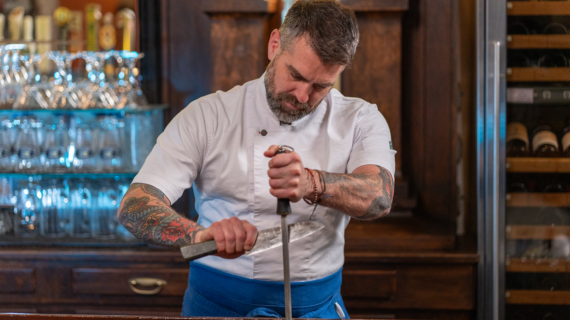
-A boning knife is a key part of your knife kit because it is the only tool that is great at trimming down beef and breaking down poultry. Let me show you what I mean. You can see this blade. It's thin. It's flexible. So, when you're trimming something like this gorgeous beef tenderloin, which is expensive, it allows you to just take away the fat and silver skin without wasting any of the meat, and Adam is here today to tell us which brand of boning knife is best. -I think you should keep working on that. -I know. -I'm thinking lunch later on. -I don't like stopping a prep project. -Alright, but we'll stop to go through the testing. We tested six different boning knives. The price range was $18.85 to $119.95, and they all had blades that were roughly 6 inches long, and just as you pointed out, the blades are narrow and sharp so that you can go around corners, fit in between joints, hug bones, and we had a group of testers who were men and women with different-sized hands, different strength hands, different dominant hands, and most importantly, different levels of experience with butchering and trimming meat. -Aha. -And the tests included trimming the fat and silver skin off tenderloins just like that one, boning out chicken breasts, taking the bone out of a cooked pork shoulder roast, and frenching the bones on a pork rack. Now, there were a couple of factors that made a real difference to testers. One of them was the thickness of the blade. The thinnest one was 0.7 millimeters, and the thickest blade was 1 millimeter. And you can't see it with the naked eye, but testers really felt it. They felt like that 1-millimeter blade was a little less keen, a little less sharp. They didn't like the thinnest one, either. They liked something right in between. The winning knife actually ended up having a 0.84-millimeter thickness. Now, let's talk about flexibility a little bit. -Mm-hmm. -You pointed that out. This one -- Try that. -Alright. -Flex that against the board. -This is like a toy. You can see how flexible it is. I'm not even pressing on it very hard. -That's really flimsy. -Yeah, and this is not my boning knife. -Yep. -I do not like things that are this bouncy because I lose control. -That's exactly what the testers said. They said it felt a little less controlled. Try this one. -Alright. -Remember that's the one with the thickest blade. -Ooh. Yeah. I'm actually putting a fair amount of pressure on it to just bend a little bit, and it's not even bending towards the tip. It's bending towards the handle. I don't like this either because it would be hard to get around the curvature of some things. -Next time, I'm getting you into this testing. You're good, Julia. Now try this one. -This feels good. You know, it has flex into it, but it flexes further up the blade, so that would give me more control, and I also really like how it's shaped. You can see it has some of the knife down here so that if you really had some hard work to do, you could get down there and get in there, but then the tip would be nice for some delicate work. Yeah, I like this guy. -So, let's also discuss the handles. Testers didn't want anything too big and beefy because that didn't feel like they had maximum control, but they wanted something with some grip and a little bit of heft, something with plastic that's grippier. Wood was really good, and in fact, this is the winning boning knife. This is the Zwilling Pro 5 1/2-inch flexible boning knife. It's $99.95, so it's not a cheap knife, but if you're going to invest in a piece of meat like that, you really want to trim it carefully, and this is the knife to do it. It's got that nice moderate flexibility. It's got a 0.84-millimeter thickness, so it's perfect thickness, and it's got 15-degree bevels, so it felt nice and sharp. -Mm, buy it once, buy it right. -Buy it once, buy it right, but there is also a best buy. This is the Victorinox Swiss Army Fibrox Pro 6-inch flexible boning knife. It's $26.95, and I want you to give this one a try. -Alright. So, it's a lot less expensive. -Tons. -Oh, the flexibility is right in the middle. I can see it has a little less of a curved blade, but it does have a bit of a protection here for your hands, and I like that sometimes. Alright. Let's get in here and see. Let's take it for a road test. You know what? It's not as agile as the winner, but it's pretty good. -And it's almost 70 bucks less. -Yeah. So, there you have it. If you're in the market for a new boning knife, and you probably should be, check out the Zwilling Pro 5 1/2-inch flexible boning knife at $99.95. Ceviche is a very simple dish in which fish is cooked not by being put over heat but rather by being soaked in an acidic liquid, very often lime juice. Now, the method is thousands of years old, but finding a good recipe for it is surprisingly hard. Well, that's why Keith is here. -Yeah, we found a ton of simple recipes for ceviche, but we didn't find a lot of good recipes for ceviche. -Mm-hmm. -The lime juice is too strong, it's too powerful, the textures are not quite right, and the fish is inconsistently cooked, so we set out to develop a reliable recipe that tasted great, and that starts with fish, of course. -Yeah, not surprisingly. -Yeah. So, a word of caution before you start this recipe -- If you can't find fresh fish, then just turn around and walk away. -Don't do it. -Exactly. -This is not for frozen fish. -Yeah, especially frozen fish, which turns mushy with that marinade, but even if you have 2-day-old fish, it's not good. You really want the freshest fish possible. So, today we're working with red snapper. You can use other fish here. You can use sea bass, grouper. Halibut is a good choice. Really, what you want to do is you want to go to the fishmonger and ask them what's fresh. I mean, if you go for red snapper and they say it's not fresh, then get something else. -Yeah. -They'll recommend something, and if you don't have a fishmonger there, you know, you want to look for something that is firm in the flesh. It should feel firm. It should spring back when you touch it. If it feels at all mushy, pass it over. It should be kind of glossy. It should look moist, but it shouldn't be mushy. Yes, and that is the most important test is the smell test. -Get your nose in there. -Get your nose in there. It should not smell like fish. So, this is 1 pound of red snapper that we're going to be using today, and we're just going to start to prep it. What I like to do is to break this into smaller pieces, and that makes it more manageable. So, before you cut this into slices, we have a little bit of scale here. We just want to get rid of that. -Mm-hmm. -You want to flip it over, and we have a little bit of skin right here. We can get rid of that. You don't want to eat these things, so you can just trim them off. So, 1/2-inch slice, and it really is nice to have a super-sharp knife here. -I was just saying that. It's just gliding through that flesh like butter, and that's important when you're cutting fresh fish like this because it's quite delicate. I also want to point out, you have a little bit of the blood line there, and you're leaving that in. -Yeah, it's fine to leave that blood line in. It's a little stronger than the flesh around it, but, you know, we're eating fresh fish, so you get what you're going to pay for. -Right. -So, now that I have these 1/2-inch strips, I can just do 1/8th-inch-thick slices. What you want to be doing is slicing it about as thin as you can go here. Okay. We've sliced all of our fish up here. Instead of seasoning the lime juice that's going to go around the fish, we're actually going to season the fish a little bit before we start, and that way, we're seasoning both the fish and the marinade, so we're going to bring out that fish flavor rather than kind of masking it. -Ah. -So, I'm just going to set 1/3 cup of this fish aside. I'm going to use that in our marinade, and the rest I'm just going to put in this bowl here. I'm just going to sprinkle a teaspoon of kosher salt over the fish, give this a quick toss. -I can see you're being pretty gentle with that fish at this point, too. -Yeah, exactly. You want to treat it almost like you're folding a batter, right? You kind of want to get your spatula underneath it. Be really gentle. Okay. So, I'm just going to put some plastic wrap over these. And so, we're just going to let this sit in the refrigerator for 10 to 30 minutes, and that way the salt can work into the fish and season it through and through. Okay, so our fish has sat for 10 minutes, and you can see that it's changed a little bit. The salt has drawn out a little bit of that moisture, so let's talk about our marinade. With a lot of ceviches we found just using lime juice, it falls to the bottom of the bowl and doesn't coat the fish, so what happens is that the fish on the bottom cooks before the fish on the top, so we wanted to create something that had a little bit more body, that would cook the fish a little bit more evenly, so what we found was a Peruvian recipe that made something called leche de tigre... -Ooh! -...or tiger's milk. Sounds kind of weird, doesn't it? -It sounds awesome. -Yeah, but what it is, is that they use some of the fish that they're making the ceviche with in that sauce, and what happens is that it gives it a lot more body, a lot more cling that's going to cling to that fish. I had that 1/3 cup of fish that I set aside that I didn't salt, and that's going to go into our blender. 3/4 cup of lime juice. I also have 2 tablespoons of extra virgin olive oil, 2 garlic cloves, 2 1/2 teaspoons of kosher salt, and we also have 1 tablespoon of aji amarillo paste. -Mmm. So, aji amarillo chili paste is simply paste made from aji amarillo chilies. Now, the chilies are quite spicy, spicier than a jalapeo, but not as spicy as a scotch bonnet. So if you can't find it, simply substitute one habanero chili with the seeds taken out for 1 tablespoon of this paste. -Okay, so, we have all of our tiger's-milk ingredients in here. I'm just going to process for 30 to 60 seconds until this is nice and smooth. Okay. We've made a fish smoothie now. We're going to just put this through a fine mesh strainer to get any stray bits that might not have gotten processed there. -Boy, that yellow amarillo paste really made it yellow. -Yeah, it did. It's pretty concentrated. It's going to add a lot of flavor to this dish, as well. You want to kind of take a spatula and just rub it back and forth and make sure that you're getting all of that liquid out and you're leaving any solids behind. There are going to be some stray bits of skin or any bones that might be in there that we missed when we prepped our fish. Okay. Great. So, we have our fish. We have our marinade. Now we can focus on the other ingredients. First up, we have 8 ounces of radishes, so you just take off the top, the bottom. Slice these nice and thin. Okay. So, like I said, I had 8 ounces of radishes that were halved and sliced thinly. I'm just going to add that to our sauce. We're going to add some oranges to our ceviche, as well, and this is going to add texture but, more importantly, some sweetness. We have a tart lime juice, rich flavors from the olive oil. We're going to balance it out with some oranges, and I love segmenting oranges. So, you noticed I took the top and the bottom off, and I've taken one swath down the edge here, and you just want to follow the curve of the orange, and then you want to follow your blade right along that white segment right there, trying not to take too much of the meat underneath the pith and the peel. So, I'm just going to cut down one side of this membrane and down the second side. I'm just going to pop that right out into the bowl, and it helps to take these segments out over a bowl so you can kind of catch all the juices and the segments as they kind of pop out. So, then we'll just take these out of the bowl, and we're going to cut them into 1/4-inch pieces. Okay, so, we have three oranges total that we've segmented and cut into 1/4-inch pieces, and I'm just going to add that to our sauce and radishes. -They're beautiful. -Isn't that great? So, the last thing that we need to add is our fish that's been salted. Now, in addition to coating the fish really nice, that leche de tigre has another benefit. It's less acidic than lime juice because of all the other ingredients in there. So, what that's going to do is they're going to give us a longer window of time in which to marinate the fish. If you want something firmer, more opaque, you can go 45 minutes, up to an hour. Again, I'm being quite gentle stirring this. We don't want to break that fish up. You can really see how that tiger's milk is coating that fish, and it's going to really help to cook through evenly. Okay. So, I'm just going to throw some plastic wrap on this, and I'm going to refrigerate it for at least 30 minutes and up to an hour depending on how you want it done. -Okay. So, ceviche cooks the fish by using acidity, not heat. Let's take a closer look at how that works. The muscle proteins that make up fish are long, sturdy chains that are held by weak molecular bonds. When you cook a piece of fish, the heat breaks those bonds, and the protein chains unfold, which is called denaturing. Then the long, unwound chains link up to each other, and that's called coagulating. So, heat is not the only way to make these changes happen. An acidic liquid can do the same thing to the fish by denaturing the proteins, then coagulating them. So, by soaking our fish in that leche de tigre for 30 to 60 minutes, we actually cook the fish. -So, it's been 30 minutes, and I think we're ready to eat. Have just one last addition here, which is 1/4 cup of coarsely chopped cilantro. I'm just going to stir this in. -This is gorgeous. -I think we are ready to eat. I'm just going to drizzle with a little olive oil. -Mmm. -We like that richness that this extra virgin olive oil adds. We have a tablespoon here. -And I notice that you have some snack foods over here. -That's for later -- for beers later. -Got you. -No. We actually found that most Peruvian recipes for ceviche add some sort of corn product, whether it's popcorn or corn nuts, as texture. -Really? -Yeah. It's absolutely great because you have the crisp radishes. You have that kind of firm fish, and then I would highly recommend having corn nuts, couple pieces of popcorn. I think you'll like it. -Absolutely traditional. Mmm. Okay. Love the crunchy little bits of corn nuts in there. That leche de tigre really has some serious flavor. You get the aji amarillo paste. You get the garlic. But it's not harsh. -Yeah, it doesn't have any edge to it. -No. You could taste the fish. It tastes clean. It tastes like the sea. And it's in perfect harmony with the marinade. Keith, this is absolutely delicious. -I'm glad you enjoyed it. -Yeah. Thank you. So, if you want to make the best ceviche, start with very fresh fish, cut it into small pieces, and toss it with some salt. Make a leche de tigre in the blender with a few pieces of fish, lots of lime juice, and some aji amarillo paste. Stir in some oranges and radishes and refrigerate until the fish is cooked through. From "America's Test Kitchen" to your kitchen, a great new recipe for Peruvian fish ceviche. You can get this recipe and all the recipes from this season along with our tastings, testings, and selected episodes at our website, americastestkitchen.com. Awesome. -Want some more corn nuts? -I want some more leche de tigre. -Let us help you with dinner tonight. Visit our website anytime for free access to the newest season's recipes, taste tests, and equipment ratings, or to watch current episodes, log on to americastestkitchen.com.
Search Episodes
Related Stories from PBS Wisconsin's Blog








Donate to sign up. Activate and sign in to Passport. It's that easy to help PBS Wisconsin serve your community through media that educates, inspires, and entertains.
Make your membership gift today
Only for new users: Activate Passport using your code or email address
Already a member?
Look up my account
Need some help? Go to FAQ or visit PBS Passport Help
Need help accessing PBS Wisconsin anywhere?

Online Access | Platform & Device Access | Cable or Satellite Access | Over-The-Air Access
Visit Access Guide
Need help accessing PBS Wisconsin anywhere?
Visit Our
Live TV Access Guide
Online AccessPlatform & Device Access
Cable or Satellite Access
Over-The-Air Access
Visit Access Guide




Follow Us