
 Passport




Be ‘cringe’ with me in reverence for Mary Oliver
A few years ago, I texted my friend, "I didn't know that it's 'cringe' to love Mary Oliver." I had returned from a dinner party, embarrassed.



A few years ago, I texted my friend, "I didn't know that it's 'cringe' to love Mary Oliver." I had returned from a dinner party, embarrassed.
A few years ago, I texted my friend, “I didn’t know that it’s ‘cringe’ to love Mary Oliver.”
I had returned from a dinner party, embarrassed. Several professional writers and professors of writing were there — a few with MFAs in fiction and poetry from premier programs like the Iowa Writers’ Workshop, NYU, UW-Madison and the University of Michigan. Intimidated, and a relative stranger at this gathering, I fumbled my way through “getting to know you” small talk. When I mentioned I was relatively new to reading poetry more seriously, and included Oliver on a list of poets whose work I’d been enjoying, I noticed one of the writers’ faces wince in disapproval.
Sometimes, when you gain the people, you can lose the poets.
Ada Limón on Mary OliverU.S. Poet Laureate 2022-25
When I shared this with my friend, an MFA and poet herself, she kindly texted back, “Ignore them,” along with an eye roll emoji. I pressed her, however, wanting to understand better what was behind his wince, explaining how I value the opinions of true experts in their field, and that I am humble about the things I simply don’t know.
She shared that, while Mary Oliver (1935-2019) was and remains one of America’s most popular and widely recognized poets — if you’ve encountered an inspirational meme of poetry on social media, there’s a good chance it’s an excerpt from Oliver — the literary/poetic establishment have long levied criticism(s) of her work: it is too facile, too accessible, too one-note; it placates instead of challenges the reader; it sits too far removed from contradictory truths.
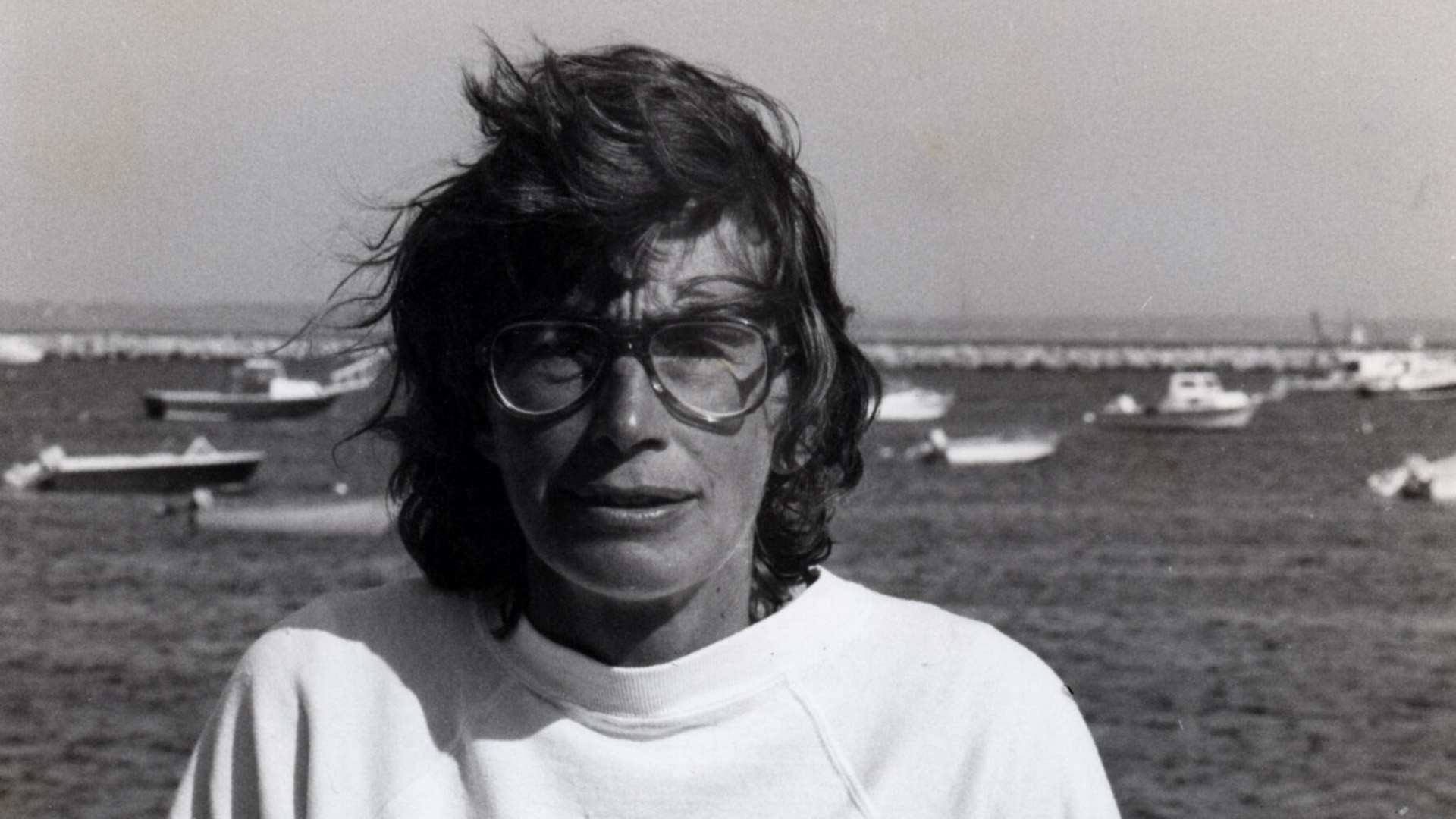
Black and white portrait of Mary Oliver. (Credit: Barbara Savage Cheresh)
The work of criticism is important. It is the critic’s job to closely examine and build arguments responding to the products of our culture from music, film, art and literature. Spending time and engaging with those arguments, with openness and curiosity, prepares us to receive and consume culture clear-eyed, with thinking caps on. And so, following that dinner and text conversation, I began reading critics and defenders of Oliver, and understanding the array of their (fair) points.
Still, when I find myself overcome — by grief or loss, by fear or regret, by the breathtaking suffering or astonishing beauty around me, by the sheer inexplicability of so many things in life — when I am reduced to a state of searching, I don’t always grab my thinking cap (not immediately, anyway). Which is just to say, my first reach isn’t always for the poets whose choices with language, line, and/or the relationship of words to the printed page invite my mind to bend and twist and double back (though I love those poets, too), but I do often reach for a book of Oliver’s poems.
Mary Oliver: Saved by the Beauty of the World produced and directed by Sasha Waters and streaming now from American Masters, reminds me that I am not alone.
Documenting the professional trajectory, rise to celebrity, public and critical reception, and personal life of Oliver, the film leans on the testimony of her close friends. The filmmaker John Waters, her neighbor and confidante, features prominently. Scholars, poets and writers like U.S. Poet Laureate Ada Limón and Jason Reynolds weigh in on the impact of her work, and a chorus of celebrities recite her poetry aloud, including Stephen Colbert, Helena Bonham-Carter, Lucy Dacus, Steve Buscemi and Oprah Winfrey.
Oliver escaped from a difficult Ohio childhood at 17, taking refuge in the natural world and the poems of Edna St. Vincent Millay — an admiration that led her, as a teenager, to Millay’s estate, Steepletop, where she met her beloved partner and patron, the photographer Molly Malone Cook. The two settled in Provincetown, Massachusetts, in 1964, where Cook managed Oliver’s career and protected her solitude through decades of rejection and freelance clerical work. Oliver won the Pulitzer Prize in 1984 at the age of 48 for American Primitive, which catapulted her career toward celebrity.
The film is abundant with archival photography and filled in with still and moving images of nature – a space for both solitude and communion in Oliver’s work. In the handwriting scribbled on my notepad while watching the documentary are lists: “owls,” “waterfalls,” “forest,” “cherry blossoms,” “hummingbird,” “daisies,” “wisteria,” “clams,” “the sea.” Later in life, Oliver spoke to the political nature of our enjoyment of the natural world.
Attention becomes an abiding subject in Oliver’s story. Central to her poetics is paying close, unhurried attention to the world as a discipline and secular form of devotion. The film is well worth yours to consider the significance and lasting impact of Mary Oliver.
Stream Mary Oliver: Saved by the Beauty of the World in full on our website. The documentary is also available in American Sign Language (ASL) and with Extended Audio Description (EAD).




PBS Wisconsin is a service of the Wisconsin Educational Communications Board and the University of Wisconsin-Madison. © 2026 All Rights Reserved.
What do you think?
I would love to get your thoughts, suggestions, and questions in the comments below. Thanks for sharing!
Sigrid Peterson