
 Passport



Education|Community Partnerships|Resources
Boosting preschool readiness: A librarian’s impact with PBS KIDS resources
At Mead Public Library in Sheboygan, Wisconsin, families and children are getting ready for preschool – together.



Education|Community Partnerships|Resources
At Mead Public Library in Sheboygan, Wisconsin, families and children are getting ready for preschool – together.
At Mead Public Library in Sheboygan, Wisconsin, families and children are getting ready for preschool – together.
The recently piloted Ready, Set, PreK program was developed by children’s librarian Alison Loewen and made possible through a grant from the Kohler Foundation. Recognized as a PBS KIDS Early Learning Champion and honored as the 2025 Wisconsin Librarian of the Year, Loewen leverages community connections and research-backed PBS resources to support little learners and their families. She shared about the preschool readiness program and what other libraries can learn from her experience.
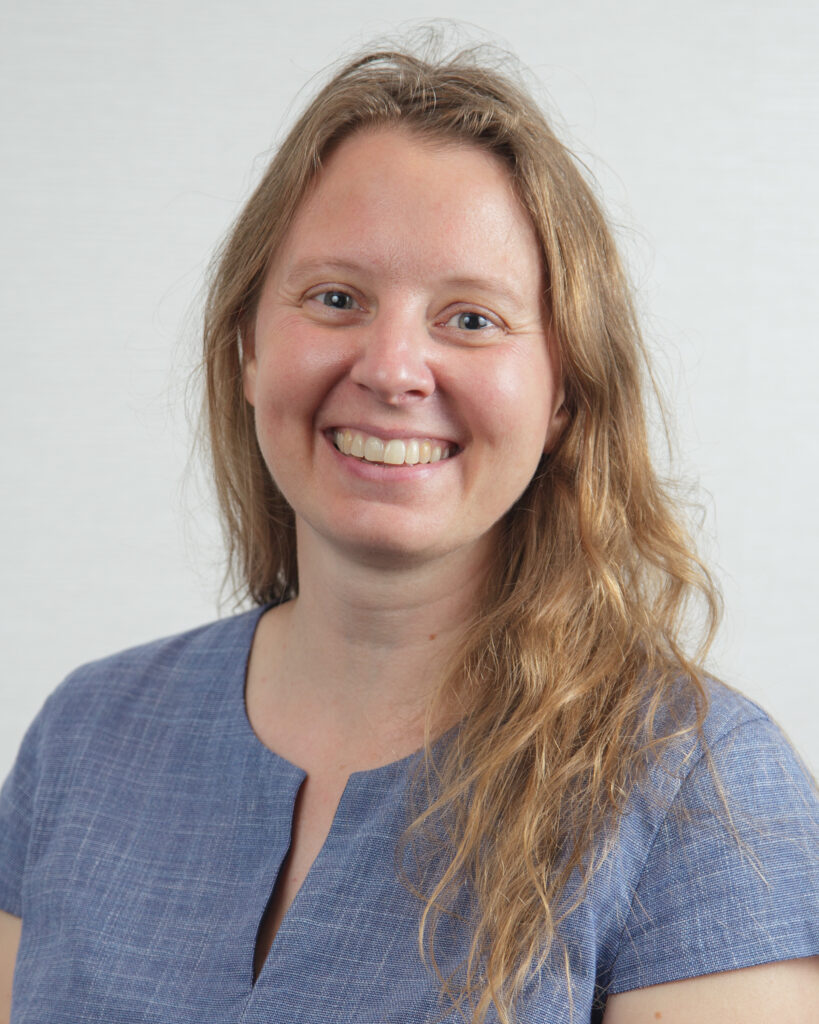
Loewen was honored as the Wisconsin Library Association/DEMCO 2025 Librarian of the Year.
PBS Wisconsin Education: What is the Ready, Set, PreK program?
Loewen: Ready, Set, PreK is a program designed for caregivers to help their children – and themselves – prepare for the first big day of preschool. The backpack toolkits contain a printed activity book with activity suggestions, conversation starters, booklists and links to digital games that support social-emotional learning – key skills that children need to be successful in the classroom.
As a bridge between home care and school, the library is in a unique position to offer support to kids and caregivers before they enter school. Libraries are often seen as a child's first classroom, and the first place where children can develop the foundational skills they will need to thrive in a formal classroom.

Alison LoewenChildren's Librarian at Mead Public Library
Inside are also a few key materials to help with the hands-on activities in the printed activity book, including Play-Doh, colored blocks, a dry-erase game spinner and two wooden “thinking of you” hearts families can decorate and wear to school or work to keep them close in thought throughout the day. The kit also includes a picture book about going to preschool.
The toolkit addresses seven key themes that were identified through surveys with teachers and caregivers: Big Feelings Routines, Focusing Attention, Separation Anxiety, It Takes Practice (or a growth mindset), Friendship and Sharing.
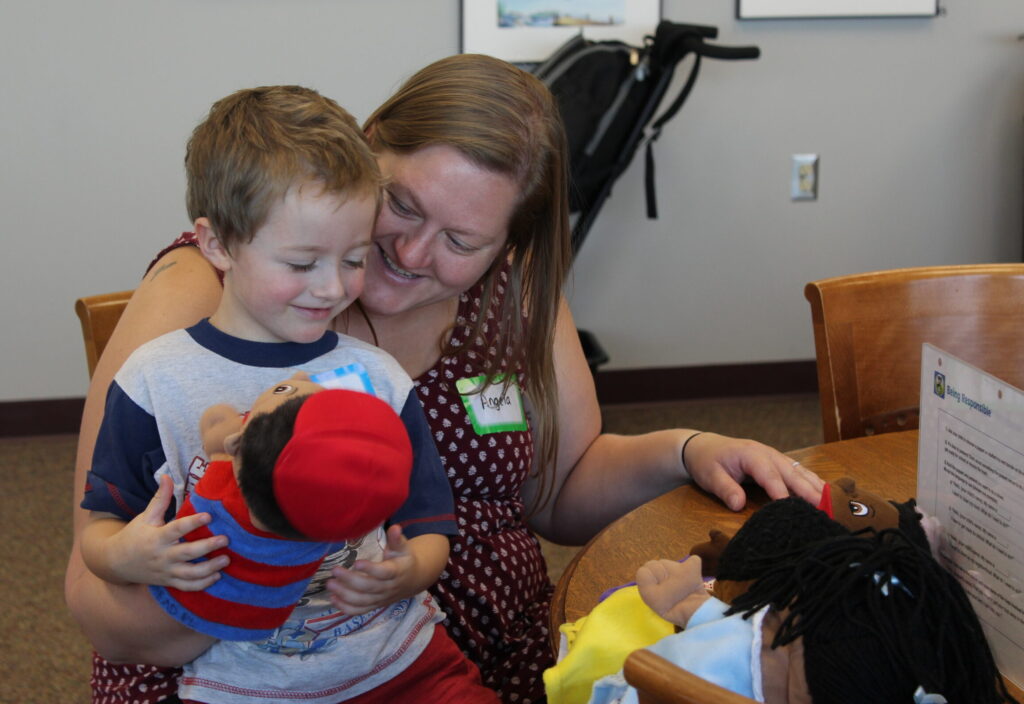
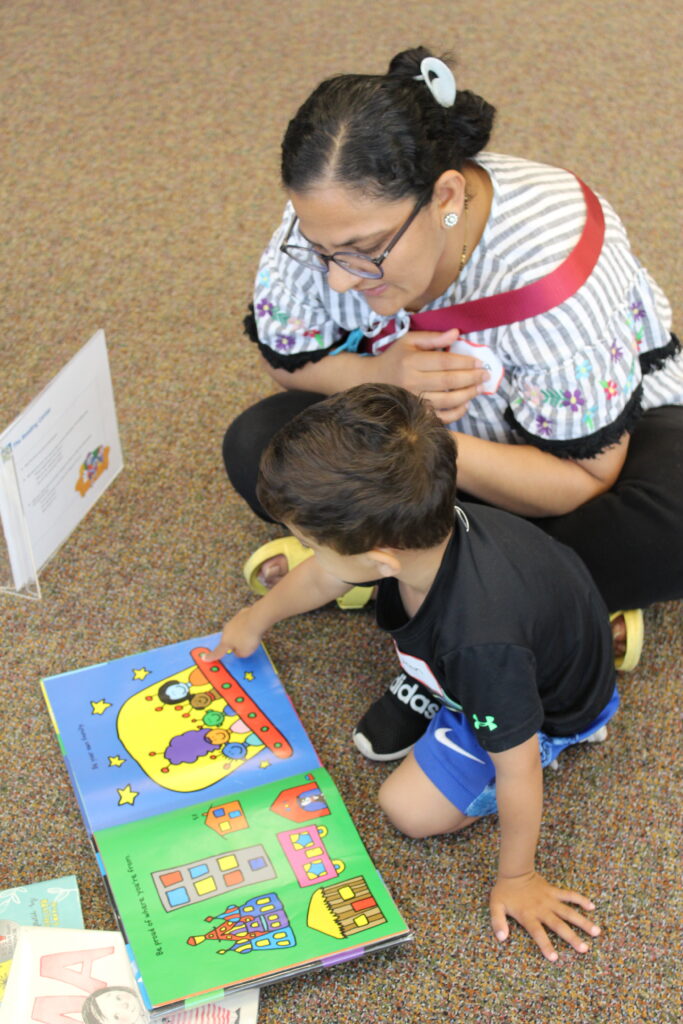
We recognized that not every caregiver would interact with the backpack toolkit, so we offered weekly in-person programming throughout the summer that allowed practicing some of the key skills, including navigating separation anxiety. We used the PBS Family and Community Learning curriculum, which includes moments when caregivers and children are together, and also moments when they are apart. We built on the curriculum to include facilitated conversations with caregivers and moments where they created tools with materials we couldn’t include in the backpack, like an album of family photos for kids to tuck in their backpacks to look at if they were missing family.
We also offered a My First Bus Ride program that provided an opportunity for kids to practice riding a school bus to reduce the anxiety that may come with that first experience. That included a round-trip bus ride from our Pre-K program to the library, with a craft and storytime in between. This helped children understand how to safely get on and off the bus, and the rules while riding. Buses are bumpy and loud, so children were able to navigate the sensory challenges that come with riding the school bus as well.
PBS Wisconsin Education: What sparked the idea for the kits?
Loewen: The kits were a solution to a problem that was identified through conversations with our area Pre-K program and with some storytime families at the library. We all shared the same concerns that there wasn’t enough support for caregivers of incoming preschoolers. We found a lot of kindergarten readiness programming, but not curriculum or support specific to entering preschool or even attending daycare for the first time. Much of what we found was focused on early learning standards generically, but without emphasis on the social-emotional aspects of entering school.
As a bridge between home care and school, the library is in a unique position to offer support to kids and caregivers before they enter school. Libraries are often seen as a child’s first classroom and the first place where children can develop the foundational skills they will need to thrive in a formal classroom. We are in a unique position to take full advantage of the years before children enter school to help build the skills they need to help all learning take root.
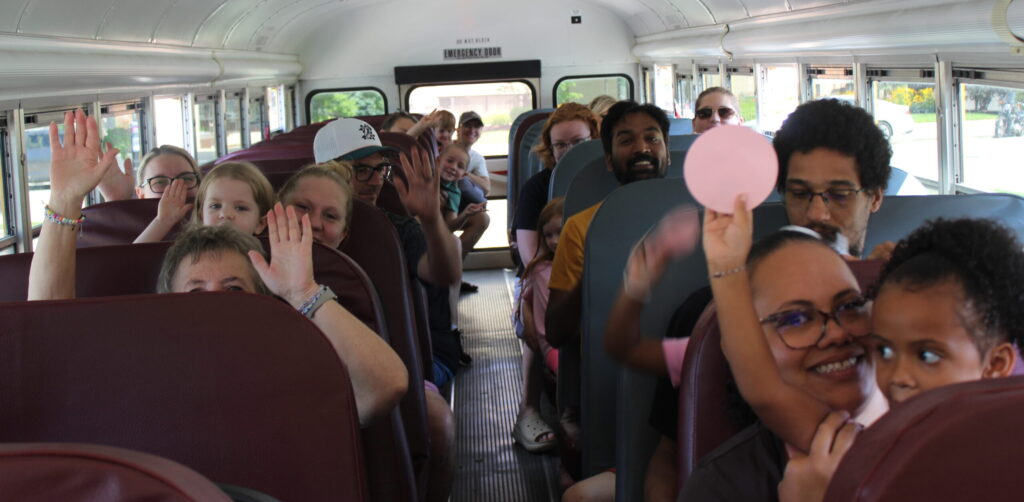
Children practice riding a school bus with their grown-ups.
PBS Wisconsin Education: How did you decide what to include to best support the needs of local children and families?
Loewen: We looked for guidance from the man who helped many of us understand our feelings and believe we were loved just the way we are – Mister Rogers.
In the early years of his show, Fred Rogers wrote a guidebook for daycare providers that paired hands-on activities and conversation starters with each of his episodes. While the book is now out of print, you can check out a derivative copy that contains many of the same activities but features the Daniel Tiger that kids of today know and love.
Many of our activities drew inspiration from the suggestions [in his] books and from other research-backed activities found on PBS LearningMedia. We selected resources that best addressed the seven topics identified for the kit, could be scaffolded to support children’s growth throughout the school year, and used mostly everyday household items.
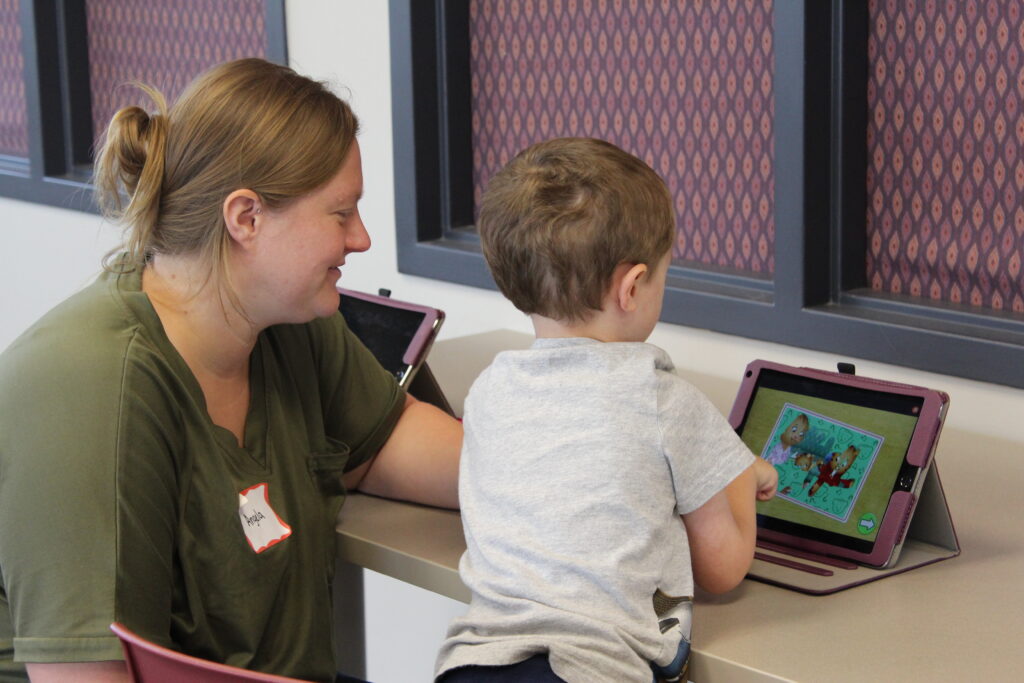
We also recognize that children learn in different ways, so we included dramatic play, hands-on activities, conversation starters, and media links like short videos, songs and digital games. It was important to explore the topic from multiple angles while staying true to the core philosophy of learning through play.
PBS Wisconsin Education: How were the backpack toolkits distributed?
Loewen: The kits were distributed in two ways. One was through participation in our in-person programming. Every child who attended one of the programs received a kit. Most of the kits, however, were distributed through partnerships with our school district’s Pre-K program, our local Head Start and other partner preschool programs. The schools chose to give caregivers the backpack toolkits as part of orientation or registration days. In total, we distributed roughly 525 backpack toolkits during this pilot year.
PBS Wisconsin Education: Is there a favorite resource or item in the kits families seem to appreciate most? What feedback have you heard so far from families, children or community members?
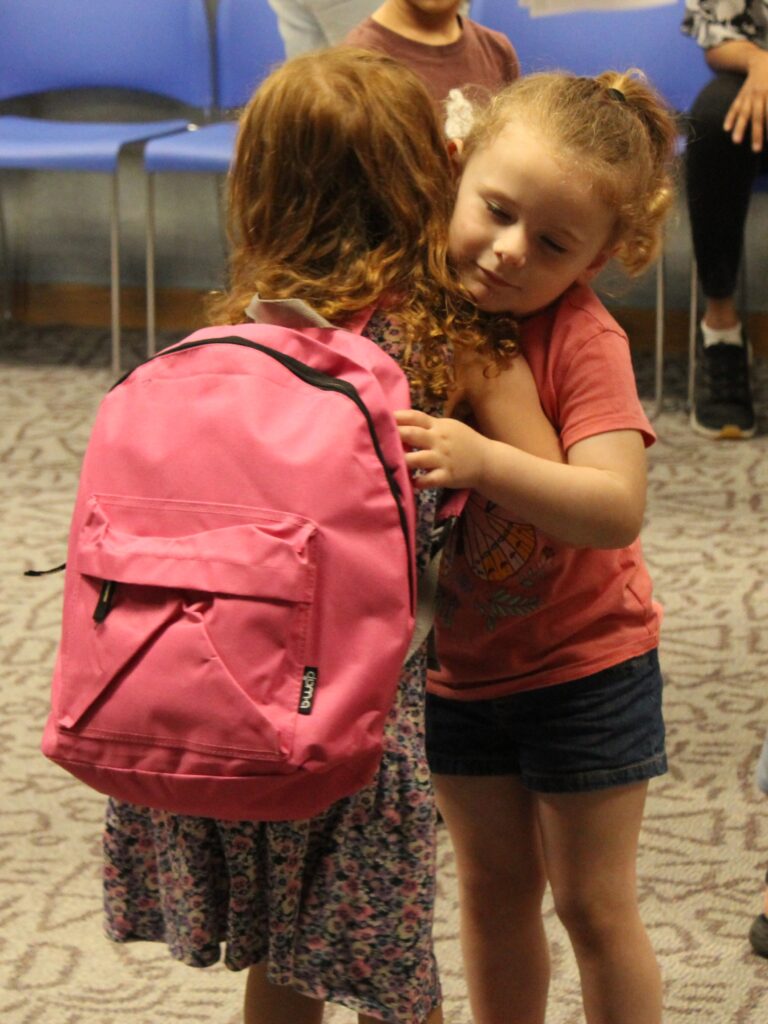
Loewen: Unfortunately, I did not get to witness firsthand how families interacted with the toolkit itself. However, I did get to pass a few out of them directly and saw the joy of children simply receiving the backpack. My experience was echoed by one teacher who wrote to me and said, “A 4K family came in today, and the mom told us that her son refused to shop for a backpack, didn’t want one, doesn’t want to go to school. When he could select his own from Mead [Library], he chose pink and had a huge smile wearing it!” This was wonderful to hear, because we packaged the kit intentionally inside a backpack so that kids could play pretend school before their first big day.
The most common feedback was appreciating the simple opportunity to practice being apart from each other during the in-person programming. One caregiver commented, “This [in-person programming] provided the tools both my child and I needed to help build confidence in attending preschool on her own.” There were a lot of big feelings on program days, both from adults and children!
PBS Wisconsin Education: If you could peek inside one of the backpacks after a week, what would you hope to see?
Loewen: I would hope to see bent pages in the picture book, signs that it has been read aloud more than once. I’d love to see circles, stars and highlights in the printed activity booklet, showing that caregivers found ideas that resonated with them and their child.
I would hope that the “thinking of you” hearts are no longer in the backpack but being proudly worn – reminders of the connection, encouragement and love that Ready Set PreK aims to nurture between caregiver and child.
Maybe there would even be new treasures tucked inside in the backpack — evidence that the backpack sparked imagination and became part of the child’s play and exploration. That would show that Ready Set PreK did exactly what it was designed to do: strengthen early learning at home, deepen caregiver confidence and help children feel ready and excited for their first day of preschool.
PBS Wisconsin Education: What advice do you have for other libraries looking to support school readiness in their community?
Loewen: Partnering with others in the community helped to make this program successful. We could not have done this without the generous support of our donor, the Kohler Foundation, or without the passionate educators who joined us from the Early Learning Center, Family Connections, Inc., Family Resource Center of Sheboygan County and Head Start. Identifying the key players in your community who want to work towards that specific shared goal is imperative.
Even if you cannot start up programming specific to preschool readiness, anyone can be more intentional about including more social-emotional skills during their regular programming. Find activities that encourage taking turns and sharing, like circle games or parachute play. Include books that feature human characters and talk about the problems they are solving in the book and the emotions that the characters may be feeling. Make social-emotional learning a thread throughout all of your programming, rather than just a theme week. PBS has plenty of resources for this, especially the interstitials on both Daniel Tiger’s Neighborhood and Mister Rogers’ Neighborhood.
We can also be more intentional about the activities we offer after our storytimes. Offer choices through various activity stations. Lean on process-based art rather than product, and comment on what the child is doing rather than making.
Libraries, schools and other early learning organizations considering similar programming can request a free Early Learning with PBS KIDS session with PBS Wisconsin Education to learn more about ready-to-go PBS resources and opportunities to implement the Ready, Set, PreK tools in their learning spaces.
Families, caregivers and educators can visit PBS Wisconsin Education’s refreshed early learning webpage to browse engaging educational resources, games, videos and professional learning opportunities.




PBS Wisconsin is a service of the Wisconsin Educational Communications Board and the University of Wisconsin-Madison. © 2026 All Rights Reserved.
What do you think?
I would love to get your thoughts, suggestions, and questions in the comments below. Thanks for sharing!
Tawny Morrison