(serious music) Good evening and welcome to the "Washington Week Extra". I'm Amna Nawaz, in for Yamiche Alcindor. We are continuing our conversation about the state of the economy. Inflation rose at the highest rates since 1982. That's according to the Consumer Price Index, which tracks the cost of items like food and fuel. Americans are facing supply shortages and dealing with high prices at the grocery store and at the pump.
Joining me tonight to discuss all of this
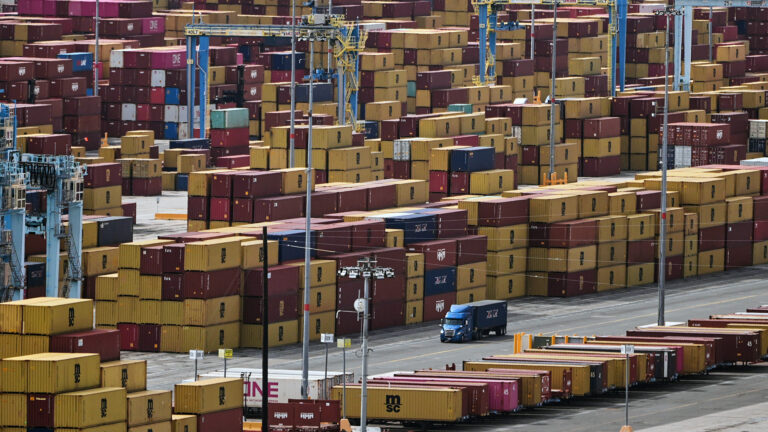
Geoff Bennett, he's Senior Washington correspondent for the "PBS NewsHour", Leigh Ann Caldwell, she's Capitol Hill correspondent for NBC News, and Amara Omeokwe, she's economics reporter for The Wall Street Journal. Welcome to you all, and Amara, I'm gonna start with you. You cover economics. Help us understand. People see that headline, that inflation rose at that rate and think, "how did we get here?" So Amara, how did we get here? Well, a lot of things have happened during the pandemic, but primarily it has been supply chain disruption. You know, earlier in the pandemic and continuing on in the pandemic, we've had factories with issues with labor and part shortages, we've had difficulties clearing backlogs at the ports and other points of transportation, and so that has just made it really difficult to get goods to consumers. At the same time, consumption habits have really changed during the pandemic. You know, we were all cooped up inside, stuck at home, and so we moved away from consuming services, like going out to restaurants and shows and consuming more goods. You know, buying furniture, buying electronics, buying things for the household. And so you had a surge in demand for goods at the very moment that we're having all these supply chain bottlenecks, making it difficult to get those goods to people. So that's a classic recipe for inflation, too little supply and a lot of demand. So Amara, when we mentioned there, of course, grocery store prices, gas prices have gone up, come down in a lot of places, too, but where else is this showing up in the lives of everyday Americans? Where are they seeing some of that? Well, it's interesting because early in the pandemic, we saw a price increases in industries that were really having sort of these pandemic specific problems, like in the used car market. But over the course of the pandemic, we've really started to see these price increases become very broad-based. We're seeing them for food, both at home, so groceries and food away from home when you go out to eat. We're seeing it in the energy markets for gas prices. We're starting to see it in shelter costs, you know, rent and home prices. And so it really has become broad-based over the course of the pandemic. -
Amna
Joining me tonight to discuss all of this
Leigh Ann, we talk off at about how sometimes there can be a lag among lawmakers, kind of catching up to what's happening in other parts of the country, and I'm wondering, as you're talking to lawmakers and members of Congress, do they get a sense of that kind of pain that Americans are feeling right now as these prices have risen? Well, it's interesting. Of course, with Congress, you have to look at many things through the political lens, unfortunately. Especially since we are now in an election year, and this is an issue that Republicans have been talking about. They say that they see the pain that people are going through, that people are struggling to put food on the table, that Thanksgiving and Christmas dinners were more expensive than they happen in many years. But this has also become a campaign issue for them, and of course, Republicans are not in the majority and so they are not going to legislate. They don't have the ability to legislate. But on the Democratic side, there's this interesting dynamic happening, because they're so focused on their agenda and their priorities of voting rights legislation, passing "Build Back Better", which many Democrats say would help some of these issues and some of the relief that people need that this caused by some of these economic problems, but really there's a lot of calls for Democrats, especially since they are in power to in fact refocus on this. There's a group of House moderate Democrats who just last month implored democratic leadership to focus on supply chain issues, to focus on inflation, and turn their attention to that. So Democrats have a difficult choice to make, focus on the immediate or this long-standing agenda they wanted to pass. So Geoff, that's a perfect place to turn to you. Where does the President stands on that balance? I mean, this is where Americans are feeling it every day, right? - Yeah. And to Leigh Ann and Amara's great points. If you look at what happened with the supply chain crisis, it speaks to why this issue is so intractable and so tough for this administration to get it sort of collective hands around. Say for instance, they fixed the ports issue and they had, for instance, one port in California running at 24 hours a day, when all of those goods came off the ships, it turns out there weren't enough truck drivers to move those goods across the country. And then for the goods that do make their way to the retail shops, there aren't enough workers in some cases, to actually put those goods on the shelves because workers have determined it's not in their own best interests to have some of those public facing jobs given this resurgent COVID crisis. And so at every step of the way, there are solutions that need to be put in place and difficult problems that need to be solved, that aren't easy, that you can't necessarily throw money at that require, in some cases, hundreds of thousands of jobs to be filled. And so this is the real challenge that sits before the Biden administration that won't be easily solved and certainly not in an election year, Amna. So Amara, I'd love to get your take on this. We've obviously kind of been reflecting back and looking back analyzing where a lot of those emergency COVID funds that were sent out by the government earlier in the pandemic, where they went, the kind of impact they ended up making, some of the programs that have been rolled back since, is there now a sense? The longer the pandemic rolls on, the positive impact that a lot of those funds had has kind of been washed away? Well, it's interesting because those COVID relief funds have actually become sort of a political difficulty for the Biden administration. Republicans, and even some allies of the administration have said that some of that aid is probably part of why we have this inflation situation that we have now. Because you may remember when Democrats and the Biden administration pushed through the "American Rescue Plan" last March, the economy was already starting to heal. It was already starting to show signs of improvement. And so some people have argued that pumping too much aid into the economy is actually part of what has contributed to inflation right now. But the Biden administration will argue that that aid has really been crucial for families. They pointed the expanded child tax credit and the impact that has had on child poverty. They point to the stimulus checks helping to boost families savings and allow them to pay for items that they need. And so, as the impact of those aid efforts paid, it will be interesting to see how households affair, if they do continue to hold up or if they start to struggle more because those funds have been exhausted. Geoff, it strikes me that Biden's top two challenges right now are so deeply intertwined, right? COVID and the economy, and as you have laid out, he's kind of playing whack-a-mole with both of them, responding to things as they pop up. But do you get a sense from folks in the White House that once they get their hands around the pandemic, once some of this surge kind of subsides that maybe the economic hit will also subside? That's certainly the hope. And so right now, what they're trying to do, they're trying to have something of a reset. We talked earlier about how the President faces inaction on so much of his domestic agenda. The hope is that next month they could try to pass a pare down version of "Build Back Better". Perhaps have the President focus on executive actions to sort of solve problems where he can unilaterally. But yes, the economic issues and the COVID issues are two major crisis that are so intertwined that the President realizes that he's going to be held to account and judged on his ability to deal with both of them. And Amara, I guess on the economy, when you look at the response from lawmakers, from the President, from this administration, is there anything else leaders could be doing right now that would help to ease some of this pain that Americans are feeling every day? Well, I think if you talk to most economists they will say the thing that's really going to bring inflation down is time, right? The economy just needs time to work through these supply chain bottlenecks and that's something that the Biden administration has no control over. It's also important to note that inflation is really in the purview of the Federal Reserve, right? The Federal Reserve can help bring inflation down by its policymaking, by its rate setting agenda. And the Fed recently has taken a more aggressive stand towards inflation, and they have signaled that they could begin to raise interest rates as soon as March. We know everyone out there feels it every day. We can only hope things will change very soon. We're gonna have to leave it there for tonight, though. But so thank you very much to Geoff, to Leigh Ann, and to Amara for sharing your reporting joining us tonight. Make sure to sign up for the "Washington Week" newsletter on our website. We'll give you a look at all things happening in Washington. Thank you for joining us. I am Amna Nawaz. Good night. (serious music)


 Passport
















Follow Us