








PBS Wisconsin Passport
Watch this video with
PBS Wisconsin Passport
Become a member of PBS Wisconsin, support your local community, and get extended access to PBS shows, films, and specials, like this one.
Harvesting the Sun
05/05/19 | 26m 46s | Rating: TV-G
The Schley’s consider all the ways the sun affects their home, farm and life. From orienting the house to capture the most sunlight, to the size and placement of windows, roof, and even flower fields. They learn that paying more attention to the sun could have everlasting benefits. Rodman and Gina learn about window efficiencies, roofing options, and home solar versus community solar options.


Copy and Paste the Following Code to Embed this Video:
Harvesting the Sun
soft music
Rodman
From vast deserts to sunny days on the beach, sand blows in and out of our daily lives. From the products we produce to the food we grow, sand is a building block for so many things.
Gina
We are Gina and Rodman Schley.
Rodman
For the past few years we've been exploring our community and learning from other people how to live a more sustainable life.
Gina
And now we've bought a farm. You in? - Come on, let's do this.
Rodman
I'll be building our home.
Gina
And I'll be working the land.
yelling and laughing
Rodman
It's all part of our...
Together
Urban Conversion. And this is so important that we develop a consciousness, awareness, that leads to our conserving water as a gift.
Gina
The water that comes from Colorado really is going to so many people and we want to really respect it and teach our children to respect it and to not be wasteful of it.
Rodman
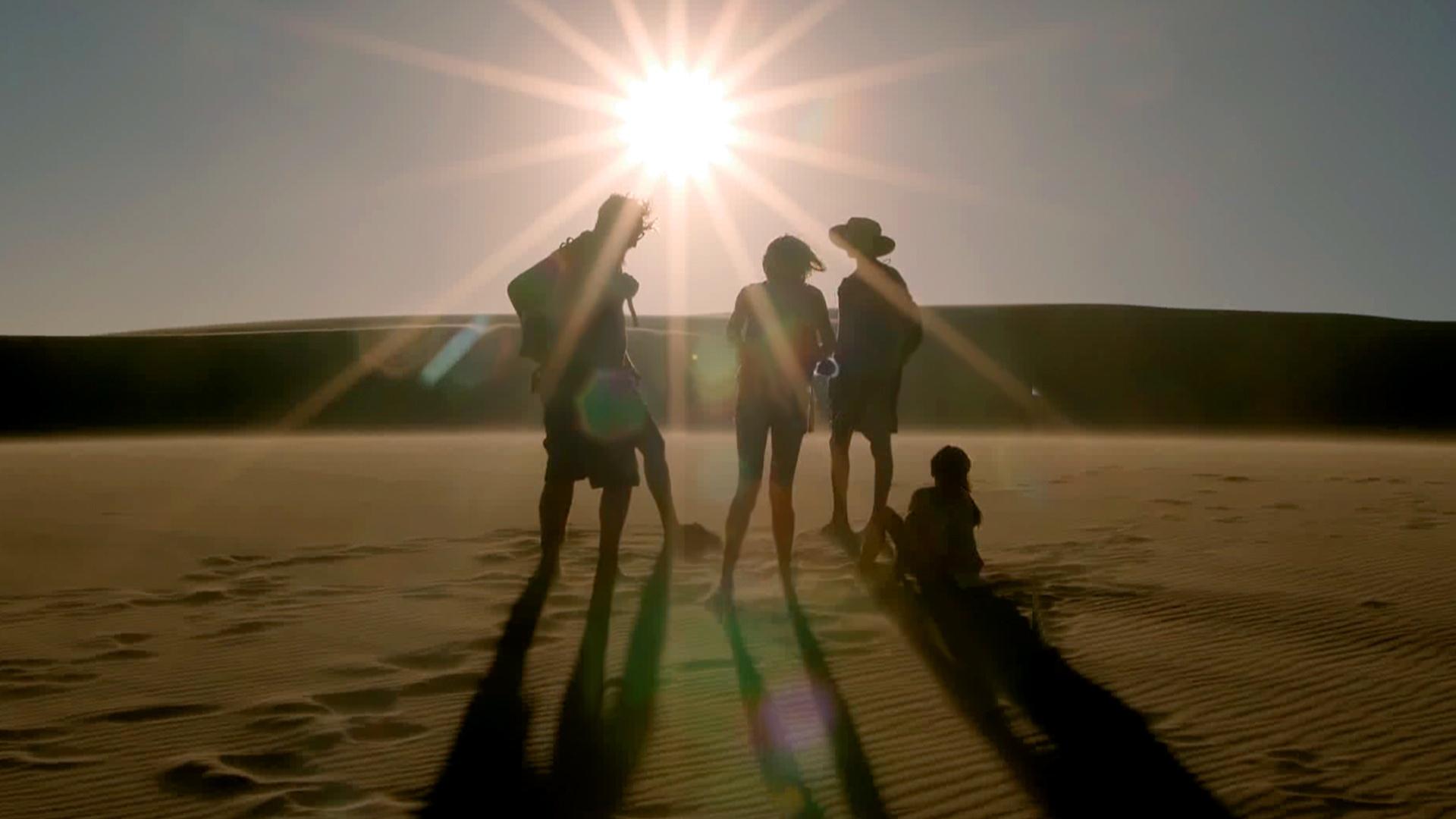
Opening our eyes to clean water and just water conservation, makes you really rethink about how you're using water. So, Cecilia was studying state geography and one of the field trips they were supposed to go on was to the Great Sand Dunes in southern Colorado but it never happened. So, we thought, let's just load up our whole family and take them down to the sand dunes. Plus, we got our nephew Jack coming in from Ohio and he's never seen Colorado. What a better place to take him than to see the Great Sand Dunes, I mean these things are incredible.
Gina
I've lived in Colorado for 15 years and I'm just now seeing these sand dunes with my own two eyes and they're spectacular.
Rodman
When we pulled in, you're at the base of these dunes and there's this beautiful clear water, there's a bunch of deer sitting in there. You can really connect with nature at that point. You really felt like when you got out of that vehicle and you started doing that hike, you were kind of leaving everything behind because there is nothing out here. Cecilia, how do you think all of the sand got here? Well, since it's so windy here, the wind is picking up the dirt and the sand and trying to take it over the mountains but the sand is too heavy so it doesn't make it over the mountains when the dirt does. One of the things I really notice is the temperature difference. When we started the sun was out and it was pretty hot, the sand was actually hot, but as soon as the sun started to go down, the sand felt much cooler. So, you know sand is actually a really good insulator. When you feel the top of sand, it's really warm but when you dig underneath it, it's nice and cool. And we actually use sand in our home, to keep our homes really, either warm in the wintertime or cold in the summertime. Do you know how we do that? What type of things do we use?
Cecilia
Insulation! Insulation in our walls, we actually make insulation out of sand. We are explorers from far away and we're coming to find the treasure of the sand dunes.
Rodman
So, we got to the base of the mountain, looked up, and these things looked relentless. So, I knew right off the bat this was not going to be your ordinary hike.
Gina
What you don't realize is that you sink when you're actually hiking up them so it takes a lot more energy to hike.
Rodman
But we kept going, we kept the kids going, and the kids would start complaining. Is this how it's going to be the whole way? Yup, a little sandy.
Cecilia
I lost a flip flop. Oh, I got sand in my eye. Ugh!
Rodman
They say these are the tallest dunes in North America, well they are. We're almost to the top. It seemed like we could never get to the top. You'd get to the top of a dune and there's another dune. Get to that dune and there's another... It's like oh my gosh, when are we ever going to be at the top of this thing? Only four more ridges.
Gina
The wind was blowing outrageously and we have sand in our shoes, in our clothing, our hair, our eyes.
Rodman
Our underpants.
Gina
There was sand everywhere. As difficult as it was to get up those dunes, there was nothing like coming down them. I mean, you would just start going, you'd roll, you'd hit, you'd spin. I'll tell you what, I was cleaning sand out of my ears for the next week. You do need a little exfoliation of your skin, Rodman. Just exfoliate your whole body.
laughing
Gina
No?
Rodman
So, what'd you guys think about the sand dunes? I thought it was tiring but fun. They look so small from far away but then when you go up there they're like monsters. Yeah, they're pretty massive aren't they. Well, I was thinking a lot about sand and when your feet go right through it, water also goes right through it. So, on the farm I was thinking about how sand plays a role in soils. Soil is made up of sand and clay and silt and so some soils have a ton of sand in them and the water and nutrients go right through it but on our farm, we don't have a lot of sand. We have a lot of clay and it just holds moisture and it's almost too much. I wish we had more sand like that in our soil. It is pretty important to appreciate all the different little things in our lives that we don't take the time to think about that help us out every single day. Whether it's to eat, to farm, to insulate, sand is just a big component. Just imagine living without sand. I thought the Great Sand Dunes were amazing. And it's really interesting to think about how those winds would come through there just right to build those dunes higher and higher and higher. I can't believe that it took us this long to go down there.
Gina
Beautiful.
lighthearted music
Rodman
It's really neat to see how this whole house is evolving and changing. Every single day there's something new. We've got all these things ready, they're inspected and it's insulation time and that's kind of a big step in the process. It's a huge step. Yeah, so Bret's gonna come over. He's gonna help us out, he's gonna walk us through the insulation process and we're going to get this job started. So, here we are. Here's the project. A lot of work. A lot of work. There's been a lot of work that's happened but there's a lot more work to do. Just to kind of give you an idea, when we came in here, we tore everything out. This is all finished space when we came in. We took down all the drywall. When we took down the drywall there were firring strips here, there was no insulation whatsoever. We're really wanting to get this thing to elite, platinum status so insulation I know is really, really important. Sure, this is a great first step firring out these walls. And you guys particularly, have chosen two by sixes here so we have an even bigger cavity than typical, so we can get even more insulation in that wall. What can of R-value do you think I can expect, say, from this two by six type construction? So, the block itself, the masonry here, isn't going to necessarily provide a lot of R-value but the mass itself helps to soak up the radiant energy. So, for example, in the summer when it's really hot and the sun is beating on this wall, these blocks will soak up that energy, kind of like a sponge, and hold onto it. And rather than radiate it into the house, at night when it cools off, it'll send that energy back out into the environment. So, it's kind of a shield? It's keeping the hot out and I suppose in the wintertime, does it do the same thing with the cold air? In the winter, what it will help you to do is, again, that regulation. So, since it's a little bit warmer from the inside it'll help hold that energy a little bit more. It's going to be fantastic. You guys are going to be much more comfortable than the previous family that lived here, that's for sure. Well, cool. Let me show you upstairs, there's a lot of house to see and there's a lot of things to do. Let me show you what we've got going on up there. Alright, Brett, so this is the new addition to the home. Oh, wow. - Yeah, I know. It's almost... it's just a lot different coming in but this is all going to blend nicely. But, trying to figure out, going from the old construction to the new construction, I'm sure it's very different on how we're going to insulate, maybe not. I don't know. What is insulation made out of? Oh, so the primary ingredient is sand. So, glass is made out of mostly sand but today, actually, it's produced primarily from recycled glass. So, we're not actually converting sand into glass to make the insulation anymore, we're starting with glass and that has a number of benefits. One, is just the amount of material that we're preventing from going into the waste stream. We're using over 10 rail cars every day of crushed glass. How much do you think is recycled content that goes into your product then? Yeah, so it's over half. What turns into the insulation is actually recycled bottles. So, instead of going to the landfill, it's coming into my house? Yeah, into your house and actually in this house, it'll probably be over five thousand bottles that we took... In this house? - Into this house. Five thousand bottles, you gotta be kidding me. It makes me feel good, not just because we're getting additional points for the LEED certification, but also knowing that a lot of the products that we're putting into our home, have a high amount of recycled content. Well, Brett, I'm excited. This is awesome. I can't wait to get you guys in here. Getting this done is so important to us and I think you guys are the right guys for the job. Let's get out of here, let's get you guys on the calendar and get you working. Sounds great, let's do it. - Alright, thanks man.
Gina
So, my friend George, he's starting to be a really familiar face around here. And he's coming back to the farm and he's going to bring his much bigger tractor out and break soil so I can start planting some lavender. Good morning, farmer. Hey, Gina. - Hey George, how are you? I'm doing good. Thank you so much for coming out today. I cannot tell you how much I appreciate your help. Boy, was it March or April or somewhere in there? It was March. Did you see the field? It looks pretty good. You had a good crop? Had a good crop, grew flowers all summer. I see you got some rye coming up already. Got some winter rye coming up... That's going to help a lot. For my first year, just getting started, it's really nice to have George here. He has the machinery to do what I need to do and tractors are pretty expensive. Not only is the tractor expensive but all the different implements. The plow, the tiller, you just need a lot of money to invest and that's hard for new farmers. So, thank you George. Alright, well let's get to work. Let's plow this field. Okay, thanks a lot. We'll see ya.
gentle guitar music
Gina
I am so thankful that George is here today because it definitely does take a community to do this. We have young farmers, especially here in Arvada. Arvada used to be known for it's farming community but a lot of the farms have been sold and they've been developed and there's not a ton of farming. So, farmers, I think, are excited to have a new generation come up. I like to come out here, to Gina and Rodman's and you get to operate your equipment, you get to use it. It's nice to be able to help somebody out. Our antique tractor club does a few of these things, we've done a couple other projects up here in Arvada. It was always fun and they're grateful that you came up. So, it's a nice time. Since George is such a wealth of knowledge, there is one question that I have to ask him. We do have clay soil, some people say to add sand. Sand is something that'll work. But do farmers do that, like on a big scale? No. Eventually after you keep turning it, it gets broken up. I was not entirely surprised to hear George's response to adding sand to soil but I was hoping for something different. With clay soil, I'm just trying to find some way to break up this clay soil. So, I'm going to keep looking and asking around to see if I can learn a little bit more about how to break up my soil.
Rodman
So, it's a pretty exciting day around here. It's insulation day. They're going to use a couple different types of product here. One, they take this fabric up, and it's blown in insulation. They put the fabric up, they take a hole and a hose, blow the fiberglass into the cavities. Now, the other one is more of a batt product. So, the batts come pre-rolled and pre-cut. A lot of time they'll have to cut them down to fit in the cavity but these things go right into the cavity of the walls. Pretty interesting to see that there's two different ways that they can put this insulation into the home. Man, this is looking good. It feels like a room now. You finally get to have some walls up. The sound in here is crazy, I mean all the sudden. Before it was so echo-y, what is that? That's the absorption? We had all the noise from downstairs and you could hear them moving around, yeah. So, everyone thinks about insulation, we think about the thermal capacity of it to slow heat but it does the same thing for sound so all those fibers that are trapping the heat, also can trap the noise as well. This is definitely, if you look at this, it's very different than this insulation. What's the difference in these two products? This product here, we'll pull a little bit of it out here, this is a loose, blown-in product. So it's the same base material. So it's still fiberglass? This is still the recycled fiberglass but it's all the tiny fibers and so, rather than gluing them together to make a batt, we just keep them in this loose form. The great thing about this is it just fills in every single gap and crack, every small little nook and cranny. Which would probably be good for around pipes, I guess, or I mean, you think it would fill in everything. Yeah, around pipes, around the electrical. So, I believe this is one of the walls that was the stone wall so it's going to have the really textured finish of that wall. It'll just fill in every bit of this. Every little bit of it. You know, for so long this house has been cold. You can see from one end to the other, it was echo-y. But now they got this insulation in, I'm telling you it just transformed this house. You're seeing the rooms, you're seeing what this thing's going to look like. This whole project is really starting to take shape. It totally is and it was freezing before. Working on a construction project, it almost feels colder inside than it did outside. So, when you put the insulation in, it totally changes the feel of the home.
Gina
George has me thinking about sand and soil so I'm going to take a soil sample and actually take it up to the CSU Extension Office to see if they can tell me a little bit more specifics about the composition of my soil. Hello, Jim. - Hey, Gina. How's it going? What are you doing here? Well, I'm putting your soil out to dry right now and we're going to get ready for analysis. So, just your first gut instincts of looking at my soil, what do you think? Visually, it looks pretty good. It has pretty decent amount of organic matter and it has pretty good aggregate stability to it, it breaks apart pretty easily. But it's really hard to tell once you get in to start analyzing it whether or not it's actually going to be a good soil for you. Whether the pH is okay or whether the nutrient content will be sufficient to support what you want to grow. Let's do it, I'm excited to see what my soil looks like. Okay, sounds good. - Alright. What's the next step? Well, we're going to take this and we're going to take it over to one of these machines over here and we're going to grind it up and sieve it through a two millimeter sieve. From that point, then we can take it and analyze it for the different parameters that are a part of our testing process. Okay, first one was for the pH. Second one was for nutrients. And, this third one is for the organic matter. What I was taught, you just take a handful of soil and you squeeze it and you get it wet and you kind of rub and you can see if it's clay or sand, if it falls apart. But when you send it into a lab, they actually put it into beakers and test tubes and they're really getting very scientific on your soil. So, it gives you a lot more information. We're gonna go ahead and get a pH measurement on this. PH on this is 6.53. Actually, the pH is not that bad, it's not bad at all. Since you want to grow lavender, you want a little higher pH. I think it's between 6.5 and 7.0 is what they recommend. So, not bad, it's still on the lower side. I thought this was going to show me some drainage information too, about sand in my soils or clays in my soils because with lavender, that's what I'm concerned about. Right, so we have a texture estimate that we do and I can show you that. I really want to see that. 'Cause that's going to be important 'cause I really want to just add sand to my soil 'cause it's pretty clay based. Okay, okay. So let's go check that out. We want to find out what kind of soil you got and this is just something you can actually do yourself. It feels like kind of a sandy clay loam and so it's got a mix of sand and it's got a little sand because it feels gritty and it has some stickiness to it, so it's clay, it has some clay in it. I was really worried that I was going to have clay soil that I had to add sand to. So, if you add sand to a clay soil, sometimes that'll make it set up really hard. Really like concrete. - Oh, interesting. To improve the texture of that, what would you do? Is that where you're adding organic matter? I would just add organic matter, that would help to loosen that up. It really isn't that bad, I mean it's got some clay in it. It's got a little bit of sand in it and it's going to have good water holding capacity because it does have some clay in it. That's good. So, I think it's in pretty good shape. It's pretty good. - Yeah. Well, Jim didn't give me the answer that I really wanted. I wanted a quick fix to improving my clay soil but I just don't think that's going to happen. So, he's encouraged me to take a more methodical, long approach to improving my soil but that's just part of farming and that's what I'm gonna have to do.
Jim
You have a lower pH, the EC is low, and fairly good amount of organic matter and then the NP&K are in pretty good shape too. The nitrogen might be just a tad low and so I'm recommending 20 pounds of nitrogen per acre, for lavender. Oh, okay. Nice. Great, well thank you. I feel like I have a good step of the first season, right? Good, good. You're well on your way. I'm well on my way to growing, thank you. You're welcome, you bet. So, we've been working so hard on this house and I'm telling you, it is taxing on a person. So, I thought tonight would be a great night to have date night. My wife is from Toledo, Ohio, which is known as the Glass City, so I thought what a better date night than to go down and visit Codey down at the Denver Glass Academy and do a little glass blowing.
Gina
Glass blowing is such a refined art, it's amazing that you can melt sand down into jewelry, glass balls for ornaments, little figurines, it's really such a magnificent art. When we're learning glass blowing for the first time, the main thing and really the hardest part that we're learning, is this muscle memory of constantly spinning and rotating the glass in front of you. And so, if you stop, is it gonna go... It's gonna droop. Yeah, absolutely. Oh, so once you start you cannot stop, alright. It's a flow state, kind of like dancing, you want to keep moving with it. You don't really have time to just take it... He's awful at dancing, not good. Kind of like dancing? So, we're going to add some glass color, called frit. Frit is just crushed down, granulated glass and once we add it to the inside, we're going to start to fuse and melt it to the inner wall. Melt it down into a smaller, thicker shape, and then blow into it and it expand it into either a garden globe today, or we can put a little ornament hanger on it and make it into an ornament or sun catcher as well. I'm just going to start the flame for us. Whoa, look at it! Yup. So, once we do stick the glass into the flame and start to manipulate, we do want to put on our safety glasses here. Okay.
rock music
Codey
Ready to blow some glass? So, bring the very tip of your piece to the top of your flame, near the ventilation. And once we put it in here we cannot bring it out, okay. Relax your shoulder and hold it nice and straight or perpendicular to the table. So, I can see the color starting to stick to the glass. Like roasting a marshmallow. So, you keep spinning as you blow. Blow, blow, blow. Yeah, awesome. And, stop. Woo hoo. And both of you, whenever you're ready, take some nice deep breaths in, take it out and blow one more time for me, very gently. And stop. Whoa, that's awesome. So, whenever you're ready, take a nice deep breath, take it out, spin and blow. Blow, blow, blow. It's going to harden on you in about three, two, one. So, if you want to go bigger, we'll bring back into the flame. I don't even think it moved. It got bigger, trust me. - Alright, alright. Has anybody ever caught fire doing this?
laughing
Codey
No. Well, today might be the first. She told me nobody's ever blown themselves up doing this. Why'd you step back? But every time I looked at her, she was always taking a step or two back. Is there something that I don't know? No. So, bring the top part of your bubble into the flame by holding it nice and straight. Like this? - Perfect. Okay. You can bring in your graphite tool.
Rodman
Okay, and I just squish it around. So, it's a lot of heating, assessing what you want to do and then you take it out, execute. Yeah, that's awesome. This is a bunch of bologna, why does yours look so good?
laughing
Codey
Good things take time. Yeah, exactly.
Rodman
Codey was great, she was such a great glasssmith. The things that she was doing, the attention to detail that she had, she was making some really beautiful things. And she was really patient. You have this flame and this heat that you're working with but she's really good at just getting us to relax and to calm down and teaching us how to work with the heat. It's really... she's an excellent teacher. And you gotta be patient to work with me. For sure. Alright, Gina, what did you make? Okay, so here's my flower. I think it turned out pretty good. I like the color. And what about you Rodman? Well, I made this. I'm not incredibly happy with, maybe, how my colors came out down here but I think for maybe my first piece? I think you did pretty good.
laughing
Rodman
You did not do that Rodman. I want to see your real piece. Alright, here it is. Here's my flower.
laughing
Rodman
That would go in this little vase.
Codey
Well,
cheers. Together
Cheers. This is really cool actually, it's beautiful. It's amazing that this all started out as sand. And, like you were saying earlier, there's glass all around us, all the time. All the time. Absolutely. It's a material where I dare you try to go home and drive home today without having glass around you or on you. Whether it be your phone, or your window, or your tablet, your computer. They all utilize glass and it's all necessary for it.
Rodman
Just think about what a role sand plays in our life. I mean, talking to Codey, she was right. Sand is everywhere, from the smallest little speck of sand to those great big sand dunes that we were hiking.
Gina
To the insulation that's going into our home to keep this home warm in the winter or cool in the summer. It's used in our soil to drain our fields, without sand in our soil, we'd have a muddy mess. It just really affects us in so many different ways and you don't really think about it, do you? I don't really think about it until we've been really trying to understand it a little bit more and have some appreciation for it.
gentle music
upbeat guitar music
Gina
Sustainability is a huge topic. On UrbanConversion.com we cover it all. We bring news, how-to's, and quick tips for going green and much more. My education may start on the show but it continues at UrbanConversion.com.
Search Episodes

Donate to sign up. Activate and sign in to Passport. It's that easy to help PBS Wisconsin serve your community through media that educates, inspires, and entertains.
Make your membership gift today
Only for new users: Activate Passport using your code or email address
Already a member?
Look up my account
Need some help? Go to FAQ or visit PBS Passport Help
Need help accessing PBS Wisconsin anywhere?

Online Access | Platform & Device Access | Cable or Satellite Access | Over-The-Air Access
Visit Access Guide
Need help accessing PBS Wisconsin anywhere?
Visit Our
Live TV Access Guide
Online AccessPlatform & Device Access
Cable or Satellite Access
Over-The-Air Access
Visit Access Guide




Follow Us