








PBS Wisconsin Passport
Watch this video with
PBS Wisconsin Passport
Become a member of PBS Wisconsin, support your local community, and get extended access to PBS shows, films, and specials, like this one.
The Great Irish Songbook
02/27/26 | 55m 24s | Rating: TV-G
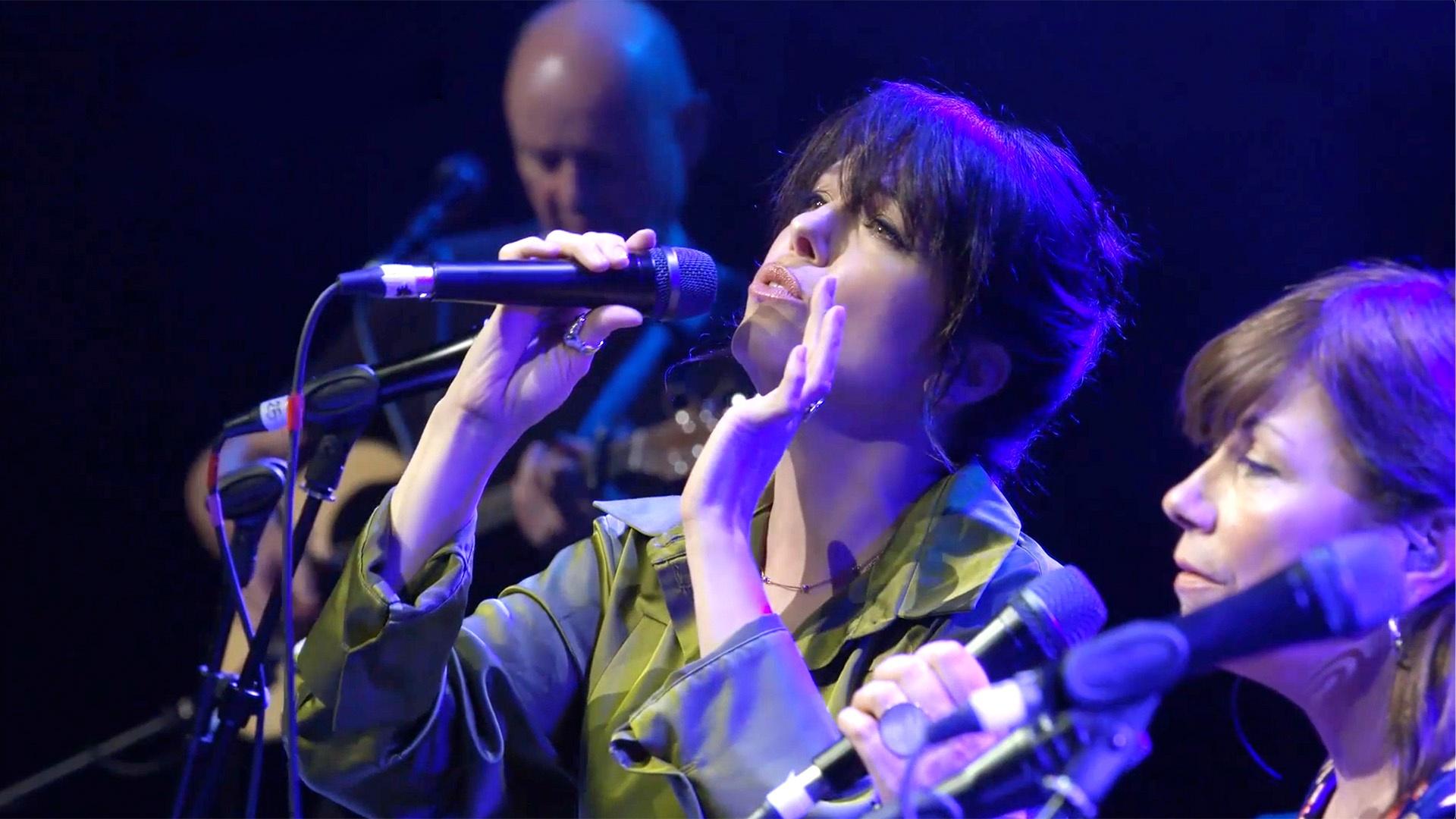
Join internationally acclaimed band Dervish and a stellar lineup of artists to celebrate the powerful Irish tradition of song. Filmed at the London Palladium, Dublin’s National Concert Hall and other, intimate venues, the program features special guests, including David Gray, Imelda May, Moya Brennan (of Clannad), Indigo Girls, Kate Rusby, Brian Kennedy and more.


Copy and Paste the Following Code to Embed this Video:
The Great Irish Songbook
NARRATOR: Welcome to Dervish and Performers with their many friends, including David Gray, The Indigo Girls, Imelda May, Brian Kennedy, Kate Rusby, Cara Dillon, Kevin Burke, and Moya Brennan.
In celebration of the Great Irish Song Book.
(cheering and applause) SHANE: Irish music has always been there for Irish people in very difficult times.
It draws us back to who we really are as people.
You know, and there's nothing really pretentious about it.
And if there was, it wouldn't last very long.
Because it's really- it's a very humble art form.
TOM: Long before there were concerts or people paying into things, the music existed among the people.
It was a pastime.
It was something that was in their hearts to share.
ADRIAN: They have held on to something that's almost like DNA for the culture.
I genuinely think that it's comparable to all the great folk cultures across the world.
When I think about Sligo music and I think about Irish music, I really do think about Dervish.
As I was going to the fair of Dingle One fine morning last July A fine young man come up behind me "Red-haired Mary," he did cry "Will you come with me my red-haired Mary The donkey, he can carry two" I looked at him, my eyes did twinkle Me cheeks they were a rosy hue "Thank you kindly sir," I answered Then I tossed me light red hair Says I "Will you hold the donkey And I'll ride with you to the Dingle fair" And when we reached the town of Dingle He caught me hand to say good-bye When a tinker he pulled up behind me And hit him right in his left eye Take your hands off red-haired Mary She and I are to be wed We were with the priest this very morn Tonight we'll lie in our marriage bed Woo Woo Well, he was feeling very peevish His poor eye was sad and sore He kicked the tinker with his hobnails Knocked him through Tom Murphy's door He galloped off to meet his father The tallest man you e'er did see He tapped him gently with his knuckles And now he's missing two front teeth Oh wasn't I the happy cailn "Man, with you I'll go," I said "Never mind the priest this very morn Tonight we'll sleep in Murphy's shed" Take your hands off red-haired Mary She and I are to be wed We were with the priest this very morn Tonight we'll be in our marriage bed Woo, hey Around the corner came a peeler Told him I had broke the law The donkey kicked him on the knee He fell down and broke his jaw To the fair we roamed together His black eye and my red hair Gazing gaily at the tinker Weren't we the happy pair Take your hands off red-haired Mary She and I are to be wed We were with the priest this very morn Tonight we'll lie in our marriage bed Will ya take your hands off red-haired Mary She and I are to be wed We were with the priest this very morn Tonight we'll lie in our marriage bed Will ya take your hands off red-haired Mary She and I are to be wed We were with the priest this very morn Tonight we'll lie in our marriage bed Will ya take your hands off red-haired Mary She and I are to be wed We were with the priest this very morn Tonight we'll lie in our marriage bed (singer trills) (cheering and applause) CATHY: The songs were little capsules of- of memories, you know, that, you know, lasted all these centuries and through the generations.
And got handed down and- I think it's very telling when we were doing the Great Irish Song Book, how many people wanted to sing those songs.
DAVID: I think Ireland has kept hold of something that's precious.
The importance of the spoken word or the sung- the sung word, those things still have real central importance to everybody in the country.
IMELDA: I don't think it ever left our psyche and our heart, because we always had that, oh, and still have, you know, you go around any part of Ireland and older people who've been playing it all their lives are respected, and you see grandkids sitting beside them trying to copy them and then figure out their own way.
CATHY: The people that play the music feel connected to it, and I think that resonates to the- the listener.
DAVID: I was approached to do a song for the Irish Song Book, and this song by Andy Irving just came into my mind immediately, because ever since I heard it, about five years ago, it sort of haunted me a bit.
Sorrow and sadness, bitterness, grief Memories I have of you Won't leave me in peace My mind was running back To the west coast of Clare Thinking of you And the times we had there (waves breaking) (gulls calling) I walk along the shore The rain in my face My mind is numb with grief Of you there is no trace I'll think of this again When in far off lands I roam Walking with you By this cold Atlantic foam Sorrow and sadness, bitterness, grief Memories I have of you Won't leave me in peace My mind is running back To the west coast of Clare Thinking of you And the times we had there Yeah (cheering and applause) ANNOUNCER: David Gray!
DAVID: Thank you very much.
ADRIAN: The thing about Irish music is is that it's so robust.
You know, you can almost chuck anything at it and it'll survive.
I think it's important to look at Irish music in a kind of historical context.
So you have a country and a culture that's complete- that's continually being crushed, if you like, in terms of the language, in terms of the religion.
You can look back even to Elizabeth I's famous edict of "Hang all the harpers."
I mean, the last thing that was going to be done was that the music itself was going to be destroyed.
But you know, you can't really destroy music in that way, even if you destroy all the instruments.
And so, therefore, the music has survived intact, been handed down from generation to generation, where the language itself has struggled to survive.
CATHY: Hello, girls!
How are you?
You too.
Thanks for doing this.
Thanks for coming.
Hello, Emily.
How are you?
EMILY: Thanks for having us.
CATHY: It's an honor to have you.
SHANE: Shane.
Grateful for you coming.
Where's Cathy?
EMILY: I'm doing great.
Glad to be here.
TOM: Tom.
Nice to meet you, Amy.
EMILY: Hey, Tom.
It's nice to meet you.
Thanks for having us.
CATHY: Well, let's run through everything then.
MAN: One, two, three.
EMILY: You know, when we were looking for which song to record with Dervish, and then when we came upon that one, it was like absolutely the choice.
JOHN: Oh, thanks so much.
EMILY: When did you write that?
JOHN: I wrote it in 2007.
EMILY: Well, it feels so timeless.
JOHN: Well, thank you.
I live in Passage West.
It's a small town in County Cork, it's in the harbor, and Queen Victoria sailed past my front door in 1849.
EMILY: Oh, wow.
JOHN: Yeah.
So that's why I have "The Famine Queen" verse.
EMILY: Oh, yeah.
JOHN: Yeah, they call her the Famine Queen affectionately.
EMILY: I mean, it absolutely evoked a sense of Ireland because, well, first, the lyrics, but just as much as that, it has a kind of verse, chorus.
feel that the old Irish songs have.
Very old Irish songs, 1600s.
JOHN: My wife, anyway, she claims credit for the song.
My wife, Cathy, she says, "I told you, put in the chorus.
"You have too many songs with no chorus.
"You need a chorus, good, simple chorus, get everyone singing along."
EMILY: Well, the beautiful thing about the chorus is the repetitiveness of it.
So, "Will you go, will you go, will you stay, will you stay?"
And it's sort of like hypnotic in a way, and you can really anchor into it when you're singing it.
So that was really... JOHN: Aw, thanks so much.
AMY: And it starts as a love song and moves into, you know, kind of a rebellious activism and I always think of certain kinds of Irish music as being rooted in activism and love at the same time.
JOHN: I wrote the verses in Ireland and I wrote the chorus in America.
EMILY: Oh, wow.
JOHN: So I thought that was kind of cool.
EMILY: Yeah.
MAN: One, two, three... I met my love in Passage West The Sun was sinking down to rest The river to the stars confessed Was the dark-haired lady I loved best We wandered down the Chapel Square And there was magic in the air And Mother Nature gently pressed The burning river to her breast I offered her a golden ring My hand, my heart my everything I offered her a sweet love nest By the flowing banks of Passage West Oh love will you go, will you go, will you go?
Or love will you stay, will you stay Will you stay?
Oh love will you go, will you go, will you go?
Or love will you stay, will you stay Will you stay?
We watched the ferry come and go We watched the river ebb and flow The tide breathe in, the tide breathe out We watched the Passage flowers grow The ghostly forms of the hungry years In sad procession did appear And hope and sorrow made their way From passage west to Amerikay Oh love will you go, will you go, will you go?
Or love will you stay, will you stay Will you stay?
Oh love will you go, will you go, will you go?
Or love will you stay, will you stay Will you stay?
The Famine Queen stood tall and proud On either bank the people bowed From Passage West came a Fenian yell Rule Britannia, rule in hell!
The grass is green on the other side And mighty ships sail out the tide To far flung harbors across the sea Far away from Passage, my love and me Oh love will you go, will you go, will you go?
Or love will you stay, will you stay Will you stay?
Oh love will you go, will you go, will you go?
Or love will you stay, will you stay Will you stay?
Oh love will you go, will you go, will you go?
Or love will you stay, will you stay Will you stay?
Oh love will you go, will you go, will you go?
Or love will you stay, will you stay Will you stay?
Oh love will you go, will you go, will you go?
Or love will you stay, will you stay Will you stay?
Oh love will you go, will you go, will you go?
Or love will you stay, will you stay Will you stay?
EMILY: Beautiful.
CATHY: World premiere, ladies and gentlemen.
WOMAN: Yes.
MAN: Brilliant.
(woman laughing) CATHY: One, two, three, one, two, three... Me name is Bold Doherty From the north country Where there's a still upon every stream ADRIAN: The Fleadh Cheoil na hireann, there'll be half a million people there over, you know, a weekend, just music and a lot of fun.
That's really, really impressive.
And all ages, like really young people to very old people, It's right across the board.
People do things for nothing.
It's the business of doing things for nothing, and the people pass on the music for nothing, and that's how it all survives.
Fol the dol do with me, fol the dol day Fol the dol do, fol the dol do with me Fol the dol do with me, fol the dol da KEVIN: I think a lot of people forget today.
And it's the music of the poor... Traditionally, it's the music of the poor people.
CATHY: The songs tell stories that you won't find in the history books.
You just feel that you're a part of that well and wealth of a shared history and, I suppose, a national identity, if you like.
Fol the dol do, fol the dol do with me Fol the dol do with me, fol the dol day Fol the dol do, fol the dol do with me Fol the dol do with me, fol the dol da (cheering and applause) ADRIAN: We'd be very careful not to talk about rules where the music is concerned.
And yes, there is a huge improvisational quality about it at its best.
KEVIN: The jazz world, the rock'n'roll world, the blues world, when they improvise, they usually base it on the chord structure.
And Irish musicians, most of them don't have a clue about, myself included.
I'm very ignorant about chords and keys.
SEAMIE: You're sneaking your improvisation into the tune.
It's nearly a balance thing going on that you're- that- that musicians try to find the balance between leaving their own bit of a fingerprint on the tune but not messing too much with the integrity to the point where you don't recognize the tune.
KEVIN: I can hear one note, and I think that is fantastic.
It's just one note.
Come on, what's fantastic about one note, you know?
But using it excites me, you know?
The thought of putting it in there is a little bit odd, you know?
Just like the nice use of words when somebody expresses something really well, he "hits it on the nail," you know?
It's a great turn of phrase.
CATHY: I loved it, Kevin.
Gorgeous.
Gorgeous, gorgeous, gorgeous.
(applause) CATHY: They say that there's three elements present in the music, and there's three little Irish words called goltra, geantra and suantra.
And goltra means that it's so sad and mournful, it makes you want to cry.
Geantra is- means it's so exciting, it- it makes you want to dance and, you know, jump up and, you know, fills you with exhilaration.
And suantra, it's so relaxing, it makes you want to sleep.
Every good session and every good concert, I suppose, should have all those things present.
The songs I think have spread even wider than- than the tunes across the world because of the resonance and because, the lyrics and people connect with them and they get- they were passed on and passed on and changed and evolved.
KATE: I've grown up with a lot of Irish music in the house because my parents both sing and play folk music and they were great fans of, like, Paul Brady and all the people like that, and so we've had a lot of Irish music as a diet- musical diet as we've grown up.
It's so lovely to take those songs that are quite familiar, if you have grown up in the folk scene or in Ireland, because they're the favorite songs of people, aren't they?
IMELDA: It's what I was brought up with, so it doesn't feel different to me.
Maybe it's different to what people hear me do, but not around The Liberties at 02:00 in the morning, a lock-in, all of them would know me for.
(laughs) That's one thing that I love most and I'm very proud of when I travel, about Ireland is that in other- in other countries the traditional music it's old-fashioned or they had to rediscover it but I don't think we ever needed that resurgence.
I love "Molly Malone," I love the song, but I wanted to slow it down a bit.
I wanted to give Molly the time and the respect that I don't think she often gets because it's actually a really sad story.
In Dublin's fair city Where the girls are so pretty I first set my eyes on sweet Molly Malone As she wheeled her wheelbarrow Through streets broad and narrow Crying "Cockles and mussels, alive, alive, oh!"
She was a fishmonger And sure 'twas no wonder For so were her father and mother before And they wheeled their wheelbarrows Through streets broad and narrow Crying "Cockles and mussels, alive, alive, oh!"
Alive, alive, oh Alive, alive, oh Crying "Cockles and mussels, alive, alive, oh!"
Alive, alive, oh Alive, alive, oh Crying "Cockles and mussels, alive, alive, oh!"
She died of a fever And no one could save her And that was the end of sweet Molly Malone Now her ghost wheels her barrow Through streets broad and narrow Crying "Cockles and mussels, alive, alive, oh!"
Alive, alive, oh Alive, alive, oh Crying "Cockles and mussels, alive, alive, oh!"
Alive, alive, oh Alive, alive, oh Crying "Cockles and mussels, alive, alive, oh!"
Alive, alive, oh Alive, alive, oh Crying "Cockles and mussels, alive, alive, oh!"
Alive, alive, oh Alive, alive, oh Crying "Cockles and mussels, alive, alive, oh!"
Alive, alive, oh Alive, alive, oh Crying "Cockles and mussels, alive, alive, oh!"
"Cockles and mussels, alive, alive, oh!"
(cheering and applause) ANNOUNCER: Imelda May!
(cheering and applause) (cheering and applause) DAVID: When people sing your songs back to you, in the way that it happens in Ireland, it's a Celtic thing, do you know what I mean?
And I guess that there must be some of that down in me too, because that just feels like that's the way it should be, as far as I'm concerned.
ADRIAN: It's that thing of, you know, you could be in a foreign city, you're walking down the street, it's a bit like if you smell turf on the wind.
If you smell the peat fire burning on the wind, you know, you hear Irish music on the breeze and you go, "Wow, where's that coming from?"
That's the music that says, "Come in, you're home."
Oh of all the money that e're I had I spent it in good company And all the harm e're I've done Alas it was to none but me And all I've done for want of wit To mem'ry now I can't recall So fill to me the parting glass Good night and joy be with you all If I had money enough to spend And leisure time to sit a while There is a fair maid in this town And she surely has my heart enthralled Her rosy cheeks and ruby lips My own she has my heart enthralled So fill to me the parting glass Good night and joy be with you all Of all the comrades e're I've had They are sorry for my going away And of all the sweethearts That I've loved They wish me one more night to stay But since it falls into my lot That I should rise and you should not I'll gently rise and I softly call Good night and joy be with you all Good night and joy be with you all (cheering and applause) Twas in the merry month of June West first from home, I started Left the girls of Tuam Were sad and broken-hearted Saluted father dear Kissed me darling mother And drank a pint of beer Me grief and tears to smother Then off to reap the corn And leave where I was born Cut a stout Blackthorn to banish ghosts and goblins A brand-new pair of brogues To rattle over the bogs And frighten all the dogs on The rocky road to Dublin One, two, three, four, five Hunt the hare, and turn her down the rocky road All the way to Dublin Whack-follol-de-dah In Mullingar that night I rested limbs so weary Started by daylight Next morning bright and early Took a drop of the cure To keep me heart from sinking That's the Paddy's cure when'er he's on the drink To hear the lassies smile Laughing all the while At me curious style 'Twould set your heart a-bubblin' They asked me was I hired And wages I required to lay Was almost tired of the rocky road to Dublin One, two, three, four, five Hunt the hare and turn her down the rocky road All the way to Dublin Whack-follol-de-dah In Dublin next arrived I thought it such a pity To be so soon deprived a view of that fine city So then I took a stroll All among the quality Bundle it was stolen In a neat locality Something crossed me mind When I looked behind No bundle could I find upon me stick a-wobblin' 'Quiring after the rogue Said me Connaught brogue It wasn't much in vogue On the rocky road to Dublin One, two, three, four, five Hunt the hare and turn her down the rocky road All the way to Dublin Whack-follol-de-dah From there I got away Me spirits never failing Landed on the quay Just as the ship was sailing Captain at me roared Said that no room had he When I jumped aboard A cabin found for Paddy Down among the pigs Played some hearty jigs Danced some hearty rigs The water round me bubbling When off Holyhead I wished meself was dead Or better off instead on the rocky road to Dublin One, two, three, four, five Hunt the hare and turn her down the rocky road All the way to Dublin Whack-follol-de-dah The boys of Liverpool When we safely landed Called meself a fool I could no longer stand it Blood began to boil Temper I was losing Poor old Erin's Isle they began abusing "Hurrah me soul" says I Me Shillelagh I let fly Galway's boys went by and saw I was a hobblin' With a "lo!"
and "hurray!"
They joined in the affray Quickly cleared the way For the rocky road to Dublin One, two, three, four, five Hunt the hare and turn her down the rocky road All the way to Dublin Whack-follol-de-dah Hunt the hare and turn her down the rocky road All the way to Dublin Whack-follol-de-dah Woo!
(cheering and applause) (cheering and applause) SEAMIE: Getting into that zone with the music like that is kind of like an escape to reality.
In a way, you know, there's times you'll hit that... that wee zone, you feel you're quite present with things, you know, and you're- you know, and you just feel you're right where you're supposed to be at that moment.
To me, traditional music would be synonymous with that.
She worn no jewels CATHY: One's senses are present in music.
There's a great sense of togetherness, and I think we all seem to feel that we know something that everybody else doesn't know.
You feel kind of elevated and you're going to get higher because as the tunes progress, your senses kind of rise up.
It's a wonderful, wonderful experience.
People that you've never met before are your friends.
Once the music takes hold and- and once we've played hours together, none of it matters except that experience that we all share together.
SEAMIE: I think it was Joe Cooley said that it's the kind of music that brings people to their senses.
That was his distillation.
KEVIN: I grew up in London, so I was listening to The Kinks and Manfred Mann, and, you know, a child of the 60s, like, so that's what I was hearing people talk about in school, but at home it was all... Irish music.
Whatever I got from listening to the Kinks, I got from the Irish music.
Emotionally they were all exciting.
The actual sounds they were making were very different, but the musical impact that they had on me was pretty similar.
Getting into Bob Dylan in his acoustic phase, it wasn't even a step, it was just an acknowledgement, "Oh yeah, the Americans do that too," you know?
Instead of singing about Skibbereen and having to leave your home because of political and economic strife, he was singing about somebody in South Dakota, songs of migration and songs of working.
And that's what I was hearing all my life, you know?
I'm sailing away, my own true love I'm sailing away in the morning Is there something I can send you From across the sea?
From the place where I'll be landing?
There's nothing you can send me, my own true love There's nothing that I wish to be owning Just carry yourself back to me unspoiled From across that lonesome ocean But I just thought you might want something fine Made of silver or of golden Either from the mountains of Madrid Or the coast of Barcelona But if I had the stars from the darkest nights Or the diamonds from the deepest ocean I'd forsake them all for your sweet kiss For it's that I'm wishing to be owning Oh, I got a letter on a lonesome day It was from his ship a-sailing Saying, "I don't know when I'll be coming back again It depends on how I'm feeling" Well if you, my love, must think that way I'm sure your mind is roaming I'm sure your thoughts are not with me But with the country to where you're going So take heed, take heed of the western wind Take heed of the stormy weather And yes, there is something You can bring back to me Spanish boots of Spanish leather (wind blowing) (indistinct singing) CATHY: Do you have your broom?
Yay!
She's dancing!
Yay!
AISLING: That's fantastic.
Brilliant.
MOYA: That really works.
That's fantastic.
CATHY: Yeah, it was a challenge at first when we heard... I mean, Clannad they're so quintessentially Clannad.
And we wondered what on Earth, you know, how are we going to, you know?
MOYA: No problem to you.
CATHY: We can't copy it.
And, you know, so we have to... MOYA: Well, there'd be no point of copying it, you know what I mean?
Remember that we had the- that session in Leo's.
CATHY: Oh, yes.
MOYA: Yeah.
And so you started to talk to me about it.
And what you were saying was really important.
If I was going to sing a song with you, that would be in Gaeilig.
So, it was your idea that you said, let's do a Gaeilig song.
CATHY: Absolutely.
Well, if it's the Great Irish Song Book, I mean, there has to be Irish language in it.
MOYA: Absolutely.
CATHY: We're a bilingual country after all.
MOYA: This song came to my mind that I wrote with my daughter, Aisling.
CATHY: What do you think is unique or particular or characterizes an Irish song?
MOYA: Em, well, the vastness of- of- like the way the language is used, the description of how they- they- they- sort of use nature with their emotions is- is beautiful.
CATHY: Mm-hmm.
And I often consider as well, we weren't a rich country, I mean, and weren't particularly educated, yet, stores and stores and stores of songs came out of these uneducated poor people, you know in both languages.
MOYA: Well, it's the way that- you see, some of these people wouldn't- wouldn't be able to write- read nor write.
CATHY: Yeah.
MOYA: And so they- they put everything into song and remembered them.
CATHY: Mm-hmm.
MOYA: You know, I mean... CATHY: And pass them on.
MOYA: And pass them on.
CATHY: And this song is how old?
MOYA: Oh, this song is just about 10 years old.
CATHY: Hmm.
It's fantastic.
I mean, it sounds like it's been around for centuries, but yet it's very topical.
MOYA: "Tobar an tSaoil," it's kind of the well of the world, kind of, you know, what we dig from, you know, to walk out into, you know, into the forest and just thank God for, you know, your- your- your life and your health and everything.
And that's basically what the song is about.
Taobh le taobh, thall is abhus Taobh le taobh, thall is abhus Taobh le taobh, thall is abhus Taobh le taobh, thall is abhus Taobh le taobh, thall is abhus Taobh le taobh, thall is abhus Rachaidh muid siar Go tobar an tsaoil sa phairc mhr T caint is ciall 's aigne le fil ansin Rachaidh muid siar Go tobar an tsaoil taobh le taobh T siad ln de bhr le haoibhneas an lae Ag isteact lena paist ag rith ar chos an airde An for ina mbal gire agus greann Ba bheag a bh le r Nuair a chuala trup san oche Chumhdaigh m le gr iad 'gus bh siad sln Rachaidh muid siar Go tobar an tsaoil sa phairc mhr T caint is ciall 's aigne le fil ansin Rachaidh muid siar Go tobar an tsaoil taobh le taobh T siad ln de bhr le haoibhneas an lae Anois t an dream sin fsta Ag tarraingt ar an eolas Ar bharr na mar t na lnte uilig ansin Cuid ln d'amhras 's cuid at go frinneach Ghlacfainn mar thalamh sln achan rud ansin Rachaidh muid siar Go tobar an tsaoil sa phairc mhr T caint is ciall 's aigne le fil ansin Rachaidh muid siar Go tobar an tsaoiltaobh le taobh T siad ln de bhr le haoibhneas an lae Tann muid anois go dtig athrach ar an athrach T rtha mra an tsaoil ag casadh leo go deo N dan dearmad den phlisir Ag sil f na gleantin Tabhair buochas as do shlinte go bhfuil t beo Rachaidh muid siar Go tobar an tsaoil sa phairc mhr T caint is ciall 's aigne le fil ansin Rachaidh muid siar Go tobar an tsaoiltaobh le taobh T siad ln de bhr le haoibhneas an lae Rachaidh muid siar Go tobar an tsaoil sa phairc mhr T caint is ciall 's aigne le fil ansin Rachaidh muid siar Go tobar an tsaoiltaobh le taobh T siad ln de bhr le haoibhneas an lae T siad ln de bhr le haoibhneas an lae Take your hands off red-haired Mary She and I are to be wed We were with the priest this very morn Tonight we'll be in our marriage bed Woo, hey Around the corner came a peeler Told him I had broke the law The donkey kicked him on the knee He fell down and broke his jaw To the fair we roamed together His black eye and my red hair Gazing gaily at the tinker Weren't we the
Search Episodes

Donate to sign up. Activate and sign in to Passport. It's that easy to help PBS Wisconsin serve your community through media that educates, inspires, and entertains.
Make your membership gift today
Only for new users: Activate Passport using your code or email address
Already a member?
Look up my account
Need some help? Go to FAQ or visit PBS Passport Help
Need help accessing PBS Wisconsin anywhere?

Online Access | Platform & Device Access | Cable or Satellite Access | Over-The-Air Access
Visit Access Guide
Need help accessing PBS Wisconsin anywhere?
Visit Our
Live TV Access Guide
Online AccessPlatform & Device Access
Cable or Satellite Access
Over-The-Air Access
Visit Access Guide




Follow Us