

 Passport






Nancy's Favorite Handbag Sewing Techniques - Part 2
08/16/15 | 26m 46s | Rating: TV-G
Learn Nancy’s secrets for making a designer handbag with panache. Add grommets and piping to a cinched tote, embroider monograms on faux leather, or create a continuous strap to hold a yoga mat or baby blanket. Nancy’s easy handbag techniques can be adapted for your favorite bag pattern


Copy and Paste the Following Code to Embed this Video:
Nancy's Favorite Handbag Sewing Techniques - Part 2
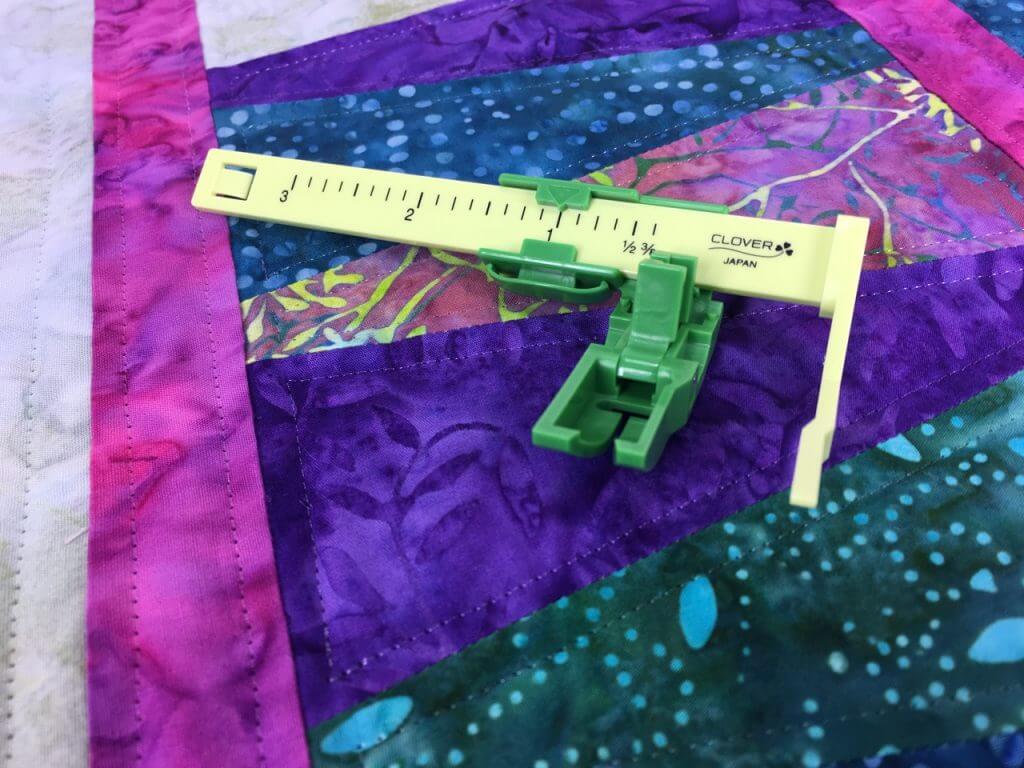
Handbags. Many of us are, well, obsessed with them. We have bags for travel, totes for shopping and handbags for special occasions. It's no wonder that I'm sent questions each week on how to sew handbags. To share some of the most common tips that I pass along through emails I've devoted a two-part series featuring "My Favorite Handbag Sewing Techniques." Kicking off this second episode is the cinched tote. Made with double-quilted fabric a continuous strap that weaves in and out of the grommets making it flexible and expandable. "My Favorite Handbag Sewing Techniques" that's what's next on Sewing with Nancy. Sewing with Nancy TV's longest-airing sewing and quilting program with Nancy Zieman is made possible by Baby Lock, a complete line of sewing, quilting and embroidery machines and sergers. Baby Lock, for the love of sewing. Madeira, specializing in embroidery, quilting and special-effect threads because creativity is never black and white. Koala Studios fine sewing furniture custom-built in America. Clover, making a difference in sewing, quilting, crafting, and needle arts for over 30 years. Amazing Designs and Klass needles. Double-sided quilted fabrics are perfect for handbags and totes. Why? They don't have to be lined. The fabric is double-layered "quilted" meaning with a batting in between and because of that this bag just has one layer of fabric. In the bottom, we do have a little base that we made and covered it with contrasting fabric to make that firm foundation in the bottom. But other than that, it's a single layer of fabric. Mainly, what I want to talk about is the cinch bag the draw cord or in this instance, the continuous strap that goes through the eight grommets. You can adapt your pattern to be a cinch bag. I would like to show you the details. During the first episode of this program I discussed the various pattern pieces that we're working with and here they are. You can work with your favorite tote pattern a template pattern, a bag pattern. It really doesn't matter, just something basic. I'm going to be working with this template set throughout the series, making five different bags. You could adapt your own pattern accordingly. So, I use this pattern to cut out my pattern pieces. You may have noticed on the bag and we'll look back at that once again. In the bag, we have some trim, just to accent the seams. And the seam along the pocket top along where the two panels come together we have some piping accents. I like adding piping. Just a little bit of accent can go a long way. My favorite way to create piping is to cut bias strips of fabric that are 1-1/4" wide. "Bias," meaning cut on the 45-degree angle that's been cut an 1-1/4". Then, to make the piping, the first step I don't do any sewing, but just pressing. Because I have, in the middle of the fabric fusible piping, where there's a cording and then a fusible web that has been wrapped around that cording. This is the way it comes in the package and it's really convenient. At the pressing surface I have placed the cording or the piping on the wrong side of the fabric. Match the cut edges, the long, cut edges and then just run the tip of the iron along the edge, along the cording. It fuses down fast. My pattern has a 1/4" seam allowance so I'm going to trim this down to "trim this" being the seam allowance down to 1/4". I would like this to be, totally 1/2" wide. So, you can just align the ruler. 1/4" will be the piping, 1/4" will be the seam allowance. Then, just do the trimming. So you can trim. There we go. You can use just a ruler or there are rulers just for piping that the groove of the piping will fit in the ruler. It just fits in that groove, and then you can do the trimming, too. So, there are a couple of ways that you can address this. There we go. Now, to do the stitching we're also going to use a serger or sewing machine foot that is meant for piping and it has a groove on the underside. When you stitch the piping to the fabric it allows the piping to fit in the groove very easily. Everything fits together. Here is a close-up of how the piping is serged, in this instance along the edge of the fabric. Fast, simple. I like using the serger for double-quilted fabrics. The reason is, it kind of finishes the edges. That serging edge finishes those exposed edges since there isn't a lining in here that finishes the edges. But if you didn't have serger, just zigzag the edges together. So, we've placed piping. Now it's time for the grommets. Now, my pattern didn't have grommets in it but it did have a placement for where the straps are to be marked. I have marked the strap placement on my fabric at the top. When you buy grommets you'll get a little disk, like this. You simply trace the grommet opening. I put it down 1-3/4" from the cut edge the middle of it. Trace around the edges and then cut out the circle. We're adding one in the side. To add that in the side we simply just folded the side panel in half and positioned the grommet in that spot. Cut out the circle, simple as that. Then, add-- there we go-- You add the grommets. Two parts. You kind of have to manipulate it a little bit to make sure that they're lined up. And then, you can use... Use this to press it down. And tah-dah! It's secure and in place. So you'd add eight of these. Eight grommets along the edge. Two in the front, where they've been marked. Two in the back, where they've been marked. And the center one on each side panel, making eight. My next sample has all eight grommets in place. See, four in the front, four in the back just like this. I started to weave through a strap. But before we discuss that you need to know the size of the strap to make. It's 64" in length so cut two crosswise strips of fabric that are 2" wide. Seam together, and cut it to 64". Then, if you saw the first program we used a fusible interfacing that was perforated for straps. On the wrong side of fabric you meet the perforated interfacing. Or, you could just use interfacing. After you press it then you'll be pressing along the perforations so that it's nice and even. Find a trim, ribbon, whatever you'd like to use and top-stitch it to the 64" length.
With this exception
leave 3" at each end unstitched. You can see, perhaps, I have some topstitching just along the trim. So, the 64" length is woven in and out in and out of the grommets. I've already started this. Starting at the back, you can see that I have a long length in and out, of the grommets. You continue to do this for the rest of the bag so that you've gone in and out. I think you've got the idea. It's not too difficult to do. Then, we'll attach the straps. That 3" on each end has not been stitched. You meet right sides together flatten out the strap itself and sew the strap ends with a 1/4" seam. You might guess, I have a sample of that. This little sample has the strap stitched with 1/4". You do the same stitching to the trim and, then, magically, they fit together. Then continue to stitch the trim to the straps so it's continuous. We'll look back at our finished bag. Later, I'll show you how to work with the binding across the top but you can see that with an accent of piping adding grommets and then a continuous infinity strap you have a great bag for shopping and for travel. With a few modifications turn your handbag into a handy yoga tote. This time, with adjustable infinity straps. Not into yoga? Use it for a picnic tote with convenient storage for blanket or make a beach bag option for easy storing of a lofty towel. Regardless, it's a handy carry-all with many possibilities. This is a tremendous gift idea a great gift idea. Personalize it for your friend or a family member. With this yoga tote version you can see that the straps are not attached to the bag. They float. The infinity straps float within tabs. We have eight tabs. Four in the front, four in the back and an extra-long strap. The strap technique that I just detailed for you with a cinch bag is made in the same manner now only making that strap much longer, 120". You're going to cut 2"-wide strips several crosswise strips of the fabric and join them together. Then, make it a continuous strip before you do any sewing to the bag because the strap is not attached to the bag. I made the strap. I stitched down the ribbon, and then sewed the end seams. Now, this is not quite done yet but I just want to show you that you connect it before you do any of the attaching to the bag. So, the ribbon has the seam and then I can do the continuous stitching or continue to stitch, to attach the ribbon to the bag. So, it's 120". Set that aside. Then it's time to make some tabs. There are eight tabs on the bag behind me. We're gonna put those eight tabs on the base of the bag. They're a little bit-- They need to be secure or they need to have some interfacing. They end up being just a little over 3" long 3-1/4" long. They've been folded several times. How I made them, is to start off with a 2" strip of fabric and then use another fusible that has some perforations. This is for binding. You don't have to use this, but it certainly makes it easy. You press it onto the wrong side of the fabric and then press along the long edges. Once, twice, and then fold it again in half. It's a little bit easier to press on a flat surface! So here, it's been folded, folded. Then you just stitch so that these are now 3-1/4" and a 1/2" wide. The base of the bag is made like we did in the first program. If you didn't watch that first program at nancyzieman.com, you can watch that first episode. It's done with two layers of interfacing, a base fabric. And then on the flip-side, we have the tabs in the beginning stages of being attached. You measure up from the top, 3". We're centering this over the seam. From the bottom seam, and here's the bottom seam measure up 4", and then 4" from the side. So, down 3", up 4", over 4", and tack down the outside edge of each tab. I've turned under, you might see about 1/2" of each tab. Then, place the infinity strap, without twisting. You've got to double check that. Place it underneath the tabs and then do another stitch on each side of the tab to hold it into place. You can finish the bag following the instructions. Now, the strap has already been attached. You can see how easily you can place the towel the blanket, the mat, whatever you like to use in this area to give your bag extended room for carrying. It's fun to make and another versatile bag. One of my favorite sewing techniques. Simple details. That's what I like in handbags. Adding a monogram provides an elegant statement without adding clutter. Stitch the embroidered accent on faux leather faux ostrich to be exact and master two new sewing skills while creating one trendy handbag. This is the final handbag of our series. We worked with five different designs having multiple techniques on them. You can see, of course, the monogram which will be the focal point of this bag.
Some trimming ideas
the finishing of the pocket as well as the finishing along the top. All five bags were finished in this way and I'll detail that with you. Now first, the fabric. A lot of people think that when they're working with vinyl or faux leather that you're going to need a special needle. Not so much. You're just going to use a universal needle. Size 75 or 80 is what works out great. You want a small needle. Then, instead of pinning, you're gonna use clips. Hair clips or sewing clips. That's the best way. We don't need a lot of pinholes in the fabric. I do add interfacing to this fabric just like we did throughout this series to give the body of the fabric some weight. It sews through like butter. It's a little thicker, but it sews very well if you make this combination. Now, you're going to choose a monogram idea. Later in this year, you're going to see a two-part series on monogramming so I'm not going to go through all of the movement and working with moving the letters around. Choose your favorite monogram program or letters. I have nested my three initials together from my computer and then placed it into the embroidery machine. You can see that in my memory, I have that set of letters or the trio of letters. I'll just set them. I do know in advance that I have to rotate this. I'm just going to rotate it going in the correct direction. The pocket is going placed my hoop matching the direction of the monogram that you just saw. I did mark the north, south, east, west the center marks of each side of this pocket so I could align it with the hoop. There are many ways to align fabric in your hoop but I just think for a rectangle this is the fastest way. I'm aligning the four marks with the marks on the hoop. Then, I'll just continue to tape it down. You can use a spray adhesive. Personally, taping a small piece of fabric into a hoop is my favorite way. Then, I'm just about ready to sew but we need to talk about the thread. The thread that I worked with was a rayon thread. Let me set this. I think we're about ready to embroider. We are. So, I have it square. I have it stabilized. We are ready to do the sewing. I'll hit start. While this starts to sew-- it's kind of like watching paint dry-- Just let the machine do the work. It just stitches away. As I look on my screen, it's going to take about 10 minutes to do this embroidery. So, we're not going to watch the whole process but we'll watch part of it. In the meantime, I'm going to show you how to do the finishing techniques. This sample has been embroidered with the same initials. I'm going to show you how I add the binding to the top of the pocket, as well as the top of the bag. You need to remove the seam allowances because the fabric is going to just wrap around the finished size. This had a 1/4" seam allowance. So, you would trim that away. Remove this from the back of the stabilizer. This is tear-away, it will just tear away. When we made that yoga tote I used a fusible that created binding. You could use that same thing or your favorite technique from your quilting project. But as a beginner this might be the perfect idea. Just pressing, centering the binding fusible on the wrong side of the 2" strip. The trimmed-off seam allowance is aligned with the fabric. Right sides together, and you clip. You just sew across the top. I have a little shorter sample, but you'd have a sample that would be the whole length. Then, after doing the stitching press up the lower edge, along the fusible interfacing and wrap to the underside. Tah-dah! So, it's a nice finished edge. It'll wrap a little bit lower than the seam. Just stitch in the ditch, sewing along the edge and you have the edge bound. Now, if you're working with a continuous top as we did with the handbags we folded the starting point at a 45-degree angle and covered the fold with double-sided basting tape. Start stitching. Go all way around the curve. Bring this back as we're reaching the ending point overlap this the to the starting point, and press. Finger press, that's all you need to do. Isn't that magical? Then it wraps right around the edge. Again, you do that stitching in the ditch. Sewing in the edge. As we look at our embroidery, it's stitching away. We just have one of the three letters that has been embroidered but on our finished bag we have the embroidery complete the binding at the top of the pocket the binding at the top of the bag. All five of our bags were finished this way giving you some of my "Favorite Handbag Sewing Techniques." Quilting and sewing enthusiasts have a rich history of preserving memories, recording history and teaching all ages to appreciate the culture. Recently, at the Quilt Expo in Madison, Wisconsin I learned how Native Americans honor their heritage through the art of quilting. Enjoy my Nancy's Corner interview. Quilts tell a lot of stories. They keep people warm but they also are great for children to learn about cultures. With me today is Rita Lara from the Oneida tribe in Oneida, Wisconsin. Rita works for the Oneida Museum. Welcome, Rita. Thank you. I'm glad to be here. We are standing in front of an amazing quilt that is a story quilt. Tell our viewers the origins of the quilt and the quilt makers. Okay. The children in the community created the quilt. So, it's a group of boys and girls between the ages of nine and 12. The intent of the quilt was for them to learn more about our culture. So, on the bottom of the quilt is our Oneida Tribal Belt and then up from there is the Tree of Peace. The Tree of Peace has the white roots that reach out in all four directions. The intent of that is that anybody that felt that they wanted to be part of the Iroquois Confederacy would be protected if they believed in peace for one another and an appreciation for the Earth. I think it's important that we learn a bit more about Indian history and the Iroquois Confederacy. That was interesting information for me to learn. Rita, why don't you share that with our viewers, as well? Okay. Our original homelands are in upstate New York. The way that it set up is it's the Mohawk, the Oneida the Onondaga, the Cayuga, and the Seneca. They all have a role that they play. The Mohawk are considered keepers of the Eastern Door and the big brothers to the Oneida. The Onondaga is where all the Chief Consuls go to meet when they have meetings. That's part of our traditional government that still exists today. Then it goes on to the Senecas and the Cayugas. The Cayugas are the keepers of the Western Door and the big brothers to the Seneca. It's really fascinating. That's how you were teaching with this quilt to the youth of your nation about your government their history and their culture. You have some tribes that are represented-- Clans. Clans, excuse me. Tell us about the three clans. For Oneida, our clans are Turtle, Wolf, and Bear. We're a matrilineal society. So, when the Europeans came over they had their last names from their father. Well, for Iroquois, we get our clans from our mother. So, that's how you associate the family. So, let's take a look at the Wolf and the Turtle and then the Bear. They're cute depictions of the clans. And the tree and the beading is really quite fascinating. The beading is actually raised beadwork which the Iroquois are well-known for. The reason it's called raised beadwork is because its layers of beads beaded on top of other layers. Or, there are some that are puckered up which means that you bead them and then you don't leave enough space to where it's flat you bead it so that it comes close back to where you started from, and it has a loop and it lifts up. This is the raised look here, that you have in-process. It's beautiful. Thank you. The children did some of the work or almost all the work, along the border areas. Yes, the children did all of the work. They each have their own design that they did. They learned a lot. Then they signed the quilt. Yes, they did. On the back you will be able to see a lot of signatures. And their age. They weren't really all that old working on this. No, the children were between the ages of like nine and 12. Yes, so they did a remarkable job. Yes, they did. Story quilts. So many cultures have story quilts. What a great way to preserve information create memories, and have a sense of pride. Exactly. Rita, you you've done a lovely job to share this with us. I've learned a lot and will look forward to coming to the Museum. Oh, great! Thank you. Thank you for being with us. You're welcome. Special thanks to Rita Lara for giving us insight into the Oneida Nations special quilting project. Remember, you can rewatch this episode and also four seasons of Sewing with Nancy programs online at nancyzieman.com. At that site, you'll be able to follow my blog and connect with me on social media. I hope you've enjoyed this series on my "Favorite Handbag Sewing Techniques." Thanks for joining me. Bye for now Nancy has written a fully illustrated book that can be used to create the designer handbag techniques featured in this two-part series. The book is $14.99 plus shipping and handling. To order the book, call 1-800-336-8373
or visit our website at
sewingwithnancy.com/2901. Order Item Number BK2901 "Nancy's Favorite Handbag Techniques" Credit card orders only. To pay by check or money order call the number on the screen for details. Visit Nancy's website at nancyzieman.com to see additional episodes, Nancy's blog, and more. Sewing with Nancy TV's longest-airing sewing and quilting program with Nancy Zieman has been brought to you by Baby Lock; Madeira Threads; Koala Studios; Clover; Amazing Designs and Klass Needles. Closed captioning funding provided by Pellon. Sewing with Nancy is a co-production of Nancy Zieman Productions and Wisconsin Public Television.
The latest from Nancy's blog

Search Sewing with Nancy Episodes

Donate to sign up. Activate and sign in to Passport. It's that easy to help PBS Wisconsin serve your community through media that educates, inspires, and entertains.
Make your membership gift today
Only for new users: Activate Passport using your code or email address
Already a member?
Look up my account
Need some help? Go to FAQ or visit PBS Passport Help
Need help accessing PBS Wisconsin anywhere?

Online Access | Platform & Device Access | Cable or Satellite Access | Over-The-Air Access
Visit Access Guide
Need help accessing PBS Wisconsin anywhere?
Visit Our
Live TV Access Guide
Online AccessPlatform & Device Access
Cable or Satellite Access
Over-The-Air Access
Visit Access Guide




Follow Us