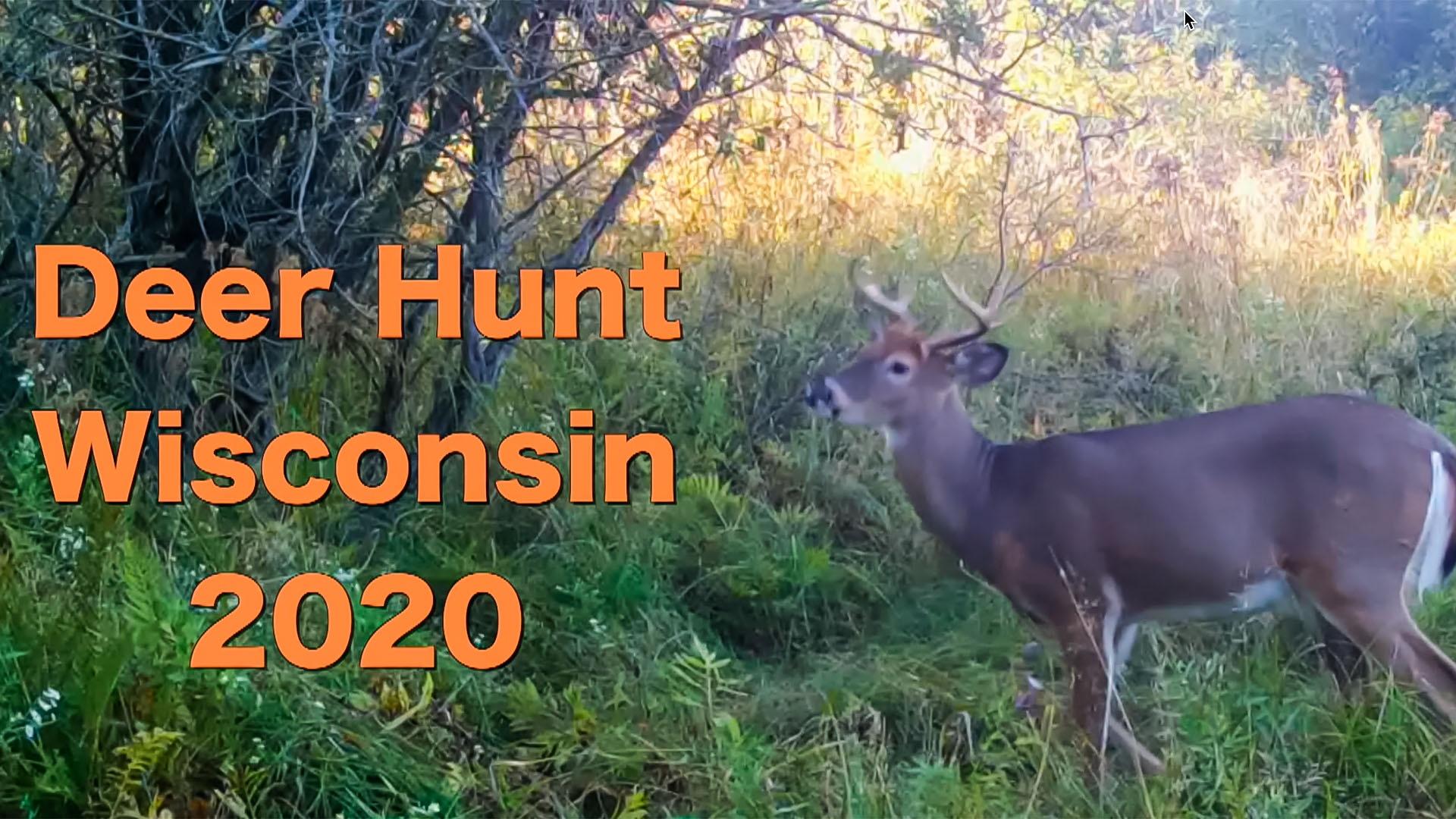
(gentle acoustic guitar music) All across Wisconsin, hunters are gearing up for the 2020 gun deer season. For many of us, the annual deer hunt is a tradition that brings friends and family together each November. Some friends won't be with us this year and we'll miss them. Let's pledge to carry on the tradition as they would have wanted us to. We dedicate this year's show to the memory of Dave Cook. We'll be thinking of you, Dave, as we hit the woods this fall. In this year's show, we'll meet several hunters who share the story of their successful hunts from last season. We'll also look at opportunities for physically challenged hunters and as always provide a hunt forecast for each region of the state. I'm Dan Small, welcome to Deer Hunt Wisconsin 2020. (upbeat acoustic guitar music) Many deer hunters wouldn't miss opening day, let alone the entire season, but some hunters give up hunting for a variety of reasons and some return to the sport later, often with the help of her friend or relative. Charles Beedlow gave up hunting and then he came back to it thanks to help from his friend and mentor, Joe Russo. -
Charles
Well, I grew up hunting. My father, he grew up in Ohio and that was part of his family tradition growing up. And it was something I was very eager to do as a child. I went hunting with him many times even before I could legally go and just kind of observe what he was doing and the excitement couldn't compare to the first time that I saw him take a deer. It was so exciting to me to see that. And I wanted to do that so badly, and I did, my first year where I could hunt, I legally took a deer, but he passed away in my middle teens and at that point, just going out in the woods was a sad affair. I bought a license the next year and I sat in the tree stand and I just thought to myself, "Why am I even here?" Without him, it wasn't the same. About 15 or 16 years passed and I was talking to Joe Russo. I've known Charles since he was in seventh grade so we've always been in close contact. Charles came over, probably it was about a year ago maybe and he said, "I want to start doing some things with hunting", and I have 80 acres of property out here and I said, "Hey, you're welcome to come out hunting on my property anytime you would like". And so he set me up in one position on his property while he was on the opposite corner of the property. I was sitting on my stand this morning and I said to myself, "The most important thing today for me would be for Charles to be successful". One of the reasons I feel that way is because it's been over 10 years. Charles' father passed away and I know he hadn't been hunting since that time. And I know he really enjoyed it and here he was going to give it a try again. The buck came in, a little spike and I was able to turn around and get a good shot on him. You know, few bounds later, he was down. I heard the shot that seemed like it was from the direction where Charles was sitting. I decided to take a walk and when I got down there, I looked at Charles and I gave him the thumbs up and he gave me a thumbs up and he showed me that he had gotten a spike buck. I was just overjoyed by that. I know Joe Russo because he was my high school shop teacher. And so he's been a positive influence in my life and I was glad that he was happy to hunt with me today. This year, deer hunting regulations are combined with regulations for small game, waterfall and turkey hunting in one booklet, which you can pick up at any license vendor or download from the DNR website. There are just a few changes in this year's regulations. The list of counties closed to baiting and feeding changes depending on where new cases of chronic wasting disease are found. The list of counties that offer an antlerless only hunt and or extended archery and crossbow season has changed. And there are three bucks only deer management units for 2020.
All deer taken must be registered by 5
00 PM on the day after harvest and you'll need your harvest authorization number to do that. You can register a deer easily online or by phone. Instructions are printed right on the harvest authorization tag. You may also register a deer at participating walk-in stations. We'll have a link on the Deer Hunt Wisconsin Facebook page, or look for one of these deer registration station signs. This year, the nine day firearm season runs from November 21st through the 29th. The muzzle loader season runs for 10 days immediately following the gun season, November 30th through December 9th. In all Metro zone subunits, the firearm season runs through December 9th. Some Metro sub units offer free antlerless harvest authorizations so check the regulations for these changes before you hunt. The four day statewide December antlerless deer hunt will run from December 10th through the 13th. The antlerless only holiday hunt runs from December 24th through January 1st in all or part of the 32 farmland zone counties shown on this map. To participate, you or someone in your party must have an unused antlerless harvest authorization for the unit where you're hunting. Women and girls make up the fastest growing segment of the hunting population. Some women are born into hunting families while others become hunters as adults. Lori Wittkopp, who hunts with her husband and two sons on both private and public land, killed her first buck with a bow last fall. And her son caught some of the action on video. -
Lori
All deer taken must be registered by 5
I was pretty excited about shooting my first buck. We all went out together. Gunner was sitting not too far from me and this buck was by his stand and then it came over towards me, and after a little bit of waiting, he presented himself with a good shot, good clean kill, and so I took it. And then he ran about a hundred yards and that was it. I see the white belly. My first buck with a bow. I got into hunting with my dad and then my brother, and then I met my husband and we've been hunting together for 20 years. We all get ready together, we all go out together, we all have our own CNO. Hunting on the electric bikes has changed a lot for me. It used to be a half hour walk, now it's like five minutes from here. I used to get pretty sweaty, you know, if you have to wear a lot of clothing, you have to carry heavy gun. Now I don't even get warmed up. I love the electric bike. When I was young, hunting was just part of what we did. To me it was a normal thing. I say try it. I mean, it's another thing that you can do with your family. It just brings you closer together, it's fun. Like Lori Wittkopp, most bow hunters and many gun hunters today hunt from tree stands. And if you hunt on public lands, you'll see more bucks if you put your stand where other hunters are unlikely to go. Here's Michael Murphy of Whitetail Sanctuary Solutions with some advice on choosing a good spot for a stand on public land. There's a lot of information out there for you to utilize to determine that perfect spot for your hunting stand. One of the options you have is aerial views, contour maps, you can get those on Google, you can find it on the internet. You can go to map stores and there's many phone apps as well. Once you collected that information, first thing you want to do is look at a spot where no other hunters want to go. The number one thing that mature bucks avoid is human pressure. So you're looking for a spot that's not easy to get to. If that has an elevated area that's surrounded by water and you have to walk through water to get there, that could be a great location for mature buck to bed. An island in the middle of a marsh is an ideal location for a stand. Look for natural pinch points that funnel deer into an area like this well-used trail, with woods to the right and the thick swampy area to the left. This is a great location for a stand. When you're looking at that public property to hunt, don't overlook a great piece of information that's out there and that's the private land owner that lives nearby. Meet with those neighboring property owners to determine how the deer are accessing that land and get them a gift certificate as a thank you. Now that you have this information, you can utilize this to take that large hunting parcel and reduce it down by 75% to determine your scouting area. Scouting public land is a must. Be prepared for a long walk and wear the gear that you're going to wear when you're hunting so you work all the kinks out before that hunt. Do your homework and you will be rewarded. (upbeat acoustic guitar music) Northern Wisconsin has a variety of habitats from farmland to large blocks of forest and deer numbers vary across the region. Last winter, some areas saw mild conditions while others experienced their second severe winter in a row. Forest, Northern Marinette and Northern Oconto counties have bucks only hunting this fall. In all other counties in the region, some antlerless tags are available. Areas that experienced mild to moderate winter conditions last year can expect to see an increase in deer numbers, but areas where the winter was severe last year, you'll see fewer deer this year. Heavy snow during last year's gun season in parts of the North decreased the harvest so hunters can expect to see more mature bucks there this year. Spring green-up was early, quick and lush, providing much needed forage for winter stress deer, which appears to have helped fawn production across the North. Public land is abundant in county, state and national forest and hunters looking for new areas to hunt on public land should seek out five to ten year old aspen clear cuts and areas with a lot of mature oaks as this year's acorn corn crop was another good one. (upbeat acoustic music) Most of the Northeast district experienced six mild winters in a row, and there was strong fawn production this year throughout the region. Habitat ranges from Northern hardwood forest to flatter agricultural and wetlands complexes in Winnebago, Fond Du Lac and Calumet counties. In most of the district, you'll be allowed from one to five antlerless authorizations and biologists are urging you to take at least one antlerless deer, where this is allowed. Pre-season scouting is a good idea as high water along the Lake Michigan and Green Bay shorelines and in forested wetlands will make access difficult in some places. Not everyone has access to private land where they can establish food plots and waterholes. Many of us hunt on public land. But as we saw earlier, that doesn't have to be a handicap. Here's how one successful hunter scored a nice buck last season on land open to everyone. It was probably quarter to five this morning when I got up. I thought to myself, "You know, you better get out in the woods. You got a big cold front coming this whole next week and if you don't hunt today, you're going to miss out". I'd really like to hunt this public land area. Never have I hunted there before. I saw a car deer accident there about two or three weeks ago. An eight point buck was hit by a vehicle. So I thought this would be a good area maybe to try hunting from the ground and maybe getting a shot at a buck. I went in where I was a tree and I drug some brush in around me that had fallen in the area and I made a little nest and I sat there, got my grunt call and gave a series of grunts. (grunting) It was probably maybe two minutes later I heard a twig snap and it was a buck caught the movement that I had made, but still couldn't make me out with the snow camo on. It started moving through the field again and at that point I thought, "I'd better take a shot". I had to shoot between two trees, actually had to cant the bowl so I could shoot through the trees. I made the shot, I heard that that hollow thud you hear when an arrow impacts, so I knew I may have hit. How good it was, I wasn't sure. So I waited 10, 15 minutes before I actually went out and I checked for blood, and where I went, where the deer was standing, sure enough, there was blood there. I backed out, sat in my stand for another half hour, 45 minutes, then went back and checked again and sure enough the blood trail got heavier and heavier. I walked maybe 150 yards on a pretty good blood trail and ended right here with this buck. So it was just an awesome morning. Public land, anybody can hunt it, nobody does. I went in there and was lucky enough to make it all happen. Not the biggest buck in the world, but it was an awesome morning, a lot of fun. The mentored hunting program allows hunters of any age to obtain a license and hunt without first completing a hunter education course. Regardless of age, the hunter must stay within arms' reach of a mentor and comply with all hunting laws. The mentor must be at least 18 years of age and is subject to other restrictions outlined in the hunting regulations booklet. In addition to the mentored hunting program, Wisconsin has increased efforts to recruit, retain, and reactivate hunters through the learn to hunt and learn to hunt for food programs. These programs train novice adult hunters with demonstrations, hands-on field instruction and a one-on-one hunting outing with an experienced mentor. No licenses or hunter education certification is needed to participate. (acoustic guitar music) Deer numbers are up in most Southern counties and hunters will have plenty of opportunity to fill the freezer this season. Deer habitat varies greatly across the South however. Deer are more abundant in the Western and central counties, but mature bucks can be found all across the district. Most deer in the Southern district are taken on private property, which makes up more than 90% of the landscape. However, excellent deer hunting can also be found on county, state and federal land here. (upbeat acoustic guitar music) The landscape of West central Wisconsin offers some of the most productive deer habitat found anywhere in the US, with rolling valleys, fertile farmland, big rivers and wooded ridges. Last winter was mild throughout the district with very few days of deep snow to restrict deer movement and few periods of sustained below zero temperatures. Fawn production was good and deer numbers are on the increase throughout the district. As corn and soybeans are harvested, deer will relocate to Oak forest and other natural food sources. The harvest was down in this district as well last year due in part to the late opening date into late corn harvest. Many deer, including some big bucks that would have been taken last season, will be available to hunters this year. Scouting is an important part of preparing for your hunt of course, and if you own your own land, you can also create food plots that attract deer to your property. Aaron Zwiefelhofer involves his whole family in every aspect of the hunt from start to finish. It's a great help having the whole family. My son, Alex, to my daughter, Amber, to my wife, Raena, my stepdad helps a lot. Sometimes my brother helps a little bit. In fact, I couldn't do it by myself and you need to have somebody to help you and my family has always been there for me and it's fantastic. There's a lot that really goes into a hunt. It's not just sitting up there in the stand. There's a lot of work owning your own land that goes in prior to being up there. Recently, we purchased a tractor and we've had a four wheeler so we've been farming the land now for two years and doing food plots and corn. It's a lot of work, but it is all worth it when you get that deer down and it's a big deer. I used to watch my husband practice bull hunting in the backyard. Didn't grow up around guns, didn't grow up around hunting, so I wasn't sure if it was something I wanted to try, but the archery aspect of it actually really intrigued me. And still, even after I purchased the bow, learned how to shoot and felt confident enough to go sit in a stand, I still was unclear as to whether or not I still would be able to hurt an animal, but that all came very clear once an animal actually presented itself in front of me. So that night, Amber and I were sitting in the tower together and early on, we had quite a few deer coming out and then at the very end of the night, we had this nice 10 pointer come out. It was coming out into the field and it was eating and I really couldn't decide if I should take a shot or not, because I don't know, it's early in the season and I really didn't want my season to be over yet. I just decided that Amber was with me and I wanted her to experience it so I went ahead and took a shot. When I am tracking deer, I love to look for a blood. I don't know, it's like the excitement of just trying to find someone's deer. -
Alex
All deer taken must be registered by 5
Are you excited? -
Raena
All deer taken must be registered by 5
Yeah, I'm excited, it's great. -
Amber
All deer taken must be registered by 5
I have tracked every single one of my family members' deer before so that's always a nice experience. -
Aaron
All deer taken must be registered by 5
We've owned this land for about 14 years. When we first purchased it, my son, Alex, was one year old and it's been great watching him grow up and come out here every year, from the times that he was three years old and it seemed like I was dragging him through the woods rather than him following me. Now that he's older and he's off, he goes off hunting on his own and it's just a great sense of pride for me to watch him walk away off to his own stand. I was kind of born and raised into the hunting family. It really is a family experience. As I grew up, I started to go out and sit with my dad. That was always fun. I always loved the thrill of seeing a deer. It really calms me and then when you do see a deer, it's a new type of excitement, it really is. -
Raena
All deer taken must be registered by 5
When we bought this land, we knew that we wanted to incorporate into raising our children as far as teaching them the importance of giving back to nature, family togetherness, hopefully maintain that as they get older and we want them to carry that tradition along. I hope that my kids end up hunting for the long-term. If they don't, that's fine because everybody's their own person but I think hunting is a great way to spend time with your family. It's something that the kids will remember for the rest of their lives. It's something that my wife and I can be proud of teaching them how to hunt. And it's not just about hunting, it's spending time together. It's spending time at the cabin. It's really about memories more than anything and those are memories that nobody's ever going to forget. Not every hunter can get around in the woods easily. Hunters with a physical disability are especially challenged, but there's a mode of transportation that can make it possible for almost anyone to get out and hunt. Here's Monica Spaeni, Founder and President of Access Ability Wisconsin to show us how easy it is to hit the woods in a tracked outdoor wheelchair. It was phenomenal. For the first time being a wheelchair user, I could actually move around on the ground and not have to worry about falling out. I could go through grass, I could go through the marsh, I could walk or roll by myself. It was frustrating in a regular wheelchair, because then if there was a harvest, I had to sit and wait for the truck to come and somebody to lift the blind, get back in the truck, then see what they brought to me, where in this chair I can go where the harvest is so I get to live the whole experience and that in and of itself is incredible. As a hunter, I've been very successful, pheasant hunting, turkey hunting, I got to go to Wyoming and I harvested a mule deer and an antelope before a Wisconsin white tail, can you believe that? And I was also lucky enough to be awarded the Pathfinder award from Safari Club International and I got to go to Africa and take a blue wildebeest, a black wildebeest and a variety of other animals. I also use the outdoor wheelchairs to bird watch, to fish from shore where it's on level ground, to take my dogs for a walk, to hold my husband's hand while I'm going anywhere I want. We are able to not have people worry about us falling out of our chairs, so it's freeing to know that we can go where we want to go and we can go over logs and through the water, or we can just go sit quietly in nature and just watch. The people who love us normally don't want us to be outdoors by ourselves because they know something could possibly happen in an everyday situation where we might be using a wheelchair, a walker, a cane, or have heart issues, so this allows a freedom and independence. You're able to be outdoors and experience the outdoors almost like walking again. The DNR is conducting a multi-year study on the impact of chronic wasting disease on deer populations in Southwest Wisconsin. Researchers have put radio collars on more than a thousand deer, bobcats and coyotes. If you hunt in that area, collared deer are fair game and if you shoot a deer with a radio transmitting collar, call the number on the collar so researchers can retrieve it and provide information on your deer. Hunters are encouraged to have their deer tested for chronic wasting disease, especially in surveillance areas surrounding the locations of recent CWD positive deer. Chronic wasting disease sampling stations are located around the state and some are staffed by DNR personnel or registration station employees, but many are self-service kiosks. Before you head into the woods this season, be sure to site in your firearm and you can do that at a number of private and public ranges around the state. And whenever you're handling a firearm, remember to practice the four rules of firearm safety summarized by the acronym TAB K. Treat every firearm as if it's loaded, always point the muzzle in a safe direction, be sure of your target and what's beyond it and keep your finger out of the trigger guard until you're ready to shoot. If you haven't already done so, consider switching to non-toxic ammo this season. Lead core bullets like those commonly used by most deer hunters can leave enough lead fragments in the meat and end trails of deer to poison eagles and other scavengers that feed on gut piles and deer carcasses. Studies have shown that non-toxic all copper bullets mushroom evenly, don't fragment like lead, and are equally effective at normal hunting ranges. You'll find links for more information on the Deer Hunt Wisconsin Facebook page, and all the segments from this year's show on our YouTube channel. I'm Dan Small, thanks for joining us. Have a safe and successful deer season. Most deer in the Southern district are taken on harvest...(laughing) (upbeat acoustic guitar music) And they're equally as effective at normal hunting ranges. (upbeat acoustic guitar music) Oh, sorry about that. (upbeat acoustic guitar music)









 Passport









Follow Us