








PBS Wisconsin Passport
Watch this video with
PBS Wisconsin Passport
Become a member of PBS Wisconsin, support your local community, and get extended access to PBS shows, films, and specials, like this one.


My New Orleans Kitchen
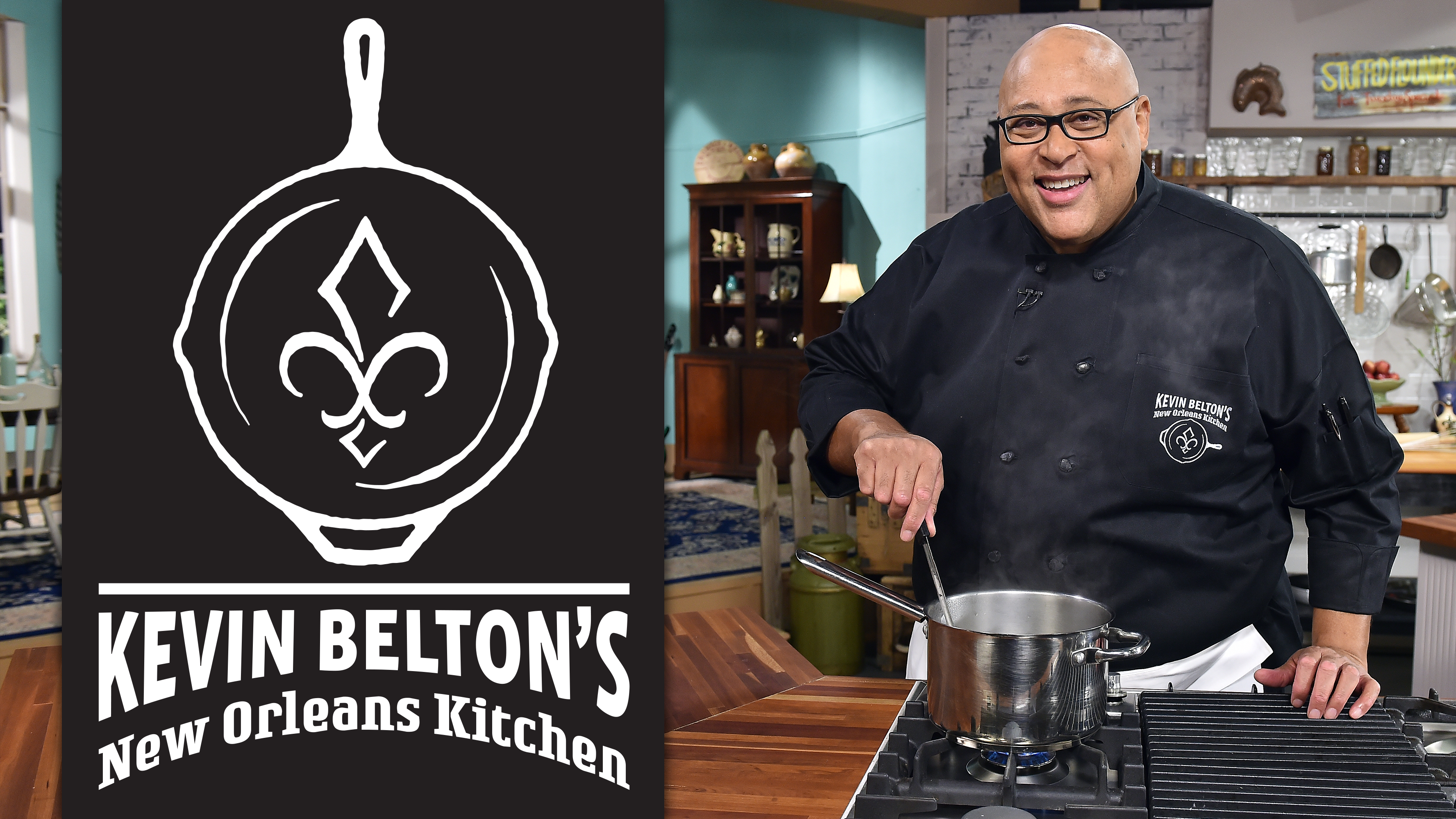
-Funding for "Kevin Belton's New Orleans Kitchen" was provided in part by the L.E. Phillips Family Foundation Incorporated, and by the St. Tammany Parish Tourist Commission. Located 40 minutes from New Orleans, the Northshore's Tammany taste features the chefs and farmers, brewers and bakers of St. Tammany Parish's culinary scene. Learn more at LouisianaNorthshore.com. Additional funding was provided by Welbilt -- bringing innovation to the table. -I'm Kevin Belton. And today in my New Orleans kitchen, we're gonna make three of my favorite dishes from my hometown. We're gonna go to the swamps, get a little crawfish, and we're gonna put 'em in a pie and make crawfish pie. Also, went fishing, got some flounder that we're gonna stuff and bake up in the oven. And to finish it off, we're gonna do banana fritters. We're going bananas! Let's get cooking. Hi. Welcome to my New Orleans kitchen. We are having another great day here, in New Orleans, and we're gonna start off with crawfish pie. Now, it's not the typical pie that you might think of. You know, you think of apple, strawberry -- all of those type things. This is gonna be nice and savory. So, in our pan, what we want to start with is a little butter. Now, I have a stick of butter. We're gonna get this in. I've had the pan heating up. Can you hear that little bit of sizzle? So, before our butter totally melts, we're gonna get in. We're gonna put in about a cup of onion. I'm doing a little yellow onion. You could use a Vidalia. You could use a red onion, if you like, because it's all about the flavor. So a little bit of bell pepper, just about 1/2 cup of bell pepper into that. And we're also gonna add a little bit of green onion. And if you notice, when things start to heat up, they get such a vibrant green in color. Now, this is all gonna contribute to the filling, okay, that we're gonna make for our crawfish pies. So now let's add some more family members to the pie. Of course, a little bit of our Creole seasoning that we have down here, in Louisiana. We're gonna put in a little bit of seasoning, a pinch of salt, little bit of black pepper. And if you use white pepper, red pepper, black pepper, it's all good. And we have some moisture in the pan. Now we can go a little garlic. Now, we can do teaspoon. We can do a tablespoon. And if you really like it, you could do 2 tablespoons. So, always go with it to your taste. But you don't want to put your garlic in too early because of the fact that we want that garlic to have some moisture so it doesn't dry out. So while this is cooking and reducing down -- Well, not reducing, but we're just gonna get those to sweat out and get some moisture -- let's take care of our stock and cream that's gonna help thicken this. So, here we have a little seafood stock. We could use a little vegetable stock, if you want, a little chicken stock. So, I have about a cup of stock, and we're gonna add in a cup of heavy cream. You don't want to use a half-and-half. You don't want to use 1%, 2%. You want cream because we want this to reduce down to help thicken up. So, our vegetables are sauting. This is gonna add flavor to it, plus it's gonna give our filling some body, which you're gonna see. We're gonna slowly add the cream and our stock to this. Just do it really slow. We only need about a cup of this. And you know, depending on how much you're making, you could always add more. So now, a few more things here. We're gonna add a little hot sauce, which adds flavor. A little touch of parsley -- just about a tablespoon of parsley down in there. And now, as this cooks down, this is gonna thicken. We want to reduce this down just for about five minutes for it to thicken. Now, if you've never eaten crawfish, picture a lobster, shrink it down to that big. Meat's in the tail -- That's where it's coming from. Texture of shrimp, but a little sweeter than shrimp. So, our crawfish tails, about a pound of tails. And we're just going to go ahead, put this in, let this heat up. Oh, my. So as this cooks down, you see all of our flavors have blended together. Let's turn this off because now that this has thickened up, we want this to cool down a little bit. Now, let me show you a little something. I've taken puff-pastry shells. Basically, I had the oven set at 350 degrees. I took them, took a fork, poked little holes in them, baked them in the oven just for 8 to 10 minutes. Okay, we just want them to puff up. And now all we're gonna do is take off our lids. See, those pop right out. So this isn't your typical kind of pie where you think, "Oh, it's going in a pie shell." This is great to have as appetizers. You can do this for a party. You know, these little puff-pastry shells, you can get them small, you can get them big. They could be a snack. They could be a full-on meal. Now we have our shells open. It's time to fill them. So, we've let our filling cool down just a little bit. And, you know, I didn't want to get rid of our seasonings just because of the fact that we want to taste this before we put it in, in case we have to adjust it. Remember, you can always make little adjustments... as you're cooking. Oh, that's wonderful. Now, what we're going to do -- We're going to take some of this, put it directly in. And, you know, it's all not gonna fit in, so it'll run over the sides. That's all right. That's what we are looking for. Just stack that on in. You know, something I've done with this at home -- I've made this with shrimp. I've made this with vegetables. I had some extra vegetables I had on the grill, and I've done it with vegetables. So you can do it with vegetables, You can do it with shrimp. You can do with chicken. You can do it with whatever you like. Now... We're gonna stick this in the oven. Once I took the puff pastry out of the oven, I cranked up the oven to 400 degrees. Now, we just want to put this in the oven for 10 to 12 minutes, just for that filling to heat up and get bubbly all inside. Oh, look at that. See, this is a crawfish pie. But, you know, there's a very similar dish that is often done here, in New Orleans, called an oyster patty, and they were used as appetizers when you had friends coming over for a party. So look, let's just put our crawfish pies down. Some folks like to take a little extra sauce and put it on the top. But here, we're just gonna finish this off -- just a little touch of parsley. But if you want, you could put extra sauce in the bottom of the plate. So here we have our New Orleans crawfish pies. Coming up next, baked stuffed flounder. Baked stuffed flounder. You know, as a kid growing up in New Orleans, I remember going out to eat with my parents and friends and everyone, and there was this wonderful thing on the menu called stuffed flounder. Now, as a kid, I always ate fried shrimp and looked at this dish, and I figured, "Ooh, this is a dish I could eat when I get to be an adult." But I'm gonna show you how to do this. This is something that we all grew up with. Of course, little bit of butter. Now, what we're gonna work on here -- This is just a couple of tablespoons of butter. We're gonna work on our filling. So into our butter, just about 1/4 cup of onion just for a little flavor, about 1/4 cup of bell pepper. And we just want this to saut down. Now, remember, this is gonna be a seafood stuffing. So yes, we're gonna put seafood on seafood. And of course, when you cook, we have to season -- not too much because we're gonna season other places. Now, this is a stuffing that is done with flounder. And, you know, it's a shame, because growing up, every seafood restaurant out at Lake Pontchartrain had this dish, and you just don't see it much anymore. But flounder is such a great and wonderful fish and don't worry. You're gonna meet the star of the show in just a minute. So, our shrimp are gonna go in. Basically, I've taken our shrimp, given them nice chop, and since it's going inside of the fish, we just want to saut this off just for a little bit. We want to barely get it cooked because if we put the shrimp in raw, it may not cook all the way through. Our fish will cook before the stuffing gets cooked all the way through. So that's why we just want to saut our fried shrimp a little bit. Of course, season as we go. The other thing that we're gonna stuff in this is a little bit of crab meat. Now, lump crab meat is very pretty, and we use that to top fish. But, you know, flavor comes from the claw. That claw meat is nice and sweet, and that's why we're gonna use claw meat in this. But if you notice, look at our shrimp. Our shrimp are just starting to go from that translucent color to a bright pink -- That's all we need. We just want this to go ahead, barely get our shrimp cooked. Look, we can go ahead and turn our fire off. We're gonna take our crab meat, throw our crab meat in. And, remember, we want claw meat, okay? So, about 1/2 pound of crab meat, a little pinch of salt just to add a little more flavor to this, okay? Now, to help bind this and keep it all together -- You notice this is a nice, bright, light color? Now, into this, while this cools for a second, let's add a little bread and cream to it. I've taken our bread, and I've just cubed it just a little bit. I've run it in the oven just a slight bit, just to give it a little bit of firm texture. We can put our cream in. And basically, I have about 1 cup of bread, 1/4 cup of cream. And we want to stir this in. And take your spoon just to kind of get this moist. Now, if you accidentally put in too much cream, go ahead and just squeeze it out. But here, if you notice, this gets all absorbed. Now, into this, of course -- remember, this has no flavor -- a little bit of our Creole seasoning, a little seasoning, a little bit of salt. This'll give our stuffing a little binder. But now we can go ahead and add this to the stuffing in our pan. Let's just stir this in. We just want to get this incorporated. That bread gives us a little bit of body. With that little cream in it, it gives a little moisture to it. And now here, we can just let this sit and cool and introduce you to the star of the show. Now, if you aren't familiar with the flounder -- A flounder runs flat. It's similar to a sole. But it runs flat, and if you notice here, I've taken the top. See, white on the bottom, because this is the side it swims on, okay? Never gets any sunlight. It's pale there, so all the flavor's here on the top. I've taken my knife and run it right down the center, and I've created a pocket. See, there's the spine running right through the center. This is why stuffing the flounder is so great, because as the fish swims, it swims on its side, both the eyes are right on top. So here, we want to take a little bit of our Creole seasoning, put it on the inside. You know, and with fish, you want to season both sides of the fish. I put a little butter in our pan that we're gonna bake it in. But you know, everything has two sides so you want to season both sides really well. A little bit of our seasoning, now we're gonna stuff our wonderful flounder. See, this is why we want to make that pocket, because now we can take our spoon and just take all of that filling and just press it down in here. And I know it may not look like it'll all fit, but just take the back of your spoon and press it in. This is what made it look so impressive as a kid, because it sat open. And you're like, "Wow! That looks so wonderful!" But look at the flavors we have. You know, out of Lake Pontchartrain, we get such great and fantastic flavors coming out of the lake. And this is taking some of them -- the blue crabs that come out of the lake, the shrimp that come out of the lake -- and this is just making all of this so wonderful. Oh, look at that. Now we'll take a little more. And it's okay if we have extra dressing. We can use this for something else. So if it makes extra, that's fine. But we just want to pile it on and just press it into place. And you see, that's why this is such a wonderful dish to stuff, because of the fact that we've created that pocket. Make sure you press it down in. Now, I've taken some lemon slices. We're just gonna place these on the top. And before we put this in the oven, what I want to do is, I want to run a little bit of butter over the top of it. That little bit of butter will keep that fish from drying out. So I've just melted just a tablespoon of butter. And we're just gonna pour this just lightly over our fish because this'll give it a nice little shine and it'll keep it from drying out, okay? Now, I've preheated the oven to 400 degrees. We're gonna put this in the oven for about 20 to 25 minutes. Some flounders are bigger than others. So, we can do this with other fish. If you don't happen to have flounder, you could do this with redfish, you could do this with catfish -- any mild, white, flaky fish. But flounder is perfect for this. It's what we know in New Orleans. So, we're gonna put this in the oven, bake this off just to get it cooked enough. And we want our filling to heat all the way through. That's why we went ahead and precooked our shrimp, so our fish just has to cook. Now let's make a nice herbsaint butter to go on top of this fish. So, I've had our skillet heating up. We're gonna put in a little bit of canola oil. And something we're gonna use is shallots. You know, shallots are a very mild onion. So, just a little bit of oil to coat the pan. We just have about 1/4 cup of shallots in there. And we, basically, just want to cook this down to release the flavor of those shallots. Oh, if you could smell the sweetness coming off of this. The other thing, you know, in New Orleans, we have a dish called oysters Rockefeller. Herbsaint was often used in oysters Rockefeller. That's where I got the idea of using herbsaint in this. So, we're gonna take our herbsaint... We'll put in about 1/2 cup of herbsaint. And because we don't need a lot of it for our sauce and we want this to boil, basically, we're gonna reduce this. Reducing is, you're pulling out the moisture, and the flavor's intensifying. So we want to reduce this by half. Oh. See? That is just starting to reduce by half. Now, we're gonna do something here where we're gonna go in with a little splash of cream. All right? Not too much. We just want a little cream in, just a few tablespoons, just to kind of cream that together. A little bit of hot sauce, a little bit of Worcestershire. And now the star of the show -- butter. By putting in the butter off the fire, this is called creaming out. This is what makes sauce thicken up. So as this butter melts, it's gonna thicken our sauce and it'll be a nice topping to go on top of our fish. It looks like we've used nothing but cream. But, actually, it's the butter that's creaming this out. So of course, as we cook, we have to take a little taste. And this is one of those things where, with the butter, you can always add more. But you don't want too much butter. Oh, that's a nice flavor. Just a little pinch of salt. And now our sauce is ready. We can go ahead, and we can get ready to plate up our fish. The fish is ready, and it is looking fantastic. Oh, look how pretty you are. Look at our flounder. You can see our flesh is nice and cooked right on the top, our filling is nice and browned off. Now let's just finish this off -- a little bit of our herbsaint butter. And we just want to spoon this right over the top. If you like a lot of sauce, you could do a lot of sauce. You know, we could take our lemon wedges and put some lemon wedges around it to add a little extra lemon to it. But so classic, New Orleans baked stuffed flounder, that I hope it comes back and make an appearance again. So, coming up next, banana fritters. You know, in New Orleans, we have always had bananas. Our port sitting right here on the Mississippi River -- Bananas always came into the port. So one of the things I love doing with bananas is doing them different ways. So today, we're gonna do a banana fritter. So, about 1 1/2 cup of flour. We're gonna go in with a couple of pinches of salt. You know, salt in desserts give that little sweetness. It tweaks the sugar a little bit. We're gonna put in about a tablespoon of baking powder. And we're gonna also get in a couple tablespoons of powdered sugar. Because we're making fritters, we want a little sugar in this flour. You know, some people eat bananas green. Some people eat them bright yellow. You want bananas, for this dish, a little spots on them because when they start to spot, that means the sugar's coming out of them. So, let's continue. We have our egg, and we're gonna put in about a cup of milk. We're gonna just work this together. I'm also putting in -- You know, lemon juice brightens up food. This little bit of lemon juice will add such a wonderful flavor, and it'll make that flavor of the bananas just pop. Let's slowly put this mixture into our flour. Just want to get that in there. Now, this is gonna be kind of a -- not a sticky mess, but just to incorporate. And we can always, if we need to, add a little more milk, if it's dry. If it's too wet, let's go ahead and put in a little more flour. So now I've taken our bananas that were nice, spotted, and brown. And even, they can be really brown. And I've just mashed them. So, we're getting in about three bananas in this. You know, this is one of those things where if you like more bananas, put more bananas in. It's gonna be clumpy and sticky, but that's okay. It almost starts to look like a dough because, basically, that's kind of what a fritter is -- a little fried bread. Now, I'm heating up our oil. I want the oil up to 370 degrees. I'm gonna take an ice cream scoop. Our oil is hot, and we just want to take a little bit of the mixture into our scoop and just drop it right in our oil. One of the things about frying is, you wanna make sure that temperature is up high. We don't want to overcrowd the fryer, so we're gonna put about, maybe, five to six in. You can see them, how they are just separating themselves in there. I tell you what, five works perfect. We don't wanna do too much. And what you're gonna notice when things fry, if the oil is hot, it sears it. So we're gonna get a nice, crisp outside. With an inside with that banana and that flour, the banana will give us a softness. At the same time, that flour will give us a little bit of body to it. Look how quick they pop up. So, when they pop up like this, you can just move them around. Make sure to turn them over. This is only gonna fry for about five minutes. That's all we need. You know, I've done this with apples. You can put some apples in -- puree some apples and do this with. Pears -- Now, pears are a little firmer so you wanna cut them up really, really small. But, you know, a really ripe mango -- That mango gets nice and soft, puree it a little bit, and go ahead and put it in. Oh. Let's just have a moment and listen to the sizzle. So, now our fritters are ready. Let's remove them, and we're just gonna put them on paper towels just so they can drain. They've gotten nice and golden brown. And make sure -- The larger they are, they may take a little bit longer to cook. But typically, they only need five minutes. So while these are cooling, let's put in a few more while our oil is hot. We'll get a few more going. You know, this is something where at home, the kids are hanging around and you want to make... Well, here, my home, the crew is hanging around, and they have to eat some. So, now our fritters have started to cool. We're gonna take a little bit of powdered sugar......and we're gonna dust our fritters while they're warm. We just wanna give them a nice little dusting. We have a little bit of sugar on the inside, just to give them a touch of sweetness. So, let's place our fritters right in our basket. I have a little syrup made from sugarcane for dipping. And there are our New Orleans banana fritters. Thank you for spending your time with me today. I'm Kevin Belton. Remember, the absolute best place in the house is sharing your table with family and friends. I'll see you next time. -The companion cookbook to "Kevin Belton's New Orleans Kitchen" is available for $24.99 plus $6 shipping and handling. You can also order an hour-long DVD of favorite dishes from the series for $19.95 plus $4 shipping and handling. Both the book and "Favorites" DVD are available for $40.95 plus $7 shipping and handling. To order these items, call 1-866-360-4924, or order online at wyes.org. -Now, by tomorrow, this will have reduced down to make a nice, thick sauce. So come back. Join us next week to see if our bacon and gravy has reduced down. Dun, dun, dun! I'm cleanin', I'm cleanin' Get the bootie, get the bootie I'm cleanin' Whoo! Ceviche Whoa, whoa Ceviche That was money, there. That was it! Now, I know you got that one! Yeah, boy! You got that one, uh-huh. Shake your head, shake your head. Uh-huh. We all good. This is good. You can go away now, 'cause I gotta eat this. This is good. I'm going. Bye. Y'all mind your business. -For more information about "Kevin Belton's New Orleans Kitchen," visit wyes.org. Funding for "Kevin Belton's New Orleans Kitchen" was provided in part by the L.E. Phillips Family Foundation Incorporated, and by the St. Tammany Parish Tourist Commission. A short drive from New Orleans, the Northshore offers epicurean experiences, as well as kayaking, cycling, and tours of the Honey Island Swamp. Learn more about the Tammany taste at LouisianaNorthshore.com. Additional funding was provided by Welbilt -- bringing innovation to the table.
Search Episodes

Donate to sign up. Activate and sign in to Passport. It's that easy to help PBS Wisconsin serve your community through media that educates, inspires, and entertains.
Make your membership gift today
Only for new users: Activate Passport using your code or email address
Already a member?
Look up my account
Need some help? Go to FAQ or visit PBS Passport Help
Need help accessing PBS Wisconsin anywhere?

Online Access | Platform & Device Access | Cable or Satellite Access | Over-The-Air Access
Visit Access Guide
Need help accessing PBS Wisconsin anywhere?
Visit Our
Live TV Access Guide
Online AccessPlatform & Device Access
Cable or Satellite Access
Over-The-Air Access
Visit Access Guide




Follow Us