







PBS Wisconsin Passport
Watch this video with
PBS Wisconsin Passport
Become a member of PBS Wisconsin, support your local community, and get extended access to PBS shows, films, and specials, like this one.


Latin America Meets NOLA
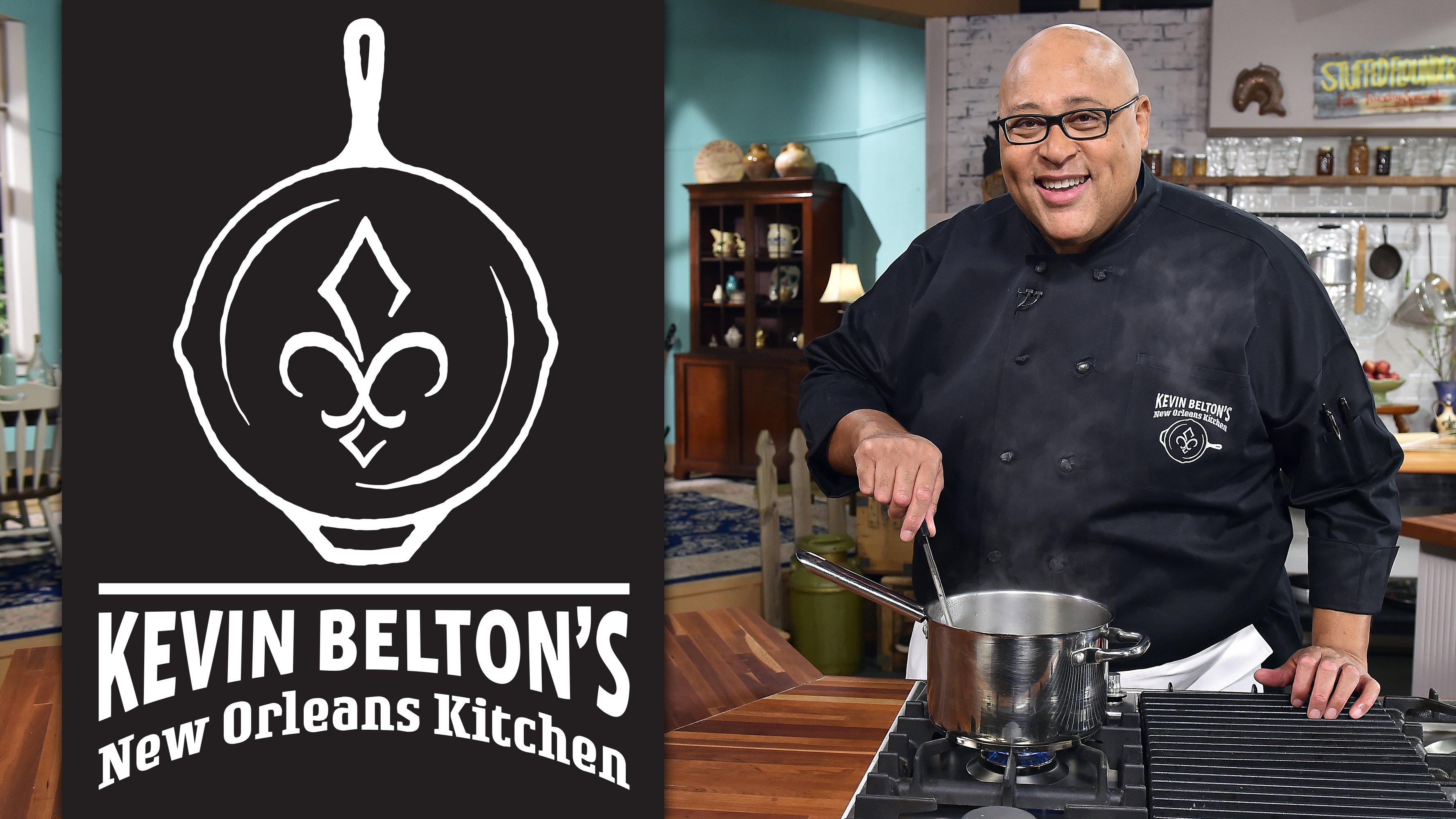
-Funding for "Kevin Belton's New Orleans Kitchen" was provided in part by the L.E. Phillips Family Foundation, Inc. and by the St. Tammany Parish Tourist Commission. Located 40 minutes from New Orleans, the Northshore's Tammany Taste features the chefs and farmers, brewers and bakers of St. Tammany Parish's culinary scene. Learn more at louisiananorthshore.com. -Additional funding was provided by Welbilt -- bringing innovation to the table. -Buenas! I'm Kevin Belton. Today in my New Orleans kitchen, it's all about our Latin community. I'm going to start off with a wonderful soup called sancocho. We're going to make a shrimp ceviche and serve it with arepas. And for those of you that have a sweet tooth, we're going to make guava turnovers. So it's time to get your Latin on. Be that Latin person you always wanted to be!
Smooches
Zing! Whip! Whip! Whip! Sloop!
Lion snarls
Ding!
Gong sounds
Buenas! Como tu estas? Hi. Welcome to my kitchen. Today, we're going to visit South America. We're going to make some wonderful -- Oh, I can't wait. This is... We're going to make sancocho soup. So, starting off, we have to make an alios sauce. Now, in our alios sauce, we're starting with red bell pepper. This is a sauce that's going to add so much flavor to the dish. We're adding green bell peppers. A little bit of onion. So, we have about 1/2 cup of everything. We're also going to get a little green onion in, a little spring onion, a little scallion in there. Just about 1 tablespoon of garlic, about 1 tablespoon of cumin. Now, the recipe calls for 1 cup of water. I prefer using -- I always like to cook with a little chicken stock. So, here we're going to add a little stock in, about 1 cup of stock, because this is going to turn into a paste. And the last thing going in is a little sazn. This is a seasoning that is going to add a wonderful flavor. It's going to give that depth, and that's all we're going to put in. So, now let's get our lid on, and this is going to turn into a paste. We want to grind this into a paste because it's going to be the base flavoring in our soup. Look how those colors come together. Let's just check it out to see if we need to do it any more. See? It's loose. Always be careful with your blades. We're going to pour this into our bowl because we're going to use this in a couple of different spots. So, now let's get this and start cooking it into our oxtails. In our pressure cooker, I have 2 cups of stock. We're going to put in half of this alios. Now, the whole reason why we're going to use our pressure cooker is that we want our oxtails to get tender. Basically, I have taken our oxtails, blanched them in hot water, rinsed them in cold water, and just let them drain. So, this is going to add flavor, but we also need them to get tender. So, our oxtails go in. Let's put our lid onto our pressure cooker. Let's put on the regulator. When this starts dancing, this needs to cook for 15 minutes. So, while that's taking place, let's start off on our main pot, browning off our meats and getting our other ingredients in. So, in our pan, I've put in a little olive oil. Just put our beef in. Now, this is just beef that's been cubed. And, of course, when cooking, we need a little bit of salt. We aren't going to do too much seasoning in this, but, basically, I just want to get this started to brown off our meat. Now, you can use any type of beef that you want. I'm using cubed top round. Now that this is sauted, let's put in other ingredients. A little bit of onion -- just about 1 cup of onion. About 1 tablespoon of garlic. We'll get that garlic in, and let that meet up with our top round cubes and our onion. So, here, let's just take our potatoes. We just need to quarter them. Now, also, besides the potatoes going in, I have some plantains. Things like a potato, they go well with that. So, we have our plantains. We also have yucca. Now, if you've seen yucca, it looks like a root, okay? All in the potato family. It's a root. Again, another starch. Now, in yucca, there's a center stem that, when it cooks, you'll be able to see that and take it right out. So, now let's get our other ingredients in with our meat, our onion, and our garlic. So, let's put in our potatoes. We'll get in our plantains. And now we'll put in our yucca. You can see how this is going to be a nice, sturdy, hearty soup. Look at all the ingredients we have in, the flavors we have in. Our regulator is dancing. That means we have enough steam in here where our oxtails are starting to cook, so this is where you start your time for cooking. Now, let's take our alios sauce and put it in with all these other goodies that we have been sauting. Our sauce, as you can see, just coats everything. So, to this, now we can add our stock. We're going to give this a nice stir, bring this up to a boil because all of these goodies are going to cook, get a great flavor. I think our oxtails are ready. Let's remove our regulator, open this pressure cooker, and just look at those tender oxtails in there. You notice it's a little foamy up at the top. This is the starch and the oil that are coming to the top, so let's just take a ladle and skim this off. You know, you want your soups to be clear. You want them to be clean. We don't have to get all of it off, but we just want to take a little bit of it off. All right. I think that looks good. So, here, let's move this over, and we're going to take our oxtails and slowly add them into it. Now, be careful. This is a little hot, and you don't want to splash yourself. So, we're just going to slowly give this a pour, because we want that goodness that was in there. We want that alios sauce that we had. We want that little bit of stock that we had. So, now let's put in our corn. And because we have so much goodness down in here, I took a little taste earlier. We're going to put in a little more salt. Remember, that's a lot of potatoes, a lot of flavor. So, now let's just simmer this. This is one of those dishes where, the longer it cooks, the more the flavors blend together. I like to cook it at least 30 minutes, just on a low fire, simmering. Take a look at our sancocho. We're going to put a little cilantro in. So, this is one of those things where you have to get a little bit of everything. We have the plantains. We've got that yucca. We've got that oxtail. Let's make sure we get some corn, some of that beef. And, of course, take your ladle and get some of that wonderful stock, because this stock is so wonderful from that alios sauce. So, here we have my take on sancocho soup. Coming up next, shrimp ceviche with arepas. You know, this is a dish that's often done in many countries, and, you know, a lot of times, people would be afraid to do ceviche because they're like, "Wow! It's raw," but that's okay. Here's what we're going to do. We're going to do shrimp... Boiling water. We're just going to put our shrimp right into the boiling water. Our shrimp are not going to be in here very long. We just want to get them blanched, okay? And you see, they're peeled, they're deveined, and we just want to blanch them. We just want to get them cooked. I have a bowl of ice water, so we're going to shock them. So, you see how our shrimp have curved. They have a nice brightness to them. Turn off the fire. And you see how quick this is. Now, just take them out of the hot water. Put them into the ice bath. Basically, what we're doing -- We're shocking the shrimp, and this will stop them from cooking. Now, we're just going to let our shrimp cool while we put all the other ingredients together for our ceviche. We're going to take a large bowl. Here I have some cucumber that is just peeled and cubed. We put in a little tomato that has also been just diced up, and, you know, that's one of the nice things about this dish. It's all fresh ingredients. Now, and you're wondering, you're asking me, "Hey, why didn't you put it all in?" I like to mix a little at a time. Let's take some of our red onion and our green onion, get that in. Let's go in with a little lime juice, a little lemon juice. If we wanted to, we could serve this right away because the shrimp are cooked, but, personally, I like to let this marinate and let those flavors just blend together. So, of course, a little salt. We're going to do a little drizzle of olive oil. Let's get this mixed in. And now let's put in more. Let's get the rest of our red onion and green onion in. We'll get in the rest of our cucumber. Ceviche Tomatoes! For a little bit of a spice, a seeded, diced jalapeo. Let's mix this all in. Now, where we're going to get our flavor and where we're going to get our wonderful blend of goodness is coming from our juices. So, here we have lemon juice. We have some lime juice. And we have orange juice. Look at all these flavors that are in here. Now we're missing our shrimp. So, all we want to do with our shrimp is give them a rough cut and put them in as well. Take our shrimp, bite-sized pieces. Let's put them in with our tomatoes, in with that cucumber, the orange juice, the lime juice, the lemon juice, that red onion, that jalapeo. I like to put this in the refrigerator for at least a couple of hours. The longer this stays in the refrigerator, nice and chilled, the more these flavors get to blend together, and I love putting in some diced avocado right before serving. Now, I also have a little cilantro. We'll put a little in now, and we'll put a little in right before we get ready to serve this. But while this is chilling and these flavors are just making new friends and getting together, let's get cleaned up so we can make some arepas to go with it. Here I have pre-cooked cornmeal. Yes, it's ground corn that's been precooked, dehydrated. And, basically, what we're going to do here -- We're going to make a dough. Now, what I have -- Let's start with a little cream cheese. I have lukewarm milk. You don't want to get the milk too hot, but we just want it lukewarm. So, we're going to put in at least 1 cup of our milk. Now, I like to put this in when I first put in that cream cheese because this allows it to soften up a little bit. This is so popular when you go to Colombia, when you go to Venezuela. Most countries have some form of an arepa. And you notice -- See how it's starting to come together? It almost reminds me of a little mashed potato. You can always add to something. You can never take away from it. Into this one, we're going to put in some sour cream. So, we had a 1/2 cup of cream cheese, 1/2 cup of sour cream, and we're just going to work this in. At some point, we're going to have to start working this together with our hands. Now, you can almost tell when this is ready because as you're working it with your hand, it is starting to form, but it's still a little sticky for us. So, here, let's mash this open, and let's get a little bit of salt to season this. And we're also going to get a little more of that cornmeal. Some salt. And it looks like a good bit of salt because of the fact that this is dough. A little bit more of our cornmeal. And you see, just work it together to the point where it's not sticky. Can you see how this is starting to come together like a ball? That's what we want. So, here, let's just put a little oil on our griddle that's heating up. And I'll show you how to form this arepas. Take a little piece about the size of a golf ball in your hand. Roll it together. See how that's not sticking at all? Now, as we flatten it -- One of the tricks to arepas is if the sides are too thin, it will crack. So, as you press, take your thumb, and just take your thumb and just kind of make sure that edge is evenly rounded. See? Now, this is a small one. We could make them a little bigger. Some places make them really, really big. As a matter of fact, I'll make one here. Because, like I said, it's like bread. So mash it, mash it. Take that thumb. It's important to get that side, get that side. See, we don't want that side too thin because that will crack. That's why we just press it with our thumb. We have a wonderful restaurant here in New Orleans that makes these, and they stuff them with different things. Here, I'm making these to serve with our ceviche. Okay, one more. Let's do one more. Press it down, press it down, thumb it. Palm it, thumb it. Palm it, thumb it. Palm it, thumb it. This is so much fun. Let's spread a little bit of our oil over our griddle. And we take on our arepa and just put it down. You're going to hear this nice little sizzle. But we just need to cook them on both sides. Ah, two to three minutes per side, depending on how hot your griddle is. But once we turn these over, these are going to be a wonderful, wonderful golden brown. That's what we want. See that nice golden-brown color? That's what we're looking for. That's what -- And we can always press it down a little bit, okay? Some folks like to give them a little more color. If you find that they weren't even, just take it, press it down. Oh, look at that. Look at that. Nice golden color, nice golden color. While our arepas are finishing cooking, I'm going to go to the refrigerator and get our ceviche. To this, a little avocado. A little more cilantro. One quick stir to get that in, and let's serve it. Look at our arepa sitting there. Now we'll take our ceviche and just put it right here. Oh, it's running over! So, here is our wonderful ceviche with arepas. Coming up next, guava turnovers. Guava turnovers! Now, here's what we want to do. Let's put some flour down on our work surface, all right? The other thing to this that seems a little odd -- We're going to put some sugar in because the sugar is going to help press into the dough. Now, we're going to use puff pastry today. Take that puff pastry. Fold it over. Now, puff pastry, if you aren't familiar with it, when it bakes, it puffs up really big. So when we bake it, it doesn't blow up too big on us, let's just roll this out. And you see, as we roll this out, what's going to happen -- Our sugar gets pressed in the dough. This is a dessert. Now, when you're in the grocery stores and you see these cans of guava paste, a lot of times, folks say, "What is that? What is guava?" It's a wonderful fruit. So, we're going to take our knife. We're just going to make one little cut here, one little cut this way, okay? I've taken the guava, and I've kind of worked it into these little balls that we just place right on in the middle. A little egg wash. Now, basically what this egg wash is going to do -- It's going to help seal the edges of this dough. That's what egg wash does, because we want this to stay closed so our filling doesn't leak out. So, look. We have this brushed. We just want this to seal. So, take it, fold it over. And you see, it's not exactly pretty here, but that's all right. Put this here, right in the middle. Fold this one over. Come on! Get to the edge. Get to the edge! We're going to take our fork and just crimp the edges -- Basically, just ensures that they get sealed. The other thing we want to do with this is we want to make sure that we cut a little slit on the top. We want this to be able to -- Just a couple little slits right in our dough at the top because as this bakes, we need that moisture to escape. So, now let's place them on our baking pan, which is basically just a little piece of parchment paper. Place them on the pan. Now, I like to brush them -- a little more egg wash. Just over the top. This helps them get golden brown, by putting this little bit of egg on the top. Now, let's put a little egg on this one. The other thing we're going to do here is, besides this egg, I'm going to put a little sugar on the top. Remember, we put a little sugar in that flour that we rolled out. I also like to take a little sugar and just sprinkle right on the top. I have preheated the oven -- 400 degrees. These are going to be in the oven 10 to 15 minutes. Everything bakes a little different. All of our ovens are a little different. So, just check them when they're golden brown and puffed up. This will be beautiful and ready to go. These smell absolutely fantastic. Now, to finish this off, let's put it here on the plate. And, basically, this is just a glaze of powdered sugar, lemon juice, and a smidge of water. And now we can just drizzle that right on the top. What a way to finish off the day down in South America. So, here is our wonderful guava turnover. I really appreciate you spending your time with me. I'm Kevin Belton, and remember, the absolute best place in the house is sharing your table with your family and friends. So, I'll see you next time. -The companion cookbook to "Kevin Belton's New Orleans Kitchen" is available for $24.99, plus $6 shipping and handling. You can also order an hour-long DVD of favorite dishes from the series for $19.95, plus $4 shipping and handling. Both the book and favorites DVD are available for $40.95, plus $7 shipping and handling. To order these items, call 1-866-360-4924 or order online at wyes.org. - You're once You're twice You're everything I need You're the dough that I want to make You're the sun, my moon You're my fair cookie You taste so wonderful I'm not gonna share with the crew Because the heat expands, then the cool -- They shrink up. Picture when we jump into a pool of cold water, how we -- Rrrgbhr! All right? That -- Yeah, yeah. Rrrgbhr! What's what the shrimp just did. The shrimp went, Rrrgbhr! We cannot rush a good thing. Do you think I was made instantly? No. I was made over five years, it took to make and put me together, yes. -For more information about "Kevin Belton's New Orleans Kitchen," visit wyes.org. -Funding for "Kevin Belton's New Orleans Kitchen" was provided in part by the L.E. Phillips Family Foundation, Inc. and by the St. Tammany Parish Tourist Commission. A short drive from New Orleans, the Northshore offers epicurean experiences, as well as kayaking, cycling, and tours of the Honey Island Swamp. Learn more about the Tammany Taste at louisiananorthshore.com. -Additional funding was provided by Welbilt -- bringing innovation to the table.
Search Episodes

Donate to sign up. Activate and sign in to Passport. It's that easy to help PBS Wisconsin serve your community through media that educates, inspires, and entertains.
Make your membership gift today
Only for new users: Activate Passport using your code or email address
Already a member?
Look up my account
Need some help? Go to FAQ or visit PBS Passport Help
Need help accessing PBS Wisconsin anywhere?

Online Access | Platform & Device Access | Cable or Satellite Access | Over-The-Air Access
Visit Access Guide
Need help accessing PBS Wisconsin anywhere?
Visit Our
Live TV Access Guide
Online AccessPlatform & Device Access
Cable or Satellite Access
Over-The-Air Access
Visit Access Guide




Follow Us