

 Passport


Hits and dodges in Wisconsin's lone 2026 debate for governor
10/22/26 | 18m 45s | Rating: NR
The lone debate between David Crowley and Tom Tiffany in the 2026 race for governor saw the candidates offer arguments and dodge questions — Inside Wisconsin Politics considers the race's big picture.


Copy and Paste the Following Code to Embed this Video:
Related Links for this Video:
Hits and dodges in Wisconsin's lone 2026 debate for governor
Shawn Johnson:
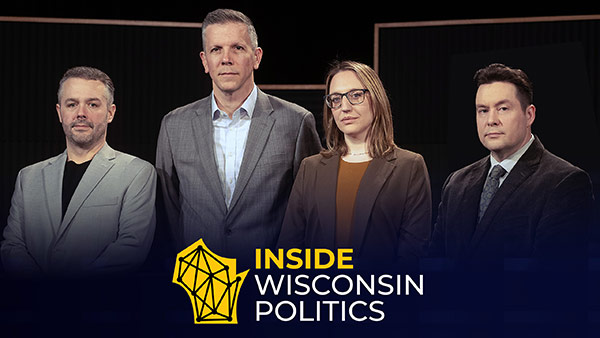
The candidates for governor meet in their only debate of this campaign. They give us a few answers and they dodge a lot of questions — let’s pick it apart. This is Inside Wisconsin Politics. I’m Shawn Johnson here with my colleagues Anya van Wagtendonk, Zac Schultz and Rich Kremer in Eau Claire. Hey, everyone.
Anya van Wagtendonk:
Hey.
Zac Schultz:
Hello.
Shawn Johnson:
So we’re going to get into a lot of specifics about this debate here. But before we do, I just wanted to get your general impressions about this — the only debate of our governor’s race here. Anya, I kind of watched this debate with you. So I’m going to ask you what stood out to you as you think about this debate as a whole?
Anya van Wagtendonk:
You know, so I’m taking notes during this debate, and I just kept waiting for specific numbers to come in, specific details, and they just weren’t coming. So one of my big takeaways from the debate was just all of the sort of talking around the specifics. And there are reasons for this. There’s normal reasons around campaigning. There’s the open question of who’s going to win the Legislature that actually does make hammering down certain details kind of difficult. But there was just a lot of non-answers as you mentioned. And we’re also, early voting has already started. We are two weeks out, less than two weeks out from the election. And so for this to be coming so late and for there to still be kind of these big unanswered questions — that really stood out to me.
Shawn Johnson:
Yeah, big unanswered questions for sure. Rich, any impressions for you?
Rich Kremer:
I was kind of surprised. There was a bit of, the moderators were trying their best to keep control of the situation, but towards the end of the debate you could tell that they had run out of time on certain topics that they would have liked to get to. There was a lot of talking over each other from both — maybe more Crowley than Tiffany — but it got pretty contentious, and it felt like it was going off the rails a little bit at times.
Shawn Johnson:
Going off the rails — you know what, I think one thing that stood out to me was a lot of references to the Legislature: Well, we’re going to have to work with the Legislature on that. They don’t know what the Legislature is going to be, and that’s an honest answer when you get down to it. If David Crowley has a Democratic Legislature, it’s going to be a lot different priorities for him than if he has a divided or Republican Legislature, and vice versa for Tom Tiffany. But it sort of gave them a pass to answer question after question in this thing. They did get into some specifics, though, sort of. When it came to the budget, it was nice to hear them talk about that for quite a while. So let’s get into some of that. They spent a while talking about taxes and school spending. Tom Tiffany talked about a 10% income tax cut for families who earn under $150,000, but he didn’t say exactly how he’d be able to do that and still fund education. Here’s Tom Tiffany’s exchange with WISN 12 moderator Matt Smith.
Tom Tiffany:
We’re going to put more money into people’s pockets. We are not going to raise taxes on the good people.
Matt Smith:
That’s a lot of income not coming into the state then. Do you make cuts in your first budget proposal to offset that?
Tom Tiffany:
We are going to have sufficient money in this budget to be able to fund the things that are important to Wisconsinites: education, transportation and infrastructure, healthcare.
Shawn Johnson:
And then on the flip side of that, you had David Crowley talking about funding education in part by taxing billionaires. He was asked a few times about the details — here’s David Crowley.
David Crowley:
We need a long term solution, not just quick fixes.
Matt Smith:
I’ll give you one more chance. You don’t have a threshold, though, for where taxes will go up, what that income level is?
David Crowley:
This is about making sure that we’re working with the Legislature. They’re the ones who have the power of the purse, and so as I’m crafting my budget, I look forward to working with them.
Matt Smith:
Do voters deserve to know that ahead of the election?
David Crowley:
I think voters want to make sure that they have somebody who’s going to work for them.
Shawn Johnson:
Alright Zac, I know that these candidates are not the first candidates for governor to kind of dodge what they’re going to do when it comes to the budget. But boy, if you tuned in hoping to hear how they’re going to achieve their priorities without hurting other priorities, you might be disappointed.
Zac Schultz:
This is why we don’t have three debates anymore, and why we really aren’t missing that much by not having as many debates as used to happen. In this era of campaigning, where there’s hundreds of millions of dollars for these candidates to push their message every which way exactly as how they want it phrased and crafted, they don’t need to rely on a debate to reach the average voter the way they used to. It used to be they had to come through these intermediaries to reach people who weren’t as tuned in as they might normally be, and they simply don’t anymore. So they can give kind of broad platitudes. They can hit their campaign marks, and they can talk generally, and try and make it sound like they’re the most reasonable, mature person up there, and everyone will be safe with them running the helm, and don’t worry about it. And that’s exactly what we heard last night was a whole lot of: Don’t worry about it, I’ve got a plan. We can dig into their history as we did in the last week’s episode. We talked a little bit about their legislative achievements. To give some sense, Tom Tiffany was on Joint Finance during the Scott Walker era, so we would expect him to run government in a similar fashion. That’s how he crafted those budgets when he was there. David Crowley runs the largest county in Wisconsin. We have a very good insight as to how he runs those counties. So their evidence really comes from what they’ve done, not necessarily what they said last night.
Shawn Johnson:
Yeah. Anya, I feel like you were tough but fair with these candidates in your story — said they kind of didn’t answer the questions on this stuff.
Anya van Wagtendonk:
Yeah, and they didn’t answer them in different ways. So that’s sort of interesting, right? So we just saw David Crowley not necessarily giving specifics on exact taxation plans. And then Tom Tiffany did have some clear numbers on what he would do tax-wise, but not in terms of then what he would do to make up for that lost revenue. And that’s been a sort of a repeated — I’ve spoken with him a number of times, and he’s repeatedly said: There’s enough sort of like fat and waste in Madison that we can find other ways to cover things. That doesn’t really account for, for example, just rising Medicaid costs, just the rising cost of things that the state is obligated to cover, and that’s where a lot of those rising budgetary costs come from. That’s all very wonky. That’s hard to get into in a debate. And so we do kind of end up, again, with these broader platitudes. And so there was a lot of, again, kind of trying to evade the specifics. And so therefore you could see like the themes that they were trying to hammer, especially with David Crowley going really, really hard on Congressman Tom Tiffany: Don’t forget that he’s in Congress, you all hate Congress right now, right? And then really trying to hammer his relationship to Donald Trump, the votes that he’s taken there. He pivoted many, many times to Tiffany’s record in a way that Tiffany did not as often point to Crowley’s record. And when he referred to him, he called him David. He didn’t call him, you know, county executive, which sounds a little bit like what a governor does.
Shawn Johnson:
Sure. So your story aslo referenced some awkward moments, was I believe the phrase you used. Let’s play one of those. This is where Tom Tiffany was asked by WISN 12 about why he wanted to overturn the results of the 2020 election. He referenced private election grants from Facebook founder Mark Zuckerberg, sometimes called “Zuckerbucks.”
Tom Tiffany:
That’s why I objected, because the people of the state of Wisconsin, they did not want that. And by the way, the people of the state of Wisconsin have voted to enshrine photo ID into our Constitution.
Matt Smith:
That’s the why you joined efforts to disqualify hundreds of thousands of absentee ballots in Milwaukee and Dane counties, was “Zuckerbucks.”?
Tom Tiffany:
Yes, because of what happened there, where there was money coming in privately that should not have been.
Shawn Johnson:
I want to mention it took moderators four questions to get to that point. In that fifth question, they heard about “Zuckerbucks,” was the final question on that topic — with a little awkward pause, I think it’s fair to say. Rich, you have done some stories about Tom Tiffany’s record recently. You’ve dug into what he said about the 2020 election. Was this a different answer from him when it came to why he wanted to object to Wisconsin’s vote that year?
Rich Kremer:
It was. And it also wasn’t. So the “Zuckerbucks part” — Tiffany wasn’t talking about that initially back in 2020, when he was first announcing that he was signing, or when he first signed on to the Texas lawsuit seeking to throw out Wisconsin’s results. He also didn’t mention “Zuckerbucks” when he moved to object to Wisconsin’s election results, which never happened. But he did object to results from Arizona and Pennsylvania. Back then, Tiffany was echoing Trump’s concerns, President Donald Trump’s concerns about the way that some clerks or some states changed or kind of massaged election laws with regard to absentee ballots. So in Wisconsin, they talked a lot about clerks, like in Dane County, and saying you can use this exemption from the photo ID law, list yourself as indefinitely confined — that way you don’t have to do, you know, submit proof of your identity. But so it was things like that. It was other things related to absentee ballots back in 2020. So I guess I say it wasn’t different because he also brought that back up with regard to Dane County. He said that the Dane County Clerk broke the law, which, you know, there’s been no charges or anything like that. So that was something. But yeah, “Zuckerbucks” — I remember it coming to the fore in terms of news coverage or concerns from Republicans far later.
Shawn Johnson:
Yeah. I mean, before the election, it was explicitly legal to do what Mark Zuckerberg’s group did with those private election grants. I was just looking back last night after Tom Tiffany mentioned that. Zac, you know, he did, as Rich mentioned, he did not talk about “Zuckerbucks” in that initial objection. The press release where he talks about how he wants to object to Wisconsin’s vote in 2021 is still sitting on his website — a little bit of a rewriting of history on this one, it seems like.
Zac Schultz:
Well, there’s been a lot of coverage about election denialism still strong within the Republican Party. And this, you might be able to parse between Tom Tiffany having to serve a couple different audiences. One is definitely fealty to Donald Trump, who absolutely wants to talk about rigged elections, and he has to, you know, pay homage to that. There’s also a strong undercurrent within the Republican Party that believes that election fraud is rampant and that people like Tom Tiffany need to be elected to stamp it out once and for all. And then there’s a lot of other moderates and independents and, of course, Democrats who are like: There is no fraud, there is no anything that’s changed elections, and so you’re an election denier if you keep bringing these up. So trying to find things that most people did object to — and there was a constitutional referendum to eliminate “Zuckerbucks” from coming back around…
Shawn Johnson:
Which passed.
Zac Schultz:
But of course, that was years afterwards…
Shawn Johnson:
Right.
Zac Schultz:
They were not illegal at the time. Part of the arguments at the time had to do with ballot drop boxes and “Democracy in the Park” events in Madison, where people voted absentee with a clerk in the park as opposed to having to go down to the hall. Lots of different things that Republicans didn’t even bring up before the election. They were only brought up afterwards, which is part of the reasoning the conservative majority on the Wisconsin Supreme Court denied an attempt to overturn the results of that 2020 election.
Shawn Johnson:
They did. And one of the things that was part of that Trump lawsuit that year was an objection to in-person absentee voting on the grounds that a form was bad, basically, and that was not raised before the election. So let’s move on to an awkward topic here for David Crowley. He had a tough primary, remember, against democratic socialist Francesca Hong. He wants her supporters to vote for him. So he was asked whether he supports the Democratic Socialists of America platform. Here’s what David Crowley had to say.
David Crowley:
And I’m glad to have the support of those who believe in the same things that I believe in, because that’s what’s going to move the state of Wisconsin. That’s what’s going to show these, all individuals that I’m going to be a governor for them, not for those who are funding my campaign.
Matt Smith:
Do you support any of the platform?
David Crowley:
What part of the platform are we talking about?
Matt Smith:
The Democratic Socialists. Any part. You tell me.
David Crowley:
The one thing — I’m not familiar with the DSA platform to be answering that question.
Shawn Johnson:
Alright, for our audio listeners, our radio listeners, podcast listeners — a little smirk there at the end from David Crowley. Anya, as he says: I’m not familiar with the DSA platform. He ran against Francesca Hong for how many months and he doesn’t know what’s in that platform? What’s going on there?
Anya van Wagtendonk:
To quote the great Mariah Carey: I do not know her. Right? He’s just sort of removing himself from that whole kind of situation entirely, in part because, once you do start, you know, parsing out: OK, yes, I want to keep the senate and I do believe in Thanksgiving — you kind of just end up in a message that is not necessarily yours. So part of his response was: You know, sure, socialists could vote for me and Republicans should vote for me. Right? He kind of used it to just say, as always: I, David Crowley, will reach across all aisles and appeal to all people. And he kind of was able to pivot it back to his message a little bit. And then, of course, Tom Tiffany was able to then say: But you also said, you know, when you want to invite Francesca Hong supporters into your big tent, you sound like a socialist. And so we did kind of end up with a little bit of them trying to define one another against this candidate, this primary candidate who’s no longer in the race.
Shawn Johnson:
Is there any risk, guys, of David Crowley has these Francesca Hong voters watching this debate and they’re saying: What’s this guy about? And they see him say: You know, I don’t know anything about that platform. And they move on?
Zac Schultz:
I think you have the same parallel of Tiffany worrying about Trump voters saying: Hey, you’re not loyal enough to our favorite candidate —- with Hong voters saying: Hey, you’re not loyal enough to our favorite candidate. And that’s always the problem when you come through — whether it’s a primary that’s contested or if you have a presidential candidate who’s very unpopular with the majority of the voters — where you do have to worry about what others think. And if you disavow them too much or too firmly in public, they could say: Well, I thought you were on our team. He has to worry about it, but he’s also trying to win an election. I think Hong herself has said: Hey, we want Crowley to win over Tiffany. So if they’re in that category, they’re probably on the fence of whether they’re going to vote at all or vote third party. They’re certainly not going to vote for Tom Tiffany.
Shawn Johnson:
You said there an important phrase, Zac: He’s trying to win an election. Why is he not answering these questions with firm details? That’s kind of the answer to a lot of these things. We only have a few minutes here left. Let’s do kind of a rapid fire on some topics. They were asked about transportation, Rich. And they were asked about whether they’d support gas tax increases, toll roads in Wisconsin, which used to be a mighty big deal. David Crowley said something kind of newsworthy there.
Rich Kremer:
Yeah, he did. He said he’s open to tolling as a way to raise additional revenue. He said he’s open to raising user fees, but he said he’s not in favor of raising or indexing the gas tax to inflation. So yeah, the tolling thing is very interesting. Just today, the Republican Party of Wisconsin put out a press release saying: David Crowley, you know, he’s running on an unaffordability, he wants to raise fees and make it more expensive to drive, et cetera, et cetera. But, you know, not too long ago it was Republicans — Republican leaders in the Legislature — that were pushing this tolling idea. Gov. Scott Walker didn’t want that, but the leaders of the Assembly and the Senate at the time did. So that was pretty interesting to me.
Shawn Johnson:
Yeah. Anya, another topic. Let’s cover the nuance of the abortion debate in about 60 seconds here. But it was pretty interesting the way that it got brought up in this particular debate and what these two candidates said about it.
Anya van Wagtendonk:
Yeah, absolutely. So, Tom Tiffany, you know, when he was in the state Legislature, he supported what was then a restriction on Wisconsin abortion access, which was to limit it at 20 weeks. But then when he went to Congress, he coauthored a bill that would limit abortion to six weeks. And so this is something that Democrats have kind of been trying to hammer on, is that he would just be extremely restrictive on abortion. Abortion access being one of these issues that is often a winning issue for Democrats, because a majority of voters want some kind of abortion access, including Republican voters. So this normally is something — like, we’ve seen this in the Supreme Court elections, et cetera. — that Democrats and liberals want to bring up abortion because it’s a good issue for them. And yet, the way that David Crowley handled it, he ended up sort of on the defense, unable to answer a question about sort of the type of legislation he would support. And so, again, he did some of that pivoting back to Tom Tiffany’s record. But Tom Tiffany made a very clear pledge, which is: I will uphold the five-month, as he says, the 20-week ban. And David Crowley sort of was the one who ended up really kind of stumbling through that.
Shawn Johnson:
And then voucher schools, Zac. He talked about those as well, and gave what I thought was a pretty forceful defense, in a way, of voucher schools from a Democrat — David Crowley did. This has not caught you by surprise — you’ve talked about it previously. But why in this forum would he come out and basically be a pro-voucher Democrat to some degree?
Zac Schultz:
Because Milwaukee is the birthplace of the voucher system in the United States, and it was largely on the backs of African American representatives and state senators who wanted it for African American students in that city to have an option to go to a private school, often a parochial school. That is where it started in the entire state — and the nation. And David Crowley knows a lot — even though he proudly says my kids go to public schools, he knows a lot of families that rely on that voucher system. The expansion of it beyond that came in the Walker era, 30 years after it started in Milwaukee — completely different contrast, even though Republicans like Tiffany love to draw a lot of parallels.
Shawn Johnson:
And then, of course, they talked about data centers, and David Crowley sounding a little bit more like Francesca Hong this day in the way that he talks about data centers, says: We need to put a pause on them while we have this environmental review. Tom Tiffany is trying to say: Hey, why weren’t you saying that before? And David Crowley is basically saying: Facts have changed. Before we let you go, we want to let you know if you like talking politics, you should join us at a free live event coming up in Madison. It’s Tuesday, Oct. 27. It’s at 6 p.m. so you don’t have to miss the World Series. We just did one of these in Eau Claire and it was a lot of fun. We’ll talk about the election. You can ask us questions. Find details and reserve your spot at pbswisconsin.org/events. That’s all the time we have for today. This has been Inside Wisconsin Politics. Be sure to follow us on pbswisconsin.org, wpr.org, YouTube or wherever you get your podcasts.
Search Episodes

Donate to sign up. Activate and sign in to Passport. It's that easy to help PBS Wisconsin serve your community through media that educates, inspires, and entertains.
Make your membership gift today
Only for new users: Activate Passport using your code or email address
Already a member?
Look up my account
Need some help? Go to FAQ or visit PBS Passport Help
Need help accessing PBS Wisconsin anywhere?

Online Access | Platform & Device Access | Cable or Satellite Access | Over-The-Air Access
Visit Access Guide
Need help accessing PBS Wisconsin anywhere?
Visit Our
Live TV Access Guide
Online AccessPlatform & Device Access
Cable or Satellite Access
Over-The-Air Access
Visit Access Guide


Follow Us