

 Passport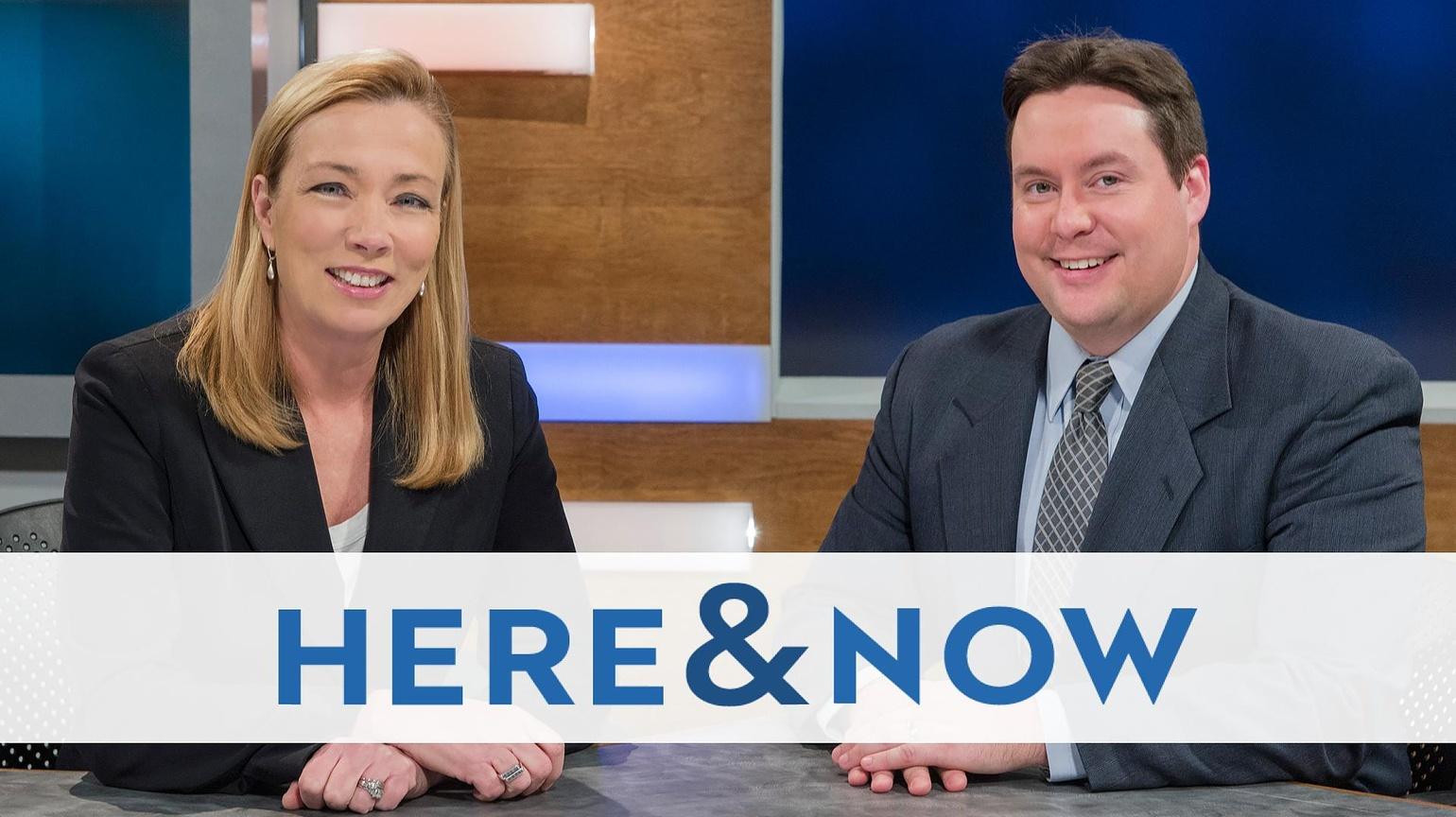






Here & Now for October 9, 2026
Announcer:
The following program is a PBS Wisconsin original production.
Pam Van Handel:
Trying to buy a home. Gas and groceries are high. I think it’s tough right now for everybody.
Frederica Freyberg:
Affordability and the economy loom large over midterm candidates as voters shift through an excess of fact and fiction.
I’m Frederica Freyberg. Tonight on “Here & Now,” how the left and right are approaching affordability. AI advancements make election deception easier than ever. “Inside Wisconsin Politics” has the latest in the governor’s race, and Chief Justice Jill Karofsky discusses a new tool for victims of harassment and domestic violence. It’s “Here & Now” for October 9.
Announcer:
Funding for “Here & Now” is provided by the Focus Fund for Journalism and Friends of PBS Wisconsin.
Frederica Freyberg:
In less than a month, voters head to the polls taking their concerns over the economy with them. Tonight, “Here & Now” reporter Murv Seymour takes us on the campaign trail with both candidates for governor as they try to reach voters Wisconsin-style.
Ben Sagan:
Economy-wise, it’s mostly don’t screw things up.
Murv Seymour:
Ah, the economy. Rising prices at the pump and grocery stores. Steady jobs, but stagnant wages.
William Garcia:
Everyone agrees that the Democrats are the people who are truly talking about affordability.
Murv Seymour:
When it comes to making things more affordable, supporters of all political parties believe their party has the answers.
Pam Van Handel:
I think we’re going to have more tax cuts when it comes back to the Republican Party.
Murv Seymour:
University of Wisconsin La Follette School of Public Affairs economy professor J. Michael Collins says in Wisconsin, sure, the unemployment rate is below the national average, but too many families don’t bring home enough money. In his words, economic indicators don’t always tell the whole story of how Wisconsinites are coping or how they feel like they’re coping when it comes to the economy.
J. Michael Collins:
There’s things they can control and things they can’t. So housing, you know, I got to pay. I got to have a roof over my head. I got to pay for gas. I got to get to work. I have to have transportation. I have to have food. For young families, childcare and Wisconsin is one of the most expensive states for childcare. These are non-negotiable, right? So as a result, what gets pushed to the side? It’s, you know, any of the extras. It’s the eating out. It’s the, you know, replacing that appliance. It’s, you know, all those other kinds of things that people have to cut back on.
Murv Seymour:
Out back of Town Center Park in Grand Chute, a 20-year tradition is fully in motion.
Ben Sagan:
It’s the end of the summer. This is our annual corn roast. We got a grill we picked up for like, 20 bucks from a sale, and we’re making brats, burgers, hot dogs, and corn.
Murv Seymour:
It’s an all-out patriotic and political picnic for Republican voters and their candidates to meet and greet with each other.
Ben Sagan:
So now we know who all the candidates are going to be. After that, you know, you’re getting ready for the general election. And so then it becomes who needs what. What strategies we need to implement.
Murv Seymour:
In between buttery corn on the cob, brats and potato salad, talk centers around the number one issue for voters nationwide: the economy. From the smoky grill, Ben Sagan tells me he wants to see less government spending.
Ben Sagan:
Housing is going up. Gas is going up. Okay. There’s loads of increases, right? Those increases are a reaction to what happened in the past. Trying to offset them by doing additional spending is ridiculous.
Pam Van Handel:
Thank you for all you’ve been doing.
Murv Seymour:
Chairwoman of the Republican Party in Outagamie County, Pam Van Handel, is the lead organizer of the annual corn roast. From the party’s headquarters in a nearby strip mall in Appleton, surrounded by campaign signs, shirts, hats and buttons and all things Republican, Pam tells me part of her job is to rally support for party candidates. She and her husband run a small machine shop just up the road from here, where the impact of the economy hits close to home, especially for her employees. Pam would love to see more tax cuts, especially a statewide no tax on tips or overtime in Wisconsin.
Pam Van Handel:
Owning a machine shop with employees that are younger adults trying to buy a home. Gas and groceries are high. I think it’s tough right now for everybody. When I talk to, like I said, the age groups of the 30- to 40-year-olds and you hear they’re not going out and doing stuff and maybe vacationing as much because all their money has to go into saving for a house, living every day. We got to get prices down somehow. And I don’t know the answer.
Murv Seymour:
Back at the Republican corn roast, Pam and others hope their candidates do have answers. When it’s time for Tom Tiffany, all ears are front and center.
Tom Tiffany:
We’re going to end the 400-year property tax increase. Day one, we’re going to end it. We’re going to make Wisconsin more affordable. We’re going to return all the budget surplus regardless of how much it is. They’re talking $3 billion now or however much it is. We’re returning all of the surplus to you, the people that created it.
Murv Seymour:
160 miles to the east, Democratic voters meet up at the La Crosse County Fairgrounds for an annual corn roast of their own.
William Garcia:
This is Brad Pfaff’s old fashioned corn roast. It is a decades old tradition here in La Crosse County.
Murv Seymour:
It’s a chance to meet, mingle and get up close and personal with the candidates up and down the Democratic ticket.
William Garcia:
The general idea is just a really — a way for people to come together and learn from each other, and especially hear from candidates, hear from our elected officials, so that we can really understand what’s happening all the way in Madison.
Murv Seymour:
William Garcia tells me what should be happening is trust in a Democratic-led strategy that promises to lower the cost of living.
William Garcia:
Democrats are the people who are truly talking about affordability. We’re the people really talking about how to fix property taxes, how to maintain our public schools.
Robin Schmidt:
I wanted to be able to meet the candidates.
Murv Seymour:
New to the party, that’s what Robin Schmidt says about being here.
Robin Schmidt:
It’s important to see our politicians as people, and this event allows you to do that because you can have that one-on-one face time. We have a big gap between the folks who have more than enough, and those who are barely getting by. And to me, I feel like we need to have opportunities for people at the bottom to be able to afford to raise their children, to afford to be able to send them to college someday, to afford groceries, basic needs, and health care costs.
William Garcia:
Our expectations on the economy is that we elect people who actually care about fixing the economy.
Murv Seymour:
The evening ends …
Brad Pfaff:
Join me in welcoming David Crowley to the stage.
Murv Seymour:
… with candidate Crowley making his personal pitch at this picnic/political rally.
David Crowley:
Together we will cut taxes. We will lower health care costs. We’re raising three daughters in the same neighborhood that I grew up in. And you know what? We got a mortgage and a car payment to pay as well. And I live and know firsthand that our economy is not working for folks. Is it working for you?
Audience:
No.
David Crowley:
Absolutely not. It’s not working for regular people. And we also need to make sure that government is that much more transparent and held accountable.
Murv Seymour:
Like these two traditional corn roast events, candidates Crowley and Tiffany may be miles apart when it comes to what it will take to better the economy. The hope is that talk at these casual and annual picnic style political get togethers gives voters something motivating to chew on before they make their decisions on Election Day. Reporting from La Crosse and Outagamie County, I’m Murv Seymour for “Here & Now.”
Frederica Freyberg:
In the months and weeks ahead of the 2026 midterm elections, disinformation, including deep fake political ads, is rampant. New and easy to use artificial intelligence tools can put real sounding words in candidates’ mouths, surrounded by manipulated video. And the more lies and disinformation generated, the more chatbots scrape it and could repeat it back to users. UW-Madison journalism professor Mike Wagner is an expert in the political media landscape. And thanks for being here.
Mike Wagner:
My pleasure.
Frederica Freyberg:
So is this the wild, Wild West of kind of AI generated disinformation or is that sensibility kind of overstated?
Mike Wagner:
I think it is the Wild West on social media. In many states, Wisconsin included, a television ad or a radio ad that uses AI in a campaign ad has to disclose it but on social media, they generally really don’t. And so people can kind of do whatever they want, and there are already rules in place that hold social media companies harmless. if phony false things are said on their platforms. And so it really is a free for all.
Frederica Freyberg:
So one candidate in a congressional race in Wisconsin sought a cease-and-desist order from their challenger over the use of AI generated ads. So this is not theoretical anymore.
Mike Wagner:
No. Derrick Van Orden has made ads on his Facebook page that have a AI-generated Rebecca Cooke saying things that she has not said and says that she would not say. And so it looks like she’s saying them. She’s called for a cease and desist. I think the Van Orden campaign responded by creating a AI- generated duck that was quacking cease and desist. And so I think they don’t want to take the stuff down, but it’s stuff that she has not said that they are pretending that she said.
Frederica Freyberg:
With increasing numbers of people getting their information on elections from social media, what role do changing consumption patterns play in the consumption of mis and disinformation?
Mike Wagner:
It’s so much easier to encounter it, and it’s spreading from the world of politics into the world of entertainment. Our own alum, Charlie Berens, the famous comedian, is being — there are ads going around on people’s phones where it looks like he’s endorsing a candidate in the governor’s race, which he has not done and explicitly never does. And so, you know, people are — this is happening in politics, but it’s bleeding everywhere. And we’re getting the information on social media where we think we might be getting news. We’re getting it on our phones and text messages. We’re getting it from trusted sources sometimes. And it’s very hard to discern what’s real.
Frederica Freyberg:
What are the numbers of people getting information from social media versus traditional outlets?
Mike Wagner:
So a fair number of people, you know, probably in the neighborhood of half, say they get some news from social media. It kind of varies by platform and by age. And so older people tend to use Facebook a little more for news. Younger people tend to use TikTok a little more for news. But you know, most folks still get their news from local television. That’s still number one. And it’s the most and it’s the best source in terms of providing accurate information that’s verified. And then there are consequences if things aren’t real. Whereas on social media, there aren’t consequences if things aren’t real.
Frederica Freyberg:
So with all this stuff out there, what is the best way for people to get — make sure they’re getting accurate information?
Mike Wagner:
I think start with traditional sources of news where the place has a corrections policy, where reporters get in trouble if they report things that aren’t true. That’s the place to start. And when you’re getting stuff in your social media feed that appears fantastical or really exciting, especially if it’s a “Boy, my candidate looks great and my opponent looks awful.” Maybe see if you can’t find that same story, you know, from PBS Wisconsin or Wisconsin Public Radio or local newspapers, local television stations to see are there other places that are corroborating this, or is it just something that’s churning on social media?
Frederica Freyberg:
Unless and until there are more regulations of AI, is it consumer beware?
Mike Wagner:
It really is. There’s not much else that can be done. Candidates can scream and holler if they believe that they’re having AI generated images of them be used, as is happening right here in Wisconsin in this election cycle. But it’s really up to us until there are regulations.
Frederica Freyberg:
So how do fears of election fraud or how the Trump administration might respond to those fears create mistrust in institutions in the process?
Mike Wagner:
A lot of our opinions are rooted in what the political leaders we trust most have to say. That’s how most of us learn about what’s going on in the world. And when they tell us over and over again, we can’t trust the result of the election, especially ‘if I lose,’ it diminishes the overall trust we have in our system. And then when things happen on election night and they are going our way, our minds are more likely to go to, ‘I wonder if there’s a conspiracy here. I wonder if this isn’t legitimate,’ instead of ‘there’s a process that’s being observed by both sides and has been replicated and repeated for years in Wisconsin where we have an incredible record of conducting free and fair elections.’
Frederica Freyberg:
What will you be looking for on Election Day?
Mike Wagner:
I’ll be looking for news organizations that do a legitimate job explaining the process Letting folks know that, you know, the early votes can’t be opened until Election Day and counted. So we get big ballot dumps in the middle of the night because we have to basically, by law. It’s not a secret, nefarious thing that’s happening. So the more local news can tell us, here’s what’s happening and why, the better off we’ll all be.
Frederica Freyberg:
All right, Mike Wagner, thanks so much.
Mike Wagner:
My pleasure.
Frederica Freyberg:
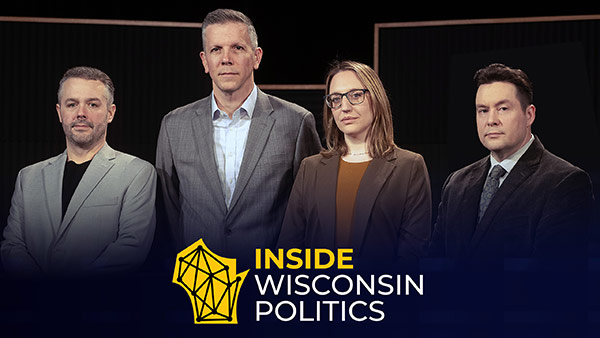
Outside of the friendly corn roasts, the candidates for governor take swipes at one another in political attack ads. Our colleagues at “Inside Wisconsin Politics” break down the most pointed ads from each campaign.
Shawn Johnson:
So what about these ads, Zac? How important are they to who wins and who loses?
Zac Schultz:
Well, if they didn’t matter, they wouldn’t be spending hundreds of millions of dollars every single cycle with this being the most important barometer out there. They are important. They do matter. And as much as the people that watch this podcast probably hate them and want them to be done. And we hear that a lot as well, they work.
Shawn Johnson:
How does what you see in these 30-second ads differ from kind of the slow wheels of government that you spend so much time covering?
Rich Kremer:
Well, I would say the difference is kind of like the difference between an orange and a glass of Sunny Delight. You know, there’s some juice in there, but not a whole lot. A lot of times what it is is there’s a speck of truth in an ad, but it’s usually exaggerated or just taken way out of context.
Shawn Johnson:
Let’s play recent ads from both candidates for governor. We’re going to start with David Crowley’s ad called “Pledge.”
Donald Trump:
I pledge.
Female TV announcer:
Tom Tiffany swore his loyalty to Donald Trump, voted with Trump 100% of the time, driving up the cost of gas, groceries, everything, and cut health care so billionaires could get a massive tax cut. Now, those same billionaire MAGA donors are bankrolling Tiffany, giving him $24 million. And Tiffany, he says he’ll cut their income tax to zero. It’s true. Wisconsin’s not for sale but Tom Tiffany is. And it’ll cost you.
Shawn Johnson:
Zac, what stands out to you from that ad in terms of themes?
Zac Schultz:
Well, 100%, it’s connecting Tiffany to Trump. Trump has the lowest ratings of any president in the modern era. They’re as low as they’ve ever been right now. It is a weight around Tiffany when it comes to independents and even moderate Republicans. So any connection to Trump is what they’re trying to bring up in the voters’ minds to get them to think that way. And then emphasizing that billionaire connection we’ve been talking about on the podcast. He’s been getting more than 90% of his money from just three billionaires with connections to the state and trying to make sure — getting through that idea, even if it looks like he’s got plenty of campaign cash, it’s not because he’s widely supported by a lot of people. It’s only a handful of people. Those are the things they’re trying to bring across and ‘tax the rich’ always plays well in elections.
Shawn Johnson:
We’re going to look now at the Tom Tiffany ad. This is called “David Crowley, I’m an accomplice.”
David Crowley:
And when it comes down to the immigrants, I’m not an ally. I’m an accomplice. I’m going to be with you no matter what.
Female TV announcer:
In Dane County, a repeat drunk driver and illegal immigrant killed two teenagers.
David Crowley:
I’m an accomplice.
Female TV announcer:
In Fond du Lac, an illegal tied up and blindfolded a 12-year-old girl to rape her.
David Crowley:
I’m an accomplice.
Female TV announcer:
In Milwaukee, a drunk, illegal immigrant killed a special Olympian on his way to church.
David Crowley:
I’m an accomplice.
Female TV announcer:
David Crowley stands with illegal immigrants. Not you.
David Crowley:
No matter what.
Shawn Johnson:
I just wonder what actual link they have to Milwaukee County Executive David Crowley. I mean, in what way was he involved or not at all?
Rich Kremer:
Yeah. Not at all. I saw some conservatives who really loved that ad, and some national people said, well, this is the most effective way to get that message across that they’ve seen. But people were sharing the definition of accomplice, which is, like, you know, knowingly, voluntarily helping someone commit a crime. That doesn’t fit in this situation. You know, their argument has been that if you’re soft on the border or, you know, soft on illegal immigration, that you’re essentially enabling people to come here and commit crimes. But to say that you tried to help them commit the crimes is a whole different ball of wax.
Shawn Johnson:
You know, the video in this ad, Rich, I know we both looked it up. It came from a Crowley appearance when he was a primary candidate for governor. And his credentials as a liberal were being questioned. But, you know, one of those where now that he doesn’t have that primary campaign to worry about, that one in particular, is kind of coming back to haunt him a bit.
Frederica Freyberg:
In a tragic metric, there were 101 fatalities in Wisconsin last year related to domestic and family violence. Sixty of them were domestic violence homicides. That sad tally from the just-released End Abuse Wisconsin annual report. For people seeking safety, there is a new and more easily accessible system in Wisconsin to submit petitions for domestic abuse and harassment temporary restraining orders. It’s an online portal allowing the forms to go directly to circuit courts. Wisconsin Supreme Court Chief Justice Jill Karofsky says the state court system stands ready to help those in need. She joins us now. And Chief Justice, thanks very much for being here.
Jill Karofsky:
Thank you for having me this morning. Good morning.
Frederica Freyberg:
So in advocating for this new online system, you also said it takes an act of courage to file for one of these restraining orders. How so? What are the dynamics there?
Jill Karofsky:
Yeah, it truly does take an act of courage. You know, before I was on the Supreme Court and the circuit court, I spent years, really decades, of my career dedicated to helping victims of crime when they came forward to make a report or engage with the justice system. And if there is one thing that all of those victims taught me is that it truly does take an act of courage to come forward and to ask the justice system for help. And so what this online portal will do is to make it easier for people when they do come forward and they ask us for help that they so desperately need.
Frederica Freyberg:
Because they will be able to do so from their laptop, their phone, and they don’t have to go into a courthouse proper to do that.
Jill Karofsky:
Exactly. Right. So just with their telephone, they can get on a website and the website is ro.wicourts.gov. And when you get on that website, it walks you through in a very user-friendly way, all the things that you need to be putting into a petition for a temporary restraining order in a harassment or a domestic violence case. If you forget to fill something out, it reminds you. If you fill something out incorrectly, it helps correct you. So yes, you don’t have to get in your car and go to the courthouse. You don’t have to get childcare. You don’t have to take a break or a leave from your job in order to do that. You don’t have to deal with parking. But in addition to that, it is a user-friendly application so that when you are finally filing your petition, it is complete and thorough and makes it much more likely that a judge or a commissioner isn’t going to say, Hey, you didn’t fill this out correctly.”
Frederica Freyberg:
What role did you play in getting this online portal up and going?
Jill Karofsky:
You know, I worked with the members of the court system. There was a big, big group, obviously, in a project like this. We had to apply for the application with the federal government. We then had a test period where we tested in a number of counties to see what was working and what wasn’t working, and what needed to be changed. There were attorneys who helped us. There were advocates who helped us. There were many, many court staff here at the Director of State Courts Office who helped us as well. It was really a very much a group project.
Frederica Freyberg:
How effective are restraining orders in keeping people safe?
Jill Karofsky:
You know, it’s a really, really good question. And you do hear from time to time someone saying it’s just a piece of paper. However, I do believe that we need to use absolutely everything in our arsenal that we can when it comes to protecting people who are looking to the court system for help and protection and for safety. And this is absolutely one way where the court system will say to another individual, ‘look, you have been harassing someone, you have been abusing someone, you have been violent towards someone. We see that and we are telling you to stop that right now and do not have contact with that person.’
Frederica Freyberg:
Reading the annual report from End Abuse Wisconsin, how shocking is that?
Jill Karofsky:
I have read End Abuse reports for decades and it is sobering. Every single year, it is sobering. There are so many people who are unnecessarily losing their lives, and there are children who are losing their mothers and sometimes their fathers. I think that I have been involved in this fight against domestic abuse most of my career. And there are good people in Wisconsin who have joined arms and continue to fight against the scourge of domestic abuse. And I’m not — I’m never going to give up trying to abate it, as I know others are not going to give up either.
Frederica Freyberg:
What is your message to people in unsafe situations?
Jill Karofsky:
The court system is here for you. We are here to greet you with open arms. We are going to do things to try to lower the barriers so that when you come to the court system looking for help, you can get the help that you need. We understand that it does take an act of courage We understand that when you’re in the situation of making these decisions, it is very likely one of the most difficult days of your life. But we are here and we are going to continue to be here for you.
Frederica Freyberg:
Chief Justice Jill Karofsky, thanks very much.
Jill Karofsky:
Thank you so much.
Frederica Freyberg:
In science news this week, UW-Madison physics professor Francis Halzen received the Nobel Prize in Physics from the Royal Swedish Academy of Sciences. Halzen is the principal investigator of the IceCube Neutrino Observatory, the first of its kind detector of special energy events from the far universe using ice deep within the South Pole. He spoke about the role of the university and Wisconsin and the future of this research.
Francis Halzen:
Wisconsin is a place where unconventional – I would say dangerous – ideas can thrive. We couldn’t have done this project if, for instance, the university hadn’t made the investments in maintaining a facility like the Physical Sciences Laboratory in Stoughton, because most universities have abandoned such institutions to do research at national laboratories. It’s incredible that we had this facility in place which could deliver the support that made this project possible. This is a new way of looking at the universe. It will take bigger telescopes, many more telescopes to become real astronomy and what this will bring is impossible to predict. But it has always been great in the past, and there’s no reason not to think that it will be great again. In fact, you know, we get the first glimpses now and of what’s out there in the sky. And this will be an exciting future. So it’s happening now but what it will bring on the long term, that is impossible to predict.
Frederica Freyberg:
For more on this and other issues facing Wisconsin, visit our website at PBSWisconsin.org and then click on the news tab. That’s our program for tonight. I’m Frederica Freyberg. Have a good weekend.
Announcer:
Funding for “Here & Now” is provided by the Focus Fund for Journalism and Friends of PBS Wisconsin.
Search Episodes

Donate to sign up. Activate and sign in to Passport. It's that easy to help PBS Wisconsin serve your community through media that educates, inspires, and entertains.
Make your membership gift today
Only for new users: Activate Passport using your code or email address
Already a member?
Look up my account
Need some help? Go to FAQ or visit PBS Passport Help
Need help accessing PBS Wisconsin anywhere?

Online Access | Platform & Device Access | Cable or Satellite Access | Over-The-Air Access
Visit Access Guide
Need help accessing PBS Wisconsin anywhere?
Visit Our
Live TV Access Guide
Online AccessPlatform & Device Access
Cable or Satellite Access
Over-The-Air Access
Visit Access Guide




Follow Us