

 Passport







Announcer:
The following program is a PBS Wisconsin original production.
Zac Schultz:
Federal workers, FoodShare and health care are caught in a crossfire of the shutdown showdown.
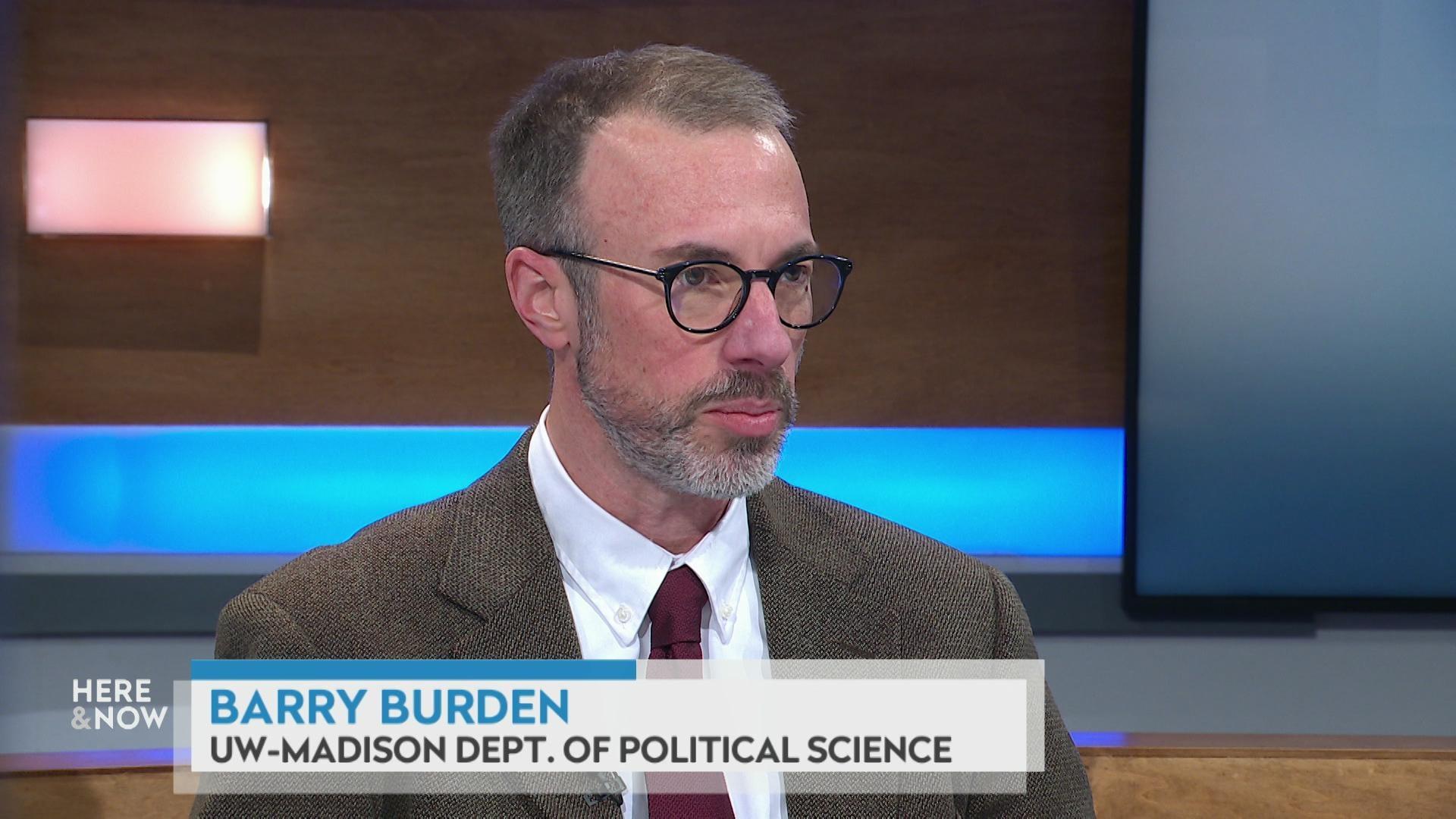
Good evening. I’m Zac Schultz, filling in for Frederica Freyberg. Tonight on “Here & Now,” Congressman Glenn Grothman and Mark Pocan weigh in as the government shutdown becomes the second longest in history. UW-Madison Chancellor Jennifer Mnookin on civil dialogue and freedom of speech on campus and PFAS pollution isn’t going away. Murv Seymour reports from one community demanding answers. It’s “Here & Now” for October 24th.
Announcer:
Funding for “Here & Now” is provided by the Focus Fund for Journalism and Friends of PBS Wisconsin.
Zac Schultz:
We are on day 23 of the federal government shutdown. So far, the Senate has failed 12 times to pass the House bill that would reopen the government. Joining us now is Republican Congressman Glenn Grothman. Congressman, thanks for joining us.
Glenn Grothman:
Glad to be on the show.
Zac Schultz:
So the continuing resolution the House passed would only fund the government through November 21st. And at this point, we’re almost closer to that date than the start of the shutdown. Do you think Republicans should consider a new CR with maybe a longer date behind it?
Glenn Grothman:
Well, I think we should, first of all, wait a little bit and see if the Democrats will vote to keep the government open. I mean, like you just said, the Republicans in the Senate, my own Ron Johnson, have voted 12 times to keep the government open. And it’s what is normally automatic. So you understand we are waiting for a budget for the calendar year, for the fiscal year beginning October 1st. Thirteen times when Joe Biden was president, the Republicans helped him out by keeping the government open in similar circumstances. I bet it didn’t even make the shows, right? So I think a lot of us still want to believe that the Democrats will do what is par for the course, has been for decades, and just vote to keep the government open. No reason not to.
Zac Schultz:
So the hangup for Democrats in the Senate, according to them, is this extension of Affordable Care Act subsidies. They’re holding out for that. They expire at the end of the year. November 1st is when those subsidies, when the marketplace opens, and people may see what premiums may look like without those subsidies. Would you vote to extend the subsidies if that was the deciding factor in a deal?
Glenn Grothman:
You got to remember, it’s always fine and good to say we’re going to vote for more spending of every type. But right now, we’re borrowing 26% of our budget. That’s why we’ve got to get the continuing resolution passed, because there may wind up being a little more for subsidies in there, but it depends upon what’s going on in the other items. We’ve got about $1.8 trillion in discretionary spending that we’re voting to extend, of which the Obamacare subsidies are a part. That is because the Obamacare is flawed. It would be nice to change so Obamacare works, so we don’t have to keep dipping further and further into subsidies. But again, we’ve got to ask the Democrats. 26% of our budget is borrowed. What do you plan on cutting instead if you do want to put $34 billion a year, which is about what they’re looking at, into Obamacare subsidies?
Zac Schultz:
So one of the things that people in the public that are receiving these subsidies aren’t as nuanced in the federal government spending as obviously you are. But when they hear headlines like $20 billion for Argentina to bail out their economy, but we can’t afford subsidies for Americans. How do you explain that discrepancy there?
Glenn Grothman:
Well, I think President Trump is in a situation in which he doesn’t want Argentina to become a new Venezuela, which would be even more wildly expensive to deal with. I think they just have to realize the Obamacare was poorly drawn up. We are prepared to keep the government open. And then as far as subsidies are concerned, you know, they’ve got to ask us where other parts of the budget are that they don’t want to spend as much on. Again, the Americans have to get used to the fact that right now we’re borrowing 26% of our budget. You’re talking about Obamacare subsidies. I’ll tell you when I’m in my office, again and again and again, I meet Americans who want the government to spend more money. Can we spend more here? Can we spend more there? And, you know, I can think of things that can be done to get to $34 billion, but the Democrats haven’t put any of those things on the table. And in part, they haven’t put them on the table because we’re not negotiating. We’re not negotiating because we should keep the government open first. It’s just not that difficult of a demand. It’s something that’s done automatically. And if you look at the statements in the, the, the journals that are put out in Washington, D.C. the Democrats admit that the reason they are not opening the government is they want to use leverage, not just on Obamacare, but on things like more DEI programs, for example, which I think are just the most officious things and wouldn’t be good to spend money on if somebody gave us the money for free.
Zac Schultz:
So the consumer price index was released today and showed inflation was up 3% in September and they say largely due to tariffs. Do you continue to support Donald Trump’s tariff policy?
Glenn Grothman:
I’m not as big a fan of his tariffs as some other people, but you know, President Trump is our president. He’s a big fan of tariffs, as is his treasury secretary.
Zac Schultz:
Speaker of the House Mike Johnson has canceled floor sessions over the past couple of weeks. Democrats say it’s because he doesn’t want to swear in a newly elected Democrat from Arizona, who potentially could be the final vote to discharge Epstein files. Do you believe that? Or do you think there’s another reason the floor — the House hasn’t come back to the floor?
Glenn Grothman:
I think the reason he doesn’t want Republicans back in Washington is I think he wants to control the narrative as far as what’s going on during the shutdown. And I think he’s afraid if you had 200 more Republicans running around Washington, the reporters would find somebody to say something that maybe Speaker Johnson wouldn’t like. I was back in Washington this week. I plan on returning to Washington next Monday, and if people want to interview me there, they can interview me there. I don’t have a problem going back to Washington.
Zac Schultz:
And today, the Trump administration announced they had denied Wisconsin’s application for federal disaster relief for six counties damaged by flooding in August. Some of those in your district. What is your reaction to that?
Glenn Grothman:
I was very disappointed. Obviously, we’re very broke. That may be one of the things that’s entering into the decision. It’s — we just got the news today and I’ll be contacting the Trump administration to see the reason for those decisions.
Zac Schultz:
All right, Congressman Grothman, thanks for your time today.
Glenn Grothman:
Thank you very much.
Zac Schultz:
For the opposing viewpoint, we are now joined by Democratic Congressman Mark Pocan. Thanks for being here.
Mark Pocan:
Yeah, thanks for having me.
Zac Schultz:
So how long would you encourage Senate Democrats to hold out on passage of this continuing resolution?
Mark Pocan:
I think we need to make sure that people understand what’s at stake, and I think people will by November 1st. You have to have the rate increases for the Affordable Care Act for almost everyone’s group plans. And I think that will show what we’ve been talking about all along, which is 15 million people are going to ultimately lose their health insurance because of the big ugly law. And right now, I had an employer told me just a couple of weeks ago that their new increase for next year’s insurance is 41%, and that’s because of the uncompensated care created by the Affordable Care Act. So I think they just need to make sure that Republicans I know are getting the calls like we are when it comes to this, and it’s going to only intensify by November 1st when people do get those rates. So, you know, I would just say, hold tight, federal workers who are really being heroes in all this right now, going without paychecks, understand what this fight is about. But we’ve got to make sure that people don’t lose one of the most important economic, you know, legs to a stool that they have.
Zac Schultz:
So the Trump administration doesn’t seem to mind the shutdown. They’re trying to lay off thousands of federal employees. Trump’s building his White House ballroom right now, not worried about any fiscal situation. What is their incentive to negotiate even after November 1st?
Mark Pocan:
By next week, I think we’re going to be about two and a half weeks out from the original seven weeks they had anyway. We’ve kind of got to get together and do something because the time will have run out for even their original kind of arbitrary deadline they did without negotiating to begin with, with us. So I think that’s what’s going to happen. But, you know, as you pointed out, I mean, Donald Trump, you know, he’s using this as an excuse to fire people, but he’s already fired 200,000 people either through riffs or outright firings since he’s been president, which he doesn’t have the authority. There’s been all kinds of lawsuits, but this has already been happening. That’s part of the problem. If you can’t actually have an agreement like we used to in Congress, and that somehow the executive branch is going to steal the funds that we’ve agreed to in a bipartisan way, then you don’t really have an agreement and that’s unfortunately the place where we’re at right now. So, you know, this is really right now about protecting people’s health care. And by the way, all of us are going to pay more for health care because of that law, because of that uncompensated care. And it will help everyone in having this fight.
Zac Schultz:
So how long can the government function in shutdown mode? At what point do things just — they don’t — they can’t function at all and they shut down?
Mark Pocan:
Yeah. Places like Wisconsin, you feel it less, right? I think I was doing a town hall in Derrick Van Orden’s district last week and I asked about 50 people. I said, “Who’s feeling the impact directly?” And one person raised their hand out of 50 people. But that’s because we’re in Wisconsin. But, you know, if you’re trying to get ahold of Social Security, you want to go to a national park. But now, if you’re eligible for SNAP benefits, right, you’re going to start feeling it. So you’re going to see more of those things now happen. I just think by the time next week I’m going to go back to Washington, even if the House Republicans aren’t. I’m going to show up because that’s my job to be there. But at the same time, we’re going to be at two and a half weeks out from their artificial deadline anyway, right? So at some point we have to quit holding our breath. If you’re the House Republicans, show up in Washington and let’s negotiate. If not even this, let’s negotiate the Farm Bill that’s two years overdue. Let’s do the Older Americans Act reauthorization that’s overdue. But let’s do something. Just simply taking another week of paid vacation doesn’t solve anything.
Zac Schultz:
You talked about the House Republicans and Speaker Mike Johnson refuses to swear in the newly elected Democrat from Arizona. Do you think that is related to this discharge petition over the Epstein files, or is it simply that they’re just not in session? There’s no need to come back because there’s the government shutdown.
Mark Pocan:
I think it’s a lot of things. I think they think this is leverage to try to bring us back, to reopen the government without fixing health care. I think some of it is about is the 218th signature in Donald Trump, for, for whatever reason, now doesn’t want the release of the Epstein files after campaigning on releasing them, but I don’t — I’ve learned I can’t predict Republicans anymore, right? I mean, it’s been so, you know, the fact that you just don’t even try to come to Washington to do your job to negotiate, whether it be the shutdown, health care, farm bill, anything, you just think you don’t have to show up. That’s a weird dynamic that, you know, I’ve been doing this for a long time in local, state and federal government. Showing up matters and you know, I don’t know if I understand their messaging. I’m not sure they do because they keep changing their messaging. We’re very clear. We’re fighting for the affordability of health care so that people don’t lose their health insurance, and we all don’t pay more for it. And I think that’s a fight people understand.
Zac Schultz:
So the midterms are still a year away. Historically, there’s little evidence that government shutdowns this far out from an election impact the election. Do you think this time could be different?
Mark Pocan:
I really don’t know where this is going to end, right? Are they going to continue it and because again, Donald Trump kind of likes parts of this, as you said. I mean, he’s already been acting unilaterally. And unfortunately, the Republican majorities in the House and the Senate have allowed him to do that. Article One of the Constitution gives us the power of the purse, but he’s stealing funds that we’ve approved. The Constitution gives the power of tariffs to Congress, only emergency tariffs to the president but he’s getting away with it. So this is anything but normal times, I think. You know, when you watch the East Wing of the Capitol being demolished right now, it’s for visual learners to see what he’s doing to democracy, right? He’s literally demolishing the institutions that we understand fundamentally and that’s why you had so many people last weekend at the “No Kings” rally. 7 million people speaking out. I just think these are times that are hard for anyone to give you honest predictions.
Zac Schultz:
So finally, the consumer price index came out today. It’s at 3%. It’s an increase year over year. It’s tariffs, right?
Mark Pocan:
Trump’s tariff taxes are absolutely affecting us. We’re all paying for that messiness and it just needs to stop.
Zac Schultz:
All right. Congressman Pocan thanks for your time.
Mark Pocan:
Sure. Thank you.
Zac Schultz:
UW-Madison has announced a new program designed to “foster and strengthen civil dialogue across the university.” It’s called the Wisconsin Exchange: Pluralism in Practice. Joining us now to talk about the program is Chancellor Jennifer Mnookin. Thanks for your time today.
Jennifer Mnookin:
Thanks for having me.
Zac Schultz:
So what is the Wisconsin Exchange?
Jennifer Mnookin:
The Wisconsin Exchange is a collection of programs and opportunities for students, as well as faculty and staff, to gain experience in engaging with each other across their differences Whether those differences come as differences in background or identity or viewpoint and perspective. We already had a number of things happening on campus around this, but we wanted to grow those further because I think it’s a significant priority for our campus and frankly, for our nation.
Zac Schultz:
So Republicans have criticized UW-Madison for liberal professors making young conservatives feel uncomfortable on campus. Is this a response to those types of complaints?
Jennifer Mnookin:
This is actually something that I think is deeper and far broader. I think that universities are perfect places for people to learn from, and to learn to talk to people who experience the world differently from the way that they do. That goes all the way back to “sifting and winnowing,” a core idea at UW-Madison. And I think we do a fair amount of that already. And I also think there are opportunities to be more intentional about it, and also to give people practice and skills. Many people these days live in relatively siloed environments in terms of viewpoint and perspective, and we want people to get out of their silos and have the experience of learning from and talking to each other.
Zac Schultz:
Looking through the materials, it doesn’t look like this will be a requirement, not like a freshman class. So how do you get the people that may need this the most to actually buy into it?
Jennifer Mnookin:
That’s a fair question, and I think we’re frankly starting out with a coalition of the willing. We’re starting out with people who are interested in doing this. It won’t reach everybody on our very large, pluralistic campus from the get-go. We already have programs like the deliberation dinners, where 375 of our undergraduates are raising their hands to come together for six dinners across the year in groups of ten that are selected for viewpoint diversity, to gain skill and practice in talking about pretty contentious issues and learning that you can learn from people who see the world very differently from themselves. That’s grown over the past couple of years, each year. And in fact, we had more people who wanted to participate this year than we could — than we could include. And these additional programs will, at first, be for those who are interested. I hope down the road that we might be able to grow some trainings in other spaces around the university and reach even more students, as well as faculty and staff.
Zac Schultz:
So in recent years, we’ve seen student protesters take over Library Mall and protest over Gaza. We’ve seen conservative groups book speakers accused of hate speech. How would this program deal with those types of environments?
Jennifer Mnookin:
Well, I mean, in some ways — protest is part of free speech. It’s absolutely permitted under the First Amendment. But you can also have time, space, time, place and manner rules that limit it. Similarly, we’ve had many speakers from across the political spectrum, including very conservative speakers, as well as very left-leaning ones who’ve come to campus and shared their views with people who are interested in hearing from them without incident. I think that is absolutely part of what needs to happen on a university campus. We also need more opportunities for people who disagree with each other to show that they can do that diplomatically, respectfully, not necessarily succeeding in changing each other’s mind. But when you hear from someone with a different point of view, sometimes it does change your mind. Other times it sharpens and focuses your own arguments. I hear that just before me on this show, you had two congressmen from opposite sides of the aisle talking to each other. That’s a perfect example.
Zac Schultz:
So in August, the university lost a free speech case in a federal court filed by a woman who said the UW was blocking her speech on social media channels. How does moderation of speech on social media work with civil discourse in the public space because often that speech is overlapping.
Jennifer Mnookin:
Yeah. I mean, I think that we need to have robust dialogue in all the different spaces that are available. I don’t, frankly, find that social media is the most useful or valuable space for having civic engagement across our differences. I think that often on social media, people are more interested in, in supporting their existing point of view, rather than bringing curiosity and compassion to their engagement with one another. So I don’t see this initiative as terribly connected to the social media space of it all. It’s much more about, in real life and perhaps virtually, giving people opportunities to be part of conversations.
Zac Schultz:
All right, Chancellor Mnookin, thanks for your time today.
Jennifer Mnookin:
Thank you so much for having me.
Zac Schultz:
We wanted to ask the chancellor about the state of the UW athletic department and head football coach, Luke Fickell. Chancellor Mnookin wanted to keep the focus on this new initiative but promised to return to our set and talk about athletics at a future date.
In environmental news, at more than 100 sites across the state, from Mount Pleasant to Superior, people are dealing with water contaminated with the manmade chemicals known as PFAS. “Here & Now” reporter Murv Seymour went to the Northwoods community of Stella, which is currently under review for a Superfund designation where residents put health and environmental officials on the hot seat.
William “Casey” Crump:
Stella is a farming community.
Murv Seymour:
Welcome to the small town of Stella.
William “Casey” Crump:
I think we’re 700 and some individuals out here.
Murv Seymour:
It’s lakes, it’s wildlife, the people.
William “Casey” Crump:
Everybody is a neighbor and everybody knows everybody.
Murv Seymour:
They’re some of the reasons people move here.
William “Casey” Crump:
It’s a very caring community.
Murv Seymour:
And it’s part of why locals never leave.
William “Casey” Crump:
When somebody needs something out here, everybody shows up.
Obviously, it’s a good turnout.
Murv Seymour:
On this night, people have shown up at Stella Hall filling the parking lot and roadsides.
William “Casey” Crump:
We’re all here for the same reason.
Murv Seymour:
Inside, they fill nearly every seat as they stand together listening because tonight, they need answers from town, state and federal officials about their precious lakes and wildlife that are contaminated with man-made chemicals known as PFAS.
William “Casey” Crump:
They’re here to work with us. They’re here to work with us. Theyre here to answer our questions.
Murv Seymour:
Stella town chairman Casey Crump lives in this community.
William “Casey” Crump:
I love the community. I love the people.
Murv Seymour:
He has for almost 25 years.
William “Casey” Crump:
These are neighbors. They’re friends.
Murv Seymour:
As the organizer, he put this information session together to provide his community and himself with the first update in almost two years on fact…
Man:
We’re learning more and more.
Murv Seymour:
… and fiction into just how contaminated are the water and ground, whose wells are affected and what’s the impact on people, wildlife, crops and property values. Casey’s quest for answers is personal.
William “Casey” Crump:
It was personal before but now it’s even more personal.
Murv Seymour:
Like everyone else here…
William “Casey” Crump:
We have permanent residents that live around it, and we have vacationers that come up during the summer.
Murv Seymour:
… Casey Crump has plenty of questions.
William “Casey” Crump:
What does PFAS do to us when we have it in our body? And then also, how can we find out if we do have it in our body? If my well’s been tested positive and I’ve been drinking this well for 30 years, you know, do I have it in my body? How can we find out about that?
Murv Seymour:
Because PFAS levels in some areas are more than three times the recommended levels, the town is in the early assessment phase of being designated a federal Superfund site. Superfund status would mean federal funds and an expedited cleanup process. Behind town hall sits one of many EPA and DNR groundwater testing sites. Water samples taken from various wells like this are part of the lengthy assessment process, which could take decades. For now, the DNR tells people within five miles of Stella to limit their consumption of deer meat to one meal per month, and they’ve been told not to eat deer liver at all. And they shouldn’t eat any fish from almost a dozen different lakes in the area, which includes fish and all of the lakes that make up the heavily populated and popular Moen Lake Chain. Nearby Snowden Lake is on the list, too. At the edge of the highway, 50 yards from shore, you’ll find a wooden gate that leads down towards the lake with a sign that warns people about the contaminated lake water and the risks of being exposed to it from swimming, fishing, or ingesting it.
Audience Member:
Do we have any idea are the levels staying the same or are they getting worse or getting better?
Murv Seymour:
Back at town hall, the panel takes questions from people who have written them on index cards.
Jean Pederson:
The rumor is that there was some illegal dumping that caused this. Is that true or not true?
Murv Seymour:
From the third row, retired nurse Jean Pederson, who lives on the First Lake portion of the Moen Lake Chain, pushes for the answers she needs.
Jean Pederson:
I just believe knowledge is power.
Murv Seymour:
The DNR confirms that former owners of the paper mill, now called Ahlstrom and Wausau Paper, are the primary PFAS polluters in the area. They’ve notified both companies and their previous owners, requiring them to fund and clean up the contamination. In an email statement, an Ahlstrom spokesperson tells me they’ve received the notification and they’re carefully reviewing it with the recent site inspection report. The statement goes on to say, we continue to actively engage as a partner with the DNR, EPA and other agencies. Less than a mile from Jean Peterson’s home on the shores of Third Lake and the other lakes, all is pretty quiet on shore and on the water, aside from a few boaters fishing and cruising the lake. One day after that community meeting, I meet Jean Pederson at the Oneida County Courthouse in Rhinelander.
Jean Pederson:
We knew that it would be a matter of time before it was us.
Murv Seymour:
She candidly tells me she worries about how PFAS contamination will impact her health, and when the time comes, the potential resale value of her home.
Jean Pederson:
We had our well tested about 12 months ago, had never heard of PFAS at that time, but we had our well tested just in general and it came back fine. And we drink bottled water.
Murv Seymour:
According to the DNR, lengthy exposure to certain types of PFAS can lead to an increased risk of cancer, developmental delays, thyroid and heart issues, infertility and low birth weights in infants. Residents are encouraged to use bottled water or treat water that they consume.
Narrator on video:
First visit DNR.wi.gov and search PFAS.
Murv Seymour:
The DNR has created an interactive website where people can search and learn if they’re in one of the PFAS contaminated zones in Wisconsin.
Narrator on video:
Pan around the map to learn about PFAS in your area or search an address in the box above.
Murv Seymour:
You can zero in on your own address or neighborhood to get details on testing and its results. Jean Pederson and others learned there are thousands of types of man-made PFAS in things like nonstick cookware, plastic wrappings, microwave popcorn bags, waterproof clothing and foam commonly used in airport fire trucks.
William “Casey” Crump:
I have a spring on my land. What do I need to do to get it tested?
Murv Seymour:
At that community town hall, at times, each answer leads to more questions.
William “Casey” Crump:
They spread this stuff on my fields for years and years and years. I lived on that field. I grow vegetables in my garden, which turned out really good this year. But now I have concerns about consuming those vegetables because we water with our well water. We, you know, we planted them in the soil that our property sits on. And in addition to that, I lease out my land. And so corn is grown on that land. I think that corn goes to feed cattle and livestock. Are the cattle and livestock now consuming that corn?
Audience member:
What is the plan for when the $125 million that has been sitting there year one, year two unspent.
Murv Seymour:
In Madison, state lawmakers have set aside $125 million to help pay for cleaning up PFAS contaminated sites across the state, a drop in the bucket of what will be needed.
Man at legislative public hearing:
We need to get the perfect wording for that, so it includes all the landowners that actually are innocent.
Murv Seymour:
For now, the funds are on hold as lawmakers hash out language in the bill that protects the environment and protects farmers, families and business owners from liability and the anticipated astronomical costs of cleanup.
Jodi Habush Sinykin:
Wisconsin has done an excellent job under the Spills Law for decades, and — but it does need funding.
Murv Seymour:
Community groups representing municipalities and environmental groups from all over the state came here to weigh in on the conversation.
Mark Pauli:
You don’t have to treat the water to do your laundry, to do your dishes, to flush your toilet. But you should be treating the water that you’re using for food preparation and for drinking water.
Murv Seymour:
In a case-by-case situation, the state is footing the bill to test and redrill some private wells. People are already drinking bottled water and some are paying for the testing of their own wells, something Casey Crump believes his small community might have to do if they want the water quality here to get better before it gets worse.
William “Casey” Crump:
We’re willing to step up and we’re willing to do what we need to do, but we still want answers.
Murv Seymour:
Reporting from Stella for “Here & Now,” I’m Murv Seymour.
Zac Schultz:
For more on this and other issues facing Wisconsin, visit our website at PBSWisconsin.org and click on the news tab. That is our program for tonight. Frederica will be back next week. I’m Zac Schultz. Have a great weekend.
Announcer:
Funding for “Here & Now” is provided by the Focus Fund for Journalism and Friends of PBS Wisconsin.
Search Episodes
News Stories from PBS Wisconsin





Donate to sign up. Activate and sign in to Passport. It's that easy to help PBS Wisconsin serve your community through media that educates, inspires, and entertains.
Make your membership gift today
Only for new users: Activate Passport using your code or email address
Already a member?
Look up my account
Need some help? Go to FAQ or visit PBS Passport Help
Need help accessing PBS Wisconsin anywhere?

Online Access | Platform & Device Access | Cable or Satellite Access | Over-The-Air Access
Visit Access Guide
Need help accessing PBS Wisconsin anywhere?
Visit Our
Live TV Access Guide
Online AccessPlatform & Device Access
Cable or Satellite Access
Over-The-Air Access
Visit Access Guide




Follow Us