

 Passport
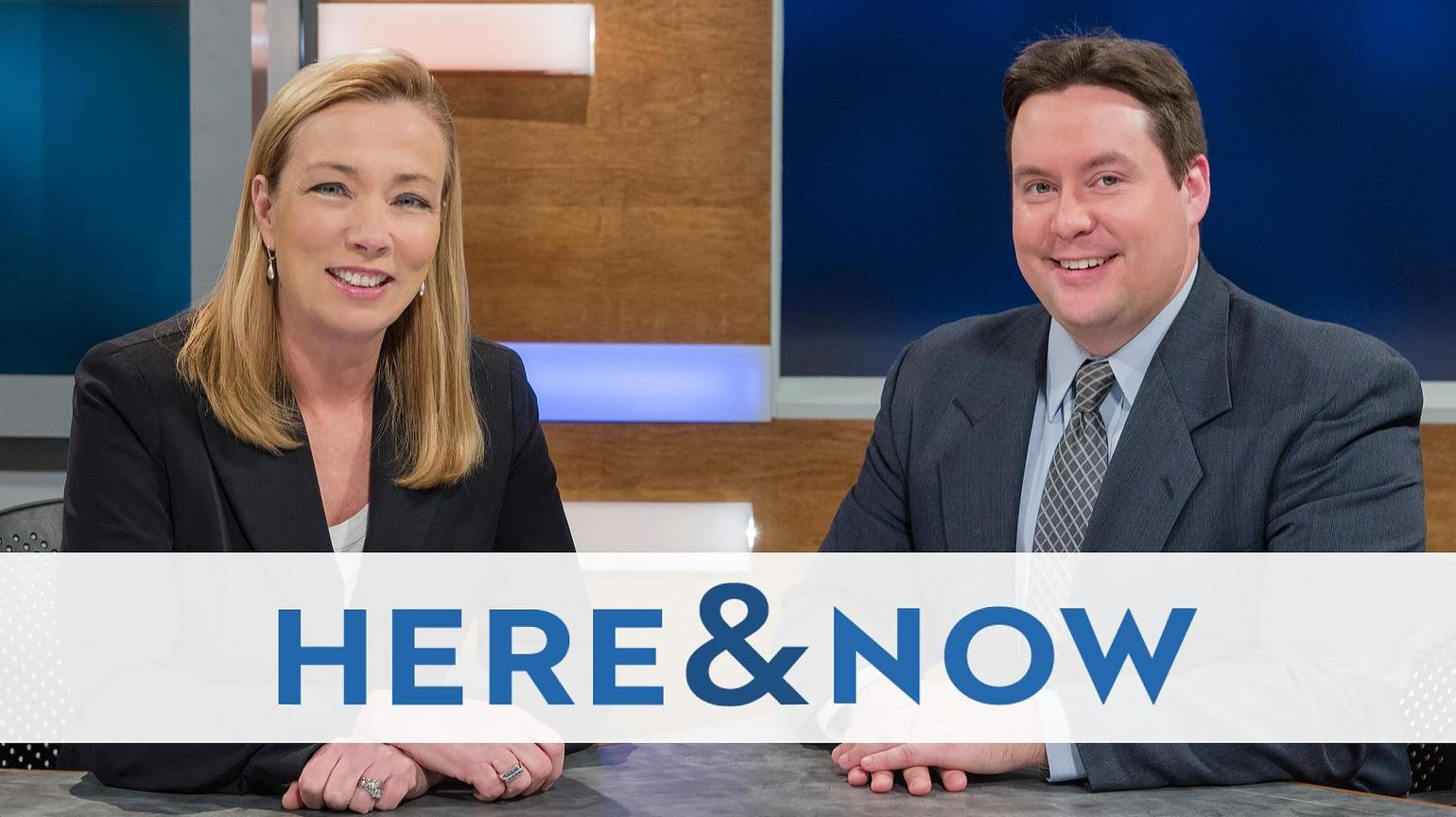




Here & Now for October 23, 2026
The following program is a PBS Wisconsin Original production.
This program is part of our Here and Now 2026 election coverage.
Harvest is a is kind of our enjoyable time of year.
You know, we've worked all year to grow this crop, take a little bit of time, look around, enjoy it.
Farmers take stock of their hard work just like the Milwaukee Brewers in the World Series.
And soon the candidates running in the midterm elections.
[MUSIC] I'm Frederica Freyberg.
Tonight on "Here& Now" inside Wisconsin.
Politics breaks down.
The only debate with the candidates for governor.
[MUSIC] third congressional district.
We follow up with a soybean farmer after last year's trade war and how politics may play out.
As the Milwaukee Brewers play in the World Series.
It's "Here& Now" for October 23rd.
Funding for Here and Now is provided by the Focus Fund for Journalism and Friends of PBS Wisconsin.
For undecided voters who watched this week's debate between the candidates running for governor.
The details from Republican Tom Tiffany and Democrat David Crowley were lacking.
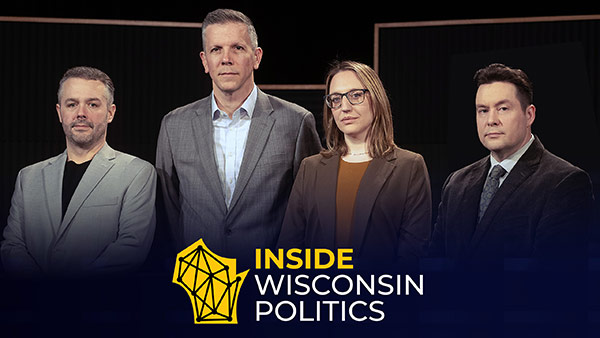
Our colleagues at Inside Wisconsin Politics looked along with a few more moments.
I'm taking notes during this debate, and I just kept waiting for like specific numbers to come in specific details, and they just weren't coming.
So one of my big takeaways from the debate was just all of the sort of talking around the specifics.
And there are reasons for this.
There's normal reasons around campaigning.
There's the open question of who's going to win the legislature.
That actually certain details kind of difficult.
But there was just a lot of non-answers.
As you mentioned, and we're also early voting has already started.
We are two weeks out, less than two weeks out from the election.
And so for this to be coming so late and for there to still be kind of these big unanswered questions that really stood out to me.
Yeah, big unanswered questions for sure.
If David Crowley has a Democratic legislature is going to be a lot different priorities for him than if he has a divided or Republican legislature and vice versa for Tom Tiffany.
But it sort of like gave them a pass to answer question after question.
And this thing they did get into some specifics, though, sort of when it came to the budget.
It was nice to hear them talk about that for quite a while.
So let's get into some of that.
They spent a while talking about taxes and school spending.
Tom Tiffany talked about a 10% income tax cut for families who earn under $150,000, but he didn't say exactly how he'd be able to do that and still fund education.
Here's Tom Tiffany's exchange with Wisn 12 moderator Matt Smith.
We're going to put more money into people's pockets.
We're not going to raise taxes on the good people.
That's a lot of income not coming into the state.
Then do you make cuts in your first budget proposal to offset that?
We are going to have sufficient money in this budget to be able to fund the the things that are important to Wisconsinites education, transportation and infrastructure, health care.
And then on the flip side of that, you had David Crowley talking about by taxing billionaires.
He was asked a few times about the details.
Here's David Crowley.
We need a long term solution, not just quick fixes.
I'll give you one more chance.
You don't have a threshold, though, for where taxes will go up, what that income level is.
This is about making sure that we're working with the legislature.
They're the ones who have the power of the purse.
And so as I'm crafting my budget, I look forward to working with.
that ahead of the election.
I think voters want to make sure that they have somebody who's going to work for them.
I know that these candidates are not the first candidates for governor to kind of dodge what they're going to do when it comes to the budget.
But boy, if you tuned in hoping to hear how they're going to achieve their priorities without hurting other priorities, you might be disappointed.
Well, this is why we don't have three debates anymore and why we really aren't missing that much by not having as many debates as used to happen in this era of campaigning, where there's hundreds of millions of dollars for these candidates to push their message every which way, exactly as how they want it phrased and crafted.
They don't need to rely on a debate to reach the average voter the way they used to.
And that's exactly what we we heard last night was a whole lot of don't worry about it.
I've got a plan.
We can dig into their history, as we did in last week's episode.
We talked a little bit about their legislative achievements to Tiffany was on joint finance during the Scott Walker era, so we would expect him to run government in a similar fashion.
That's how he crafted those budgets when he was there.
David Crowley runs the largest county in Wisconsin.
We have a very good insight as to how he runs those counties.
So their evidence really comes from what they've done, not necessarily what they said last night.
Yeah.
And I feel like you were tough but fair with these candidates in your story.
Some awkward moments was, I believe, the phrase you used.
Let's play one of those.
This is where Tom Tiffany was asked by Wisn 12 about why he wanted to overturn the results of the 2020 election.
He referenced private election grants from Facebook founder Mark Zuckerberg, sometimes called Zuckerbucks.
That's why I objected, because the people of the state of Wisconsin, they did not want that.
And by the way, the people of the state of Wisconsin have voted to enshrine photo ID into our Constitution.
That's why you joined efforts to disqualify.
Hunter, thousands of absentee ballots in Milwaukee and Dane counties with Zuckerbucks.
Yes, because of what happened there when there was money coming in privately that should not have been.
I want to mention I took moderators for questions to get to that point.
In that fifth question there, he heard about Zuckerbucks was the final question on that topic.
With a little awkward pause.
I think it's fair to say before the election, it was explicitly legal to do what Mark Zuckerberg's group did with those private election grants.
I was just looking back last night after Tom Tiffany mentioned that, Zac, you know, he he, as Rich mentioned, he did not talk about Zuckerbucks in that initial objection, the press release where he talks about how he wants to object to Wisconsin's vote in 2021, is still sitting on his website.
A little bit of a rewriting of history on this one.
It seems like.
Well, there's been a lot of coverage about election denialism.
It's still strong within the Republican Party.
And this you might be able to parse between Tom Tiffany having to serve a couple different audiences, trying to find things that most people did object to.
And there was a constitutional referendum to eliminate Zuckerbucks from coming back around.
But of course, that was years afterwards.
They were not illegal at the time.
Things that Republicans didn't even bring up before the election.
They were only brought up afterwards, which is part of the reasoning.
The the conservative majority on the Wisconsin Supreme Court denied an attempt to overturn the results of that 2020 election.
So let's move on to an awkward topic here for David Crowley.
He had a tough primary, remember, against democratic socialist Francesca Hong.
He wants her supporters to vote for him.
So he was asked whether he supports the Democratic Socialists of America platform.
Here's what David Crowley had to say.
And I'm glad to have the support of those who believe in the same things that I believe in, because that's what's going to move the state of Wisconsin.
That's what's going to show these the individuals that I'm going to be a governor for them, not for those who are funding my campaign.
Do you support any of the platform?
Which part of the platform are we talking about?
The one thing I'm not I'm not familiar with the platform to be answering that question.
Ana as he says, I'm not familiar with the platform.
He ran against Francesca Hong for how many months?
And he doesn't know what's in that platform, what's going on there?
To quote the great Mariah Carey, I do not know her.
Right.
He's just sort of removing himself from that whole kind of situation entirely, in part because once you do start, you know, I don't know, parsing out, okay, yes, I want to keep the Senate and I do believe in Thanksgiving, you kind of just end up in a message that is not necessarily yours.
So his part of his response was, you know, sure, socialists could vote for me and Republicans should vote for me, right?
He like kind of used it to just say, as always, I. David Crowley will reach across all aisles and appeal to all people.
And he kind of was able to pivot it back to his message a little bit.
And then, of course, Tom Tiffany was able to then say, but you also said, you know, when you say when you want to invite Francesca Hong supporters into your big tent, you sound like a socialist.
And so we did kind of end up with a little bit of a them trying to define one another against this candidate, this primary candidate who's no longer in the race.
The race to represent Wisconsin's third congressional district is gaining steam as Democrats hope to flip the seat in their effort to take control of the House.
The race is a rematch with Democratic challenger Rebecca Cook, once again taking on Republican incumbent Derrick Van Orden.
Steven Potter has this story from western Wisconsin.
I'm about as straightforward as you can get.
I'm a retired Navy Seal senior chief.
I'm a father and a Christian.
I'm a husband.
I'm a grandfather.
Hi.
How's it going?
Good.
How are you?
Good.
I have a background that people connect with and resonate with.
I grew up on the north side of town, on a dairy farm, over on a small business here in downtown Eau Claire.
I'm a waitress at a local restaurant up the street.
to represent Wisconsin's third congressional District say they share the same values as their neighbors.
They're hard working, farm loving, and family focused.
But how that translates into partisan politics for Republican incumbent Derrick Van Orden and Democratic challenger Rebecca Cooke is what voters are set to decide this November.
I'm running for Congress because I want to address some of the biggest issues in our communities lowering costs, combating corruption, bolstering agriculture, supporting small business and rebuilding an American dream that, you know, we can actually grasp.
Van Orden says he's running for reelection to finish what he started in Congress under President Donald Trump.
We got the farm bill.
As I said, that's critically important.
That's just got to get through the Senate.
And then I continue to work on a series of veterans initiatives.
We need an extra two years here to get get most of the things accomplished that, you know, the president ran on.
And the things that I ran on.
President Trump and his policies factor heavily into this race.
Cook says.
Voters want change.
Things have gotten worse under this administration.
You look at this war in Iran, a war of choice that nobody voted for.
Trump and Derrick Van Orden First agenda.
This war is not America First.
It's increased diesel prices.
It's increased fertilizer prices for farmers, but it's also increased prices across the board.
When it takes more to ship goods to the grocery store.
Right?
Everyone's seeing their costs go up.
Right now.
Diesel is too high.
That's flat out.
It is absolutely too high.
And it's much more nuanced than this.
The conflict in Iran, is it politically convenient right now that we're involved in this conflict with Iran?
The answer is absolutely no.
But Van Orden says he'd rather fight this war now instead of later.
I don't want my grandchildren involved in a conflict with Iran and with this current group of folks in there, you know, they will be unless something is done.
and trade policies under Trump have also hurt Americans.
as the top of the pyramid of the things that people, especially in this district, are struggling with.
We've seen two major hospitals close.
You look at the impact reciprocal tariffs have had on our soybean farmers and our cranberry producers who caused those big issues.
A lot of that leads back to him and to Derrick Van Orden.
Steil Van Orden stands behind Trump on policy.
The border is closed.
We've got no tax on tips.
Seniors living on Social Security paid, no federal income tax on their Social Security this year, and the policies that he has done for America are benefiting Americans.
And he salutes the president's patriotism.
That man got shot in the head.
Donald Trump literally got shot in the head for America.
When it comes to issues important to this region, the candidates are in alignment.
There's a high voltage transmission line referred to as line 765.
It is absolutely inappropriate.
seven, six.
Five and data centers.
I don't want a data center next to me either.
I live here on purpose.
You can't cover Black dirt.
That's farmland.
Called for a federal data center moratorium.
These issues are sort of aligned like people from the outside shouldn't be deciding what gets built in our backyards.
UW, green Bay political science professor David Helpap is watching this race very closely.
The people that are very enthusiastic about the president, they're going to turn out.
But with inflation, high gas prices and other concerns, that's not all Republicans these days, especially for a lower turnout midterm election.
It's the individuals that sort of sit maybe on the fringes of support for the party that are going to be harder to convince and harder to turn out.
The stakes are high in this race because it has the potential to be incredibly close.
And because of that, it may also help determine which party controls the U.S.
House of Representatives.
The composition of the House of Representatives right now is such that having a district go 1 or 2 districts go your way could make or break your chances of controlling that institution.
Which puts this race in the spotlight.
At the national level.
I would say the third Congressional District is probably the biggest bellwether right now.
It's the most competitive.
In this race.
According to election analysts will likely be as close as the last one was two years ago.
Derrick Van Orden faced Rebecca Cooke in an election for this very same seat.
Van Orden won that race by less than three points in this year's rematch.
Both candidates are pushing hard for the rural vote.
Especially, you know, for Democratic voters.
You know, there's been a lot of focus on some of the urban areas like Eau Claire, Stevens Point, La Crosse.
And I think that it can be easy to forget some of our small town communities, you know, 500 or less.
And I think those voices are just as important as the voices in our in our bigger communities.
purple state.
We're a state full of conservatives that don't vote in our elections are are settled by, what, 25,000 votes?
No.
If every person in the state of Wisconsin that considered themselves a conservative voted regularly, the states as red as an apple.
And with control of the House hanging on races like this one.
Van Orden and Cooke also agree that these midterm elections will decide.
democracy.
country.
Claire.
I'm Steven Potter for Here and Now.
It's the thick of harvest season for crops like soybeans and field corn.
The many trucks and combines it takes to bring in the harvest run on diesel still at record high prices.
There's been a lot of print on the plight of the farmer in this economic climate.
But as we found out when we traveled to Rock County and talked with farmer Matt Rehberg, who runs a midsized operation, his immediate attention is on the task at hand.
Tell me about how the harvest is going.
Harvest is going well.
We've had a pretty nice fall.
We've had good weather.
It's been sunny.
Weather is three quarters of it.
If you got a good harvest, weather yields are coming in.
I would say about average.
In fact, soybeans might be slightly below average on our farm.
You know, farms vary and corn might be average to slightly above.
So it's just kind of nice to have just a nice steady harvest.
You know, it is.
So we know that one of the things that people are talking about in terms of the expenses for farmers right now are diesel prices.
Sure.
How is that affecting your operation?
You know, it's it is a line item for us.
We are primarily a no till farm.
Fall is typically when we burn the most amount of diesel.
Spring would be less.
Summer is just a little bit for our spring operation.
But if you look down the ledger, you know diesel for us on our farm, you know, we're not livestock.
Some of these other more intensive or trucking is it is a noted expense, but it's it's not one of the top ones for us.
It's not like land or machinery or fertilizer or seed, something like that.
But yeah, every increase in cost, you know, goes to the bottom line.
So yeah.
What about the cost of fertilizer?
Has that been impacted because of the war in Iran?
Yeah, that's had an impact.
Just I would say general global economics has played a factor in in the price.
But, you know, I mean, the, the, every industry and consumer is kind of dealing with the same issue.
But, you know, for us, it becomes more of a like a management problem, you know, like, okay, you know, we have these increased costs.
Do we, you know, do a better job marketing?
Do we, you know, control costs, control inputs, it's, it's kind of a, just a challenge of doing business, you know, that we, we're used to.
What can you tell me about trade, international trade for your products for soybeans and corn?
Historically, you know, last year's big news, of course, was the trade war.
And, you know, I mean, that's an ongoing negotiation.
And I think that's going to be there for the long haul, you know.
And so for us, you know, as a as a producer in, in an industry, you know, we need to do our due diligence to look at other markets.
And we've done that.
And one really cool thing that's kind of cropped up for us is, you know, we're in Wisconsin, we're in the dairy State.
We're now raising a soybean.
That is what they call a plenish, being a high oleic.
And that gets crushed for the cattle market.
Helps out with, I believe, butter fat.
And so it brings a bit of a premium to us.
So that helps out on prices.
We're selling to fellow Wisconsinites.
So we're not international markets.
We're not as worried about it.
You know, it's always a concern, but it's really been a cool opportunity to help, you know, bring a little bit back to a local Wisconsin farm and supply another Wisconsin ag industry.
What are you looking ahead to in terms of your break even or profiting or not profiting off this year's.
You know, what, what ultimately determines our profitability?
The big weather, that's the ultimate.
We need good weather.
We need to raise a crop.
Close behind is the markets.
They have went up at the end of summer, which was great.
That was we took advantage of the rally.
We were able to sell some grain at a profitable level and, you know, have have a real solid start on the year.
In fact, some farms, myself included, have sold stuff even for 2027.
And looking into the future.
And they've, they've backed off a little bit, but that's typical during harvest, you know, as all the market or all the grains coming to market, you know, typically things soften a little bit.
And so I would say it's markets are, you know, not unexpected to be a little bit softer right now.
So I know that you are fully focused on getting the harvest in, but in less than two weeks are the midterm elections.
Yeah, yeah.
Coming right up.
Yeah.
In terms of that, are there things that farmers like you and others would be looking for?
I would say, I think there's probably mirrors the sentiment of most of the public is just whoever is elected into office.
Just please work with your counterparts.
You know, you know, work together.
If it's a good idea.
Don't be afraid to work across the aisle.
You know, we do as an industry, you know, we have to work with whoever's there.
We still have to produce what we produce, do business, and we just encourage whoever's elected in our politicians to do the same thing.
You know, work together.
If you're watching us, you're likely not watching game one of the World Series being played in Milwaukee between the Brewers and Tampa Bay rays.
Unless you're multitasking and that's okay.
It's the first time in 44 years that the Brewers have made it to the World Series match up, and the excitement is palpable on and off the field.
Of course, the series comes at the height of the midterm elections.
Heat.
How do these high stakes events intersect?
We turn to Milwaukee's own political scientist, Mordecai Lee and Mordecai, thanks very much for being here.
Thanks for inviting me, Fredricka.
So how excited are you about this series?
Well, I'm very excited because I remember going to the 1957 World Series of the Milwaukee Braves.
Wow.
I was nine years old and my dad was able to finagle two tickets.
We were in the upper deck at first base, and it was one of the highlights of my life.
I still remember it vividly.
So that's what people are going to be experiencing tonight.
Yeah.
Are you are you going?
No, not unless prices drop around 5:00.
Right.
My my son is monitoring the stock market.
Is it true historically that voters don't tune into the midterms until the World Series is over?
I think living in Milwaukee for the past week, the answer would be what election?
What politics?
It's just amazing.
For example, the TV news is 100% minute to minute.
Brewers, for example, yesterday I was interviewed by a TV reporter about the debate and they never aired the story because they didn't have airtime.
After they did all the brewer coverage.
And in fact, I might have been the only one in Milwaukee who watched the debate.
I mean, that's how much people aren't paying attention.
Well, if all of that is true and people aren't tuning into the elections until after this, it doesn't leave people very many days before Election Day.
Well, it'll happen when the undecideds are ready.
And I think the Democratic primary in August is a good example that they held and they held and they held.
And then in the last 48 hours, they made up their mind.
It was almost as if they had had a conference call.
All decided what to do.
And that's how Crowley won.
I mean, it's not surprising that given Wisconsin's sort of independent political culture, that people are holding off and frankly, turned off by these commercials.
The campaigns here in Milwaukee have probably wasted $1 million just on advertising during this week, during the World Series.
Well, what about ads inside the World Series?
How many of those do you expect there to be, and how expensive is that?
They're going to be tremendously expensive, even during what used to be called commercial breaks for the local station.
And I really think that they'll have a very little impact.
You know, the spirit in Milwaukee is just sort of walking down the street is almost like in the movies, you know, when sometimes everything is frozen and people don't move except for one character.
That's how it feels to me being in Milwaukee, that all we're doing is thinking about Brewers.
Nothing else is happening.
Everybody's got a smile on their face and it's like time has frozen the.
The animal spirits have been let loose.
Well, that is just lovely.
Of course, everybody kind of wants to claim the Brewers as their own.
All of us.
And they are.
But candidates are kind of fast to take credit for keeping them in Milwaukee through, what, 2050?
And we know that Democratic candidate for governor, David Crowley, was really key in those negotiations to do that.
But but does any of that matter in terms of, you know, those negotiations and the law and the funding?
$500,000 of public funding that kept the brewers here?
You know, I really can't imagine because the story of funding of keeping the Brewers here for another 20, 25 years is the ultimate of inside baseball for politics.
In other words, the governor proposed something the Republicans refused to consider it.
The Republicans came up with their own package, and it finally passed.
And everybody took credit for it.
Except now the voters have totally forgotten it.
So does winning baseball and an historic World Series kind of unite people in this politically polarized climate?
It'll be so interesting to see what the results are.
I mean, there's a story about Buffalo that when the NFL team in Buffalo does well, everybody is smiling.
And when they do badly, everybody is down in the dumps.
I suspect it's going to be a little bit like that, because it's going to be perhaps a photo finish.
But I don't think that people want to think about politics.
I think they just want to think about happiness, about the Brewers.
And this will really affect their moods.
Going practically to Election Day.
Yeah, it's kind of a respite.
So I failed to ask, was it 1957 that you went with your dad and it was the Milwaukee Braves?
Did they win?
And they were in two World Series.
They won the 57 World Series against the Yankees, and they lost it in 58 against the Yankees.
So you know how it feels on both sides.
Mordecai Lee, thanks so much.
My pleasure.
Thank you.
For more on this and other issues facing Wisconsin, visit our website at PBS wisconsin.org and then click on the news tab.
That's our program for tonight.
I'm Frederica Freyberg.
Have a good weekend.
[MUSIC] Funding for Here and now is provided by the Focus Fund for Journalism and friends of PBS Wisconsin.
Search Episodes

Donate to sign up. Activate and sign in to Passport. It's that easy to help PBS Wisconsin serve your community through media that educates, inspires, and entertains.
Make your membership gift today
Only for new users: Activate Passport using your code or email address
Already a member?
Look up my account
Need some help? Go to FAQ or visit PBS Passport Help
Need help accessing PBS Wisconsin anywhere?

Online Access | Platform & Device Access | Cable or Satellite Access | Over-The-Air Access
Visit Access Guide
Need help accessing PBS Wisconsin anywhere?
Visit Our
Live TV Access Guide
Online AccessPlatform & Device Access
Cable or Satellite Access
Over-The-Air Access
Visit Access Guide


Follow Us