






PBS Wisconsin Passport
Watch this video with
PBS Wisconsin Passport
Become a member of PBS Wisconsin, support your local community, and get extended access to PBS shows, films, and specials, like this one.
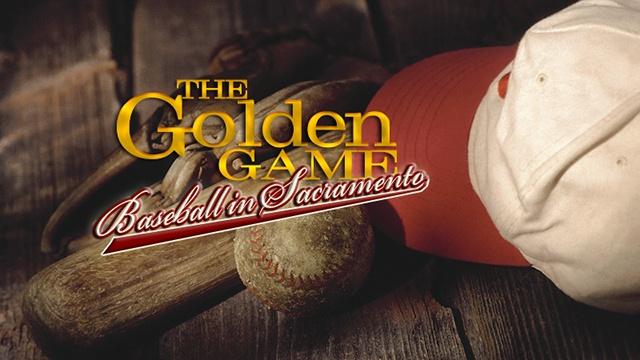
The Golden Game: Baseball in Sacramento
06/01/07 | 28m 4s | Rating: TV-G
Chronicles the Sacramento Solons' victory against rival Los Angeles in the 1942 Pacific Coast League series, the mysterious fire at Edmonds Field (and why some believe the team set it), and the 2000 opening of Raley Field, home of the triple-A champion River Cats. Footage and archival stills reveal the impression baseball has left on Sacramento and the mark the city has left on the game.


Copy and Paste the Following Code to Embed this Video:
The Golden Game: Baseball in Sacramento
♪♪♪ As an ad agency familiar with fast pitches and screwballs, Seraphein Beyn is proud to support the Golden Game. It draws us in at a young age. The exact details of our first hit, strikeout and home run are often forgotten, but people rarely forget how they felt playing the game. For more than 150 years, generations have grown up playing it.
Parents watch their children play and learn the lessons of a game filled with dramatic highs and crushing lows. Big games are won and lost, and dreams to play at the highest levels are pursued and abandoned. But what transcends it all is often a lifetime love for a game we all consider our own. The game is baseball.
The Sacramento Base Ball Club, the Altas, The Gilt Edge, the Senators, the Solons and River Cats... From pro-ball to little league, there's been a rich history of the game in Sacramento, enough to fill volumes. Here, we tell just some of those stories of a city and its love of baseball. The relationship between Sacramento and baseball runs deep, but few realize the city's connection to the sport stretches all the way to New York and the father of the game.
What's intriguing about baseball in California is that is shows up when the state itself is being formed in the gold rush. Alexander Cartwright, who if you look at his plaque in the hall of fame in New York, is described as the father of baseball. Well, he was a 49'er, and what distinguished him, as opposed to other 49ers, is that he carried a satchel, and in that satchel was a baseball. Supposedly, he organized baseball games along the way, amongst the young men on the wagon train wherever they made stops.
Did he, the father of baseball, bring that baseball out of his satchel and start tossing it around with people at the time, and was that the origins of baseball in California? Proof could be here. Cartwright did visit Sacramento, but there's no hard evidence. But buried in these articles of the old Sacramento Union, something equally impressive was discovered.
The first baseball club on the west coast was in Sacramento. It was the Sacramento Base Ball Club, and it was organized in 1859. As far as I can tell, this was the first announcement in a California newspaper about a baseball club being organized. The first West Coast game soon followed.
February 22nd 1860 should be kind of an anniversary date to note, because that's when the first official game was played in Sacramento. It was because of my baseball research and finding out about these first games that led me to Sacramento's old city cemetery. N.B. Kendell played in Sacramento's very first baseball game and would be around for another historic moment, when the nation's first professional baseball team, The Cincinnati Red Stockings, came through town.
1869 was a huge moment not only in California history but in American history. It was when the transcontinental railroad
was linked together
linked east with west. And six months after the railroad was finished, a baseball team came west, and that was the Cincinnati Red Stockings who were the best baseball team on the planet. They were the first dream team. And they came out west to play the local California teams.
That game didn't go nine innings. The score was something like 50 to 5 after seven innings. So they quit. But an interesting thing about that game is that one of the players was N.B.
Kendall. So he kind of connects the very beginnings of baseball with the next phase of the game in Sacramento. And that nextphase would be the creation of Sacramento's first professional team. Sacramento's first professional team was the 1886 Altas of the California League.
And its first true ball field was Agriculture Park near H and 20th. But truth is beer might've been bigger than the team. A lot of early baseball can be traced back to beer. You got to remember that Sacramento was as hot as it is now.
But there wasn't the air conditioning that we have now. Sacramento's second team, again beer... The Gilt Edge was named after a beer. That was Ruhstaller's Brewery, it was their top beer.
And in 1898 through 1901, they were the Gilt Edge, also called the Brewers. Their second ballpark, at S & 28th? Whiskey! Snowflake Park,
was named after a whiskey
the top whisky produced by the local Hall Lurhs Company. People talk about downtown baseball parks as if baseball parks were historically always downtown. They weren't. One of the early figures in Sacramento baseball was Edward Kripp.
He was associated with the Buffalo Brewing Company. When the Pacific Coast League was formed, he was the one that was responsible for building the ballpark at Riverside and Broadway. He picked the location at Riverside and Broadway, because it was just outside the city limits. Edward Kripp didn't want to deal with the Sacramento Police Department in connection with this new ballpark he was building, the featured attraction was Buffalo Beer.
Beer played a big part in the early history of Sacramento baseball. Beer got the game started, but 1903 was the year it began to stand on its own. That year the new Sacramento Senators beat the Oakland Oaks in what would be the first game of the Pacific Coast League. The Pacific Coast League then begins a marvelous history with
just fabulous names
Ted Williams, Joe DiMaggio...just a galaxy of talent who came through the coast league to have ultimately played in major league baseball. One thing that people have to remember is that there were no major leagues in California in 1903. All the major leagues were in the east coast. California was sort of a distant planet; far away from the orbit of the major league cities.
The Pacific Coast League was the center of that universe. And the play? As it evolved over the years, it was considered to be a third major league. For the next 6 decades the PCL was West Coast baseball.
From 1918 through 1960 baseball would be played, at the corner of Riverside and Broadway, in that great park with many names. It was once Buffalo Park, (named) after of course, beer; then Moreing, after team owner Lew Moreing; Cardinal, when they became a St. Louis affiliate; Doubleday, when St. Louis abandoned the team.
And finally Edmonds Field for Dick Edmonds, the sportswriter who successfully lobbied to keep the team in town in 1944. And along the way the team also took the name that at first no one understands. Well, a Solon is a legislator, and since this is the capitol city, and originally when came into the Pacific Coast League, we were called the Senators. They would occasionally call us the Solons.
The name stuck, and players wearing that uniform would usher in change that was felt far beyond the stadium walls. You can tell the story of baseball, and it's often the story of America. By the 1930's changes were coming for our nation, and those playing baseball would routinely lead the way. Even in the midst of the depression, America was in a whirlwind of technological change.
The first television broadcasts began in the 1930s, and in Sacramento another illuminating event was about to take place, the very first night game on the West Coast. It was a really big deal, because there had only been one or two night games played in the entire United States. It was a July date in 1930, six years before the Major Leagues had night baseball at Crosley Field, Cincinnati, Reds. It's now commonplace that there's night baseball, but in 1930 it was considered a daft idea; play baseball at night?
What are you, nuts? The 30's would be a time of more than just technological change. In 1936, Jesse Owens shattered racial barriers halfway around the globe. And in Sacramento, cultural history was being made through baseball.
Kenso Nushida was Japanese American who played for the Sacramento Solons in 1932. He was a hero to many Japanese Americans of that time, because here he was a second generation Japanese and a son of immigrants, who was playing America's game. It was important. So this was a way that all these people became part of American life, and the Coast League was the first gateway.
Coming with Jackie Robinson in the 1940s, beginning with then, the racial make up of baseball begins to change. In Sacramento our first...when we broke the color line, if you will, in 1950, when two players come to Sacramento from Venezuala...Walter McCoy and Marvin Williams... And again that's a reflection of our society, our openness as a people. There are lots of different people who live here, and there are lots of different people who play baseball, and it's one of the ways we come together as a people.
And Sacramento fans have come together over the years to see a diversity of talent. But will today's fan remember yesterday's greats? There have been a lot of baseball players that have achieved great things from Sacramento. George Borchers was Sacramento's first contribution to the major leagues.
With what would become the Chicago Cubs. Stan Hack is actually a baseball legend. Probably the most notable infielder whoever played the game here in Sacramento......played for the Chicago Cubs for 16 seasons and is really regarded as one of the best third baseman of the 1930s. Joe Marty has been described by sports writers as probably one of the finest ball players to come out of Sacramento.
He attended Christian Brothers High School, was a sports star there and went on to St. Mary's and was a sports star there. He went up and played for the Chicago Cubs, becoming the first Sacramentan to hit a home run in the World Series. And there's at least one Solons broadcaster who shouldn't be forgotten.
Tony Koester was the voice of the Solons, and he would go to road games in the Bay Area; he would broadcast local games, but those road games were very interesting to a lot of people, because what he would do is recreate them. It was no secret to them, that he wasn't watching the game, because they could see him reading the information off a ticker tape. He would make the sound of the bat by banging two pieces of wood together. And he would have some background noise for various crowd actions.
When he would announce the pitch, he would slap the side of his leg. He's say here comes the wind up, the pitch (slap), ball one. I think that was more exciting to them than to watch the game itself. But there was one pitcher everyone had to see in
person
possibly Sacramento's greatest ever. What made Tony Frietas great? He was dependable, and I think as a role model, he was outstanding. Well, Tony Freitas was a guy who felt he could do just about anything.
He pitched a 17 and 2/3 inning game against Dizzy Dean. There are pitchers that don't pitch 17 and 2/3 innings in a month, or two months time, and he did that in one day. Tony Freitas played with the Sacramento Solons for 16 years. In six of those years, he had more than 20 wins, as I understand it, 45 shutouts.
He was small in stature but big in heart and big in desire. There's a picture of him, and he's not much bigger than I am, and he's holding 7 baseballs in his hand. A classic PCL player, Freitas makes you wonder how good he would've been in today's game. And while he played only a few short years in the majors, he's still known as the winningest left-hander in minor league history.
It's a shame that memory is so short. There are a lot of people that I'm afraid are just going to be forgotten in history unless we keep talking about them and what they've done. Tony Freitas is one of those people. He was still the most personable guy even in his 70's, when he would meet with kids and visit with kids.
There was more to him and more to his life than baseball, a lot more. He had an incredible kind, loving, dedicated attitude,
and that's what I miss
just that time with him. For more than 20 years, Freitas was Sacramento's biggest sports star, and he would be the key component to Sacramento's biggest and most dramatic series. By the early 1940's the Solons had become a farm club of Branch Rickey's St. Louis Cardinals.
And for the first time in a long time, winning seemed possible. The Sacramento baseball team had never won a pennant since 1903, when the league was created. So going into the 1942 season, we were looking to finally win a Pacific Coast League Championship. But then history got in the way.
(bombing sounds) So between the 1941 and 1942 seasons, what happened? Pearl Harbor and war broke out. There was some question to as whether they would even play the 1942 season. In President Roosevelt's famous letter to Commissioner Landis, he said the game must go on, but for whom?
Well, you couldn't come out to the park if you didn't have gasoline in your tank, and everybody was on rationing. The rationing stamps that everyone had were class A's. This is almost a year after Pearl Harbor, and you have a lot of upheaval, because you know we were not winning the war then. That was a comeback year for us.
And while they lost many players to the draft, the Solons played on. And near the end of the season we were in second place, trailing William Wrigley's powerhouse Los Angeles Angels. Well, the idea of small market teams vs. big market teams is not a new one.
You had Sacramento competing against the likes of the Wrigley Family in Los Angeles, the Wrigley Gum chewing gum empire. They had lots of money. He had the best of talent that money could buy. That was the way he worked.
And it just so happened, the last series of the year would be against the Angels. Sacramento would need a near-flawless series to be PCL champs. Well, the 1942 baseball season in the Pacific Coast League was pretty much a done deal for the L.A. Angels.
It was a 7 game series. To make it more exciting, Sacramento loses the first two games of the series. It then comes down to five games. They're four games behind, which means in order to win the pennant, the Solons would have to win all five of the last games.
Remarkably, Sacramento wins the next three. They almost blew it on Saturday. It went 11 innings. In the top of the 11th, the Angels go ahead by one run.
And then comes Gene Lillard to the bat in the bottom of the 11th, and (he) hits a two run homer. The Solons win the Saturday game. The season and the championship rested on a Sunday doubleheader, and Sacramento had to win both. And for that one day, the city would take time out from the world and its troubles.
In a ballpark that was drawing 500 to 600 people the rest of the season, they draw 11,000 plus fans to a park that will only hold 10,000. It was an escape for people......escape (from) what the war was inevitably dragging us in. And to think your team, the Solons, had come out of nowhere to challenge the mighty Los Angeles Angels, this was great. This was great.
After dramatically winning the first game, the Solons had no choice but to turn to their MVP. Tony Freitas had pitched the game on Friday. He had closed the first game on Sunday. And then Pepper Martin looked around and tried to figure out who was going to pitch.
And Tony said, "I'm still warm, put me back in." (Recording of Tony Freitas 1942) So yours truly was appointed to pitch that ball game. And as luck would have it, they were lambs. They were a beaten ball club, and I had no trouble with them. And we went on to beat them 5 to 1 and get Sacramento's only pennant since they were entered into the Coast League 39 years ago.
You couldn't write fiction better than that. You see these movies about come from behind victories, and you've never seen anything more exciting than that. Truth is better than fiction. But the good times wouldn't last.
By 1943 the war effort had decimated the Solons. Most of the good players were sent to other places or were lost to the draft. So the 1943 season was a complete turn around for the Solons. We won the championship in 42 and, in 1943 we set the record for the worst league ever in the Pacific Coast League.
When I saw as few as 200 fans in Edmonds Field watching a ballgame, a coast league ballgame, I knew that there was some bad days ahead. But the worst was yet to come. Well that was a sad day for Sacramento when Edmonds Field burned down in July 1948. I still have people coming up to me saying they remember standing out in front of their house and watching the smoke and the flames from the field burning down.
The team hadn't been performing well either on the field or financially, and before the embers cooled rumors started to swirl. The conspiracy was that the ball club was losing money. There was speculation that it might have been arson. There was a suggestion that the team management had increased their insurance just a few weeks before the fire.
So they moved it from $140 thousand up to $250 thousand in insurance in case something happened. Well something did happen. And there's still a doubt about this fire. Today most people discount the arson theory, believing it was simply an accident.
But on the other hand, most people don't believe that the one person who claims to have accidentally started the fire could've possibly done it. Well,
I'll make my public confession again
I was smoking a cigarette, drinking a beer and watching the game. And when I went to grind out the cigarette, my shoe, instead of stamping it out, kicked it just enough so it fell down in a crack. I could see, see this cigarette butt resting on a big 12 X 12 beam, surrounded by peanut shells. And I poured a little beer down, and I thought maybe that would put it out.
And I have to admit, I didn't want to waste too much beer, because beer cost 15 cents a bottle then. Stan likes to...Stan is Stan. I've heard other people say that Stan didn't start that fire, but you'll have to ask Stan that question. The ground was plenty wet.
There was no reason for the wood to have taken off by a cigarette that was smoldering down there. But why did Mr. Gilliam wait so many years to tell people his story? I wanted to wait for the statue of limitations to run out I guess.
But I really do think I was the one who unwittingly burned the ballpark. A new stadium would soon be built, concrete this time, but even bricks and mortar couldn't save the team in 1958 from the bigger threat to the West and the South. When the Giants came to San Francisco and the Dodgers came to Los Angeles, that marked the end of the Pacific Coast League as we knew it. As much as people loved baseball, we weren't a big enough market and didn't win enough ball games to keep the Solons in town after the 1960 season.
So it was a sad day. A lot of people were quite sad to see the Solons leave. The Solons moved to Hawaii and eventually Colorado Springs, where they became the Sky Sox that still play to this day. And by 1964 the near 100-year history of professional baseball in Sacramento came to an end when Edmonds was demolished.
I was very, very emotional in 1960. When I go by the Target on Riverside and Broadway, I remember Edmonds Field. I had been there a number of times to ballgames and other events, and I always get a bit nostalgic. I think back over the times that I had head about when Joe DiMaggio hit home runs there...Babe Ruth did.
I don't buy that much from Target. I kind of resent that they took away my little game in the sun. For a brief time in the 70's, a new team took the Solons name, but they, too, folded. Sacramentans would go 23 years before seeing another professional game.
May 15th, 2000 would be the next milestone for Sacramento baseball and opening day for the cities newest ballpark, Raley Field. The Vancouver Canadians became the Sacramento River Cats, bringing their successes with them. ♪♪♪ ♪♪♪ But maybe better than success on the field, they've made new fans and brought back those who've had their hearts broken before. What the presence of the River Cats reaffirms is that Sacramento is still a baseball town.
I think the number one thing that I enjoy has been coming to the park, and the atmosphere here is outstanding. I think the players really enjoy playing in front of 10,000 to 12,000 people daily. And they're motivated to go out, and play the game as hard as they can. And that motivation extends to their role in the community when the River Cats partnered to build Independence Field.
To build a facility that is dedicated to people with disabilites, providing them with the opportunity to play baseball in an environment that allows them to get around and be mobile,
it's just a wonderful thing
the family component, all of those things combine, in my mind, to make it the best sport that there is. On fields like Independence, and ballparks across Sacramento, you can still see the inspiration behind the game
Cartwright established and brought west
a game that's meant to be played and enjoyed simply for the pure fun of it. Baseball has its own rhythm, and I think that's what's nice about it. There's nothing like being in Sacramento at night, and it's just a beautiful, refreshing time to be out there and yelling for your team, and that's why baseball is such a game. Well, baseball is more than a game.
It's the culmination of hard work; it's competition at its finest; it's just a great game. I love baseball for lots of reasons. And one of them is that it's a bridge to the past. It links with generations.
I remember going to the games with my father. Baseball is a game that can bind fathers and their sons together. That's one of the things about baseball that keeps it alive. What I love about the game is the game itself.
You know,
there's nothing in the world like going to a ballgame
the smell of hot dogs and the beer......the sound of the ball hitting the bat; playing my first game in Wrigley Field and hitting a home run first time at bat. And then you play the game, and you play it as well as you know how to play it. And that's what I love about baseball. To order a DVD copy of this program call (888) 814-3923.
As an ad agency familiar with fast pitches and screwballs, Seraphein Beyn is proud to support the Golden Game. ♪♪♪
Search Episodes

Donate to sign up. Activate and sign in to Passport. It's that easy to help PBS Wisconsin serve your community through media that educates, inspires, and entertains.
Make your membership gift today
Only for new users: Activate Passport using your code or email address
Already a member?
Look up my account
Need some help? Go to FAQ or visit PBS Passport Help
Need help accessing PBS Wisconsin anywhere?

Online Access | Platform & Device Access | Cable or Satellite Access | Over-The-Air Access
Visit Access Guide
Need help accessing PBS Wisconsin anywhere?
Visit Our
Live TV Access Guide
Online AccessPlatform & Device Access
Cable or Satellite Access
Over-The-Air Access
Visit Access Guide




Follow Us