








PBS Wisconsin Passport
Watch this video with
PBS Wisconsin Passport
Become a member of PBS Wisconsin, support your local community, and get extended access to PBS shows, films, and specials, like this one.
Los Angeles
06/28/16 | 53m 41s | Rating: TV-PG
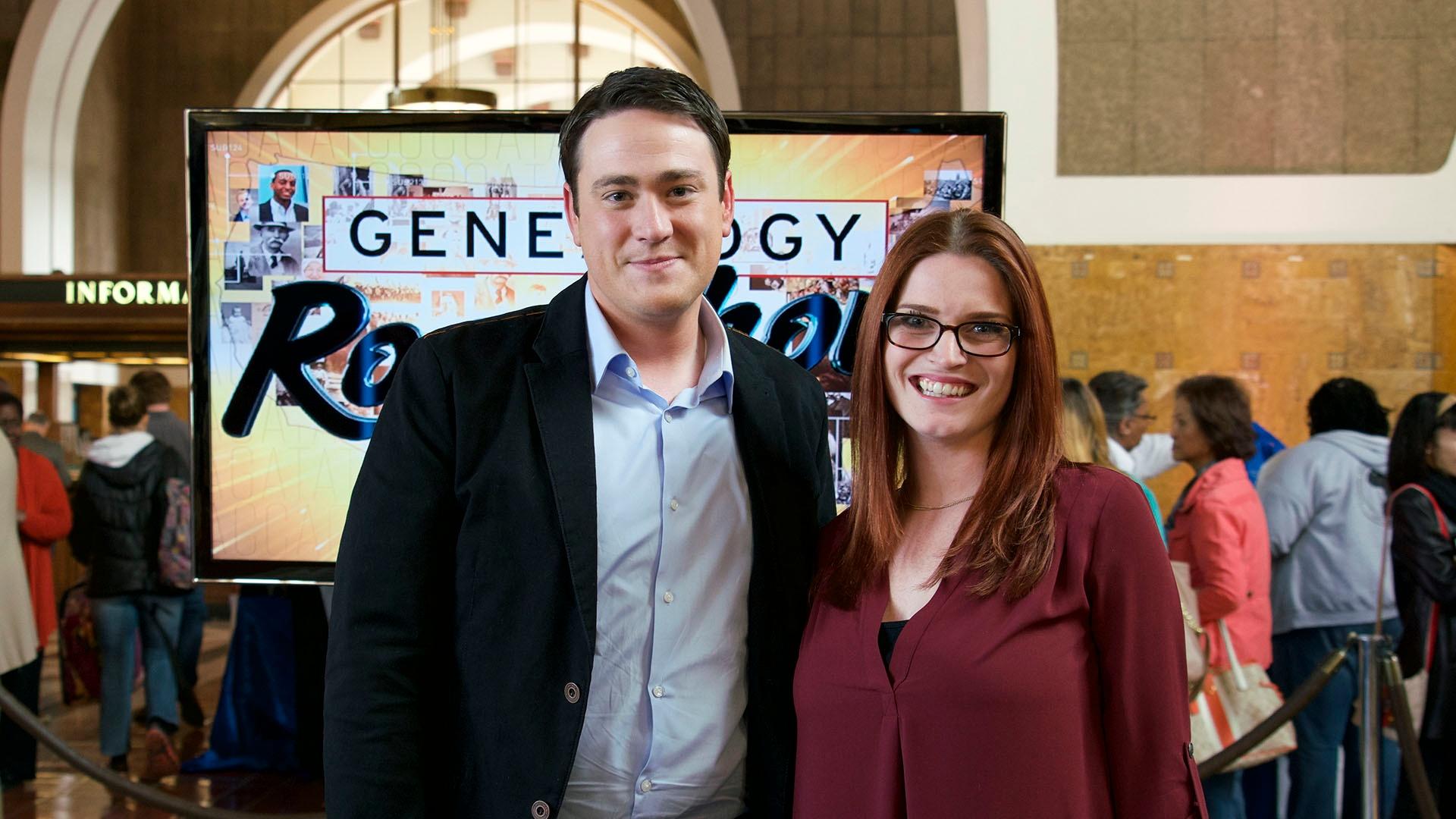
Examine a family’s connection to the legendary Hollywood pharmacy, Schwab’s; a link to one of the first African-American college graduates; a family tree wrapped in a genealogical web that has captivated the Roadshow team for years; and more.


Copy and Paste the Following Code to Embed this Video:
Los Angeles
(announcer) Coming up on "Genealogy Roadshow"... How? Who? Where? (announcer) What's her connection to a former Hollywood landmark? I love this. Shall we take a look? Yes! (announcer) Plus, a question about her past could lead to an inheritance worth millions. Oh, my gosh. I'm shocked. (announcer) And what untold stories does this old scrapbook uncover? Wow, that's really neat. I didn't know that. (announcer) The search for these answers begins right now on "Genealogy Roadshow." We've crisscrossed the country helping everyday Americans unlock family secrets... That's awesome....and discover the truths of their past. Grandpa was a scamp. Yeah. (announcer) Helping uncover these fascinating stories is our expert team of genealogists. Join us as we take everyday people on an emotional journey of self-discovery. Today, we're in sunny southern California-- Los Angeles. Known for palm-tree-lined streets, Hollywood starlets, and beautiful beaches, this sprawling city, home to almost 4 million people, started small. Spanish missionaries and pioneers settled Los Angeles in the late 18th century, naming it El Pueblo de Nuestra Seora de Los ngeles, meaning "The Town of our Queen of the Angels." Mexico took control of the territory in 1821, and it later came under U.S. rule after the Mexican-American War. By the 1930s, the Los Angeles population swelled thanks to the discovery of oil, the transcontinental railroad, and the birth of the film industry. L.A. became the home of the motion picture industry due to its variety of geographical backdrops and easygoing weather, which was ideal for year-round filming. To this day, the City of Angels continues to be the Mecca of the television and movie industry. Today, we're at the gorgeous Union Station in downtown Los Angeles. Originally known as the Los Angeles Union Passenger Terminal, it opened in May of 1939 and was intended to consolidate three local railroad terminals and the railroads they served. Union Station continues to be an important transportation hub. More than 60,000 travelers, commuters, and visitors pass through the station every day. Today, this station will be the start of a journey into the past for many locals hoping to explore their family histories. I'm really interested in finding out more information about my grandfather. I really don't know that much about him. I came to the Roadshow today to find out about my great-grandfather, who came from Norway just before the Civil War. (announcer) Hollywood has a handful of legendary landmarks, and this family's connection to one of them is truly inspiring. I'm Colleen. And I'm Jason. And we live in Pasadena, California. (Colleen) We've been married for 25 years. 25 glorious years. (laughing) (Jason) Schwab's Pharmacy was around for a long time. (Colleen) My husband's family ran the iconic establishment, and everyone in Hollywood hung out there. You would go to Schwab's with the hope that you would be discovered. "Los Angeles" magazine put out an article, and in this article, Lena Schwab is given credit as starting the first Schwab's. (Jason) I had never even heard of her. I always thought that it was my grandfather and his three brothers that had started the business. (Colleen) She was never mentioned in family gatherings. (Jason) So it was quite surprising to hear that Lena might have been one of the founding members of the pharmacy. (Colleen) And I started asking a lot of questions. As I asked more and more questions, certain details didn't add up, and I couldn't stop thinking about it. (Jason) Remembering back when I was a kid sleeping on the booths in Schwab's, having chocolate malts, I'm just interested in what actually happened and how it started. There's a lot of mythology surrounding the pharmacy. I'd love to know Lena's role in starting Schwab's Pharmacy. Hi, Colleen. Hi. Schwab family, welcome to "Genealogy Roadshow." Thank you. So, Colleen, tell me who you brought here today with you. I have my husband, Jason. Jason. Hi. And my daughter, Katherine. Katherine, so nice to meet you. Well, thank you so much for joining us today. First, let's learn a little bit about Schwab's. Schwab's Pharmacy was founded in 1928, and your family, your ancestors, first opened a small location. And then, in 1932, they opened the flagship famous location on Sunset Boulevard. (big band music playing) Schwab's Pharmacy wasn't a pharmacy like we would think of today. This was one where you could get ice cream, soda, drinks, liquor, groceries. And then Schwab's Pharmacy gained national fame partially due to its location. It was directly across the street from these famous movie studios, like RKO, Columbia Pictures, Republic Studios. It became a home away from home to some of the Hollywood elite. For instance... Lana Turner, Mickey Rooney, Clark Gable, Orson Welles, Judy Garland, and The Marx Brothers all frequented this store. Schwab's was also mentioned in the 1951 classic film "Sunset Boulevard" and also "I Love Lucy," right? (Colleen) Exactly. (Mary) Let's stop for a minute. That's amazing. It's awesome. Yeah, it's a great part of the family history. Now, after five decades, the store closed down its doors in October of 1983. So now that we know just a little bit of the history behind Schwab's pharmacy, let's take a look at the family behind it. Your family, the Schwabs. Great. Great. There's somebody I think'll be familiar to you. (Colleen) There he is. Jason, tell me who this is, if you would. That was my grandfather on the left. Leon, right? Leon. I can't believe how young he looks. So, the Schwab's Pharmacy was run by four brothers-- Leon, your grandfather, Jacob, Martin, and Bernard, your great-uncles. And at that time, Schwab is spelled just a little bit differently as it is now. There wasn't really a name change, just a spelling change. Mm. So let's learn a little bit more about Lena and who she was. Our research revealed that Lena was born in a place called Grodno in 1877. Grodno at the time was part of the Russian Empire. Today, Grodno is considered part of modern-day Belarus. Oh. Interesting. Yeah. Now, let's talk about Lena's immediate family. The next document I want to share with you is something pretty special. In November of 1898, Le files an affidavit to obtain a marriage license in Philadelphia. Wow. In Philadelphia? Yes. To a gentleman called Abraham Svouv, your great-grandfather. Wow. Okay, as we know, eventually Svouv becomes Schwab. So, Jason, we can say without a doubt that Lena Schwab is your great-grandmother. (Jason) That's great. (all laughing) Now, let's take a look at your great-grandparents-- Lena, Abe-- and the family in Philadelphia for a moment. Further research revealed in city directories that Lena was running her own business in Philadelphia. Wow! The city directories go on to describe her being in dry goods. Dry goods? (laughing) That's unbelievable. Did you have any idea? None. None. Now, by 1915, we find the Schwabs right here in Los Angeles. This document is a World War I draft registration card for Abraham Svouv. The Svouvs have said good-bye to Philadelphia. They have moved here to sunny California. Now, by 1922, Abraham Schwab dies of pulmonary tuberculosis. Oh. We never knew that. No. And then, by 1923, Lena appears in the city directories of course in Los Angeles where they were living. And this is the first time we see Schwab spelled like it is today. She's listed in the city directories of course as a widow. And we're looking for occupations. We want to know what's going on with Lena, what is she doing. In this particular document, that's not listed, so we had to look further. We had to consult some other sources. In 1927, further research finds that Jacob, the eldest brother Schwab, was listed in the L.A. city directories as working in drugs. Pharmaceutical drugs, of course. Oh. He's working at that time for A.B. Thomas drugstore. Okay. So, what I like to believe is that Jacob and the other brothers saw a business opportunity. Mm. Because by 1928, the L.A. city directory tells us that Schwab's Pharmacy has moved into the same address as A.B. Thomas drugs. Oh! So they took over an existing drugstore. Correct. I see. So, Schwab family, for the first time... (Colleen and Katherine) "Schwab's Pharmacy." (Colleen) "Formerly Arthur Thomas. Jacob--" Oh, my goodness. (Jason) Wow. (Colleen) That's terrific. So, Jason, this is the first time that Schwab's Pharmacy appears in a city directory. What are you thinking? It's inspirational. It is really fantastic. It's a beautiful L.A. legacy. Absolutely. But what's Lena doing at this time period? In the ensuing years, Schwab's Pharmacy goes on to claim a little piece of the Hollywood spotlight, and, Colleen, you know that a woman like Lena in the 1930s, in the wake of the Great Depression, would have faced overwhelming obstacles. Yeah. As a widow, a mother. A 1936 Gallup poll, in fact, said that 82% of Americans thought working women were keeping men from the jobs. From the jobs. Wow. So, contextualized, Lena is in the middle of this. Yes. In this hostile environment, Lena still has the strength to forge ahead. Our researchers found another special document that we're excited to show all of you. Probate files often give us valuable details about a person's life at the time of their death. Yes. It's kind of like a snapshot. Right. And we found Lena's probate file. Lena's probate file indicates that she was much more than just a mother of four sons who became pharmacists. I love this! Shall we take a look? Yes! All right. Colleen, if you would, could you read for me beginning with "Lena Schwab." "Lena Schwab, during her lifetime, and Jacob Schwab, "were equal owners and co-partners in the operation "of certain drugstores and liquor stores "including liquor in storage with the Los Angeles Warehouse Company." (gasps) She's a mogul! Yes! (laughter) Wow, that's amazing. That's so fantastic! Isn't that amazing? Oh, my gosh, yeah. Terrific. Some of the historical accounts don't always mention what was really the case. Exactly. Yeah. Maybe it's time to rewrite some history. I know, I know. Absolutely. Sounds like a movie to me. (laughter) So, we can definitively state that Lena was a driving force behind the iconic Schwab's Pharmacy. All right. That's so terrific. That's great. Thank you so much. So exciting. And Lena will never be just a name on a page again. Mm. And now she's got a legacy. (laughter) That's terrific. Thank you, Schwab family. Thank you. Thank you so much. Thank you very much. Wonderful. My pleasure. (Jason) Thank you. Thank you all. (announcer) Did her great-grandfather open an important door in the education of African-Americans? She's here to find out. My name is Urana Jackson, and I'm originally from Los Angeles, California, and now I live in Oakland, California. I'm a therapist, and I've just completed a book. I've been working with adolescent youth for a really long time, and I just felt like-- that there was a need to expand their horizon, so I wrote the book. I grew up in a single-parent home. Just me and my mom, and that was family. And now my family extends to my partner, my cats, you know, my community. Growing up, I always heard this one story about my great-grandfather, that he might be one of the first African-American males to graduate college. When I think of my great-grandfather, I think about that era for a black man under the obstacle of the South and racism. I'd be really proud to find out that my great-grandfather was the first African-American male to graduate college. I also wonder about what he did with his education. It's important for me to honor my ancestors so that they're a part of my thoughts and they're in my home. And I like to believe that they're somehow looking over me and guiding me. Hi, Urana. Hi! Welcome to "Genealogy Roadshow." Thank you. So I know you've come to find out more about your great-grandfather. Mm-hmm. So, I'm glad you asked that question because it struck a chord with me, really. I feel like, as African-Americans, sometimes we don't really know a lot about what it took for sort of you and I, as educated women, to be here today... I agree....and sit across from each other. So, it gives me an opportunity to talk about education at a very important time in our history, and I'm excited to do that. Now, first, let's take a look at your family tree. We see you, and there we have James Alfred Robinson, your great-grandfather. Wow, okay. Now, during our research, we were able to find your great-grandfather in an 1880 census, in Donaldsville, South Carolina. You can see a Silas Robinson. Yes, there it is, yeah. See that name? And there we have Annie Robinson, and that's his wife. Okay. These are your second great-grandparents. Wow. If we look down, we find... James. Your great-grandfather, James. I see him, yeah. Now, he's 11 years old in 1880. And he's listed as a farm laborer, okay? Now, before we talk more about your great-grandfather, I want to talk a little bit about the history of blacks and education in America. Okay. African-Americans have been attending American college and universities for well over 200 years. Unbelievable. But, I want to tell you about a man whose name was John Chavis. Now, John received a college education back in 1799. Wow, wow. So, if your great-grandfather was born in 1869, that would be 70 years after Chavis, so he couldn't be the first African-American man... Right....to graduate college. That's okay. That's okay. Now, what's fascinating about John Chavis is that he became a teacher and a theologian who taught both black and white students... Hmm....in slave-holding states. What-- How? Who? Where? That's-- I know. Just imagine, for someone who's a free man of color... Right, that's right....teaching black and white students at that time. It's amazing. Right. But it abruptly ended in 1832. So what happened? The Nat Turner Slave Rebellion. Mm. Nat Turner was an educated slave from Virginia who, in 1831, led the largest slave rebellion in U.S. history. Dozens of whites were killed. Nat Turner was later captured and executed. Mm-hmm. Hundreds of innocent African-Americans were killed. And the slave-holding states passed laws that forbade African-Americans the right to an education. Wow. Now, just after the Civil War, the South was in chaos. Southern states passed laws designed to keep former slaves from advancing. Four million people who've been told what to do, when to do and how to do it for most of their lives. And now they're free. Where do they go, what do they do? Right. In 1865, in an effort to restore order, the War Department established the Freedmen's Bureau. The Freedmen's Bureau was an agency that was responsible for relief services and aid for newly-freed slaves. Right. And that relief included education. The Freedmen's Bureau set up schools for newly-freed slaves. Hmm. At the end of 1865, more than 90,000 former slaves were enrolled as students in Freedmen Bureau schools. Wow. So, now, let's see where your great-grandfather fits into this part of history. We found a document... Oh, wow....that I think is very special. An obituary for James Alfred Robinson. Oh, wow. Now, have you ever seen this? (laughing) No. That's the best picture I've ever seen of him. I mean, he looks a little bit like my father... Uh-huh. And-- and there's just a dignity to him. Just something refined and strong and... it's just a beautiful picture. Mmm-hmm, and it says he was a graduate of Claflin University in South Carolina, the oldest historically black college or university in South Carolina. Okay. Okay? So, he was born and raised there and went-- And went to school there at Claflin. Okay. Now, we do know that your great-grandfather's life was transformed by his early education. Because when he went on, James Alfred Robinson attended seminary school... Wow....in Atlanta, Georgia. So that's a Masters in Divinity. Yes. In Atlanta, Georgia, okay. And we have here a city directory. Here, it says, "Robinson, James A.," and it says "Reverend." Mm-hmm. So we know, by 1929, that your great-grandfather was a pastor at the First Congregational Church in Mobile, Alabama. Not only is a Reverend, but he's also the editor of the "Mobile Weekly Press," which is the city's black newspaper. I-- Oh, my God. That's awesome. The writing piece is, like, completely... Completely new? New. How does that make you feel? Proud, right? Mm-hmm. I mean, there's just a fortitude that he has, right, to, like, really move through all of that, all the racism that was in the South. That's a pretty remarkable man. Remarkable life, absolutely. So I'd like to show you one more document. Something called the Schools Under the Board of Missions for Freedmen. And what I want to show you is Emerson Institute. There it is, yeah, Blackville. Emerson Institute, Blackville, South Carolina. Uh-huh. So, like Claflin University, Emerson was one of the first schools open to newly-freed slaves. Okay. And if we look again at your grandfather's obituary, what's remarkable, and what brings this home, is not only did your great-grandfather graduate from a Freedmen school, but he actually taught at one for 18 years. Wow. Wow, just completely dedicated to it. James Alfred Robinson went from a child who was working on a farm... Right, right....to become a pastor, an editor, and a pioneer in education. What a role model, right? Right. And particularly at that time. Yeah. So, I want to thank you just so much for giving me the opportunity of being able to share this story with you and learn more about your great-grandfather and what he did. Actually, truly touched me personally. Uh-huh. You should definitely be very proud. Thank you. Thank you for doing this. Thank you so much for joining us today on "Genealogy Roadshow." I've enjoyed this so much, Kenyatta, thank you. I've enjoyed it as well, thank you. (announcer) Our next guest is searching for answers about her family past, which reveals one of the biggest myths about Ellis Island. My name is Sarah Przeklasa. I'm here to find out more information about my ancestors' journey from Poland to America, and I also wanted to know if my last name changed when they came to America. It would mean so much if I could find out more of their journey. Sarah, welcome to "Genealogy Roadshow." Thank you for having me. It is wonderful to meet you. Same here. Now, you came here with questions about your father's side of the family. Yes. And their journey from Eastern Europe to America. Yes. And I know you're wondering if there's a name change. Exactly, I've always wanted to know if they changed the Przeklasa name to make it that harder last name. A more difficult last name? Yes. All right. So it's very exciting. Okay, well, first I want to talk about your relatives' journey to the United States. And it's a story that isn't just your story. It's the story of so many immigrants. Right. So let's actually look at your family tree. There you are. Okay. And as we walk back through the generations, we get down to your great-grandparents, Jan and Antonia. Now, it was this courageous couple that took the journey more than 6,500 miles... Wow....to come from Eastern Europe to the United States. Now, how do we find out that information? Because we know exactly where your family is from in Poland. Really? It's in their journey to the United States that left behind the clues that allowed us to piece that together. Mm-hmm. This is the ship manifest of the ship S.S. Laura, and it's dated the 19th of December, 1908. Okay. And the manifest includes your great-grandfather, and it also includes his father, Michael. So that would be your second great-grandfather. Really? So they traveled together. They traveled together. So we're back another generation. Oh, that's awesome. And so, luckily, the passenger lists tell us exactly where they came from. They report it as a town as Letowice. Okay. So your family comes from Letowice. Wow, that's awesome. So, let's just take a look at a map here. Yeah. We can see here the town they're from, a small village that is part of the Austro-Hungarian Empire. And today, of course, that town is located in modern-day Poland. Wow, that's great. Your family we know through the ship list arrived at Ellis Island on January 7, 1909. They spent more than three weeks traveling from their village to the port of Trieste, through the Adriatic Sea, the Mediterranean Sea, finally through the Atlantic Ocean, crossing literally in the dead of winter. Wow, I can't even imagine. That's quite a journey. Now, during the passage, we know that two of your family members were very sick when the ship arrived. Oh, okay. And the family was actually detained upon arrival. Really? Wow. This isn't an often sort of unknown or unspoken part of Ellis Island. And that is that families were detained. Now, the reasons varied dramatically. We see that the family is actually listed here on the record of aliens held for special inquiry. Wow. So, there is your second great-grandfather Michal, who we've seen before. Okay. We have Jan and Antonia and their children, the whole family was detained. The reason for the detention is actually listed on the record. You see the LPC at the top there? Oh, yes. LPC stands for "likely public charge." So, because they had members of the family that were sick, officials were worried they would become a burden on the public when they entered the U.S. Ohh. So, let's learn a little more about how were your relatives flagged for illness. Immigration officials would come onboard, and they would, by barge, take the passengers who had traveled in steerage to an inspection island. Wow. There's actually some photos that survive of the inspection experience at Ellis Island. Wow, how embarrassing. To think that they were sick and to have to be put through that in front of everybody, it's just heartbreaking. So, this was where your great-grandparents and their family were taken when they arrived. You notice here specifically it says the wife and child of Jan are placed in the hospital. Oh, no. Sarah, Stefan, who is the child of your great-grandparents, Antonia and Jan, died only four days after his arrival to America. Oh, how heartbreaking. So, here is little Stefan's death certificate. It notes here that he died of pneumonia. Aw. He was not even two years old. Oh. How horrible. I can't even imagine what the parents felt, what they-- how they dealt with it. Yes. Now, what happened to Stefan's mother? Right, when last we left her, she was in the hospital. She was released and admitted to the United States of America on January 14, 1909. Oh, well, that's some good news then. That's some good news, that's some good news. Yeah. After that, the story gets a bit happier in that sense. Okay. Your family forged ahead. In spite of the tragedy, they made it to Chicago. Here is a record of a baptism of Francis Peter, another baby of your great-grandparents in a Catholic church in Chicago in January of 1910. Good for them. Now, Chicago, as you probably know, is one of the largest places where Polish immigrants went... Yes....after they came through Ellis Island. Mm-hmm. And from what we can tell, Antonia never left the Chicago area. She died there in 1938 and was buried in the Resurrection Cemetery. Wow. Now, you had one last question for us about your family's name change. Yes. Well, let me sort of confront a huge myth in genealogy. Okay. And that is that names were changed at Ellis Island. Family names and surnames were not at all changed at Ellis Island. Oh, I never knew that. Ellis Island actually had trained individuals in various languages who were experts waiting to meet and talk with new immigrants. Oh. Now, name changes or variants for when a surname becomes anglicized. So, when it becomes a little more American, oftentimes it happened after Ellis Island. Okay. But your surname, despite the number of consonants that it has, has not changed from the point when it appears in some of the church records in Poland, on the departure list, records through Ellis Island, into some of the census records and other bible records. Oh, that's awesome. So you have a very-- That's good to know. --very consistent surname in the records. Good, that's good to know. Sarah, thank you so much for stopping by "Genealogy Roadshow" and for letting us talk truly about an immigrant experience. Thank you, I really do appreciate all the hard work. (chuckles) Well, good, very good, thanks again. Thank you. (announcer) People continue to learn their life stories here at L.A.'s historic Union Station. Mary teaches guest Esther Mario about a very important research tool in California. California voter registrations are available online. And you can go year-by-year to find all of your California ancestors that were registered to vote, which is fascinating. That is, because I never knew that. (announcer) Meanwhile, Josh helps a guest, Maria Elias Curtis, locate birth records for an ancestor born at home. If it was a birth at home with no doctor, this is where church records can come into play. Okay. At the time a child is baptized. Oh. Sometimes you can find evidence of a birth simply through looking through the church records. Great, I'll have to do that. (announcer) This man's discovery of a family scrapbook opens up an unknown chapter about an innovative ancestor. I'm Shannon Wetklow, and I live in Fullerton, California. I'm a carpenter, and I build sets for the motion picture industry. My family has been in L.A. for generations. I went to the same high school as my mother right here in Fullerton. My parents were regular working people, blue collar. May not be as smart as the next guy, but I'll outwork him. My grandmother passed away a couple years ago. And going through her things, I came across this scrapbook. It was in a closet in a green tub. I started looking into it, and it's about a George Elmer Moreland. And I had never heard the name before. In the scrapbook, there's newspaper articles, photographs, $1,200 hotel receipts from the 1930s. There's fight tickets from a Dempsey fight from 1927. It's the most incredible piece of history I've ever seen. It just sounds like this man really lived well. And from what I can tell, he spent a lot of his time in the city of L.A. making it better. This has been a secret for 50-some years. I would be very proud to know that I was related to George Moreland. And I think it would be pretty important to my grandma to explain who he is. (Mary) Shannon, welcome to "Genealogy Roadshow." Thanks for having me. Thank you so much for joining us today. So, without further ado, let's talk about George Elmer Moreland. This is a photo from your scrapbook, right? Right. Now, we know he served in the military as an officer. Okay. And the records tell us that George Elmer Moreland was born on the 2nd of January, 1884 in Ironton, Ohio. Very good. His father's name was George Washington Moreland. Now, we were able to locate the George Washington Moreland's family in the 1900 United States Census. Shall we take a look? Yes. There's George Moreland, the father. And in this census, the younger George is listed as Elmer, but we know him as George Elmer Moreland. And there's the family living in Ohio in 1900. Now, we know, Shannon, that George Elmer Moreland married a lady named Cora Roberts.
They had three children
George Jr., Violet, and Mildred. But unfortunately, Shannon, their early married life was plagued with some tragedy. Our researchers revealed that all three of their children died before reaching the age of 25. Wow. They were all gone before they were 25. It's a terrible tragedy. So we're trying to determine, Shannon, how exactly you might be related to this man. As you can see, he does not have any surviving descendants. But Shannon, let's take a look at your family tree. There you are, your parents, your grandparents. And then by researching census and probate records, we were able to continue up that maternal line to your great-grandparents, and then we arrive at your great-great-grandparents, Mary Elizabeth Moreland and her father, George Washington Moreland. My great-great-grandmother Mary Elizabeth Hoskins was her married name. Right. She was alive till I was three. Wow. She was Mary Elizabeth Moreland at birth. Okay. The sister of the man in this scrapbook, George Elmer Moreland. Wow, okay. So, Shannon, we can definitively say that you are related to this man, George Elmer Moreland, your second great-grand-uncle. Wow, that's terrific. So, we'll call him Uncle George. Yeah, that's what I've been calling him... For all intents and purposes. To my friends. We'll call him Uncle George. Uncle George. So, he really is Uncle George. Very good. Now I want to tell you more about the story of this incredible man and the amazing life that he led. I can't wait to hear it. After moving to Pittsburgh, Pennsylvania, your second great-grand-uncle, George Elmer Moreland, worked for George Westinghouse, which is a name that you may have heard of. Yes. Westinghouse was one of the titans of the 20th century. He was a pioneer in the electrical industry. So George worked for this man. Wow, that's terrific. (both laughing) He must have been very young still. I would imagine he was in his 20s during that time period. Wow. So how did the family end up in Los Angeles? That occurred at about 1913 that the Moreland family moved west. This journal article from "The Metal Industry" describes a little bit more about his next career move. By 1916, he was the superintendent of galvanizing and bolt-and-nut department at the Southern California Iron and Steel Company right here in Los Angeles, California. He's one of the bosses now. So, it sounds like his career is on the move. Sure. Now, in 1918, your second grand-grand-uncle moved on to creating his own company, which was called the Western Forge & Manufacturing Company. So he became an entrepreneur. Wow. I'm already impressed. Shannon, we also know that George was involved in selling property called Mines Field. Are you familiar with Mines Field? No, what is Mines Field? Mines Field went on to become a part of LAX, Los Angeles International Airport. That is terrific. Did you have any idea? No. No, that is really something. The property consisted of a massive cabbage patch that he bought for about $250 per acre. Is that right? Quite a steal. Yeah. So, flush with success, George starts yet another business in 1929-- the Moreland Aircraft Company. So, he was working more than 40 hours a week. I-- I would imagine so. Wow. So, his company is manufacturing planes that can be used for passenger travel. Impressive. Now, this is the M1 plane for passenger air travel that included an idea that we very much take for granted today. Do you have any idea what that is? No. The front cockpit had a fold-out desk for use by the non-pilot businessman to complete last-minute work while aloft, AKA the tray table. So, this was like a limo, and he would have a pilot fly these guys somewhere? Pretty awesome. That's terri-- wow, that's really neat. So, Shannon, in October of 1929, the stock market crashed, resulting in the Great Depression. In 1933, Moreland Aircraft went out of business. But fortunately, his other company, the Western Forge Company, had grown to over $4 million. In the '30s? $4 million is, of course, quite a staggering sum for 1930. That's-- yeah, that's like, I can't even imagine what that would amount to now. Something has gone terribly wrong. I could have been a trust baby? Could have been. Wow! That is incredible. So, Uncle George, flush with cash in 1933, retired and apparently not satisfied with resting on his laurels, runs for mayor of the city of Los Angeles. Wow, really? Yes, the bid was not successful, but he did run on a pro-business platform, which is not all that surprising. Okay. Now, the next newspaper entry that we found was an obituary for George Elmer Moreland. Uncle George died on the 7th of October, 1951, at the age of just 67. So relatively young. So, Shannon, your relative Uncle George Elmer Moreland certainly lived an incredible life. Yeah, this is really exciting. I'd like to think that my grandma's real proud that I was able to do something with this. She saved it forever. Shannon, there's so much to be proud of here. Thank you so much for joining us today. Thank you so much for the information. This is great. Thank you, Shannon. Wonderful to meet you. (announcer) Sometimes the best place to start researching your past is at a photo morgue. These places offer a visual perspective on your ancestors. (Joshua) We're here at the UCLA Special Collections to look at their photo morgue which documents photographs from various newspapers across the Los Angeles area. You might think that a morgue is a bit of a morbid term, and it is. The photo morgue is the final resting place of photographs. And so these are large-scale massive collections that were used by newspapers to illustrate the stories they would write. These collections are available for you to access to find details about your family tree. Looking at a census or looking at a birth or a marriage record can be great because it gives you a lot of genealogical information. But looking at a photograph, as they say, a picture really does tell a thousand words. I'm looking here at a photograph of an enumerator filling out the 1940 Census, which is really cool because the Census nowadays is just names and dates, but here I'm actually looking at a photograph. This is a genealogical record being created right in front of me. One of the collections here is the "L.A. Times." And that collection started coming here in the 1980s. And today it has more than 4 million photographs available for you to research. Make sure you come prepared-- for example, you might have a listing of the churches your relative belonged to, the clubs and organizations they belonged to, all of those details which you need before you access the photo morgue. I'd encourage you to visit areas like the UCLA Special Collections. Take a look at photo morgues and other materials that they might have. Find that visual element, that's what will make your family history absolutely come to life. (announcer) Could this woman stake claim to one of the most expensive pieces of property in the country? My name is Lesley, and I'm here with my husband Steve. I'm here today to find out if Anneke Bogardus is my grandmother. And there are a lot of books that state that she died a penniless pauper, and she was a beaver merchant. Our family has passed down stories that she was actually a very well-to-do woman. It would mean so much to me and my family to find out the truth because we could finally put this lore to rest. Lesley, welcome to "Genealogy Roadshow." Thank you so much for having me. It is wonderful to meet you. Tell me what brought you to the show today. I'm trying to find out if a story that's been passed down through my family is true, that Anneke Jans Bogardus is my ancestor grandmother. I have to tell you, I immediately wanted to have you on the show because of the question you asked. (chuckling) In fact, amongst genealogists, this would probably be one of our most asked questions because Anneke Bogardus owned a huge piece of property in what is now New York City. So, as you can imagine, there are so many others that all want a part of this prize. They all want a part of the legacy of Anneke Jans. So, let's dive in and learn a little bit about this famous potential relative, Anneke Jans Bogardus. Great. Here is her story as far as we know. Okay. Anneke Jans Bogardus was actually born in Norway. We do not know a lot about her father, but we do know that her mother was a midwife, and she married a fellow Norwegian, Roeloff Jansson, in Amsterdam. And we actually have a copy of their marriage certificate. Okay. Now, this couple traveled to America in 1630, and Roeloff Jansson, her first husband, died seven years later. Okay. So, she's now a widow, and she's in New Amsterdam. So, she's been taken from her home in Holland, she's married in Amsterdam, and now she's sitting in New Amsterdam which today we know as New York City. Yes. A year after her first husband passes away, she marries her second husband. So here we see Anneke Jans and her second husband, Everardus Bogardus, who is a minister of the Dutch Reform Church. Now, during her lifetime, she and her husband owned a property which included farmland in Lower Manhattan. Well, looking at a map, we can actually see that researchers have worked out exactly where that property was. This property today is extremely valuable. Have you ever heard of Wall Street? Yes. Well, Anneke's farmland is where Wall Street sits today. Really? Now, Anneke dies in Albany in 1663, 18 months before the Dutch ceded their colony to England. Okay. So she dies as a Dutch citizen. Now, Anneke's will states that all of her possessions and the proceeds from her property were to be equally split among her children. Okay. Now, it was 12 years later that Trinity Church was founded on part of her old property. And Trinity Church became the first Anglican church in Manhattan. And today the Trinity Corporation keeps control of its patch of real estate. Now, acre for acre, this is said to be the most valuable churchyard and cemetery in the entire United States. It's beautiful. It is beautiful, and it's incredibly valuable. Now, there is no record of Anneke's children or grandchildren working to re-establish any ownership of their old farmland. Really? It is only her descendants, hundreds of years later, that went on the warpath to reclaim the property. Okay. So, are you related to Anneke Jans Bogardus? I have no idea. All right, all right. I really don't know. All right? Well, let's take a look at your tree... Okay....and see what we can find. So, we were able to trace your family back here to your seventh great-grandfather, Adam Brewer. We know this is correct based upon a variety of probate... Oh, wow, that's great!...and census and vital records. Adam's mother's surname happened to be Bogardus. So, when you look through the chart, Anna's father is Willem Bogardus. Okay. And Willem Bogardus was the son of Anneke Jans. Oh, my gosh. You did it. You did it. I'm so glad. So, so, Lesley-- I can confirm that you are in fact a descendant of Anneke Jans Bogardus. Oh, my gosh, I'm just... I'm shocked, I'm really shocked. Wow. So the question is, can you claim a piece of that Manhattan real estate? Oh. (chuckles) You're a proven direct descendant, and, as we know, there's a lot of people that think they are that really aren't. Now, it's very unlikely that any court case now or in the future will be successful in getting money against Trinity Church. I wouldn't even think about that, actually. Well, the church-- So far back. It is, and the church has always had a legally established right to the property. Right. But think about the incredible experience you can have to actually walk on the farmland of your tenth great-grandparents. It'd be amazing. I would be so proud to have her in my ancestry. I am... the fact that you made that connection was all I've ever wanted. I mean, I know that she was my grandmother, and that means the world to me. Well, I'm glad we know the truth. Yes, me too. Thank you so much for stopping by and giving us the opportunity to share this story. Thank you. (announcer) This woman's simple question about the spelling of her surname will shed light on the dark past of a close relative. My name is Ellen DuVan, and this is my cousin Carolyn. We're here today to find out about my great-grandfather. When he died, he was Benjamin DuVan. He was not born a DuVan, and somewhere along the way he decided to change his name. When? Who was he? Where do I go from here to find out who he was to begin with? It would mean finalizing a 30-year journey for Carolyn. She's been looking a long time to know who her grandfather was. Hi, Ellen, welcome to "Genealogy Roadshow." Hi. (Carolyn) Hey. And who do you have with you today? I have my cousin Carolyn. Hey, there. Hi, Carolyn, welcome to "Genealogy Roadshow." Thank you. What brought you here today? I want to know who my great-grandfather was when he was born. There's a lot of family whispers and-- and stories, but I can't find him from before he was about 30, I want to know who he was. And my grandfather, my dad, even my grandmother have always stressed that my last name has a second capital, and I want to know why that's so important. The last name being DuVan? Yes. Okay, and so you want to know why is it so important it has to be capitalized? So here's the picture you gave to us of Benjamin DuVan. Right. Now, we did some initial research, and what is so interesting is that one name led us to uncover a Pandora's box. Uh-oh. Oh, boy. Look what you did. No, you did it. (laughing) Yeah, get ready, um... Now, Ellen, you provided us with this document. What's interesting about this is we see Benjamin DuVan has a sister named Gussie Valek. Now, Gussie was the key on us finding more information about Benjamin. Want to show you a marriage certificate for Gussie Valek. Son of a gun. We see her parents were Joseph and Barbara Valek, who would be your second great-grandparents... (Carolyn) Wow....who came to America from Austria. Now, we reviewed additional documents for the Valek family. Now, here's a Nebraska census record from 1885. You can see your second great-grandparents, Joseph and Barbara Valek. (Ellen) That's great. And then there's Benjamin, or Benjey, as he's listed here, your great-grandfather, Ellen. He's 10 years old, which means he was born around 1875. So your great-grandfather, the man you know as Benjamin DuVan, was actually born Benjamin Valek in Missouri and was raised in Nebraska. Now, skipping ahead to 1899, when Benjamin was 24 is when his life dramatically changes. Benjamin starts dating a woman named Marie Hlavaty. Okay? Okay. That same year, Benjamin was involved in a court case in which his friend, Lloyd, was accused of rape. So, Benjamin testifies in court that he had carnal knowledge of the woman his friend is accused of raping. Ha, ha, ha. Ah-hah. Mm-hmm. Okay. Okay. But the evidence is so overwhelming that Benjamin did not have that knowledge. So he was lying... To protect his buddy. To protect his buddy. Now, they launched an investigation, and he is arrested for perjury. Wow. We have got a few troublemakers. (chuckling) He has his own trial. He's found guilty, and he's sentenced to seven years in prison. And then this article says, after being sentenced, Benjamin yelled at the jury. He was reprimanded by the judge for his outburst. Nobody ever said we were a quiet people. Boy, isn't that the truth? So, Benjamin goes to prison to serve his seven-year sentence. And here is his prison record. You can see that he's sentenced in 1900 for perjury. Now, it begs the question, why would Benjamin risk imprisonment for his friend Lloyd? Well, remember the woman he's dating, Marie Hlavaty, turns out, she is Lloyd's sister and a wealthy widow. So he was hustlin'. And she had real estate valued at $50,000. (chuckling) That was a lot of money. That's $1.4 million today. Mm-hmm. After his conviction, Marie was determined to defend her boyfriend's character. She repeatedly petitioned the governor for Benjamin's release. And after a face-to-face meeting with the governor, it was granted. Money talks. Money talks, money talks. Yeah. So, after a year in prison, Benjamin was actually released, but on one condition-- Marie and Benjamin needed to get married that day. Here's a newspaper article that actually shows "Wedded to Obtain Pardon" "Rich Widow Was Faithful." Grandpa was a scamp. Yeah. But things quickly turned for the newlyweds. Marie had two kids from her previous marriage. And take a look at this article, "Romance Rudely Shattered." This article details how Marie told Benjamin she didn't like the way he was disciplining her children. And he took offense to that. The situation escalated, and he started to hit her. He was charged with wife-beating, thrown into jail. (chuckles) Again? Again. (chuckling) Now, sometime later, she finally filed for divorce. Whoa. And over the next 11 years of his life, between 1903 and 1914, he becomes a mystery to us. We located him in 1914 on California voter rolls as Benjamin Valek, right, the man you know as Benjamin DuVan. Now, in 1920, Benjamin Valek marries your great-grandmother Nettie Lockwood. Now, we're also able to find them in the 1930 Census. Now, this is the first time we see Benjamin DuVan and with that capital "V." So, we think this is when Benjamin Valek becomes Benjamin DuVan. Wow. We don't know the reason for the name change or the significance of the capital "V," but what I find interesting is that all of the children were born in different states. I almost wonder if he's running from the law. He could've been running from the law which would explain the name change. Yes. Mm-hmm. Now, Ellen, your great-grandfather, and Carolyn, your grandfather, Benjamin DuVan, eventually dies in Nevada in 1962. Ellen, you seem emotional. She's been looking for this a long time. Mmm. For about 40 years. About 40 years. A shadow's gone away. You know, there's not that curtain of mystery-- "What if" and "why"? you know, that he was a really super bad guy. He just was-- made some-- Poor choices. --poor choices in his life. So, Ellen and Carolyn, I want to thank you guys so much for coming to "Genealogy Roadshow" today to learn more about the man no one ever talked about, your great-grandfather Benjamin DuVan. Thank you. Thank you. Thank you so much. Thank you, that was wonderful. There's not that huge question mark in life anymore. That's definitely been one of the last quests that I have to accomplish. So, I'm glad I could do that for her. I'm glad we could do it for... (laughing)...the whole family. Of course. You know, and-- and pass it on to our legacies. (electronic blasts)
Search Episodes

Donate to sign up. Activate and sign in to Passport. It's that easy to help PBS Wisconsin serve your community through media that educates, inspires, and entertains.
Make your membership gift today
Only for new users: Activate Passport using your code or email address
Already a member?
Look up my account
Need some help? Go to FAQ or visit PBS Passport Help
Need help accessing PBS Wisconsin anywhere?

Online Access | Platform & Device Access | Cable or Satellite Access | Over-The-Air Access
Visit Access Guide
Need help accessing PBS Wisconsin anywhere?
Visit Our
Live TV Access Guide
Online AccessPlatform & Device Access
Cable or Satellite Access
Over-The-Air Access
Visit Access Guide




Follow Us