








PBS Wisconsin Passport
Watch this video with
PBS Wisconsin Passport
Become a member of PBS Wisconsin, support your local community, and get extended access to PBS shows, films, and specials, like this one.
California Superbloom – A World of Dramatic Change
01/07/19 | 26m 50s | Rating: TV-G
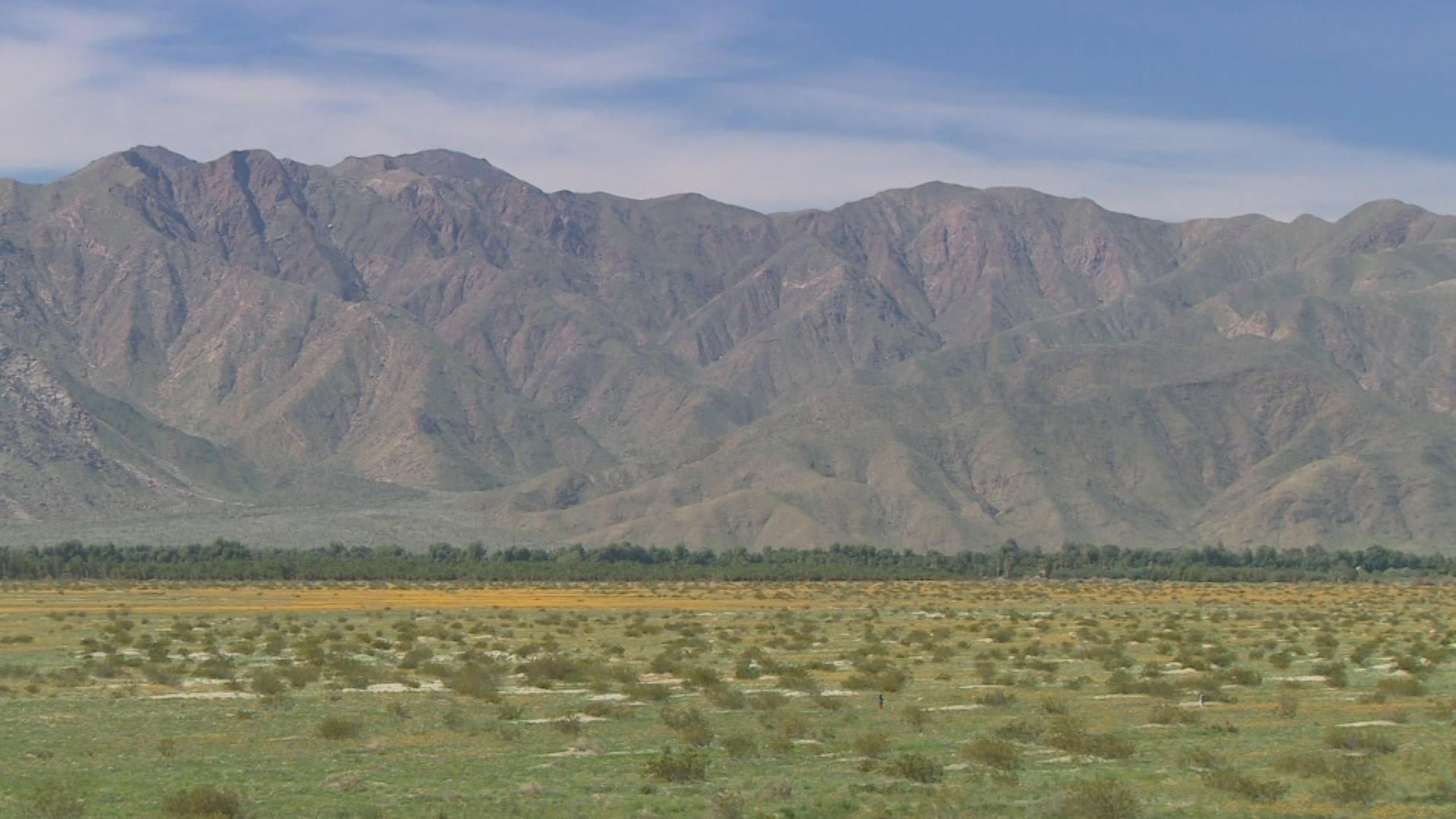
Once or twice in a lifetime the desert is transformed to a carpet of color and exuberant life. Join Patrick as he explores the deserts of California as they burst with life and color that is gone within weeks of appearing. This short-lived flush is critical to life in the desert. How do plants and animals survive in such a place and just how important is a superbloom?


Copy and Paste the Following Code to Embed this Video:
California Superbloom – A World of Dramatic Change
In its long history the world has dealt with a lot of change and let's face it, there's a tremendous amount of change happening today. In our history at least, it's unprecedented. How has life dealt with that volatility in the past? And how is it going to deal with the volatility today? Join me on today's expedition as we explore a world of dramatic change. Well you may know that I'm a pretty experienced traveler, but I've never had as hard time getting anywhere as I had getting here to San Diego County, California. I went through all kinds of trouble to get here. I'm talking about coming to San Diego by way of Greenville, Detroit, Seattle and then couldn't get to San Diego and had to fly to Orange County and drive here. But you know what? Two days of traveling, two days the worst traveling I've ever had and it's all worth it. But it's worth it because of this. This is one of nature's great miracles and it only happens one or two times in a generation and it's happening this year, here in Borrego Springs, California. This is Anza-Borrego Desert and we're on the sandy soil site here along Henderson Canyon Road and it's just completely optimum to produce a show of flowers like this on just the right year. The vast majority of these flowers that we're looking at are annuals. And they are very short-lived annuals. These plants have an incredibly unique way of dealing with the volatility that desert climates throw at them. You see, instead of dealing with the drought in the heat, they simply aren't here when it's hot and when it's dry. These plants existence as seeds waiting for the rain. The rain has to come in just the right amount at just the right time in January early February and then has to stay cool enough and cloudy enough for the rest of the spring to produce the show that we see behind me. So plants like this vast field of gold that's being caused by these incredible desert sunflowers, Garrea canescens, have waited here some of them as seeds for a decade or more. I mean last time we saw a flowering like this was Nineteen Ninety Nine. We're talking eighteen years ago that this happened last in this amount of flowering. So these seeds sit here and they wait for just the right conditions to germinate and then they do all of their growth, all of their production of above ground biomass in only a matter of a month, a month and a half. They go from seed to two three foot tall stems of flowering plants in that little amount of time. They have the highest photosynthetic rates of any plants on the planet. And photosynthesis remember is how plants make food. They're utilizing the sunlight and changing it into sugars to fuel their life and you know it's just a great example of how fast plants can adapt and how fast they can grow in response to changes in the weather here and it really allows us to get a good look at what it takes to survive in a volatile world. When we move up the hill, only a short distance, the whole world seems to change. You see, we've entered a bajada, an area where we have gravelly soil and rocks. And when you have that, you have perennials and annuals that both are filling the desert with color. It's just another variation of the incredible super bloom that we're seeing this year. A great story of deceit is told by this modest but delicate flower. This is the Ghost Flower. The Ghost Flower is a pollinator parasite. It tricks pollinators into visiting its flowers by growing near or with another species, the Sand Blazing Star, which it mimics. By looking like the Blazing Star, bees are tricked into thinking the rich nectar that they find in the Blazing Star is also found in the Ghost Flower; but there's no reward to be had. And just to go a step further, the Ghost Flower has markings that look like female bees to attract males that might otherwise ignore it. And thus, pollination is completed without expending additional energy on nectar production. Amazing adaptations here on the bajada. Well if you're familiar with scorpion weeds or Phacelia Phacelia you might call it back at home like the Fringed Phacelia those little tiny flowers in the east, imagine having Phacelias there this impressive. This is the largest species, the largest flowered species at least, Phacelia that we have here in desert. This is called Cantebury Bells or Desert Cantebury Bells. Bell shaped. So Cantebury Bells. An incredible plant and it's hard to believe that something that's this size with that large a flower has grown since the rains fell in January. In a matter of six weeks, seven weeks most, and it's grown from nothing to this great big plant in response to rain. Never seen them this big but again, I've never been here when this much rain's existed and in my lifetime we may never see plants get this large or this species again at this place. Well, all of this surge of plant life is bound to reflect itself in a surge of animal life. You don't have to look much farther than when the most abundant groups of plants out here to see that. Look at these enormous beautiful caterpillars that are covering these Evening Primroses or Desert White Evening Primrose or White Sun Drops. Well, there are lots of things in this family out here and almost everyone we look at has these enormous green and black caterpillars. I think they're probably a species of moth, maybe Sphinx Moth, but the rate at which they're produced out here, the numbers we're seeing after only a couple of weeks of having plants out here well everything in the desert is moving at breakneck speed to keep up with the incredible production of biomass with these rapidly photo- synthesizing plants and you know what? It doesn't end with just caterpillars and all these knats and bugs that are flying around me. It ends at the top of the food chain. And as we look up from bugs, what's next? Birds. In years with abundant rain, there's abundant food. Insect, fruit and seed. Some species like Gamble Quail and California Quail may not successfully reproduced in years without rain and depend on years of bounty to raise large numbers of young that bridge the gaps in rain and makes survival of the species possible. These beautiful but rather comical birds are basically the cartoon version most of us grew up with, sporting that goofy topknot. The nesting success and overall health extends to nearly every species here. One of the most unusual birds, the Phainopepla, looks a bit like a black cardinal, has a voice like a tree frog and is in the family of Silky Flycatchers. It depends on the dense stands of mistletoe here for food. Life seems to be everywhere and the density and diversity during a good wet year is astounding. That is the Northern Chuckwalla. It's one of my favorite iguanas. They're a type of iguana in the family Iguanidae that makes its living out here and that family of lizards is known for being herbivorous. And so, at this time of year, when there's so much of this really protein rich, fat rich food available for these guys, they go out and they load up. This is another example of an animal that thrives during years that are good when we have lots and lots of rain that produces all the succulent vegetation that he uses to store fat. You see, these animals are able to make it through the lean times after spring rain when it's so dry and hot out here by storing fat in their tails. So the tails become plumper and plumper and plumper as they store more and more fat reserves. Look at the three tones on his body; they're three different colors. All the males put on that brilliant red coloration most of the time most of the year when it's not breeding season. You see, they don't change color like a chameleon. What they actually do is they allow nature to take its course to drive the Chuckwallas in this area to match the boulders. The more you blend into the rocks, the more likely you are to survive, the more likely you are to produce young that look like you. And those brilliant orange colorations advertise to the female that he is extremely strong, he's extremely fit and he's ready to produce really strong and fit young. And I tell you what guy, I'm gonna leave you right there to be king of the rock and hopefully attract a few girlfriends It's not just the desert that has been sparked in the flowering by all these rains. The Chaparral community here on the leeward side of the mountains is absolutely stunning right now. Chaparral is a shrub community essentially. A few tree-size plants but most of them are low and really it's a fire dependent community one that burns catastrophically from time to time re-sprouts both from the root stock and from seed. And at this time of year, the color on these hillsides is mostly there because of Ceanothus species which are often termed California lilacs. The white flowered one is often times just called Desert Ceanothus. There's an incredible assortment of Ceanothus that flower from early spring all the way through the middle of May here in this part of California - at least six to eight species just on this one hillside. It's stunning. And they're joined by other things like Manzanita with the beautiful hanging drooping like bell shaped flowers and also a bright yellow plant down below us - the Tree Poppy. Imagine a poppy that gets to be shrub size, small three size covered with these gorgeous yellow flowers. So these rains they spark not just color in the spring in the desert when it's good, but they spark color here each and every year and this year, it's spectacular. Every year is unpredictable here and a desert by definition has far more evaporation than input of water. So how does life make it through the unpredictable times? Well there's one adaptation to drought that I know you are familiar with and that's succulents. Succulents is an example of a drought adaptation we call drought resistance. Drought resisting plants are able to resist the drought for a long period of time by storing water in their stems and leaves. And that's the definition of a succulent. What's more, these plants go to the extreme of having a special type of photosynthesis. Remember photosynthesis is how plants make food. Right. How they turn sunlight into carbohydrates and when you're doing that, you use water. So they have a special type of photosynthesis called Crassulaccean acid metabolism. It's very water efficient, but it's very slow. So these plans are notoriously slow growing. Well, if you look around landscape here it's kind of what you have in mind for a desert - vast expanses of succulents. And what would the desert be without succulents? I mean it's what you think of and you might think that this is the absolute best way to survive in droughty climates. Well you might be surprised to find out it's not. The dryer and particularly the more unpredictable that the rains are in deserts, the less succulent you actually see. Where you do find them is usually in rocky and pebbly areas not in sandy areas. So not really as tough as we think because what drought resistance implies is that these plans store water and slowly lose it the longer and longer and longer they go without rain and lately the past couple decades here in this part of California what we're seeing is droughts that are on such an enormous scale. You're actually starting to see death in some of the chollas and some of the other cactus and pretty extensive deaths. We have whole cholla forests that are mostly standing dead teddy bears, these days. These are the chollos. These are puntias. We have Silver chollas, Buckhorn chollas and Teddy Bear chollas. Maybe the most menacing if you happen to get into one, but they look cuddly. And probably the reason they called teddy bears when they die, they look just like a teddy bear. This is the type of vegetation that's probably most at risk, believe it or not in a changing world when climate change makes volatility greater on the land- scape. Like I said before, what would the desert be without the cactus? There's more than one way to escape drought here in the desert. This is another incredible strategy that's employed by this plant. I see it anywhere I go in the world that has very unpredictable rainfall in deserts and here in southern California we see the strategy of escaping the drought by having a bulb that is placed far below the surface of the ground safe from the heat safe from the dryness down here in low lying sandy or silty soil habitats. This incredibly beautiful plant, Ajo Lily, a relative of amaryllis and deep down under the ground is a bulb that looks very much like the bulb that you use to sing when you buy amaryllis to have a flower at Christmas time. So this incredible plant, this incredible strategy is to sit there dorment down deep in the sand and wait for rain the same way seeds sit in the sand and wait for rain. And when we've had rain like we've had this year seven inches, that brings about one of these super blooms, these lilies sprout up and are everywhere;bigger than I've ever seen them before. Incredible plant. The Ajo Lily. One of the most emblematic and charismatic members of the Colorado desert flora is this one right behind me that Ocotillo Foquiera splendens and splendid it is. Look at those flowers incredibly huge tubular red flowers just like the chuparosa. What are they attracting? Hummingbirds. The Costa's Hummingbird in particular is attracted to the flowers of this incredibly beautiful tree. And though it may look like a succulent may look like a cactus, it's not. This is an excellent example of a drought evading species. It's an adaptation we often term drought deciduous. This species will lose the leaves that coat the stem every time it gets droughty and dry and after every single large rainfall event whether that's in the winter time or in the spring time, summer or fall, it will put back on those leaves and quickly do growth and often times flower. This is far from the only drought deciduous tree we have. These species evade the drop by dropping their leaves and a great example that's really common at the lower elevations here is Palo Verde. In Spanish, what Palo Verdi means is green pole, right. You look at the stems they're bright green and it can actually do its photosynthesis from the tree stem itself. They don't require the leaves to be there. The leaves are way more efficient at it, but the stems will keep the plant alive all year waiting for rain. So Palo Verdes, this species, Ocotillo, smoke trees and the list goes on and on; species that are capable of losing their leaves when it gets dry, putting them right back on, and going about the business of rapid growth in response to seasonal rains. One of that very common adaptations we see here in this part of the forest is drought evading. Another one, drought enduring. The Creosote Bush we see all over the place. The Creosote Bush doesn't drop its leaves like this one does when times a bad. It just slowly declines all through the droughty times, tries to hold on and just stay alive so they can respond with slow growth when times are good again. All adaptations to survive the variability, the vagaries of this incredibly fluctuating climate that we see here desert. There's a vast variety of colors in the flowers of these annuals that grow in these desert habitats and white is a very common color that you see here and my favorite white flower here is enormous white flower is that of the Dune Evening Primrose. So the fact that these flowers are white and the fact that they open in the evening, we have to come out here in the early morning or the late afternoon to see these flowers open, they open in the evening, hence the name Evening Primrose. That tells us what they're trying to attract to pollinate these flowers. White flowers that open at night are opening for moths. And if you remember those huge Sphinx Moth Caterpillars those white- lined Sphinx Moth Caterpillars. They were all over the other little sun drop or Evening Primrose out here. Well those caterpillars are going to turn into the moth that loves to visit this plant. So it's in the same family as the little white sun drops or cream cups that are all over this desert and the caterpillars that are produced on that plant will visit this plant to produce seeds. It's incredible to me that we can tell the pollinator through the shape, the color and the timing of the opening of flowers. That's what we call pollinator syndromes and there's no shortage of pollinators and there's no shortage of syndromes in the desert. When it comes to talking about pollinator syndromes and recognizing pollinator syndromes, being able to tell that is, what species pollinate a plant based upon the color and the shape of the flower, it doesn't get any easier than a plant like this. The beautiful Chuparosa. Chuparosa has red tubular flowers that are produced way out on the ends of branches stuck out there in the air so there's no landing pad. They made for hovering creatures. And the hovering creature that this is made for can be told by the shape of the flower and the color because red is the color that is associated with attracting birds. All over the world when you see a red flower, you talk about a flower that is pollinated by birds and this tubular red flower with a landing platform you find only in the new world where we have hummingbirds, the world's only birds that can hover while they feed. So Chuparosa, this beautiful red flower, is one of several species right here that have tubular red flower dependent on hummingbirds, a creature of the new world. The desert may seem to be an ancient landscape here, but I think you will be quite surprised how young it really is. The evidence exists in a very unexpected place. Now, while this may not look like the most exciting thing in the world, it's a little pile of sticks under a rock, it actually tells us a lot about how volatile climate has been here in the desert for a long, long time. That thing right there is a packrat midden. And midden is just like a trash pile. It's a pile of refuse essentially. And packrats, which are woodrats that live in the desert. This in this case is the desert woodrat. They're notorious for gathering things like pieces of cholla and sticks and anything shiny that's one of the reasons why the call packrats. They'll pick up anything shiny that you might leave on the ground overnight and put it into their nests and these huge nests that they make are almost always underneath rocks in places where rain doesn't get very often even when it does rain in the desert and that means a stay dry. And the Packrats do something else in these middens. They urinate on the sticks in the debris that's in there. And when they do that, it preserving it. And packrat middens have preserved vegetation and in some cases the dung of some of the animals that used to live in this area for a long time. Matter of fact, the way we know what the vegetation of this area was like back during the height of the ice age, is from packrat middens. Imagine today this is the heart of the Colorado Desert, but if we went back eighteen, twenty thousand years ago, pinyon pines. Trees in the desert region. And if you don't think climate changes, if you don't think it's ever changed, all you have to do is look into the packrat middens and see the cones opinions in some of these middens that are thousands of years old. Just amazing that something that you might not think as being important like a packrat could tell us so much about the history of this place and the history of climate change. it's really hard to believe how fast life moves here in the Colorado Desert. This is same place we were only two days ago and in two days it seems like the amount of flowering has almost doubled. In fact, this is probably the very peak of the super bloom of Two Thousand Seventeen here in the Colorado Desert. This incredible place with this incredible flush of life is existing and surviving and one of the harshest places to grow on earth. The fact that life can not just survive but thrive with all the vagaries of climate we have here, should give us hope that life will not just survive, but thrive in the future. I'm Patrick McMillan wishing you your own exciting expedition. to purchase a copy of Expeditions with Patrick McMillan, call toll free 1-800 5-5-3-7-7-5-2 or order online at ETVStore.org
Search Episodes

Donate to sign up. Activate and sign in to Passport. It's that easy to help PBS Wisconsin serve your community through media that educates, inspires, and entertains.
Make your membership gift today
Only for new users: Activate Passport using your code or email address
Already a member?
Look up my account
Need some help? Go to FAQ or visit PBS Passport Help
Need help accessing PBS Wisconsin anywhere?

Online Access | Platform & Device Access | Cable or Satellite Access | Over-The-Air Access
Visit Access Guide
Need help accessing PBS Wisconsin anywhere?
Visit Our
Live TV Access Guide
Online AccessPlatform & Device Access
Cable or Satellite Access
Over-The-Air Access
Visit Access Guide




Follow Us