







PBS Wisconsin Passport
Watch this video with
PBS Wisconsin Passport
Become a member of PBS Wisconsin, support your local community, and get extended access to PBS shows, films, and specials, like this one.
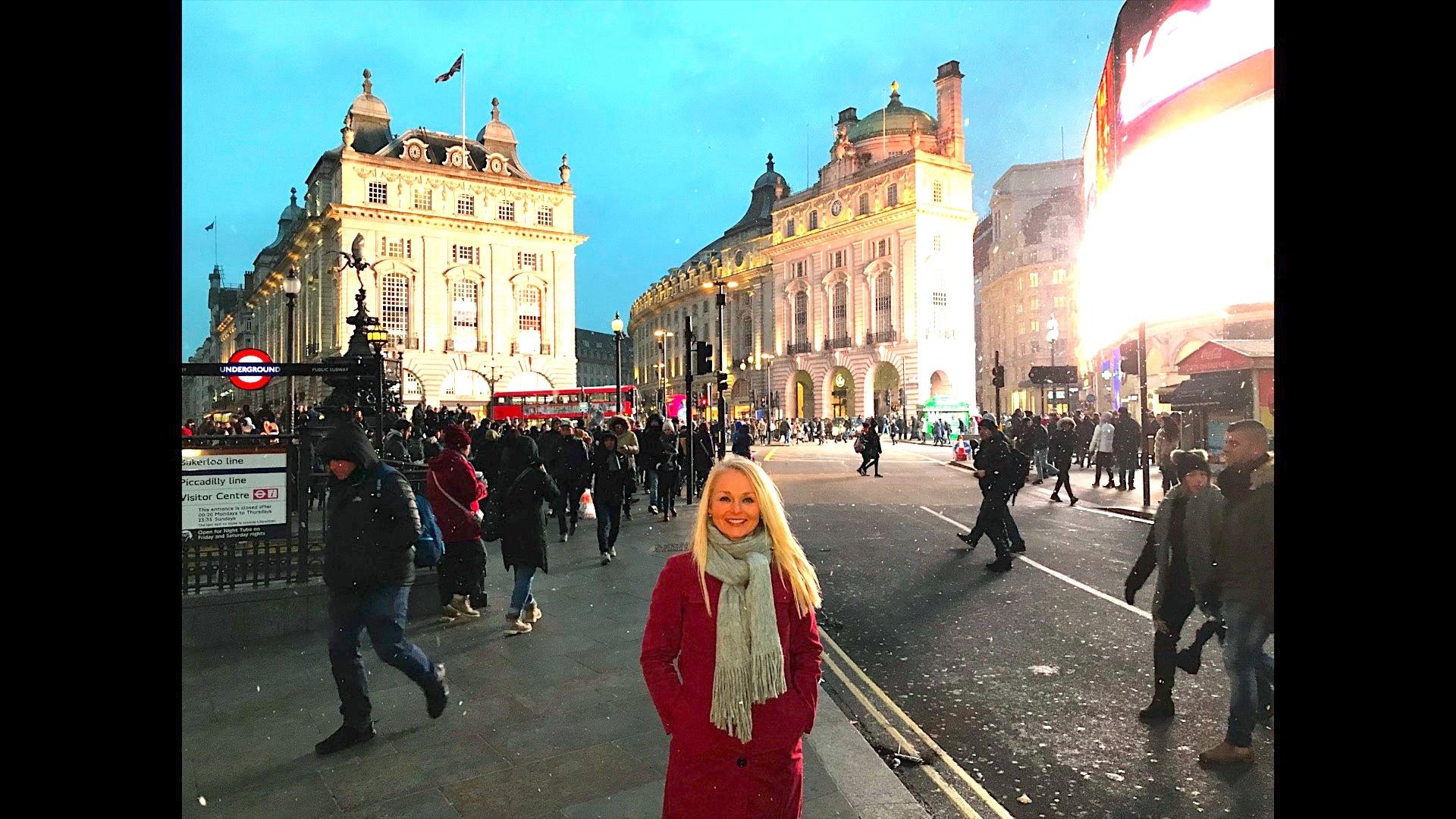
Curious London Shops
01/18/19 | 24m 41s | Rating: TV-G
In this episode, we explore the curious world of Royal Warrants, a special designation given only to the best shops and services, literally fit for a king or queen. We also visit the atelier of one of Princess Diana's gown designers. From the royal dressmakers to tiara makers to the royal cheesemonger (yes, there is such a thing); we take you across London, on a truly royal shopping spree.


Copy and Paste the Following Code to Embed this Video:
Curious London Shops
London is, of course, known for Big Ben, Trafalgar Square, and the Tower of London, but it is also known for some quite curious shops, like this one. (soft music) Remember when you were a child and all you asked was why, why, why? Well, I never quite outgrew that whole quest for knowledge phase. In fact, I've made a career out of asking who, what, where, why and how, as an arts and travel journalist for the past 20 years.
(gentle piano music) So, if I have an insatiable curiosity about the exciting, inspiring, beautiful world of art, architecture and hidden history all around us, I bet you do too. This isn't your typical what to do on a vacation travel show, oh no. This is your all access pass to a deeper understanding of the world's great art and architecture, people and places, history, and how did they do thats. So, come along on our educational journey, our field trip for grown ups who have never quite grown up, And learn, on Curious Traveler.
(gentle piano music) (lofty string music) London is full of curious and fascinating history, from Tower Bridge to those iconic Beefeaters, but today we are getting curious about something much more important, London's historic and curious shops. So, grab your pounds and your pence and let's crack on and get stuck right in. (bright string music) How did simple, medieval market stalls become this and this? How did a retail revolutionary get women to shop in his store a little bit longer?
Who wore this dress? What is a royal warrant? What is so magical about this arcade? And why is this arcade called a garden?
What's the history of the tiara? And what does Elvis have to do with this lovely atelier? And why is a bishop so stinky in this darling London shop? (bright string music) It is time to get curious about London's curious shops.
(soft classical music) The history of London's shops goes back to the Middle Ages and open-air markets where individual families often sold just one specific item in their stall or tent. The one item that they grew, milked, crafted or sewed. Over time, those markets in market squares evolved into elegant arcades, like the legendary Covent Garden. The history of London's curious shops has to include Covent Garden.
Its history goes back more than 400 years. Now, the name Covent Garden is actually a mispronunciation of Convent Garden, and that started back in the 1500s when the monks of Westminster Abbey used this area as their vegetable garden. Fast forward a couple of centuries and Covent Garden becomes the largest produce market in the world. And today, of course, it's not just produce, it is shops, shops, and more shops.
(bright string music) Another historic London market dates back even further to the 14th century, in what was once the center of Londinium or Roman London. It, too, started as an open-air market and was later covered into an arcade. It survived the Great Fire of London in 1666 and became quite elegant during the Victorian era. But its elegance is only one part of its magical history.
This place should look familiar if you know your Gryffindor from your Hufflepuff. Yep, this London shop has the magical Harry Potter touch to it. This is Leadenhall Market, which of course was the inspiration for Diagon Alley. This one was built in 1881, and still has that beautiful, Victorian architecture.
Now, in this case, the real location is almost better than the film location, although here I don't think you're going to find Ollivanders Wand Shop, or be able to buy any Bertie Botts Every Flavor Beans. So, while you may not find Hagrid or Harry perusing the shops at Leadenhall Market, you will find lovely, upscale clothing shops and elegant eateries. Quite the improvement from its meat market days. (bright string music) Next in our evolution of curious London shops, from the outdoor markets and arcades, we leap forward to the supersize temples to shopping.
(gentle string music) I mean, really, do these look like a boring place to buy your socks in bulk? No, they truly are temples of sorts, and that was just the idea behind these behemoths of department stores that went up during the Victorian era. First, there is the legendary Harrods, which began as a small grocery store by Charles Henry Harrod in the 1800s. Today, it boasts one million square feet of retail space and 330 departments.
Of its many shopping firsts, Harrods unveiled the moving staircase, Britain's very first escalator in 1898. Legend has it that a ride on this newfangled moving staircase was so nerve wracking that customers had to be given a brandy once they made it to the top. (glasses clink) (soft music) London's equally legendary Marks and Spencer started in 1884 as a humble market stall called Mark's Penny Bazaar. Polish immigrant, Michael Marks, ran that stall, and later met his future partner, Thomas Spencer.
Together, they combined many outdoor stalls, throughout England, into one Marks and Spencer. Of its many accolades, M and S is perhaps best known for its food hall. (soft music) And then there's Selfridges. Harry Gordon Selfridge was born an American but became a British citizen after opening the colossal Selfridges Department Store, here on Oxford Street in the early 20th century.
A pioneer in the science of shopping, Selfridge revolutionized the way we shop, he made it a leisure activity, not a chore. He also knew the value of putting on a show, from over-the-top window displays, to, once, he even put an entire airplane inside his store. Selfridges was also one of the firsts for something else, ladies' restrooms. Thank you, Mr.
Selfridge. But as historic as these larger than life temples to consumerism are, there is another category of London shop that, while they may be smaller, they have a special something that elevates them above the rest. And it is these curious London shops that we explore today. (soft music) Our first curious London shop is in historic Mayfair, and this particular shop has a quite curious claim to fame.
(lofty string music) Bentley and Skinner dates back to 1880, and houses antique and period jewelry and rare collections. And, of course, a little Faberge thrown in for good measure. While this may look like a priceless museum collection, not to be touched, all these pieces are, in fact, for sale or loan, you know, for that grand ball at Buckingham Palace you go to every year. So this is obviously my personal collection, I just wear a new tiara every day.
Well, aren't you a lucky one? (gentle string music) But what Bentley and Skinner is really known for is providing jewelry to the royal family for a very long time. That, to me at least, is one of the most interesting parts. So, in the late 1800s, that would have been during the reign of Queen Victoria.
That is correct, yes. And that is also the same time period where the company received the royal warrant. Yes, the Skinner and Co received its first royal warrant during the latter reign of Queen Victoria, and we've had the warrant of the monarch since then. And later in the 1970s, we were privileged enough to receive the warrant of His Royal Highness, the Prince of Wales, so the company has two royal warrants, Her Majesty's and the Prince of Wales.
-
Christine
So, what exactly is a royal warrant? For centuries, royal families around the world, including the United Kingdom, had issued royal warrants to tradesmen and companies to supply goods or services to the royal households. These special shops get to proudly display their seals of approval and, as you might imagine, to be hand selected by the royal family is the highest of honors. Having the royal warrant is quite a privilege for a company, any company.
It just goes to show that we have the integrity and, most of all, discretion. To respect and protect the privacy of the royal family, Bentley and Skinner won't tell you who they've provided pieces for, or which pieces. But there are a few carefully chosen photographs on display here. Without mentioning any names, because we are being respectful of the discretion here, we have six different tiaras here that may or may not have been worn by some members of the British Royal Family.
Well, there's one in particular, here that was actually worn on the coronation of George the Fifth, the grandfather of the current monarch, Her Majesty, Queen Elizabeth. And the lady who wore it was a great society beauty, and so we're actually quite privileged to have this in our collection, it's an elegant tiara, but I think the pearl and diamond marriage is a wonderful marriage, it's very gracious and not too ostentatious. Which is the oldest piece we have here? The oldest piece here, I believe, is this tiara over here.
Late 1860s, wonderful old-cut diamonds, very simple style, and, remember, a lot of these tiaras are actually convertible as well. So when they're not being worn as tiaras, they can be worn as necklaces. Oh, wait, how would you do that with this? The whole thing comes off its string, and then it's removed, and then there's a back part of it, the necklace part of it.
So it can be worn as a necklace. Every lady must have a convertible tiara. Well, clearly, clearly. - Oh, absolutely.
Would you like to try this one on? Well, yes, well, yes. (lofty string music) But the tiara isn't just an old fashioned fashion, some lucky Londoners still wear them today. Things like the Lord Mayor's Banquet here in London, diplomatic balls at Buckingham Palace, where tiaras may be worn, and of course, Elton John, White Ties and Tiara.
Of course, of course. Tiaras to go with his tantrums. Well, no tantrums allowed or even sudden movements allowed when one is wearing a piece as beautiful as this that happens to be more than 150 years old. But why does anyone wear a tiara?
Well, the history of this beautiful bejeweled head ornament dates back to ancient times when a tiara or diadem signified royalty, with a glowing halo around the heads of those believed to have god-like status. And this idea of royalty being close to the gods is still around today. In fact, that is what a coronation is all about. Even today, when a king or queen gets crowned, the ritual still symbolizes the transference of the divine to the human.
Whoa, that's a lot of pressure. While these vintage pieces are carefully stored, carefully worn and carefully returned, Bentley and Skinner also creates new pieces on site. You can even watch the master jewelry maker at work through a lovely little window on Piccadilly. (torch flaring) So whether you're just browsing and dreaming of living like a royal, or actually picking out the perfect piece for your next ball, just being inside this shop is to experience a bit of London history.
Being British, being English, and having this heritage and this pride, the royal family is part of being English. How does it feel to get to work in this environment every day and you're continuing on the tradition? It is a great honor and a privilege, actually. And I chose this company, to come and work here.
I was a banker. You know, we in England are very very good at pageantry and we're very proud of that. Heritage is important, once that heritage goes, I think you lose a great deal. But be careful, once you experience the royal life for even a moment, it may be hard to give it back.
Oh yes, I think I need to wear this every day. I mean, I think it's clear. (soft music) Next, we go to Chelsea for another curious London shop with royal connections. The uber elegant Catherine Walker and Company is a leading British couture house, and when you come inside, you enter a paradise of beautiful flowing fabrics.
(bright string music) As you pick out just the right dress, whether you're headed to the red carpet or an elegant soiree. (bright string music) And here, every customer always gets the royal treatment, which is fitting, since Catherine Walker has been fitting the royals for years, including the Duchess of Cambridge, and another royal who is forever near and dear to this designer's heart. I feel like I'm experiencing history here. So this is the dress that you designed for Diana.
- Yep. And we have the actual embroidery, no this was a-- - Before we make an embroidered dress like that, we obviously have to show the client what the embroidery's gonna look like, otherwise we're just wasting a lot of work. So this is a sample of embroidery only for showing the client this is what you will get on your dress. -
Christine
This is designer Said Cyrus. He and his late wife, Catherine Walker, founded their couture house in the late 70s. They've enjoyed many high profile clients, but he considers himself incredibly fortunate to have known and designed for none other than Princess Diana. During the 16 years that we were working with the Princess, her style changed according to the work that she was doing.
At the beginning, she was an ambassador for the United Kingdom, and she dressed appropriately. Towards the end of her life, she was an ambassador for the charities that she represented, and so her style changed. -
Christine
Over those 16 years, Catherine Walker and Company designed dozens of dresses for Princess Diana, including this very famous one, a modern dress with some curiously not-so-modern inspirations. We decided we would look at what we found or could be the roots of modern royal dressing, and our research took us back to Elizabethan times, but more, 100 years ago, where we have these two wonderful ladies, Queen Alexandria and Queen Mary. And if you look at these images, you can't help, whether you articulate the thought or not, you can't help notice the visual symmetry between the images from 100 years ago in this modern shiny polished princess. The inspiration for this was not Elvis Presley.
I would never say that in a million years, and it's funny that you bring that up, 'cause when I first saw these side-by-side, my impression of the inspirations were first that her collar here is this collar, and then what I found really interesting, they're all wearing very ornate jewelry, all these pearls, but you chose to put the jewelry-- In a different way. - Yeah. And then there's this dress, inspired by, of all things, the windows of the Palace of Versailles. I thought that we could design something where the Princess's face would shine through an opening, and this halter strap goes around the neck, and on the inside edge we have small beads, which are called boule, like lead shot, and we felt that was like a frame, like this frame, with the Princess's face shining through.
(bright string music) And here in the design studio above the shop, we get an exclusive peek at another of Princess Diana's most famous gowns. This one, worn to an event in 1996. She's one of the most famous female icons in history. What is it like getting to preserve her memory here with a piece like this?
Well, we're very lucky, because she borrowed this dress from us, along with many others, and we still have all of these dresses. Of course, we keep them in a very safe location, offsite. But we didn't think at the time, we knew they were valuable, but we didn't realize that 20 years on, they were going to be so valuable and so wonderful, and such a great privilege for us to keep them. Catherine Walker sometimes lends their collection of Princess Diana's dresses out for charity events or museum displays, but there is one thing that they will never allow.
And the last person to wear this dress was Princess Di? Yes. - Will anybody else ever be allowed to wear this dress? Not if it's with me.
(gentle string music) For our final curious London shop, we get a little cheesy, actually, we get a lot cheesy. (vibrant music) Cornish Kern, Double Gloucester, Special Reserve Wensleydale. Cheese, glorious cheese, but this isn't just any old cheese shop. I'm more interested in Winston Churchill.
He was known for cigars, but also-- Yes, so there's this brilliant quote that a gentleman always buys his cheese at Paxton and Whitfield, was attributed to Winston Churchill, so we are one of his favorite shops as well. The history of Paxton and Whitfield dates back to 1742, when it was a humble cheese stall in a London open air market. On any given day, the shop has about 150 different cheeses to choose from. 60% of them are British, and the rest are from all over Europe, including this, quite curious one.
Really weird and wonderful things, like this one here is from Germany, and it's a high alpine goat's milk, gouda style, which has been rubbed in beechwood ash, which is kept at the top of mountains, and they have to-- Oh, so that's why it's that color-- Yeah, that's why it's that color. Oh cool. Danielle is a cheesemonger, and she knows everything about cheese, seriously. So you're talking wine, a vintage is a year, in cheese making, a vintage is a day.
Each day's make-- - Oh, that's interesting. Can be very very different. - Okay. And if you think these wedges are huge, check out the size of cheese that the cheesemongers purchase directly from the dairies.
This one right here. How big is that? - So that's a Grana Padano, that's about 40 kilos. - Wow.
You're not putting that on your back and nipping off to-- No, people rarely buy those ones whole. I'm happy to sell it whole if you want a whole one, but rarely sell those ones whole. That's about the only cheese in the building I can't lift, any other cheeses I can do. You don't need a gym membership.
You really don't need a gym membership. People always say, oh, if I worked here, I'd be the size of a house. But really no, there's a lot of lifting and carrying and cutting, which keeps you strong, keeps you fit. -
Christine
And being the darling shop that it is would be enough to keep customers coming back over the years, but of course, this is a curious London shop, so what makes it so curious? It just so happens to supply cheese to the royal family. So, just like Bentley and Skinner, Paxton and Whitfield proudly holds two royal warrants, one for the Queen, and one for Prince Charles. When did you get your royal warrant, and what does that entail?
So, our first royal warrant was granted by Queen Victoria in 1850. - Oh, that's exciting. And we've actually held the royal warrant for every reigning monarch since. But as lofty as that honor is, getting the precious packages to the royal residences is a very down to earth process.
Tell me the wonderful story about how the cheese is actually taken from this shop to Clarence House or the palace? So, we do all of our deliveries, whoever our customer, our wholesale customer is, we do them on foot, we find it very much quicker and much more environmentally friendly to jump on public transport or just pop it in a cloth bag and deliver them, and we do the same for the palaces. We walk over Green Park, and we deliver on foot to Buckingham Palace. So for someone like you, having a royal warrant, for you, you go to the palace the same way somebody would just nip out and go to the store.
It's just part of your weekly or monthly routine? Yes, definitely. - That's so exciting. So, while you may not be able to dine with the royals, you can dine like them, so let's move over to yet another mile long cheese display, and discover something called Stinking Bishop, whose maker has his own royal warrant.
So out of all the cheeses, I think the most curious name that we have here is Stinking Bishop. So Stinking Bishop is the pear, the pear cider that it's washed in? - Yeah, exactly. So it's a washed rind cheese, as we were saying, and it's washed in perry, so perry is pear cider, and the variety of pear that makes the pear cider that washes the cheese is called the Stinking Bishop, but it's a perfectly apt name, because washed rind, it is particularly smelly.
I love it. And part of that smelly flavor is thanks to some monks and a centuries-old cheesemaking tradition. That's actually a long tradition that goes back to monasteries and monks. Yeah, monasteries using local alcohol to protect cheeses, so there are big traditions in Belgium and France, in Belgium, washing them in the local beer, or in France, using the local, the eau de vie that comes from the wine making industries.
And it wouldn't be a British cheese shop without some cheesy British traditions. And then, of course, being British, we have to have a blue cheese. We have to have a blue cheese. Definitely a British favorite, so this is Stilton.
So some people think Stilton means all blue cheese, it really doesn't. Stilton's a very particular type of cheese. Just in my little shop in December, I sell six and a half tons of Stilton. Wow.
- It is definitely the Christmas cheese in Britain. This is what people queue for two hours at Christmastime and eat. - Right. But why is Stilton the Christmas cheese in England?
(bells jingling) The reason it's the Christmas cheese is the best milk to make Stilton comes from the late summer grasses, and that means that if you count for it, from that end of summer milk, you hit Christmas. So the perfect time to eat-- - Oh, it's a perfect timing. Perfect time to eat it. - Oh, okay.
So it's not just marketing. It is the perfect season for Stilton. So from moldy to stinky to royalty, Paxton and Whitfield is truly a curious London shop. (bright string music) So, from humble medieval stalls to covered markets, to giant temples to consumerism, who finally figured out that if you put in a ladies room or two, we would shop longer, to streets lined with shops so shopper-ific one would dress up simply to walk down them, to shops so special they receive a stamp of approval from the royal family, whether that royal family needed a sparkly halo of the gods or some downright godly cheeses, to a couture house so divine it became a favorite of one of history's most famous princesses.
London's shops have so much to be curious about. (gentle string music) Thank you for joining us on our educational journey, and hopefully now, you're even more curious about the who, what, where, why, when and how of some of London's most curious shops. As the British say, cheers! (soft music)
Search Episodes

Donate to sign up. Activate and sign in to Passport. It's that easy to help PBS Wisconsin serve your community through media that educates, inspires, and entertains.
Make your membership gift today
Only for new users: Activate Passport using your code or email address
Already a member?
Look up my account
Need some help? Go to FAQ or visit PBS Passport Help
Need help accessing PBS Wisconsin anywhere?

Online Access | Platform & Device Access | Cable or Satellite Access | Over-The-Air Access
Visit Access Guide
Need help accessing PBS Wisconsin anywhere?
Visit Our
Live TV Access Guide
Online AccessPlatform & Device Access
Cable or Satellite Access
Over-The-Air Access
Visit Access Guide




Follow Us