






PBS Wisconsin Passport
Watch this video with
PBS Wisconsin Passport
Become a member of PBS Wisconsin, support your local community, and get extended access to PBS shows, films, and specials, like this one.
Bruce Springsteen’s Nebraska: A Celebration in Words and Music
08/10/24 | 1h 2m 3s | Rating: TV-G
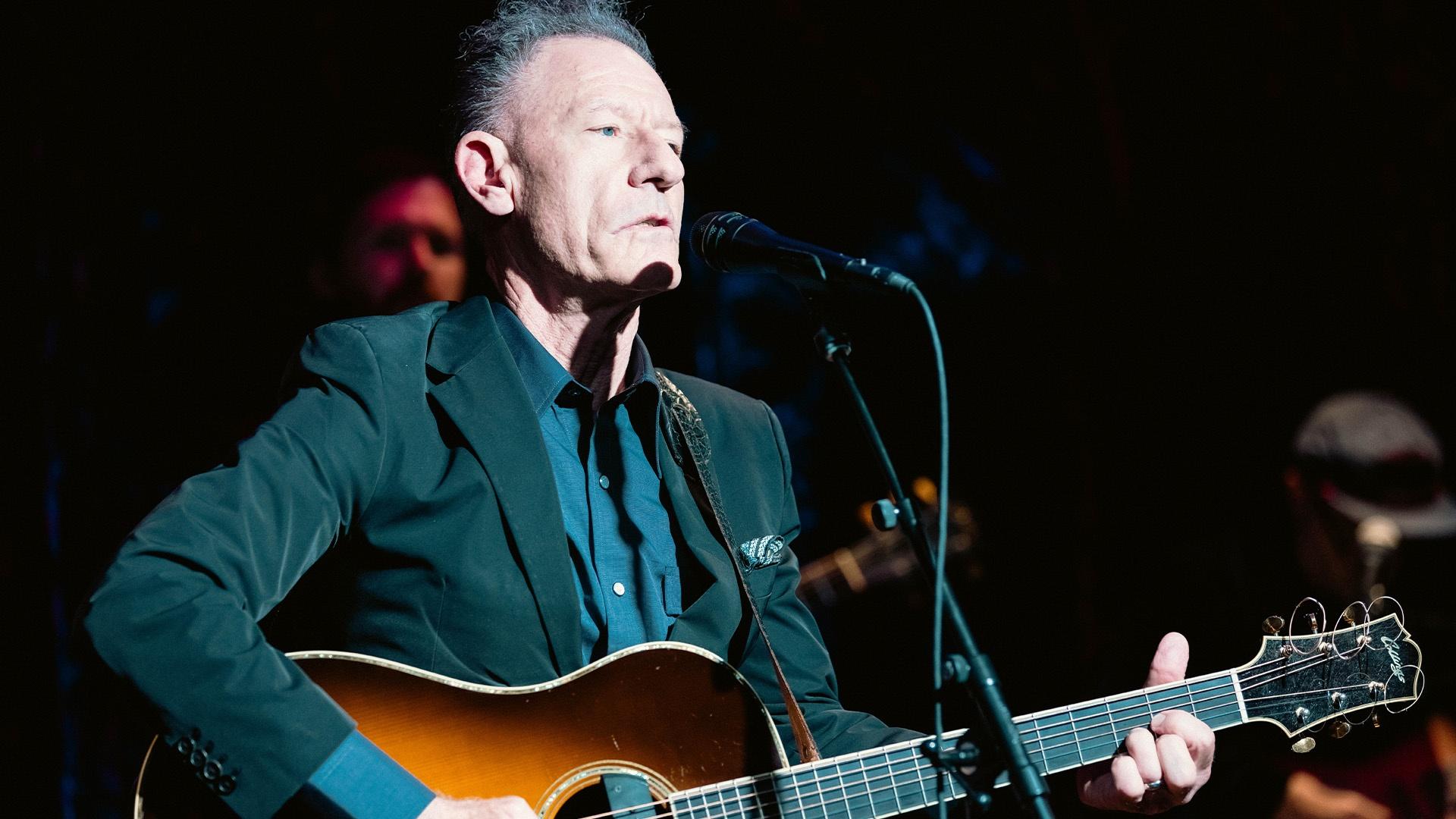
Join Eric Church, Emmylou Harris, Noah Kahan, Lyle Lovett, The Lumineers and Lucinda Williams for an in-depth exploration of the 1982 album. Hosted by famed music biographer Warren Zanes, the program features performances of Springsteen’s songs with spoken word storytelling.


Copy and Paste the Following Code to Embed this Video:
Bruce Springsteen’s Nebraska: A Celebration in Words and Music
(electrical buzzing) EMMYLOU: This particular album Nebraska was very inspirational to me.
It's in sepia.
LYLE: Each song in Nebraska is a- a snapshot, a different facet of an overall story.
Just his depth of understanding of what it means to be alive in this world, you can identify with every, every song.
ERIC: There's been a number of times in my career that I thought about what he has done and what would he do.
He's always the musical north for me.
EMMYLOU: At the time that he did Nebraska it was taking a chance, because he was really about the hottest thing around.
NOAH: For an artist like myself, Bruce opened the door for a lot of people to make- take risks and do things that felt more organic or raw or stripped back.
LUCINDA: I always felt this certain bond with Bruce.
He writes songs about the forgotten ones.
JEREMIAH: You know, 30-plus years later, the album still feels contemporary.
WESLEY: Being a part of the night, in general, makes us feel really lucky, because we can't believe we're on the same bill as some of these people that you just like love and respect.
NOAH: My favorite thing about music and writing is being transported somewhere, and this record certainly does that.
ERIC: Nebraska was the perfect album at the perfect time, and that's why we're all sitting here doing what we're doing.
WARREN: Bruce Springsteen's Nebraska is a recording that gets under your skin, revealing its mystery, its violence, and its beauty slowly over time.
When it came out in 1982, the San Francisco Chronicle described it as, "So intimately personal, "it is surprising he would even play the tape "for other people at all let alone put it out as an album."
Rolling Stone called it, "A shock."
It was the follow up to Springsteen's The River, his first number-one album.
After The River, the eyes of the world were on Springsteen wondering how big he could take this, and then he went somewhere else entirely.
I wrote a book about Nebraska, because the recordings stayed with me over decades.
Every time there was trouble in my life, I reached for Nebraska.
When I started doing events around the book's publication, I quickly realized the best of them had music.
When I went to Nashville, I had a remarkable cast of musicians to help me tell this story.
It's a story that starts with The River, which was showing some of the traces of Nebraska's dark majesty, and ends at Born in the U.S.A., and it's one of the greatest and strangest in American music.
And here's how we told it on a September night in Music City.
You make up your mind You choose the chance you take You ride to where the highway ends And the desert breaks Out on an open road You ride until the day You learn to sleep at night With the price you pay Now with their hands held high They reached out for the open skies And in one last breath they built the roads They ride to their death Driving on through the night unable to breakaway From the restless pull Of the price you pay Oh, the price you pay Oh, the price you pay Now you can't walk away From the price you pay Now they've come so far And they waited so long Just to end up caught in a dream Where everything goes wrong Where the dark of the night Holds back the light of the day And you got to stand and fight For the price you pay Oh, the price you pay Oh, the price you pay Now you can't walk away From the price you pay Little girl down on the strand With that pretty little baby in your hand Do you remember the story of the Promised Land How he crossed the desert sands And could not enter the chosen land On the banks of the river he stayed To face the price you pay So let the game start You better run your little wild heart You can run through all the nights And all the days But just across the county line A stranger passing through put up a sign That counts the men fallen away To the price you pay Oh, the price you pay Oh, the price you pay Now you can't walk away From the price you pay Oh, the price you pay Oh, the price you pay Now you can't walk away From the price you pay Eh, eh (audience cheering) (audience applauding) WARREN: When I asked Bruce Springsteen about that moment in 1981 about the success that came with The River, he said this, "The main thing that did happen to me "when I came off The River tour is that I was solvent, "which would make me unique in my little neighborhood, "and that was where I still lived.
"So I was dealing with that, "with all my very conflicted feelings "about being so separate from the people that I'd grown up around and that I wrote about."
At night, Springsteen would drive the streets he'd known as a boy and a young man.
When the songs started coming, that's where they would be going, back there.
"The life I write about in Nebraska," he told me, "is the life I was leading with my grandparents "when we all lived in their house.
"It had a kerosene stove to heat the whole place, "a coal stove to cook on in the kitchen, very old-school Irish."
In the living room of the grandparents' house was the portrait of his Aunt Virginia, his father's sister.
Virginia at age six, and out riding her bicycle, was hit and killed by a truck pulling out of a gas station on Freehold's McLean Street.
The trauma of Virginia's death was the foundation upon which the house fell apart with him in it.
This was the childhood, to which Springsteen had returned, as the songs for Nebraska started coming, and "Mansion on the Hill" was the first of them.
There's a place on the edge of town, sir Rising above the factories and the fields Now ever since I was a child I can remember That mansion on the hill In the day you can see the children playing On the road that leads To those gates of hardened steel Steel gates that completely surround her That mansion on the hill At night my daddy'd take me and we'd ride Through the streets of a town so silent and still Park on a back road along the highway side Look up at the mansion on the hill In the summer all the lights they would shine There'd be music playing And people laughing all the time Me and my sister We'd hide out in the tall cornfields Sit and listen to the mansion on the hill Tonight down here in Linden Town I watched the cars rushing by Home from the mill There's a beautiful full moon rising Above the mansion on the hill Above the mansion on the hill (audience cheering) (audience applauding) (audience applauding) WARREN: While "Mansion on the Hill" captured the small-town landscapes of a New Jersey childhood, it was the next song, "Nebraska," that would populate that landscape with characters and violence.
When he got to the song "Nebraska," Springsteen told me that he felt he'd "found the record's center."
That Fall in 1981, Springsteen was spending a lot of time alone at the Colts Neck rental.
Those orange-shag carpets made it seem all the more like someone else's house.
Sometimes he'd write songs.
Sometimes he'd get back from driving through Freehold and watch TV by himself late in the night.
Flipping through channels on one of those nights, he found Badlands, the Terrence Malick film, loosely based on the 1958 Charles Starkweather murder spree.
Malick's film pushed its way into Springsteen's chest.
Something about the story of a teenage serial murderer reminded Springsteen of his own childhood.
Starkweather killed 10 people in the days between January 21st and January 28th, and one more, a gas station attendant, in the month before.
He killed innocent people, teenagers, a baby.
The news was big.
The first such serial killings to be told as a television news story.
Through some twisted process, Charles Starkweather crossed over from struggle and invisibility into notoriety and even a kind of charisma, from Charles Starkweather to almost James Dean.
Starkweather went out a star, and he put on a good show before they threw the switch.
This was the man whose voice Springsteen took on in "Nebraska."
"Mansion on the Hill" could've led to any number of albums, but "Nebraska" took it in a very specific direction, solitary, dangerous with nothing left to lose.
I saw her standing On her front lawn Just a-twirling her baton Me and her went for a ride, sir And 10 innocent people died From the town of Lincoln, Nebraska With a sawed-off .410 on my lap Through to the Badlands of Wyoming I killed everything in my path I can't say that I am sorry For the things Things that we done At least for a little while, sir Me and her we had us some fun Now the jury brought in a guilty verdict And the judge sentenced me to death Midnight in a prison storeroom With leather straps across my chest Sheriff, when the man pulls that switch, sir And snaps my poor head back You make sure my pretty baby Is sitting right there on my lap They declared me unfit to live Said into that great void my soul be hurled They wanted to know why I did what I did Well, sir, I guess there's just a meanness In this world (audience cheering) (audience applauding) WARREN: Bruce Springsteen had a reputation for obsessive work for spending month after month in studios moving forward then back again.
Born to Run, Darkness on the Edge of Town, The River, when the record company had enough, Springsteen paid out of his own pocket, which means that Bruce Springsteen, rock-and-roll star, had started The River tour in 1980 with a total of $20,000 to his name.
That wasn't boat money.
That wasn't horse money.
That wasn't car money.
That was rent money.
By the time The River tour ended, things were a little different, a little different.
He was able to reward himself with his first ever new car: a Camaro Z28.
Bruce Springsteen was in his early 30s, and he didn't have a lot to show for it, if the social norms were your measure.
So he went to his guitar tech, Mike Batlan, and asked if there was some way to record demos at home, so that he could hopefully break the habit of writing in the recording studio.
Batlan came back with an answer, "The TEAC 144.
"You could do four- track recording "on cassette tapes, which you could pick up at CVS."
The owner's manual told a grand story.
"The TEAC Model 144 Portastudio "brings top-quality "creative recording capabilities "within the reach of the home recording enthusiast "and serious musician/engineer, with unprecedented economy and portability."
Some of that was true.
(audience laughing) They set up the TEAC 144 in Springsteen's bedroom.
The aim was to make demos, that's all.
Just something to play for the band, so they could rerecord the songs properly.
The idea was to save a little money, so that the guy who'd just purchased a new Camaro wouldn't have to buy another used car again.
My little sister's in the front seat With an ice cream cone My ma's in the backseat sitting all alone As my Pa steers her slow out of the lot For a test drive down Michigan Avenue Now my ma she fingers her wedding band And watches the salesman stare At my old man's hands He's telling us all about the break he'd give us If he could, but he just can't Well, if I could, I swear I know just what I'd do Now, mister, the day the lottery I win I ain't ever gonna ride in no used car again Now the neighbors come from near and far As we pull up in our brand new used car I wish he'd just hit the gas and let out a cry Tell them all they can kiss our ***** goodbye My dad he sweats the same job from morning to morn Me I walk home on the same dirty streets Where I was born Up the block I can hear my little sister In the front seat blowing that horn The sounds echoing all down Michigan Avenue Now, mister, the day my number comes in I ain't ever gonna ride in no used car again (audience cheering) (audience applauding) (audience applauding) WARREN: Bruce Springsteen was living in a rented ranch house in the grip of some childhood trouble that was throwing shadows on his adult life.
On The River tour, he had been reading Joe Klein's Woody Guthrie biography, talking about Guthrie on stage.
So when people eventually heard the Nebraska material, with so much acoustic guitar and in what was arguably a folk style, some were going to think this was Springsteen's effort to plant his feet in Guthrie's soil.
But if there was any musical act that had a particularly profound influence on Nebraska, it wasn't Woody Guthrie, it was Alan Vega and Martin Rev's group Suicide.
One critic would go so far as to say that, "Without Suicide we wouldn't have Nebraska."
Suicide called themselves punk as early as 1970, a year after Woodstock and somewhere around Johnny Rotten's 14th birthday, well before the term's usage soared.
The word was printed in Suicide's flyers.
But come 1976 and '77, when punk emerged as a cultural phenomenon, Suicide didn't look like punk, if only because they lacked some of the genre's defining characteristics, such as a guitar player and a drummer.
(audience laughing) They didn't have either.
Rolling Stone's review of Suicide's debut called it "puerile."
The Village Voice described it as "meaningless, a con."
It meant that Bruce Springsteen after meeting Alan Vega in Power Station's hallways was sometimes traveling in a pack of one when singing Suicide's praises.
"Suicide," Springsteen told me, "there was something in it that called to me.
"This very dangerous music that spoke to some "part of you that music didn't always get to.
"It was quite influential on Nebraska, "just the tone of it I would say.
"There was an unforgivingness in it "that appealed to me, and that I wanted as part of my own music."
The group Suicide helped Springsteen ask himself some questions like, "How far out could music go?
"How far beyond love and loss into violence, into despair?"
Suicide's song "Frankie Teardrop" told Springsteen that a song could fade all the way to black.
While others struggled to find space for Alan Vega's and Martin Rev's Suicide, Springsteen said this, "If Elvis came back from the dead, I think he would sound like Alan Vega."
A scream in the middle of Nebraska's "State Trooper," sounded like Springsteen signing Alan Vega's name to his own work.
New Jersey turnpike Riding on a wet night Beneath the refinery's glow Out where the great black rivers flow License, registration I ain't got none But I got a clear conscience About the things that I've done Mister State Trooper Please don't stop me Please don't stop me Please don't you stop me Maybe you got a kid Maybe you got a pretty wife The only thing that I've got Been bothering me my whole life Mister State Trooper Please don't stop me Please don't you stop me Please don't you stop me In the wee, wee hours Your mind gets hazy Radio relay towers Gonna lead me to my baby The radio's jammed up With talk show stations It's just talk, talk, talk, talk Till you lose your patience Mister State Trooper Please don't you stop me Whoo Whoo-hoo Whoo Hey, somebody out there Listen to my last prayer Hi-ho, Silver Deliver me from nowhere Whoo-ooh Whoo Whoo-ooh Ooh (audience cheering) (audience applauding) WARREN: The characters in Springsteen's songs knew a desperation that put them in alignment with the early '80s America.
There were people in 1981 and 1982 with no connection to the pastel and neon, the shoulder pads and saturated colors of the time.
If Ronald Reagan celebrated what he called, "Morning in America," these were the people who lived by night.
They were the forgotten ones.
So when Bruce went into the Power Station where the E Street Band and his production team were meant to help turn the bedroom demos into finished recordings, Springsteen based the success of those sessions on one simple thing, "What did the rerecording do for the characters in those songs?"
And while others on his team felt the sessions were going well, Springsteen did not.
"Every time I tried to make the recordings better," he told me, "I lost my characters."
By the time Bruce Springsteen decided to put out the demos he had made in his bedroom as his next official release, he'd also decided that he wouldn't tour in support of the album and neither would he do interviews.
He wouldn't even put his face on the album jacket.
Rough home demos, mastered at a low level, no singles, the first track is about a serial killer.
No tour.
No press.
If you could make a list of things a record company doesn't want to hear... (audience laughing) Oddly enough, he did make a video.
His first, "Atlantic City."
Well, Arnold Levine made a video.
Springsteen just asked two things of Levine, "One, make it black-and-white.
Two, leave me out of it."
(drum sticks tapping) Well they blew up the chicken man In Philly last night And they blew up his house, too Down on the boardwalk they're ready for a fight Gonna see what them racket boys can do Now there's Trouble busing in from out of state And the D.A.
can't get no relief Gonna be a rumble out on the promenade And the gambling commission's Hanging on by the skin of its teeth Well, now everything dies, baby, that's a fact Maybe everything that dies someday comes back Put your makeup on, fix your hair up pretty And meet me tonight in Atlantic City Well, I got a job Tried to put my money away But I got the kind of debts That no honest man can pay So I drew what I had from the Central Trust And I bought us two tickets On that Coast City bus Well, now, everything dies, baby, that's a fact Maybe everything that dies someday comes back Put your makeup on, fix your hair up pretty And meet me tonight in Atlantic City Now our luck may have died And our love may be cold But with you, forever, I'll stay Now we're going out where the sands turn to gold So put on your stockings, babe 'Cause the night's getting cold Now I been looking for a job But it's hard to find Down here it's just winners and losers And don't get caught on the Wrong side of that line Well, I'm tired of coming out on the losing end So, honey, I met this guy last night I'm gonna do a little favor for him now Everything dies, baby, that's a fact Maybe everything that dies someday comes back Put your makeup on, fix your hair up pretty And meet me tonight in Atlantic City, oh And meet me tonight in Atlantic City Won't you meet me tonight in Atlantic City Oh, won't you meet me tonight in Atlantic City Oh, won't you meet me tonight In Atlantic City, love Whoo (audience cheering) (audience applauding) WARREN: Bruce Springsteen called Nebraska, "An accident start to finish."
He also said, "It still may be my best."
As I discovered in my interviews with Springsteen and his team, Nebraska had a sibling born at exactly the same time.
For a bit, they were sleeping in the same crib.
The other kid was named Born in the U.S.A.
They weren't identical twins.
It was Nebraska that got out of the house first in 1982, Born in the U.S.A., second in '84.
But they went from Springsteen's mind to his fingers in the same general period.
When Springsteen decided to focus his attention on Nebraska, he was, in fact, sitting on two-thirds of Born in the U.S.A., including five recordings that would become top-10 singles.
The record that was going to change his public life that would make him one of the biggest stars in the history of popular music was put on the shelf.
The record that was going to change his private life, his inner life, was the one that interested him, the one that compelled him, the one that woke him at 3:00 a.m. As his manager and fellow producer Jon Landau described, "Bruce kept doing this dance between questioning "and embracing the album he was making "that would have 'Born in the U.S.A.,' "that would have 'Glory Days,' "that would have 'Cover Me.'
"So he knew, in my opinion, "that on one hand he was onto "something that could be really explosive "and raise his profile as a mass artist.
"He had reservations about that, no secret, "and he'd written this other collection of songs, "the Nebraska material, that was very independent, "certainly not geared toward mass appeal.
"Two extremes: same songwriter, same time.
"It's like he had his Star Wars "and his art movie in his hand at the same moment.
"And he went to Nebraska first.
It's just where he had to go."
(audience cheering) (audience applauding) Last night I dreamed That I was a child Out where the pines grow Wild and tall I was trying to make it Home through the forest Before the darkness falls I heard the wind rustling Through the trees And ghostly voices Rose from the fields I ran with my heart pounding Down that broken path With the devil Snapping at my heels I broke through the trees And there in the night My father's house stood Shining hard and bright The branches and brambles Tore my clothes and scratched my arms But I ran till I fell Shaking in his arms I awoke and I imagined The hard things that pulled us apart Will never again, sir Tear us from each other's hearts I got dressed and to that house I did ride From out on the road I could see its windows shining in the light I walked up the steps And stood on the porch A woman I didn't recognize came And spoke to me through a chained door I told her my story And who I'd come for She said I'm sorry, son But no one by that name lives here anymore My father's house shines Hard and bright It stands like a beacon Calling me in the night Calling and calling So cold and alone Shining across this dark highway Where our sins lie unatoned (audience cheering) (audience applauding) WARREN: One thing that happened when Born in the U.S.A. finally came out was that it obscured much of what had come before it.
It was that kind of success.
The final show of the first leg of the Born in the U.S.A. North American tour took place in Syracuse, January 27, 1985.
Some 50,000 people in attendance.
With more than 90 shows completed and needing the break, Springsteen nonetheless got on a plane the day after the show and headed for A&M Studios in Los Angeles.
There he'd participate in the U.S.A. for Africa recording being produced by Quincy Jones.
The list of artists who showed up that night was striking, and still is: Willie Nelson, Diana Ross, Bob Dylan, Stevie Wonder, Dionne Warwick, Ray Charles, Tina Turner, Billy Joel, Paul Simon, Bette Midler, Kenny Rogers, Cyndi Lauper, Al Jarreau.
There were others.
Michael Jackson and Lionel Richie wrote the song.
Historically speaking, this was the largest gathering of star power ever to come together in a recording studio to perform what most of them believed was a terrible song.
(audience laughing) "I don't think anybody liked it," Billy Joel recalled.
(audience laughing) Cyndi Lauper is reported to have described it as, "A Pepsi commercial."
(audience laughing) How did it all come together?
As Ryan D'Agostino would later recount in Esquire, "The organizing "was a matter of making a lot of calls until Bruce Springsteen agreed to participate."
"Bruce was in," D'Agostino says, "everybody wanted in."
Michael Jackson, quiet during the long session that went through the night, saw Springsteen's empty Budweiser can and asked someone to take his picture with it.
(audience laughing) When Michael Jackson is getting his picture taken with your beer can, you can say things are going well career-wise.
(audience laughing) Born in the U.S.A. was like a light shined in the eyes.
It overwhelmed everything else.
One thing that was obscured in it all was the album Nebraska.
Of all his albums, it was the furthest from Born in the U.S.A.
It was also the very thing that allowed Born in the U.S.A. to come into being.
Talking to me almost 40 years later, Springsteen voiced some regret that he didn't leave any clear sense of connection between the two albums.
"My big mistake," he told me, "was leaving the Nebraska version "of Born in the U.S.A. off Nebraska.
"I should have put it on there.
"It could have easily been on both records.
It fit perfectly."
(audience cheering) (audience applauding) Born down in a dead man's town The first kick I took was when I hit the ground You end up like a dog that's beat too much Till you spend half of your life Just covering up Born in the U.S.A. Born in the U.S.A. I was born in the U.S.A. Born in the U.S.A. Got in a little hometown jam So they put a rifle in my hand They sent me over to Vietnam To go and kill the Yellow man Born in the U.S.A. Born in the U.S.A. Born in the U.S.A. Born in the U.S.A. Come back home to the refinery Man says, son, if it was up to me I'd go down to see my V.A.
man He said, son, you don't understand Born in the U.S.A. Born in the U.S.A. Born in the U.S.A. Born in the U.S.A. Had a brother at Khe Sanh Fighting off the Viet Cong They're still there He's all gone He had a little girl in Saigon I got a picture of him in her arms In the shadow of the penitentiary By the gas fires of the refinery I'm 10 years down the road I got nowhere run I got nowhere to go Born in the U.S.A. Born in the U.S.A. Born in the U.S.A. Born in the U.S.A. LUCINDA: Thank you very much.
(audience cheering) (audience applauding) We love you, Bruce.
(audience cheering) (audience applauding) WARREN: Just a few years after graduating from boarding school, the one that twice suggested I not return, I was in a band and out on the road.
We were sitting in the cramped dressing room at the back of Greensboro, North Carolina's Rhinoceros Club.
A little place on South Greene Street across from the Carolina Theatre.
It was January 17, 1985.
I was in my late teens at the time, a kid guitar player in a rock-and-roll band.
We were writing out a set list when Nils Lofgren, Bruce Springsteen's guitar player, came in the dressing room door.
Bruce Springsteen and the E Street Band were on tour, taking a night off between shows in Charlotte and Greensboro.
Excited to have Nils Lofgren there with us, we asked him to come on stage, and that's about when the door opened and Bruce Springsteen walked in.
Minutes later Springsteen was leading us through a few sloppy rock-and-roll classics, "Hang On Sloopy" and "Stand By Me."
He can't be blamed for the sloppiness, but he knew the place and he met us back there.
He stretched the songs out.
Let some joy flood the room.
Made a few people believe in small-town miracles.
In that moment in American life, it seemed you couldn't turn on a radio without hearing Bruce Springsteen.
You couldn't buy a magazine without seeing his face.
But that wasn't what mattered to us, not right then.
It wasn't even the earlier records like Born to Run or Darkness on the Edge of Town that were on our minds, though we knew them line for line.
When our dressing- room door opened and Bruce Springsteen walked in, we had one thought, "That's the guy who made Nebraska."
Nebraska taught me how to listen to all of Bruce Springsteen's music.
From the first record to the most recent, Nebraska gave me the man, and it helped me to see him and everything he did.
I heard his big hits on the radio, but they all came to me through the rooms of a rented ranch house in Colts Neck, New Jersey.
Nebraska taught me how to hear that.
But maybe just as importantly, Nebraska taught me that I wasn't alone.
And this strange, unfinished, imperfect record was always going to be a place I could go to be with my people.
I get up in the evening (audience cheering) (audience applauding) But I ain't got nothing to say Go home in the morning I go to bed feeling the same way Ain't nothing but tired I'm nothing but tired and bored myself Hey, baby I could use a little help You can't start a fire Can't start a fire without a spark This gun's for hire Even if we're just dancing in the dark Message keep getting clearer Radio's on and I'm moving 'round the place Check my look in the mirror I wanna change my clothes, my hair, my face I ain't getting nowhere I'm just living in a dump like this There's something happening somewhere Baby, I just know there is You can't start a fire You can't start a fire without a spark This gun's for hire Even if we're just dancing in the dark You sit around getting older There's a joke here somewhere and it's on me I'll shake the world off my shoulders Come on, baby, the laugh's on me Stay on the streets of this town And they'll be carving you up all right They say you got to stay hungry Hey, baby, I'm just starving tonight I'm dying for some action I'm sick of sitting around here Trying to write this book I need a love reaction Come on now, baby, give me one look You can't start a fire You can't start a fire without a spark This gun's for hire Even if we're just dancing in the dark You can't start a fire You can't start a fire without a spark This gun's for hire Even if we're just dancing in Even if we're just dancing in Even if we're just dancing in the dark Dancing in the dark (audience cheering) (audience applauding) ("Reason To Believe") Seen a man standing over a dead dog By a highway in a ditch He's looking down Kind of puzzled Poking that dog With a stick Got his car door Flung open He's standing Out on Highway 31 Like if he stood there long enough That dog'd get up and run Struck me kind of funny Seemed kind of funny, sir, to me
Search Episodes

Donate to sign up. Activate and sign in to Passport. It's that easy to help PBS Wisconsin serve your community through media that educates, inspires, and entertains.
Make your membership gift today
Only for new users: Activate Passport using your code or email address
Already a member?
Look up my account
Need some help? Go to FAQ or visit PBS Passport Help
Need help accessing PBS Wisconsin anywhere?

Online Access | Platform & Device Access | Cable or Satellite Access | Over-The-Air Access
Visit Access Guide
Need help accessing PBS Wisconsin anywhere?
Visit Our
Live TV Access Guide
Online AccessPlatform & Device Access
Cable or Satellite Access
Over-The-Air Access
Visit Access Guide




Follow Us