



Trump visits Wisconsin and 2026 candidates file for office
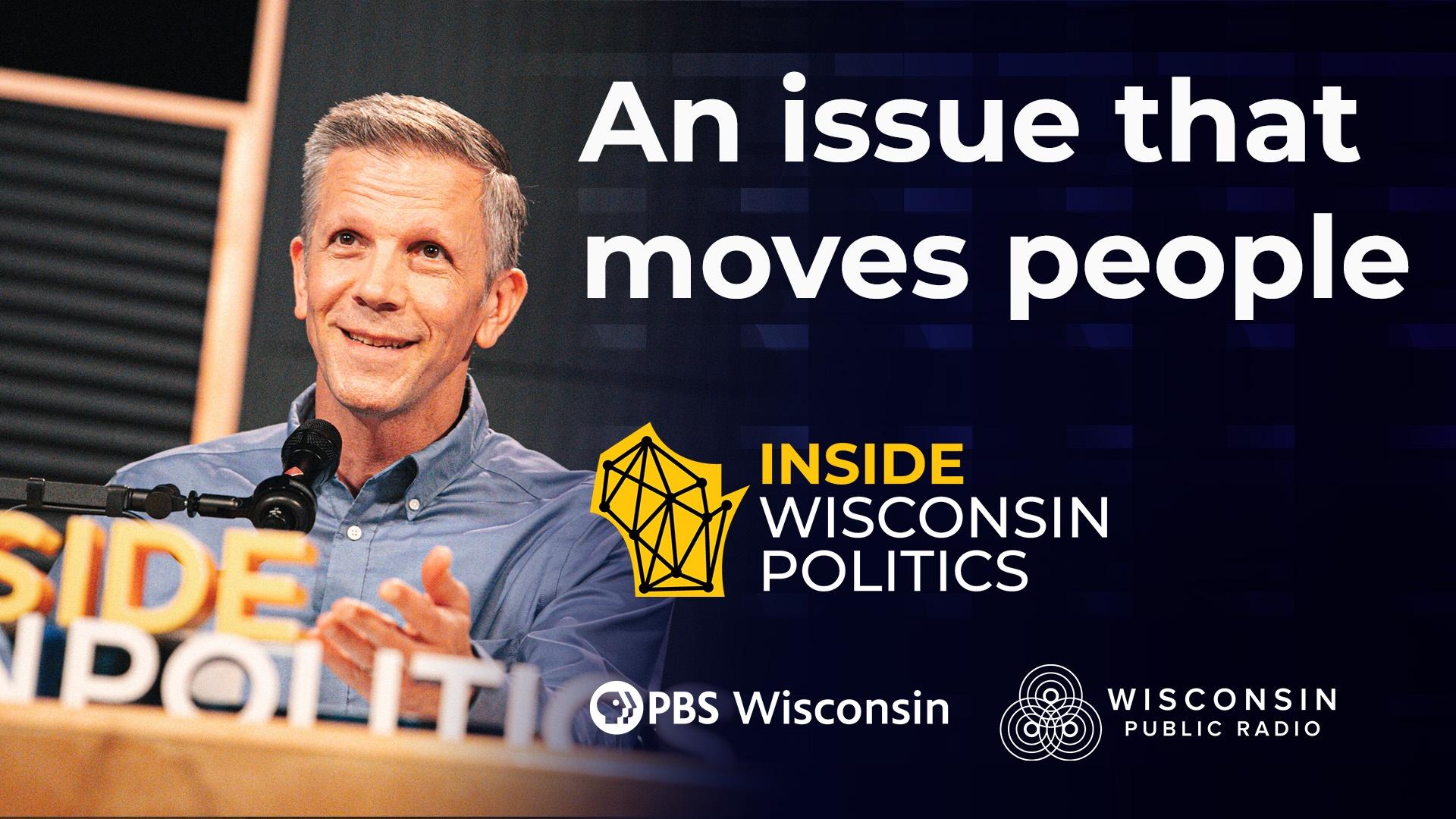
President Donald Trump campaigns in Chippewa County and candidates for governor and other races file nomination papers — Inside Wisconsin Politics consider what each means for the 2026 election cycle.
By Shawn Johnson, Zac Schultz, Anya van Wagtendonk, Rich Kremer | PBS Wisconsin, Wisconsin Public Radio
June 4, 2026
President Donald Trump campaigns in Chippewa County and candidates file nomination papers.
VIDEO TRANSCRIPT
Shawn Johnson:
President Donald Trump returns to Wisconsin, candidates file nomination papers for governor, and the Wisconsin Supreme Court will hear an appeal of a redistricting case after all. Let's talk about a busy week of campaign news. This is Inside Wisconsin Politics. I'm Shawn Johnson, along with my colleagues, Rich Kremer in Eau Claire and Zac Schultz and Anya van Wagtendonk here in Madison. Hey, everyone.
Anya van Wagtendonk:
Hey.
Zac Schultz:
Hello.
Shawn Johnson:
So, Zac, as we record this program right now, we just know that President Trump is coming to Wisconsin. It's a big deal anytime the president comes to your state. But it seems to be an especially big deal now. What's different about this visit here in this point in 2026?
Zac Schultz:
Well, this is a campaign visit. I mean, in the past, you could look at the president's visit, it's more about himself. This time, you can kind of look at it in terms of what does it mean for the fall — or in one particular race in northern Wisconsin that Rich will, I'm sure, be talking about — what it means for that primary in August. But specifically, we're looking at which Republicans show up with him. Now we expect them all to be there, all the big names, but if you look back in history, more on the Democratic side, there is a history of some candidates really not sure if they want to sit next to an unpopular president in a midterm election. In 2010, President Obama came to Madison. There was a big question of whether Russ Feingold was going to appear on the stage. In the end, he did. But all the weeks leading up to it, his campaign wasn't sure — he might be in Africa, he had some other things going on — and that was really a political question of does he want to be seen with him? And he ended up losing that race — that was the Tea Party wave, before it was. Just two years ago, President Biden visited Madison after that disastrous debate performance. Tammy Baldwin was elsewhere. She didn't come to Madison to be with the president. That's about campaign optics.
Shawn Johnson:
We should game out some of these names who might or might not be there in just a minute. But Rich, you are the closest to where the president will be. You're in Eau Claire. He's going to be in Chippewa County. What's the significance of where he's going to speak, and you know, potentially what he's going to talk about?
Rich Kremer:
So Chippewa County kind of serves as a twofer for the president and for Republicans. So, it is essentially a county that has two congressional districts. To the north side of it, we're talking about the 7th Congressional District. That is the seat that Tom Tiffany, Congressman Tom Tiffany is vacating as he runs for governor of Wisconsin. And then to the south of that line, it's the 3rd Congressional District, and that is Republican Derrick Van Orden, and he's in the middle of a pretty competitive reelection campaign. It's just one of a small handful of seats that are considered toss-ups — I mean, we're talking across the entire nation. He's running against someone who came pretty close in 2024 — Rebecca Cooke, she was within three percentage points in a year that President Trump won the state. So it's a different dynamic now. He needs all the help he can get, and the White House is responding in kind.
Shawn Johnson:
And it seems like the message from the White House has been, we're going to talk about farmers, we're going to talk about agriculture in these settings, in this district. Anya, what can we make of that?
Anya van Wagtendonk:
I mean, we're talking about sort of the steep odds that the ruling party, the Republican Party is facing right now. Obviously, the president right now has some of his lowest approval ratings throughout his time in office. But farmers in particular have really helped deliver him victories. I believe in his last election, he won the vast, vast majority of sort of farm-dependent counties in the country. And yet a lot of his policies, tariff policies in particular, have really been connected with some of the pain that farmers have been feeling. So tariffs that have caused, you know, weakened overseas markets for corn and soy, and then increased prices on steel and aluminum. So we have seen changes in his policies in ways that are, I think, aimed really directly at trying to appeal to these farmers. Earlier this week, he signed an executive order to lower some tariffs on agricultural equipment in particular. So now he's coming to Wisconsin to talk directly to farmers and kind of try to make sure that that part of his base is secure.
Shawn Johnson:
But Zac, as you mentioned, he is not coming for himself, he's not saying vote for me. He is coming to a county that straddles a couple of districts, including, as Rich mentioned, our most competitive in Wisconsin. He's also coming at a time where, if you just look at the latest national poll from Marquette University, he has, 19% of voters approve of how he's handling gas prices, 22% on the cost of living, the economy's around 30%. His overall rating is at a record low 38%, with disapproval creeping up. Is that good for someone like Derrick Van Orden?
Zac Schultz:
It doesn't help. But I think that the difference between these Republican candidates specifically and past examples like Tammy Baldwin or Russ Feingold is they, the Republicans need this area, and they need Trump's voters to come out. When he is not on the ballot, Republicans across the state struggle to get turnout, especially in western and northern Wisconsin. That is the MAGA base of this state, in the 7th and the 3rd. And without those voters, they could really struggle in the fall. So they actually need to attach themselves even closer to Donald Trump at this point, even if it looks like, politically speaking, it may not be the smartest move, because of his terrible numbers on a lot of things. And I'd like to meet the 19% of people who think gas prices are good right now, unless they are all biking or not driving themselves — there's really no one I've ever talked to in a while that says gas prices are doing great.
Shawn Johnson:
Kind of like, you know, biting their lip a little bit when they say that they're happy with that. Rich, what do you make of this visit here?
Rich Kremer:
Well, I wanted to go back and mention the 7th Congressional District. I failed to mention that, so this is the seat that Tom Tiffany is giving up to run for governor. But there's a big Republican primary going on right now up there. Michael Alfonso — who is Sean Duffy, U.S. Transportation Secretary Sean Duffy's son-in-law — has already been endorsed by President Donald Trump. So, some of the other Republicans in that race are trying to use Alfonso's connections against him. So I guess Trump coming to here, if Alfonso shows up — which I would expect he would — you get the president talking about this person that a lot of people in northern Wisconsin might not know about yet, and it also takes a little bit of the wind out of the sails of the Republican challengers that haven't dropped out yet, after that endorsement came way back in January.
Shawn Johnson:
Yeah, so let's talk about a few of the people who might or might not be at this event, and depending on when you watch or listen to this show, you're going to know whether we got these answers right. So, cut us some slack if we get anything wrong, OK? Michael Alfonso, you mentioned, it's in the 7th District. He is kind of the Trump candidate, that's his thing. So I think in that conservative district, I would be very shocked if he was not there to cheer on the president. I think we seem to be hinting at we expect Derrick Van Orden to be there, you know, a very strong Trump supporter going for that Trump voter who might stay home. How about Tom Tiffany, the Republican candidate for governor, running in 50-50 Wisconsin? Anyone want to take a stab at that?
Zac Schultz:
I think he's got to be there. I don't know why he wouldn't. It's next to his district. He's already tied himself to Trump over and over and over. And he, like Van Orden, needs that turnout in northern Wisconsin that Trump can deliver, that really no one else can. So it would be really odd, considering his past moves on election denials and all the other stuff where he's this closely related to Trump — including just voting in Congress to not end the war in Iran, supporting Trump again in that area in a very unpolitical fashion in terms of, like, popularity — so I would be surprised if he wasn't there.
Shawn Johnson:
Any dissenters there? We think that Tiffany's probably going to be there?
Anya van Wagtendonk:
I assume so.
Rich Kremer:
Well, I mean...
Anya van Wagtendonk:
Getting the endorsement, I think, was like a really big deal for the Tiffany campaign, right? It made him sort of the heir apparent to the Republican path to the governorship. But he has been trying to thread this needle a little bit. And, you know, as Democrats try to really closely tie him to Trump — to say that he is, yes, he's aligned with those politics and some of those value systems, but he is not sort of in lockstep with Trump, and he doesn't always vote with him 100% of the time. He made a sort of point of that at this appearance that he made in Madison a week or two ago. And so he wants to kind of show that he, yes, he's in line with those values, but also he will put Wisconsin first. And so how does he thread that needle at the visit? Again, maybe our viewers will already know and we'll be waiting to see.
Shawn Johnson:
Right. Rich?
Rich Kremer:
I'm sorry, I stepped on what Anya was saying. But, I have seen some folks online point out, well, Tiffany has taken some small, little stances against the war, you know, saying it needs to be wrapped up soon, et cetera. So they're arguing, well, that's him putting a little bit of daylight between himself and the president. But as we know, he has been pretty much in lockstep for a long time. So I do expect him there. But there's a part of me that is very contrarian and wants to push back just because you all say he's going to be there. But, so if he's not, maybe it would be because he's trying to appeal to the general election audience.
Shawn Johnson:
All right, well, now that I got the three of you on the record and I didn't take a position, I think we should move on to the next topic: the candidate-filing deadline. In the race for governor, you had candidates for governor, attorney general, Congress, Assembly, Senate, you name it, filing their nomination papers in Madison ahead of this week's deadline. Nothing is final yet, Anya, which you should explain to us, but we knew going in, there's a big field of people who said they were going to run for governor. What is sort of the lay of the land right now?
Anya van Wagtendonk:
Yeah, so a million caveats about the various steps of review that they will go through with the Elections Commission. But as of right now, eight Democrats have filed their papers, two Republicans — and so that's a field of ten. Tom Tiffany sort of being the, again, the kind of obvious frontrunner on the Republican side, less of an obvious frontrunner on the Democratic side. Then the big open question going into the filing deadline was whether Kirk Bangstad, the owner of Minocqua Brewing Company, this kind of liberal activist and perhaps social media provocateur, we might say, whether he was going to get his papers in on time. He declared his candidacy just a few weeks ago. He got his signatures in. It seems that about a quarter of them, if not more, are not valid. So, they didn't contain either the right voter information for the signers, and then about 40 pages of them didn't have the right date of the election. So he has until Sunday to cure those. That is a tall order that involves filing affidavits. He can't just go out and get 500 new signatures. So that's the big question. And then the Elections Commission will kind of vote and see whether everyone else qualifies. So as of right now, it seems that there are seven qualified Democrats, two qualified Republicans, and then the Kirk Bangstad question.
Shawn Johnson:
Right, and it's a big question, not only for Kirk Bangstad, it seems, but I mean, we're talking about what kind of a primary this is going to be, because let's say you're a candidate who wants to occupy that left flank of a seven-candidate Democratic primary like Francesca Hong. Kirk Bangstad comes in and is attacking you from the left, saying you're not left enough. He could pull away a few votes and it could make all the difference in a primary this big, Zac.
Zac Schultz:
It's possible. I mean, we are talking about a primary. If we get seven candidates going all the way to August, it's not unreasonable to think that high 20 percentage might be the winner if things get split pretty evenly. It really depends on whether those last three or four candidates at the bottom of the barrel are pulling 2%, or if they're pulling 5% or 6%, because those can add up to a big enough chunk of the electorate that they can swing an election towards the top when there may not be anyone that's really run away with it so far. Bangstad is not something that most of the Democrats are taking seriously. They look at him as more of an online troll. Provocateur is a good, polite word. They don't always use polite words when they're talking about him. Republicans love having him in the conversation because he's just more ammunition for them to throw at Democrats. Democrats would like him out of the conversation for that very reason.
Shawn Johnson:
So, I guess I assumed when we were looking at this race way back in, I don't know, January maybe last year, even that by June, when it comes time to file signatures, maybe that hurdle right there would thin the field a bit. And it basically did not. Do you all think that this field will be smaller before people vote in August? That you'll have some candidates say, look, I know I'm on the ballot, but I'm dropping out of this race and I'm throwing my support behind someone else? Rich, you want to take a stab at this one?
Rich Kremer:
Well, I would, you would expect that the field would shrink a little bit. But also this is an open seat, so it's kind of a different ball game. And you know, why not keep going? We've got candidates that in polling have been hovering around 1%, you know, single digits essentially, and they're still in it. I can't help but think of 2022. It was a U.S. Senate race against Ron Johnson, and you had the majority — you had the Democratic candidates all drop out all at once and endorse Mandela Barnes, who is now running for governor. But I really don't expect to see anything like that this go around. I could be wrong, but it just seems like the cost-benefit analysis that they're reviewing, these Democratic candidates, is leading them to stay in it.
Anya van Wagtendonk:
And by contrast, you know, in 2018, the last time that there was a big open Democratic primary for governor, it was an even more crowded field. I think there were two dropouts, and it was still a larger field than it currently is. And Evers emerged from that — Gov. Tony Evers — with a decent chunk of, but not a majority of the votes. He didn't have more than 50%. And so we could be seeing sort of a similar dynamic throughout the summer. One of the big questions, of course, is who can maintain the money that it takes to kind of get through to August, but especially if you see yourself as kind of standing out from the pack, like occupying a lane to yourself, why not kind of keep running in that way? To your point, will there be then — when people do start dropping out, and I do think we're going to see some before the primaries — but there's going to be some trading, like there's going to be backdoor discussions. I know everyone hates talking about how those happen in politics, you know, to trade my support for you, and so that'll be really interesting to see who wants to kind of give it up this time in exchange for something else down the line.
Zac Schultz:
Yeah. The two things to look at ahead of those are one, staffing. If we see — because we get the emails, the press releases, we know who their campaign staffers are, I would never expect the general public to have an idea of who these people are — but if we see changes in staffing, then that means they don't have the money to pay them, or those people are moving on to a new race or a new position. It really doesn't cost much to run for governor in Wisconsin. It's gas money, which I know is more than it has been in past years, but it's still not that difficult, and it's not even that difficult to get 2,000 signatures, quite honestly. We have lots of candidates — you just go out and knock doors and anyone will sign something we put in front of them. The other thing to look at is, is there a reason that consolidation might actually keep someone else from doing something in a race, and if they actually have enough support to throw behind someone else and kind of make that move or bargain for them, they almost have enough leverage to like say, I can deliver my voters, or my name comes with enough people to make it worth this effort.
Shawn Johnson:
The one thing I'd add to everything that you all have said is that I think that the 2022 experience could discourage some people to drop out. What I mean is that the idea in 2022 was, we're all going to get behind this one candidate, everybody put aside your political ambitions and back Mandela Barnes. It didn't work out for Mandela Barnes, you know, and so those candidates who dropped out maybe look at that and say, hey, why not me? So they could be having a similar calculation this time around. Real quick, before we wrap up, and we'd give more time to this if this was a bigger decision, but we have to address this Wisconsin Supreme Court decision. Briefly, Rich, they dealt with this redistricting case on the congressional map. Was it a momentous decision or incremental? You know, you tell me.
Rich Kremer:
It was not momentous. People might get excited when they see, oh, they're taking up this redistricting appeal, but really what they were addressing is whether or not a three-judge panel that they appointed made the right decision in dismissing this lawsuit. What's interesting about this lawsuit is it's not arguing that the congressional map is a partisan gerrymander. It's saying, no, this is an anti-competitive gerrymander — so a different, kind of nuanced approach. But ultimately they want new maps. So this doesn't mean that they're going to be issuing any decisions anytime soon. It's, it would be shocking if anything came before the elections this year.
Shawn Johnson:
Yeah, never, never say never in politics, but it does not feel like...
Rich Kremer:
True.
Shawn Johnson:
...at this moment the kind of redistricting moves you're seeing in other states around the country right now. That's all the time we have for today. Thanks for joining us. This has been Inside Wisconsin Politics. Be sure to follow us on pbswisconsin.org, wpr.org, YouTube or wherever you get your podcasts.
Passport


Follow Us