

 Passport




'Here & Now' Highlights: McCoshen & Ross, Lisa Tollefson, Bryna Godar, Tony Lo Sasso, Justin Sydnor
Here's what guests on the Oct. 16, 2026 episode said about the midterm election in a one-hour program that explored the role of money in races, election administration, ballot questions, the issue of healthcare costs and prediction markets.
By Frederica Freyberg | Here & Now
October 19, 2026


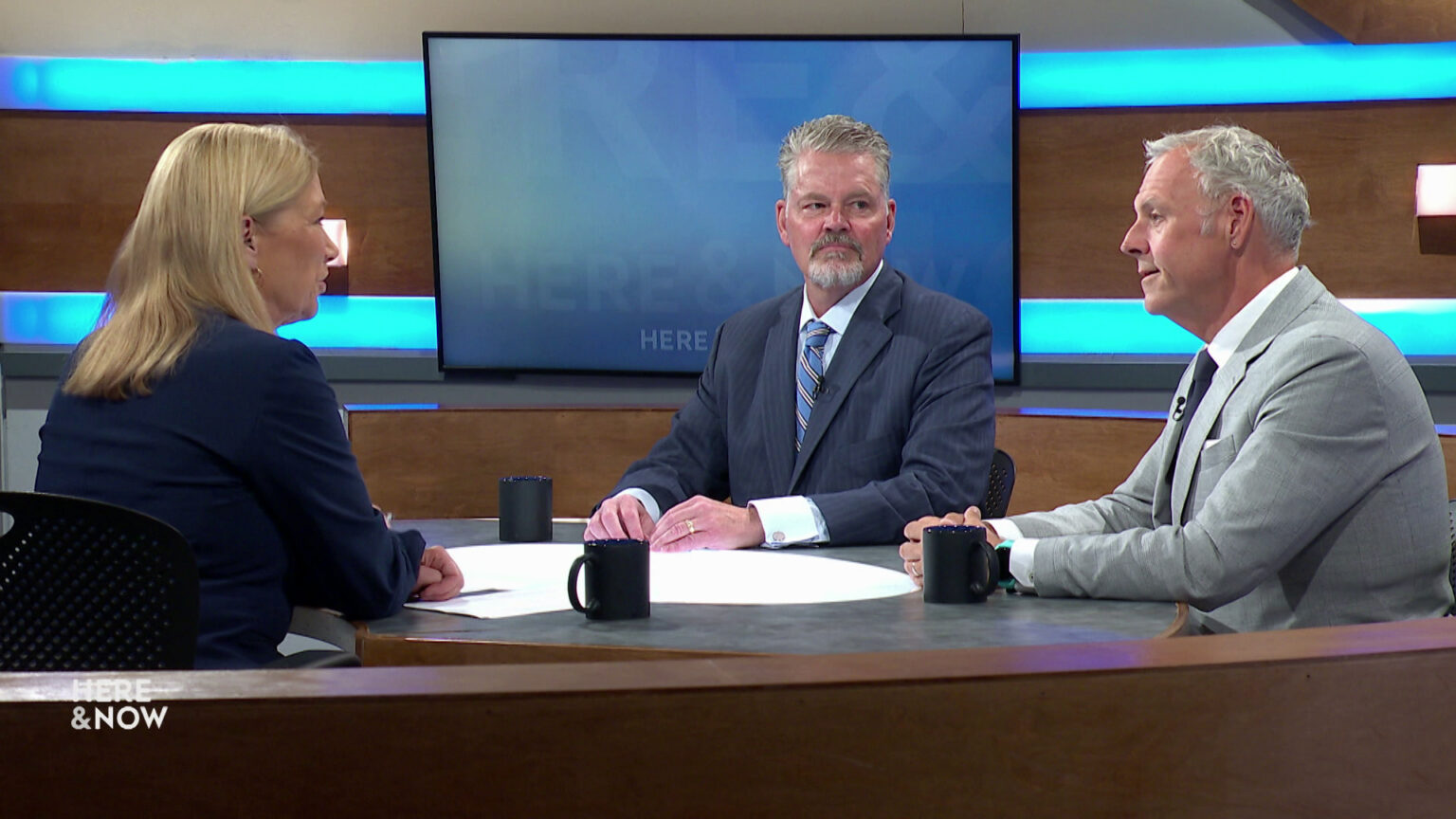
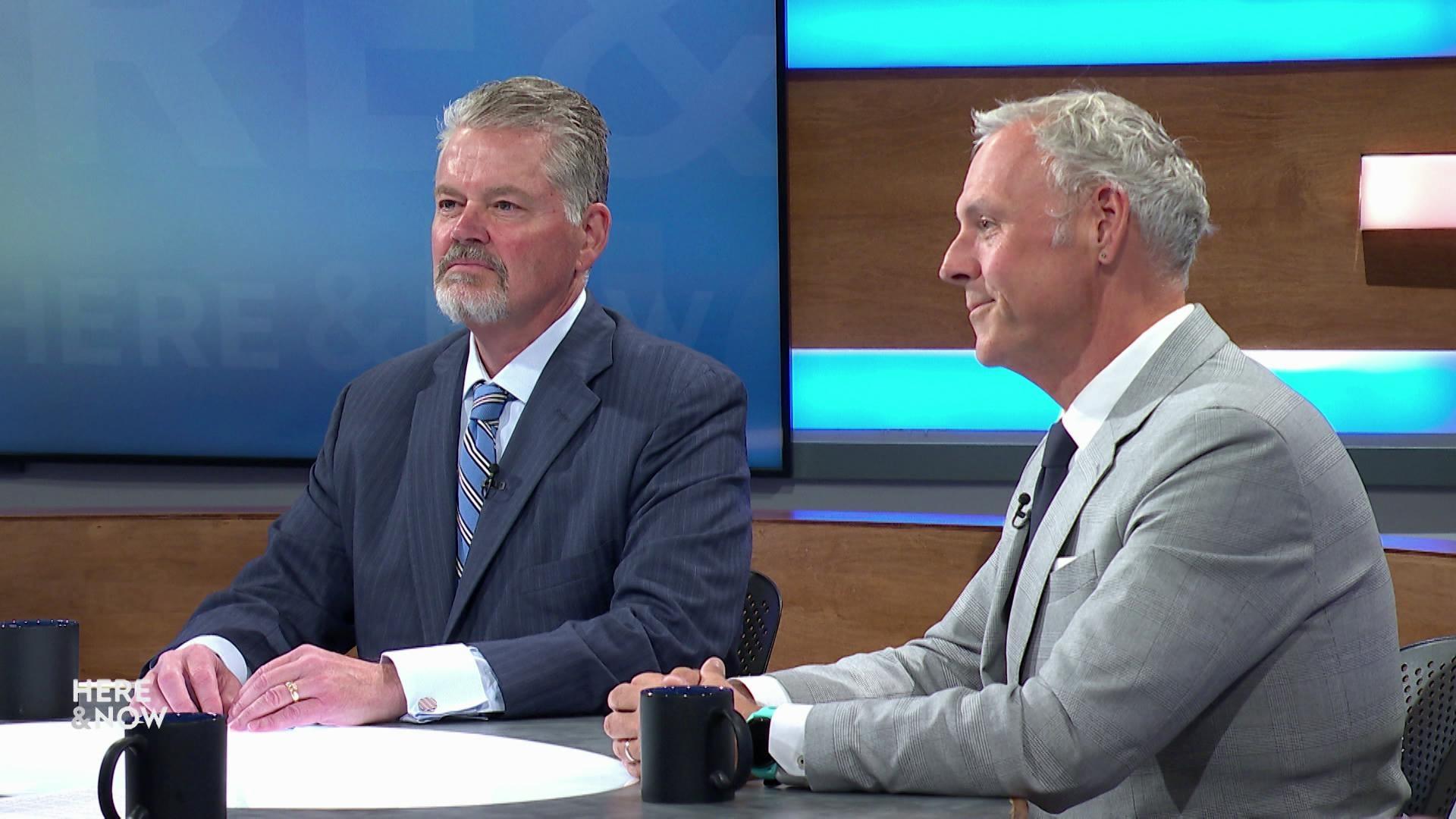
Frederica Freyberg, Bill McCoshen and Scot Ross (Credit: PBS Wisconsin)
The 2026 midterm election on Nov. 3 is just over two weeks away, and “Here & Now” took a close look at the candidates, issues and more in an extended episode. The role of big money in Wisconsin’s races lit up a discussion between political panelists Bill McCoshen and Scot Ross. Rock County Clerk Lisa Tollefson said election clerks are busy as voters cast absentee ballots and preparations continue for in-person voting, Bryna Godar with the State Democracy Research Initiative explained the provisions of three proposed constitutional amendments on the ballot. As voters highlight the issue of healthcare, Tony Lo Sasso of the La Follette School of Public Affairs described how Wisconsin has some of the highest health insurance costs in the nation. Prediction markets are growing, and Wisconsin School of Business professor Justin Sydnor unpacked what people placing wagers on election outcomes can reveal.
Bill McCoshen and Scot Ross
Republican and Democratic political panelists
- One question in the 2026 midterms is whether big campaign spending for Republican candidates in Wisconsin and nationally will temper President Donald Trump’s low job approval numbers in an otherwise favorable election climate for Democrats. Ross and McCoshen weighed in as the spending relates to Wisconsin’s race for governor and legislature.
- Ross: “What we basically have is three billionaires versus 3.7 million voters. The investment by Diane Hendricks and the Uihleins, Dick and Liz — it’s unfathomable. They have put something in the neighborhood of $50 million into direct campaign contributions by funneling through the Republican Party to not just Tom Tiffany, but also the State Senate and the State Assembly. They represent 90% of the fundraising by Tom Tiffany and every single candidate in the state legislature for the Republicans.
- McCoshen: “It’s kept Republicans in the game, for sure, particularly Tom Tiffany. He’s defying gravity, political gravity, right now. It’s a good year for Democrats, no question about that. Will it be a great year? It remains to be seen. I, you know, Is it a red undertow where people are just fed up with broken promises, particularly on the Iran war, or will it be a blue wave? The polling says voters are not very happy with Democrats either. So midterms generally go against the party in the White House. That’s Republicans this time around. But I think there’ll be some surprises across the board.”
Lisa Tollefson
Rock County Clerk
- County and municipal clerks across Wisconsin are busy preparing for Election Day proper on Nov. 3 and the counting of ballots after polling places close. Ahead of that, they’re managing absentee voting by mail, with in-person opportunities starting Oct. 20. Tollefson and other local election officials are making a special point to urge people who plan to mail in their ballots to do so with plenty of time to spare.
- Tollefson: “There’s no change to the rules on absentee voting. So you can mail your — there is no checking — the rules that were going to be put in place or tried to be put in place, did not go into place through the executive orders. So absentees ballots, that all stays the same. One thing that we are pushing is that if you are going to mail back your absenteeing ballot, mail it back at least 14 days before the election. We have found some delayed timeframes for ballots being returned. Think ahead. If you have your ballot and you’re closer to the election, you might want to deliver it yourself to your clerk or a drop box.”
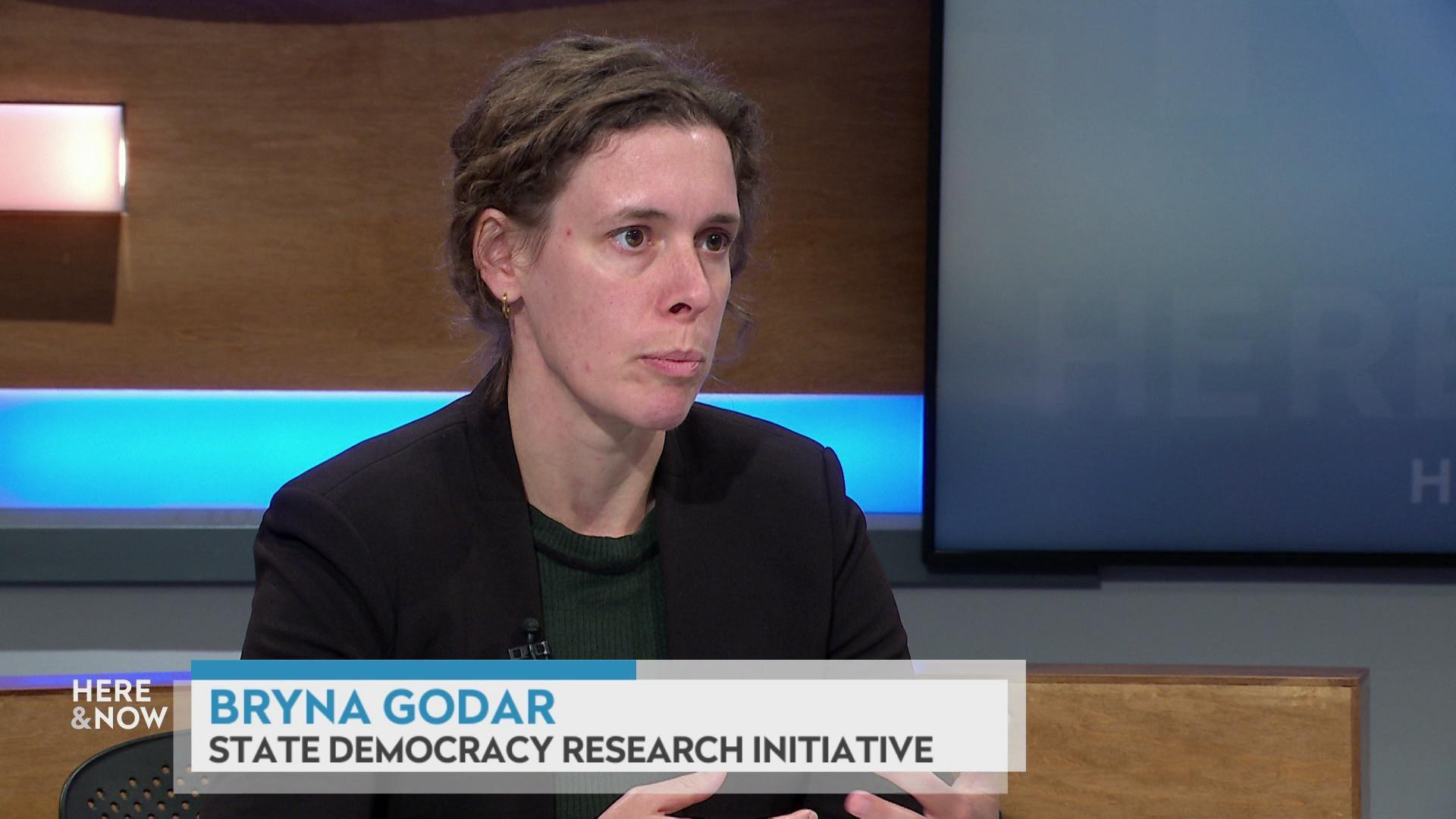
Bryna Godar
Attorney, University of Wisconsin Law School State Democracy Research Initiative
- There are three proposed amendments to the Wisconsin Constitution on the November 2026 ballot. One would restrict the partial veto authority of the governor, another would prohibit closing places of worship during emergencies, and the third would prohibit government entities from giving preferential treatment on the basis of race or sex. The State Democracy Research Initiative compiled a comprehensive guide to the ballot questions. Godar said while the proposed amendments were developed by Republicans in the Legislature and Democrats widely oppose them, the questions are not necessarily a straightforward party-line matter.
- Godar: “These amendments have implications that can cut across partisan lines, and so while it might be helpful to look to party leaders to have some indication of how you might want to vote, it’s useful to actually look at what the constitutional text itself says.”
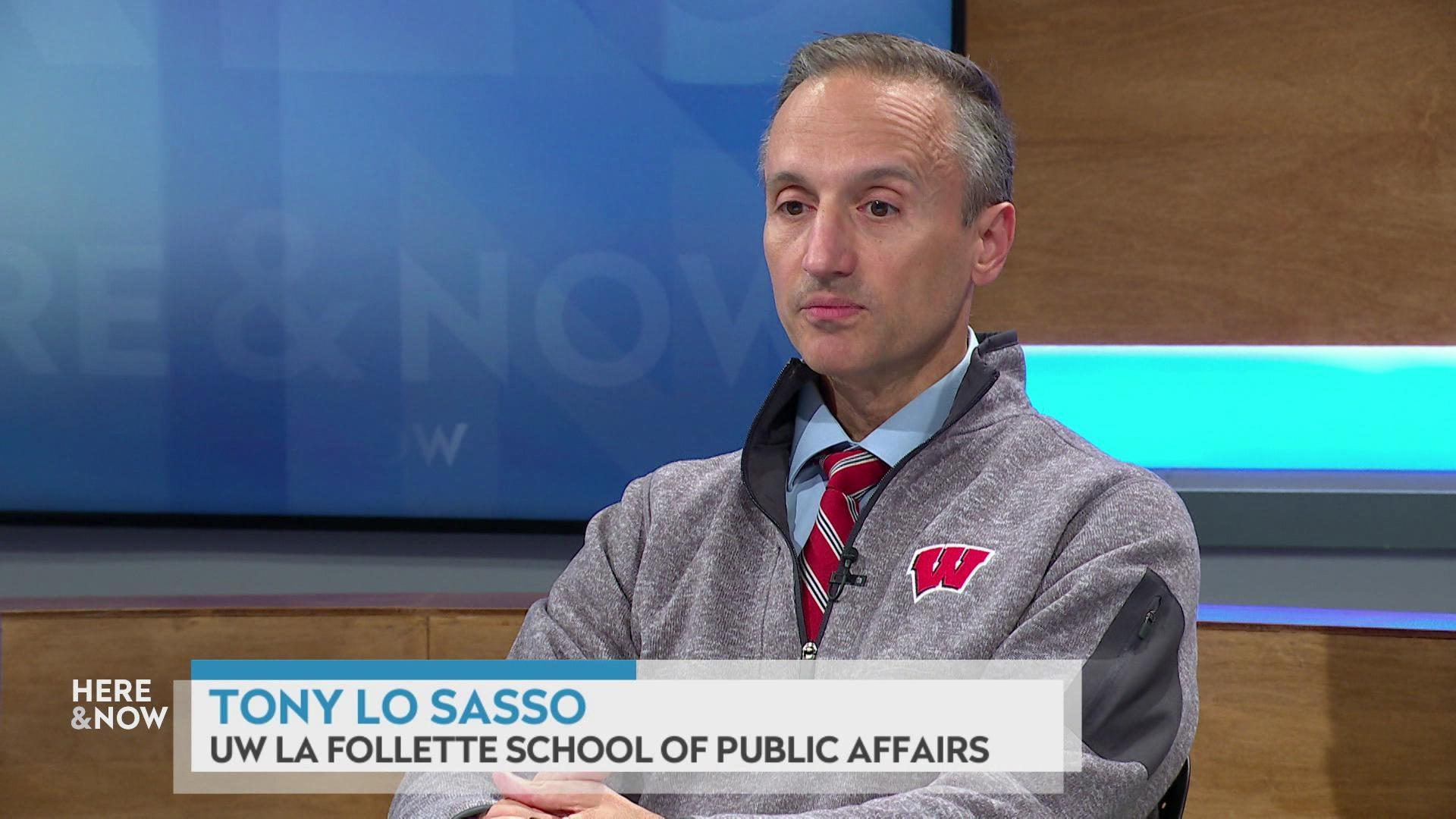
Tony Lo Sasso
Professor, UW-Madison La Follette School of Public Affairs
- Statewide polling conducted in late September puts health insurance as the third most important issue for voters after cost of living and immigration. Wisconsin is a national outlier for how expensive healthcare is in the state. Set against neighboring Illinois, healthcare costs that translate to premiums and co-payments are 25% higher in Wisconsin. The cost of healthcare is driven by many factors, but one little-known factor Lo Sasso has researched is a concentration of hospital markets in Wisconsin that resulted from health system mergers.
- Lo Sasso: “There have been a number of mergers. Some of them have had quite dramatic effects on concentration in specific markets. I think the Ascension merger, the merger that took place up in Wausau, created basically a, not a monopoly but a very consolidated, very concentrated market in the Wausau region. And so there’ve been a series of mergers. All of them — to the best of my ability to discern — have not been challenged, were not challenged in any way. So they’ve gone through, so that means the FTC at the federal level, that means the state AG. No — they’ve gone through. So on the one hand ,in terms of what do you do now that you’re in this situation, you’ve got high prices. Those prices, incidentally, transfer on to higher cost of health insurance. They go directly into the cost that premiums, the cost people pay in terms of their health insurance premiums. So, you kind of can’t put the toothpaste back in the tube, so to speak.”
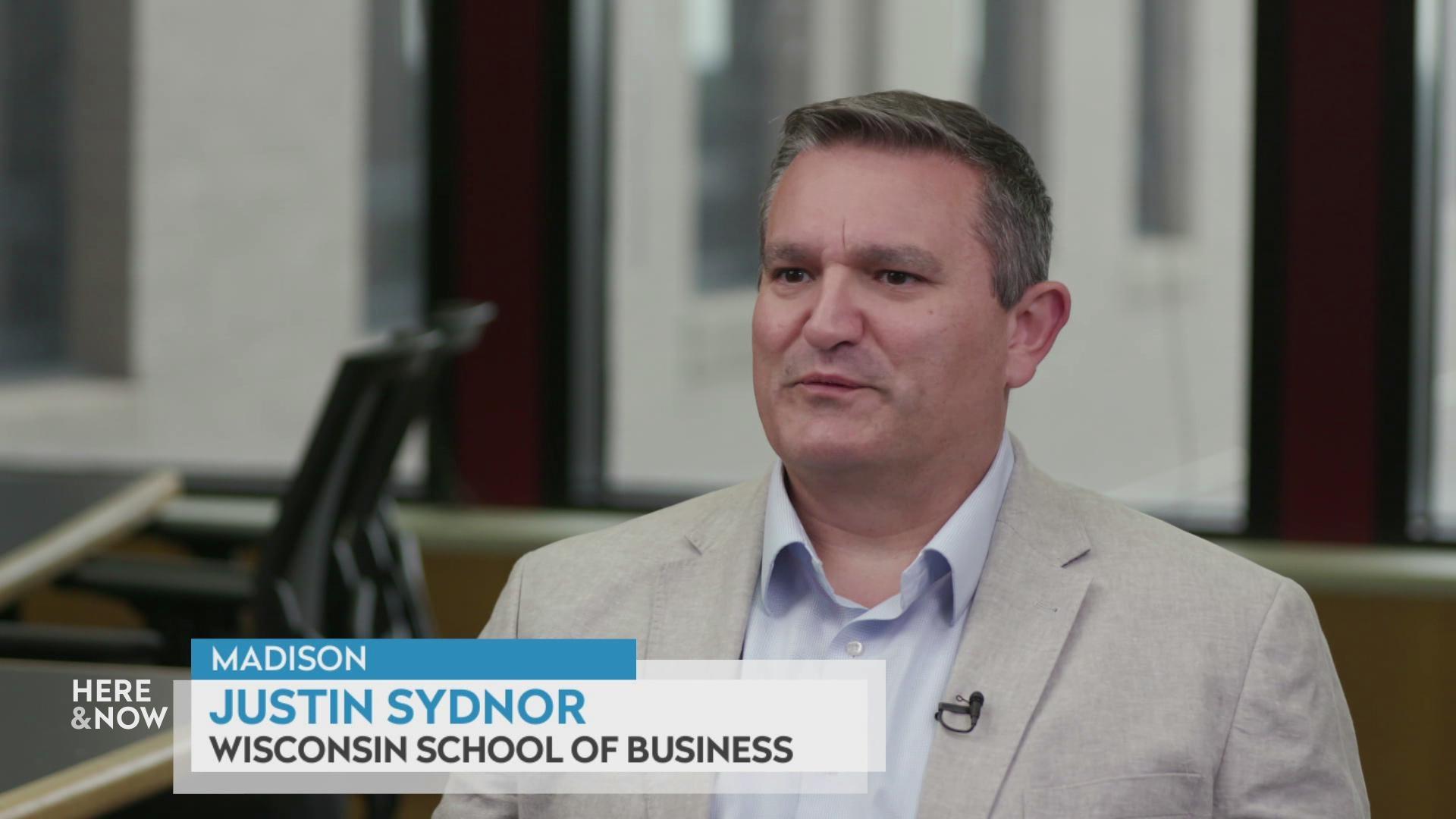
Justin Sydnor
Professor, Wisconsin School of Business
- Prediction market betting has expanded beyond sports and into elections. These bets are prohibited in many states, including in Wisconsin, where it is illegal for a voter to bet on the outcome of an election they’re voting in. Meanwhile, researchers are looking at the growth in the peer-to-peer wager market, which Sydnor said may be more accurate than election polling when it comes to gauging voter sentiment.
- Sydnor: “They benefit from leveraging the information of a lot of people, and so biases tend to get somewhat muted by lots of people participating. And the betting feature, the putting money behind those predictions if you will, does put extra weight for people who are more confident in the outcome. Now, whether that leads to accuracy really kind of depends whether those confident betters — the people willing to put their money behind — have better information and better insight about what’s going to happen. I think sometimes that’s true. Other times these markets, you know, there’s just not good information out there.”
Watch new episodes of Here & Now at 7:30 p.m. on Fridays.


Follow Us