




Childcare subsidies, UW tuition hikes and a PFAS settlement
Aid for childcare providers is expiring, the Universities of Wisconsin raises tuition, and the state reaches a $10 million PFAS settlement — Inside Wisconsin Politics reviews a busy start to summer.
By Shawn Johnson, Zac Schultz, Anya van Wagtendonk, Rich Kremer | PBS Wisconsin, Wisconsin Public Radio
June 9, 2026
Aid for childcare is expiring, UW raises tuition and the state reaches a PFAS settlement.
VIDEO TRANSCRIPT
Shawn Johnson:
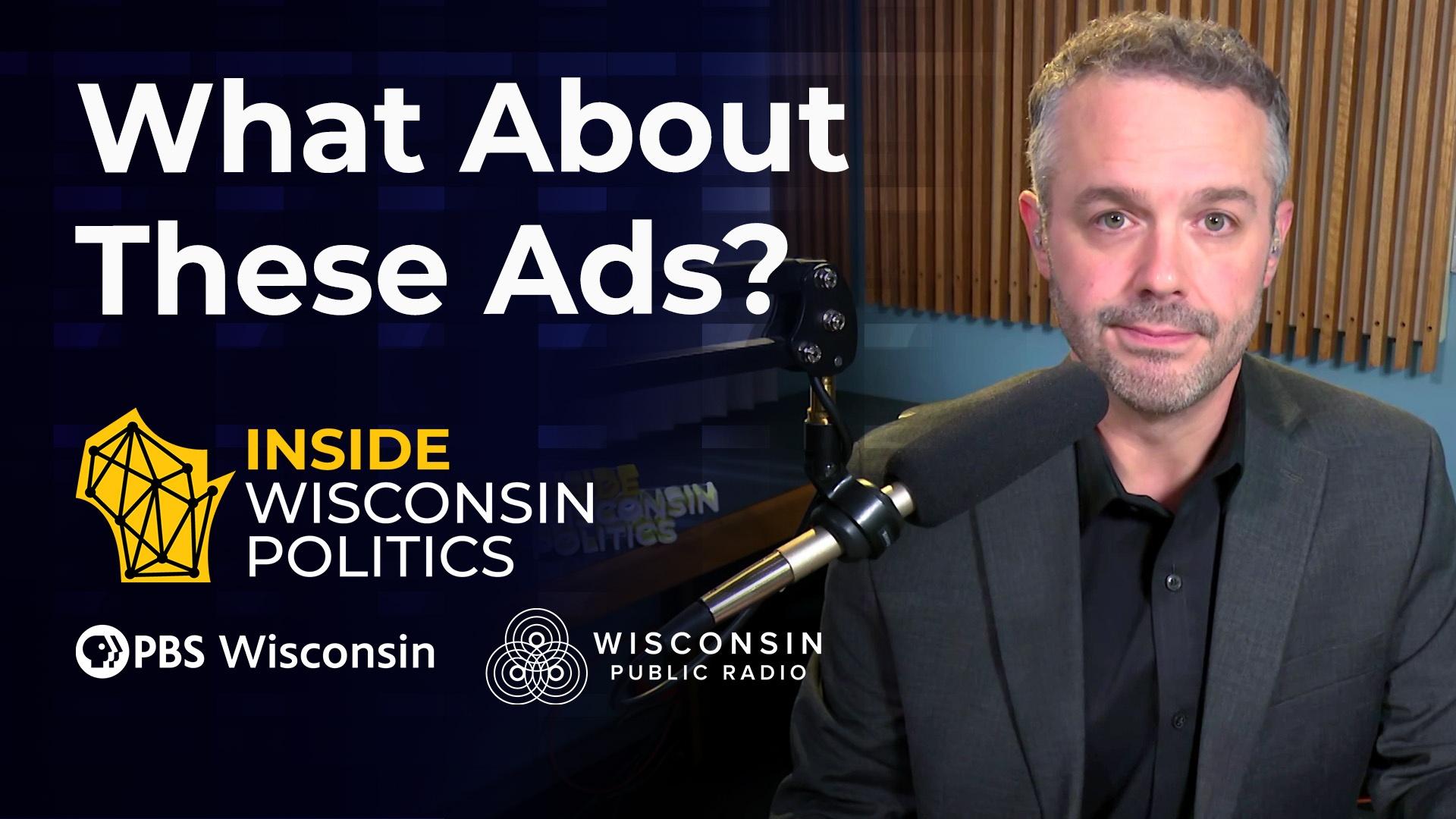
School's out, and for many parents in Wisconsin, a big concern looms: Funding for a childcare subsidy is about to run out. And — the political backstories behind a tuition hike at the University of Wisconsin, and a $10 million PFAS settlement. This is Inside Wisconsin Politics. I'm Shawn Johnson here with Anya van Wagtendonk, Zac Schultz and Rich Kremer in Eau Claire. Hey, everyone.
Anya van Wagtendonk:
Hey.
Rich Kremer:
Hey.
Zac Schultz:
Hello.
Shawn Johnson:
So, Anya, how do we get to this point with this childcare subsidy that is about to run out, right at a point in an election cycle in a year where costs are already this massive factor on everybody's minds?
Anya van Wagtendonk:
Yeah. I mean, this is like a story that we've all been covering incrementally for years and years. And when I say incrementally, what I mean is people ringing that alarm bell that we were heading towards this cliff. So go back in time to COVID. There were federal subsidies put in place for the childcare industry while everything else was collapsing — this is one of these things. And so the Child Care Counts program was initiated, which in Wisconsin looked like about $300 million going to childcare providers for things like paying staff more to retain them, infrastructure needs, material needs, and also some amount of financial aid for families that were struggling. And so that was due to expire. And so then for years, we were all covering legislative fights over what to do about this funding that was going to go away — program finally sunset last summer, and then a bridge program took over. And so now it is the bridge program that is due to expire. So again, we've sort of been pushing off this cliff for years and years and years, and now the thing that advocates and providers have been warning about is about to happen. This new report came out last week saying that potentially up to a quarter of childcare providers could close their doors, and almost certainly more than that are going to raise tuition after all of these funds go away.
Shawn Johnson:
And Rich, this is an issue where the Democratic governor and Republican Legislature definitely have not seen eye to eye when it comes to subsidizing childcare. Refresh my memory a little bit on how they did see eye to eye a year ago, and how they got this money that is about to run out now.
Rich Kremer:
So it goes back to this fight over $171 million. Gov. Evers had access to this money, which was interest from those federal COVID-era stimulus funds. So the interest generated from that is Wisconsin revenue in a sense. So there was this political battle. Republicans said, well, that should be under our control, or we should have a say in how you spend that. The governor said, no, this is federal money. And I remember watching a hearing on a bill that would have essentially given the Legislature a lot more say over that money. And even an attorney with the nonpartisan Legislative Council said: Well, it's kind of an open question. You know, they didn't answer it specifically, but that was a political battle, and during that discussion on the bill, one of the authors, Republican Eric Wimberger, you know, toyed with the idea, or talked — he mused about impeaching Gov. Evers over this money. So that bridge fund tapped into that interest from the COVID stimulus funds, and that's how they were able to at least, you know, keep this program going to some extent. The providers were saying it's not enough. Democrats said it's not enough. But here we are, and that's what's been keeping the thing afloat.
Shawn Johnson:
So Tony Evers said, it's very important to me that we keep this childcare subsidy going. And Republicans said: Well, it's very important to us that you get this money out of your bank account, Gov. Evers. And so they found that agreement for a year, but, Zac, it feels like now the money really is going to run out. Are providers going to close? What's going to happen?
Zac Schultz:
Well, you're going to hear a lot of noise about it, and that's for sure. And there's a reality on the ground of what it means for providers and for parents specifically who have to figure out where their kids are going to go if they can't afford this and still need to go work. But in a political season like this, this is going to be top-line messaging, especially for the Democrats running for governor. Republicans in the past and in the Legislature, and we assume Tom Tiffany's kind of in this category, have looked at the private sector means of trying to fix this childcare issue of like: Oh, let's lower regulations, let's find some discounts or some savings elsewhere, but instead of directly funding them. They've never liked that "welfare idea," as Robin Vos would constantly call it. And so we don't see Republicans coming back to the table. This wasn't part of the grand bargain that we talked about for a month straight. So this is a dead issue politically. There's no one coming back in special session to find money to fix this. They've all known this date is here. The question is, what will it mean going into the fall? How much damage will we see leading up to September? And maybe because September means school's back in session, it will be a little less of a hot-button issue, but there will still be people talking about it, and there will be Democrats campaigning on it — especially since they have a forum coming up that's invited all the gubernatorial candidates, but five of the Democrats are going to appear to it, and it's being held by these childcare providers and some of the groups that represent them, where they want to keep raising the profile of this heading into the fall.
Shawn Johnson:
And, I mean, it's kind of a subjective question here, but like, do you feel like this particular cost will resonate with people at a time when we're paying so much for gas and everything else? Does childcare kind of, I guess, get people's attention when they have all this noise?
Rich Kremer:
If you have a child in your house that you have to pay childcare for? Yes. I remember 15-20 years ago, long before this was an issue, I had family friends that said I would actually save money by staying home and quitting my job and not making my truck payment, and paying gas and insurance and taxes, and not having to pay childcare. That was a long time ago, and it's still the reality — even more so. More people than ever need to have two incomes to fund even a modest lifestyle in Wisconsin. And if you have small children, that means they need to go somewhere. As more and more families have split apart from the nuclear, larger umbrella of grandma or grandpa or aunts or uncles who are around, you're relying on other people to raise your kids. That is just the reality that people are in right now. And if it's your reality, it's one of the biggest realities facing you.
Shawn Johnson:
And Anya, any sense that this might affect specific races, whether it be the race for governor, you name it?
Anya van Wagtendonk:
I mean, I think one of the interesting things here is that childcare as a need and as a household expense really spans. It spans the state, it spans political backgrounds. Where that's not as much reflected is in the Capitol, where you have a little bit more of these hardline positions, especially within the Republican caucus. In the Assembly, there is a small but significant enough number of lawmakers who do believe in a more traditional family structure, who don't want to be subsidizing other people raising your children, and they are really trying to kind of legislate around that. And so it's not just about those sort of market solutions. And so I think that at that level, at the legislative level, we might really see this issue come to the fore because people who kind of don't care about some of those more cultural fights, they just want a little bit more money and a little bit more ease in their bank accounts. Will those people be motivated by not just this, but this in combination with gas prices and inflation? And then also, there's at least one district where one of these childcare providers turned advocate is now running for a seat in the Legislature. I don't know that this will be her only issue, but this will be one of her strongest issues, and that'll be really interesting to watch how resonant this is through the summer.
Shawn Johnson:
That would be Corrine Hendrickson...
Anya van Wagtendonk:
That's exactly right.
Shawn Johnson:
... I believe, who is the Democratic candidate. She's in a primary with Lisa White and Rep. Jenna Jacobson against Howard Marklein, the powerful co-chair of the Legislature's budget committee.
Anya van Wagtendonk:
One of the most hotly watched races, anyways.
Shawn Johnson:
And he has really been clear that he does not support this. This is not an issue where there's kind of gray between what Democrats support and what Republicans support with this childcare subsidy — there are stark differences. And so if they want to have that kind of debate out there, it would be certainly a chance for voters to see a difference in the way that, you know, these two parties view this issue in government.
Zac Schultz:
And that's why it was probably really helpful to have Rich's background of how we got to this point, because some people may be confused to think there was a bipartisan solution to provide this funding. From COVID on, it was all federal money that Gov. Evers directed into this program when the federal money ran out, with Republicans fighting it every step of the way, repeatedly passing bills that said, we would like oversight in how this federal money gets spent so you can't make that decision unilaterally. Gov. Evers vetoed every one of those bills. And it was this compromise in the last time — was not a compromise of, oh, we believe this should happen, it was, how do we spend this other pot of money that's still sitting here? So the COVID money is gone. This is now on the state's back, or we will see the consequences in households and businesses across the state.
Shawn Johnson:
And you alluded to this earlier, but I was looking back through public statements from the leaders as this big deal was negotiated, the deal that fizzled. And I don't think anybody was ever talking about putting some money behind childcare as much as the governor has said it's a priority for him. So that kind of gives you a sense of the politics on that one. Rich, we've got another cost going up here for some Wisconsin residents, or out-of-state residents who come here to go to school. Tuition going up at the University of Wisconsin — how much, first of all, and give us a sense of how this came to be.
Rich Kremer:
Well, so the tuition increase — specifically for tuition that the Board of Regents has approved — is 2%, but there's another 3.5% increase with regard to what are called segregated fees, you name it, fees for facilities, et cetera, et cetera. So we're talking 2%, which is below the rate of inflation, of course. And, but the argument over tuition — I'm not sure if it ever had a beginning or an end — but this specifically goes back to 2013, when there was a tuition freeze after Republicans found out and loudly complained for years and years that the University of Wisconsin System had something like $500 to $600 million in what are called fund balances, tuition fund balances — essentially reserves. And they had those reserves at a time when tuition had increased by 5.5% year after year after year. So that created a lot of heartburn among Republicans. And, that in 2013, there was the tuition freeze. Not long after that, Republicans, when they had both houses of the Legislature and Governor Walker in the governor's mansion, they cut $250 million from the UW budget, essentially saying: You've got those reserves, spend them down. So the universities had these directions to spend down their reserves, and they did. Over the years, the reserves went down by 60%. Some universities wound up in the red and had to do some pretty stark things to get their budgets under control. We saw layoffs. We saw a lot of buyouts. I think of Oshkosh, Marathon — excuse me, Stevens Point — a number of universities did that. So the tuition freeze was lifted officially in 2021. The university system, the Board of Regents tread carefully at first. They didn't immediately ask for a tuition increase. But since then, we've seen four consecutive tuition increases from the Board of Regents. And they haven't been the 5.5%. They've generally been close to or below CPI, which is pretty high. But Republicans don't like it. And even when they lifted the tuition freeze in 2021, some Republican lawmakers said: Be careful, if you get out of hand with this, we will freeze it again. So what we're seeing now is some Republicans, Tom Tiffany running for governor, saying we need another tuition freeze. That freeze lasted for eight years. Universities said it was harming quality of education. But on the other hand, Republicans said this is about access, this is about affordability, so the tuition increase back to back to back is just not good for Wisconsin families. But also the university says our tuition rates are lower than other states. So it's a really complex issue. And it's just been years and years since they've been complaining and arguing over this.
Shawn Johnson:
So certainly not, somebody might be forgiven to look at that increase — 2% — and say: Hey, what's the big deal? But this is something that goes back, boy, 16 years, or 13 years at this point now that they've been fighting over this particular round of tuition. So I think it's an open question on this issue like any other. Is this going to be something that resonates in the campaign for governor? Anya, how about you go first?
Anya van Wagtendonk:
I mean, in some ways, I think that the arguments that we're seeing from Democrats and Republicans mirrors the property tax and K-12 funding thing, right? Which is that you have these kind of levers, and as you pull one, another one goes up. And so in this case, Democrats are saying, well, the state has been defunding the UW system. What do you expect? Of course, tuition is going to have to go up. One of those, you know, they're sort of in balance with one another. I think another point of tension that's going to be really interesting is the way that this affects Madison, and in some ways Milwaukee, compared to all the other schools, because Madison especially has this international cachet, right? And can bring in students from out of state and from across the world who will pay full freight, and that offsets some of those costs in a way that Stevens Point, Oshkosh are much more kind of aimed at local Wisconsin kids. You have Tom Tiffany now coming out and saying he wants to see fewer international students. He wants to put the "W" back into the UW. What will that do for this kind of other revenue source that UW-Madison has and how that feeds into the system? Lots to play with, and to what extent that motivates voters who, again, maybe they face the day care charges, now they're facing increased tuition on the other end — it's expensive to raise a kid in Wisconsin.
Shawn Johnson:
It could really be — whether or not it resonates could just be a matter of whether or not Tom Tiffany decides to put some resources behind it and put it in front of people and make it his message, or focus on other stuff.
Zac Schultz:
There's a lot out there, and one of the things that's interesting is a report just came out from the Center for [Research] on the Wisconsin Economy, which is CROWE, which is this conservative think tank that was created by Walker in his administration, at the UW, with the goal of having a little more conservative-friendly economics ideas being floated out there as from the UW, giving it that stamp of authenticity. And they came out and said, actually, UW's tuition is too low. It's below its peer institutions. It's actually — freezing it is subsidizing this private enterprise of kids that go to college and get this degree and then are very successful, making their college tuition cheaper, subsidizes them at the expense of everyone else who's impacted by these costs. So it's interesting even some of the conservative groups out there aren't supporting a freeze or keeping it this low.
Shawn Johnson:
Zac, I want to turn to another issue with a long political backstory. There was this settlement this week — or last week — reached with Tyco, a PFAS manufacturer, for $10 million with the state. This is a big deal. Tell us why, and then tell us the politics that led to this.
Zac Schultz:
Well, these lawsuits have been out there about PFAS contamination throughout. Tyco makes firefighting foam and equipment, and so they've contaminated the ground around there as we've learned more about what PFAS does and the forever chemical. But the history of this is fascinating because we talk a lot about elections having consequences. This decision is a consequence of Supreme Court elections. So you have to go back and look at that slow transition that occurred from Democrats and liberals taking over the court, because there were two major decisions that they issued in 2025 that allowed this to happen. The first is that with the DOJ lawsuit, they said: You do not actually have to create a new rule for each version of PFAS chemical or contamination that's out there in order to put into place these kind of fines or sue people over the Wisconsin Spills Act about anything that spilled into our ground that can harm our waterways. So that was a big win that said you don't have to go back each time. But then another separate lawsuit — part of the Evers v. Marklein lawsuit — said, well, the state doesn't actually have to go and worry about the Joint Committee for the Review of Administrative Rules to promulgate new rules for what the standards for PFAS are. And so when that happened, the Evers administration was able to push through new standards on PFAS contamination that matched stricter federal standards. Now, the DOJ doesn't have to worry about getting sign-off from the Republicans for settling these lawsuits, and they can actually prosecute this Spills Act for anyone out there that's contaminated the ground, which allows settlements like this to happen, creating money to help people that have been impacted by this pollution.
Shawn Johnson:
So you're not going to see any of that in the settlement language obviously, but that's the legal environment that everybody is operating in now under this liberal majority on the court, which we know is going to last until at least 2030.
Zac Schultz:
Yeah, and it's not going to change anytime soon.
Shawn Johnson:
And on other issues perhaps as well — in subtle ways.
Zac Schultz:
The court matters — that's why we watch the court.
Shawn Johnson:
The court always matters. That is very true. That's all the time we have for today. Thanks for joining us. This has been Inside Wisconsin Politics. Be sure to follow us on pbsisconsin.org, wpr.org, YouTube or wherever you get your podcasts.
Passport


Follow Us