[relaxing guitar music] The sun is rising over the Mexican desert and I feel so blessed to be here.
Today, I'm starting a new journey into my home country, but in a region that I've never explored before.
Coahuila is a northern state that was once one with Texas.
And even though they are now separate states in different countries, the bond between them remains strong.
[upbeat music] From the moment I land, I feel the need to search deeper into the past.
And much to my surprise, I'm able to go all the way back into the origins of time.
[upbeat music] Pati's Mexican Table is brought to you by... [upbeat music] Wells Fargo supports over 3 million small business customers.
[upbeat music] La Costea, por sabor.
Avocados from Mexico.
-[calm music] -Eggland's Best, available in your groceries egg aisle.
Visit egglandsbest.com.
- [Pati V.O.]
My 1st point of co Regina Gonzlez, who is continuing the legacy of her father, Don Arturo Gonzlez, the man who had the vision to launch a place where the past comes to life, the Museum of the Desert in the city of Saltillo.
- [Regina] Coahuila es un lugar de dinosaurios.
Hace miles de millones de aos, toda esta rea era mar.
Somos uno de los principales centros de conservacin de flora y fauna a nivel Mxico y uno de los ms importantes a nivel Latinoamrica.
- [Pati] Y estos son modelos de dinosaurios.
- [Regina] Estos son rplicas.
Los originales estn bajo cuidado.
Tenemos un equipo muy grande de paleontlogos que, la verdad, han descubierto muchsimos dinosaurios.
Entonces, yo pienso que tienen un sexto sentido porque saben dnde buscar.
- [Pati] Los huesos los llaman.
- [Regina] S, los llaman, totalmente.
Aqu tenemos al doctor Hctor Rivera.
Es el mero mero de la paleontologa aqu en Mxico.
- [Doctor Rivera] Mucho gusto.
- [Pati] Qu porcentaje de lo que tienes es real y qu porcentaje es modelo?
- [Doctor Rivera] Todos los fsiles que hemos encontrado en Coahuila y en otras partes estn aqu resguardados dentro del laboratorio.
- [Pati V.O.]
And it is another young woman, Karina Lozano, who is in charge of preserving the species that still exist today.
- [Pati] Qu significa para ti estar con estos animales que estn tanto en peligro de extincin, como que la gente no conoce y t eres la responsable de que sigan vivos y de que coman?
- [Karina] Es un sueo para m trabajar aqu con especies prioritarias para la conservacin en Mxico.
Cada especie cumple un papel muy importante.
Hay una cadena trfica que si se extinguen ellos, nos extinguimos nosotros.
Entonces, todos estamos conectados y es algo importante y necesario.
- [Pati V.O.]
It is the younger generation who are leading the path.
[Calm country music] - [Pati] Le puedo tocar la nariz?
- [Karina] No.
No s, no.
Verdad Gonzalo?
- [Pati] Ya somos amigos.
Qu boca!
Estn los otros as como: Y yo qu?.
The bison ate, now it's my turn.
[upbeat country music] - [Pati V.O.]
Regina takes me to Los Pioneros, a breakfast institution in Saltillo.
Asado de puerco, pork cheek, barbacoa, chicharrn en salsa, machacado with eggs.
All freshly made to order each morning for mouthwatering tacos, available until they run out, which happens every day.
Yo te recomiendo que hagas como un road trip.
Porque est muy fcil manejar de aqu a todos los lugares que te voy a ensear.
Mis lugares favoritos aqu de Coahuila, nmero uno es Parras de la Fuente.
Pero para llegar a Parras de la Fuente hay dos lugares que estn muy padres, General Zepeda y Rincn Colorado.
Hay estos pueblitos que la gente vende sus cosas desde nuez, dulces, tortillas de harina, comida hecha.
Entonces, es delicioso.
- Es que, sabes qu, Regina?
Llevo yo ya haciendo esto 14 temporadas.
Es mi 15va.
- Increble.
Guau!
- Tengo ganas de adentrarme ms, de conectarme ms con la gente.
- [Regina] Buensimo.
- [Mesera] Es cachete y machacado para usted.
- Muchas gracias.
Voy a guardar tantito esto.
A ver, esprame, este es cachete?
- [Mesera] Este es cachete.
- Ah, doradito.
- [Mesera] S, y lleva pico de gallo.
- Yo la verdad hago un mix de todo, me encanta.
- [Mesera] Provecho.
- Muchas gracias.
- Gracias.
- Yo tambin voy a hacer mix.
- [Regina] S, haz un mix y lo mejor tambin, yo soy adicta al limn, me fascina el limn.
Entonces, buensimo.
Mi lugar principal que voy muy seguido es Cuatro Ciegas.
Qu tal?
Buensimo verdad?
[risas] No, no puede ser.
- Es delicioso.
Es mi favorito, el de cachete.
- Qu cosa!
Es que est crujientito, pero al mismo tiempo se te deshace en la boca.
- Y el pico de gallo le da un sabor especial.
Delicioso.
[calm music] - [Pati V.O.]
I took Regina's suggestion to heart, rented a pickup truck and went to outfit myself for a real off-road road trip.
[calm music] - [Vendedor] Listo, Paty, ya ests toda completa, pero te falta un detalle, el sombrero, lo ms -importante para ser vaquero.
Mira.
-De vaquera.
-S.
Este es el indicado.
Te lo muestro.
- [Pati] Qu belleza.
- [Vendedor] Est hermoso, s?
-Y va as como para adelante.
-As hacia abajito.
Aj, as.
Y te ves superbin.
[western music] - [Pati V.O.]
And then I started plotting my path.
But first let me show you how you can make machacado with eggs at home.
So excited because I'm in a beautiful kitchen.
I'm filming in Mexico and, em... Ay, es que estoy muy contenta, me dio emocin.
I'm gonna start with preheating my cast iron pan, which I love 'cause it's seasoned.
It holds the memories of what I've cooked in it for years, but now it's bringing in the flavors and stories of Coahuila.
The machaca, once you mix it with the salsa and the scrambled eggs, is such an iconic dish.
Imagine a time where there was no refrigeration, where the weather is so extreme.
The way to make the machaca was to cut the meat super thin, dry it out in the sun with some salt.
You can eat it on its own.
It's absolutely delicious.
Well, it's machaca.
Mmm, mmm.
It tastes like beef jerky, but it's super thin, slightly salty, and it's just packed with protein.
[relaxing music] So I wanna start by making a rustic salsita that's gonna season the machacado.
[tomato sizzling] I love it when the tomatoes start to whistle.
You'll hear.
Ay, viste cmo brinc?
[laughter] [relaxing music] Now to use it and to cook it, you have to unlock its flavors and kind of rehydrate it.
You can see how the machaca is gaining color.
And now I'm gonna add the rustic salsa.
[pan sizzling] I just want this to be not so juicy.
So I'm gonna let it thicken, and as it thickens and it seasons and the salsa absorbs the flavors of the dry beef, mm-mm.
[relaxing music] [egg cracking] You want the scrambled eggs to thicken.
[pan sizzling] I like my scrambled eggs tender, 'cause if I cook them too much, they become rubbery and hard and they lose the egg charm.
Esto ya va a estar en un segundito, mira.
- [Director] S verdad?
- [Pati] S.
And you know when the eggs are ready, when they are set.
There's nothing wet.
It's just gently moist.
[relaxing music] Made flour tortillas earlier, so these are made from scratch.
And I love to heat them straight on the flame, 'cause it gives that rustic char that is also in this machacado that has that rustic flavor from the taquero north.
[relaxing music] Ready.
My eggs.
[plate scraping] Some refried beans.
[relaxing western music] Mmm.
Mmm.
Tastes insane.
I think Mexico's north and Coahuila is very misunderstood.
People... ...really don't know how rich... ...the culture... ...and the food is, and this is just, oof, so incredibly delicious.
Mmm.
[upbeat western music] - [Pati V.O.]
When the Spanish conquistadors settled on this land, they brought wheat to make bread.
Centuries later, that wheat found new shapes.
The traditional bakery, Morapan, makes pan de pulque, a bread leavened with fermented agave syrup.
Its most famous one is filled to the brim with pecans.
[upbeat music] I take some to go to share with my friend, Juan Ramn Crdenas, who has taken it upon himself, along with his brothers, to shine a light on the importance and history of cabrito in the region, the roast goat that the area is known for.
- [Pati] Se nos hizo!
-Bienvenida al saltillo.
-Me vas a llevar a tu rancho.
-Claro, a eso vamos, a ver los cabritos.
- [Pati] Acabo de ir a Morapan y te traje unos panecitos.
- [Pati] No, no, no.
Es que dime t esta belleza.
-Qu bueno est, verdad?
-Mmm.
-Mmm.
Est sper, sper, sper.
- [Pati] Mmm.
S que el cabrito tiene orgenes sefard-Judo.
- [Juan] Mhm.
-Platcame un poquito de eso.
-S, el cabrito llega cuando se tiene que colonizar estas zonas.
Y estas zonas, quienes colonizan -Mhm.
-Son espaoles y portugueses.
Y muchsimos de ellos eran sefards.
-Mhm.
-Que se convierten Y llegan, y llegan con la cabra.
Y la cabra encontr -una, un, un ecosistema- -Mhm.
En el cual fue superideal.
Por, por eso, eh, el cabrito, eh, se adapta y Coahuila lleg a ser el primer estado productor de caprinos.
Por muchos aos mantuvo ese lugar.
Y fjate que como cocinero, cuando tienes la fortuna de poder hacer un sacrificio de un animal- -S.
-Porque, pues el animal entrega su vida para que nosotros nos alimentemos y por eso es sagrado.
Es que lo reflexionas y, y te das cuenta del valor.
Eh, como cocinero, tienes un gran respeto hacia los alimentos.
-Claro.
-S, porque hay vida de por medio, sacrificio de vida.
[calm western music] Luego me cambias tu cinturn, eh?
[calm western music] -[msica tranquila] [balidos de cabras] - [Juan] Esto es lo que es la majada.
- [Pati] La majada?
- [Juan] La majada es en donde estn [cabra balando] las chivas con sus, con sus cras.
Y fjate cmo el, el, el perro los viene cuidando.
-S.
-Y bueno, ya entran y cada chiva, si es que tiene cras, porque no todas tienen cras.
Va a buscar su cra para amamantarla.
[calm western music] [balido de cabras] - [Juan] Alejandro Herrera.
-Qu tal?
Mucho gusto.
-Su pap, don Perfecto.
-No, pues muy perfecto, s.
[risas] -Ya conoces a Eduardo, mi hermano.
S, s, s, s.
Y entonces hay q llevarlas... - [Cuidador] S, las sacan ac.
- [Pati] Todos los das.
- [Cuidador] Todos los das.
- [Perfecto] Todos los das.
Ya en las tardes, cuando llegan aqu, les aviamos con algo.
Ahorita, ahorita que est la sequa, les ayudamos con algo de, de forraje.
- [Juan] Fjate cmo tu, tu mano siente, si le vas sintiendo as todo este, vas sintien-- si-sintelo desde ah, no sientes los huesos.
[balido de cabras] Entonces, el cabrito est bien gordito.
Este es un cabrito bien gordito, muy bien criado.
[calm western music] [balido de cabras] Pues mira, ya este es un, una canal de cabrito, un cabrito sacrificado.
Me ayudas a detenerlo de este lado?
Agrralo, ndale.
Te lo voy a llevar para ac para que lo veas.
-Okey.
-Entonces, mira, mira los riones llenos de -grasa.
-S.
Mira esta tambin esta grasa.
Este es un cabrito bien gordo.
-S.
-Este viene siendo la molleja.
Esta es una mollejita, las costillas.
Y este se va a ensartar.
Entonces, aqu lo vamos a poner.
-Okey.
Y aqu cuntas horas se queda?
Aqu -nos vamos a tardar 3 horas.
-Okey.
[calm western music] - [Juan] Pati, vente para ac que vamos a hacer una fritada.
Esta cazuela es la que te platiqu que mi suegra me la regal y era de su mam, o sea, de la abuela de Beatriz, mi esposa.
Entonces, yo estoy muy honrado.
Siempre se ha hecho fritada en esta olla, -en esta cazuela.
-No he probado fritada nunca, -as que ser mi primera vez.
-Tu primer fritada.
- [Pati] S.
- [Juan] Vamos a ponerle tantito chile poblano.
- [Pati] Poblano, qu rico!
- [Juan] Entonces, es fritada porque todo se fre.
- [Pati] Aj.
Zanahoria?
- S, vacalo.
-Vaco?
-Ponte 2, 3 cuartos.
- [Pati] Rodrigo, cuntos aos llevas t haciendo fritada?
- [Rodrigo] Fritada... Pues la como desde, yo creo que desde los 7 aos.
- [Pati] Y te sabe diferente si lo cocinas aqu en Coahuila que si lo cocinas en Texas?
- [Rodrigo] Hoy en da, yo creo que ya los sabores son muy parecidos.
- [Juan] Y vamos a ponerle el ingrediente principal de la fritada, que es la sangre.
- [Pati] Del mismo cabrito?
- [Juan] La sangre del cabrito.
- [Pati] Se come todo el ao para ocasiones principales o...?
- [Juan] Sabes qu?
Es festivo, es un platillo festivo.
Un cumpleaos, un aniversario, Navidad.
- [Pati] A ver, platcame este qu es.
Entonces, lo vamos a ir poniendo as como fue la sangre- -Okey.
-A que todo sea baado.
- [Pati] Y qu es lo que le estoy echando, que huele delicioso?
S, es, es, eh, son dos tipos de chiles, chile ancho, - [Juan] es chile guajillo, ajo y cebolla.
- [Pati] Y existe fritada sin sangre o ya no le llamaras fritada?
- [Juan] No, ya no se llamara fritada.
Sera cabrito en salsa- - [Pati] Okey.
- [Juan] O cabrito enchilado.
-Y esto cunto tiempo se cocina?
-Una hora y media.
Una hora y media.
[calm western music] - [Juan] Mira, Pati, a ver si alcanzas a ver ah cmo est hirviendo el, el rin por dentro.
- [Pati] [suspiro de sorpresa] S!
- [Juan] Es algo muy parecido a un foie gras.
Pues es el rin con toda esta grasa.
Y cuando lo llevas a la boca, ambos explotan y se disuelven.
Eh, tiene, tiene un valor gastronmico realmente alto.
Esta es la parte que a mi esposa, Beatriz- -Mmm.
-Ms le gusta.
Y t tienes ahorita el privilegio.
[calm western music] Te gust?
Entonces, esa es... -esa viene siendo el pechito.
-Mmm.
- [Juan] Una rionada preciosa.
- [Juan] Vas a comer esto.
- [Pati] Okey.
- [Juan] La grasita.
- [Pati] Okey.
- [Juan] Que esto es lo que te digo que se parece al foie gras.
-Uf.
-Vamos a darle.
-Con tantita sal.
-Ya le puse, pero ponle tantitita.
-Y te pongo aqu un poquito.
-Dale.
Gracias.
[calm western music] Mm.
Ah djalo en la boca.
- [Pati] Qu cosa ms deliciosa.
Mejor que tutano.
-Pues es la comida del norte de Mxico.
-Mm.
Bueno, pues un privilegio compartirla contigo y con tu familia, no?
Gracias, gracias.
[car driving] - [Pati V.O.]
As the night takes over, I head north towards Monterreal, an alpine-looking town that makes me think this landscape also belongs to Mexico.
[calm western music] [car engine shuts off] - [Pati V.O.]
As I was getting ready to turn in, I was offered a warm slice of apple pie, which immediately took me back to my maternal grandmother's home, eating her apple strudel, which was stellar.
Little did I know how much more I was to learn about the apple, this modest fruit, and just how much it means to me.
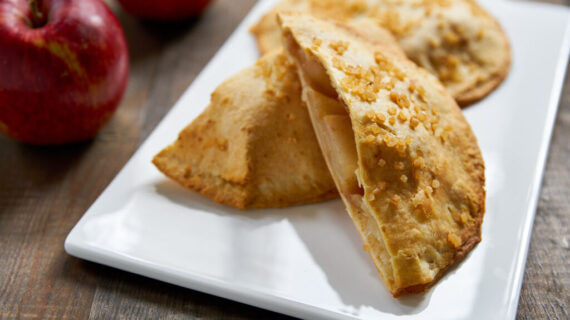
So I'm gonna show you how to make apple strudel flour puffs.
[upbeat music] - [Pati] For puff pastry, you don't want to knead too much.
It's just flour, salt, butter, and water is gonna make the most exquisite [mixer] pastry.
And you want it to barely come together, just like this.
[upbeat music] And make it like a little packet.
And these are the folds that make the puff pastry.
And you do this four times.
And it becomes softer and softer, but then you're creating all these layers.
Super soft, so much butter, so many layers, incredibly flaky.
And then this beautiful thing is gonna wrap the apples, and we're gonna turn those apples from the springtime into the most beautiful bloom.
[upbeat music] Oh my gosh, this recipe calls for so much butter, but that's why it's so good.
And I'm gonna melt the butter and make some toasted breadcrumbs.
This was the way that my grandmother, who I called Lali, used to make her apple strudel.
I'm gonna add the breadcrumbs.
And this is gonna give, like, a toasted, buttery layer inside of the apple strudel flour puffs.
10 more tablespoons of butter, because why not?
This butter I'm going to flavor with zest of a lime and juice of a lime.
So it's gonna be a citrusy butter, and this is what we're gonna cook the apples in.
The smell of using butter for desserts and, like, bubbling butter and the toasted breadcrumbs really, really bring me back to my grandmother's kitchen.
She survived the 2nd World War, had to flee, made it to Mexico by herself, and then she made a life for her and her husband and my mom and the family.
Coahuila reminded me of her because the desert seems so intense and severe, and yet it gives so many beautiful things.
My grandmother was a phenomenal, phenomenal cook.
And even though she had a kind of a dry personality, she wasn't very warm, but the way that she showed love was through her cooking.
She never saw me cook.
She died before I got married.
I must have been in my early 20s.
And I wish that she could see what I'm doing with apples and her legacy today.
[upbeat music] I'm using red and green because I like the combination of flavor and I like the combination of color.
So I have apples, pecans.
I have brown sugar.
I have white sugar.
And I have cinnamon, and then my essential brown butter breadcrumbs.
And now we're gonna build.
Hola Mau!
Okay, let's make the apple strudel flour puffs.
[upbeat music] So you remember all the folds I did?
So all of these folds are gonna make the puff pastry have so many layers of flaky, delicious goodness.
So I'm looking for a strip of about 14 inches long and about 2 to 2 and a half inches wide, and I want it thin 'cause I want it crispy.
And you can see the marbling of butter.
This is the brown butter breadcrumbs, and this is gonna give it, like, a grainy texture.
But so we have the brown butter, the beautiful flowers.
Now we're gonna add brown sugar, a little bit of canela, or true cinnamon, and then the chopped pecans.
[instrumental music] This is one gigantic, beautiful flower.
[laughs] I don't know how I'm gonna fit it into the mold.
I have my oven at 375, but I'm gonna cover my roses with aluminum foil so that the tops of the flowers don't burn.
So 20 minutes 1st, then after 20 minutes, I'm gonna remove the foil and let my puffs bake for another 20 to 25 minutes.
[instrumental music] Oof.
Mira Danny.
These look so beautiful, and I think I wanna eat the chubbiest one.
And the smell, oof, oof.
Whoa.
Gorgeous.
Gonna get some ice cream.
Then let's do some confectioners' sugar over my rose.
Oof.
Mm.
Mm.
[gentle music] And I so wish that I could've given these to my grandmother to try.
and I know she would've loved it.
[smacks lips] For recipes and information from this episode and more, visit patijinich.com and connect.
Find me on TikTok, Facebook, Instagram, X, Pinterest, and YouTube @patijinich.
Pati's Mexican Table is brought to you by... [instrumental music] Wells Fargo supports over 3 million small business customers.
[instrumental music] La Costea, por sabor.
Avocados From Mexico.
[instrumental music] Eggland's Best, available in your groceries egg aisle.
Visit egglandsbest.com.
Proud to support Pati's Mexican Table on public television.
[instrumental music]


 Passport
















Follow Us