
 Passport





Producer Colin Crowley reflects on ‘Welcome Poets’
Early in fall 2023, my friend Nick Gulig asked me if I would like to accompany him and other writers on a road trip around Lake Superior.
04/06/26



Early in fall 2023, my friend Nick Gulig asked me if I would like to accompany him and other writers on a road trip around Lake Superior.
04/06/26
Early in fall 2023, my friend Nick Gulig asked me if I would like to accompany him and other writers on a road trip around Lake Superior. His hope was that I could gather video footage for a documentary project he envisioned about a Fort Atkinson poet, and I enthusiastically signed on.
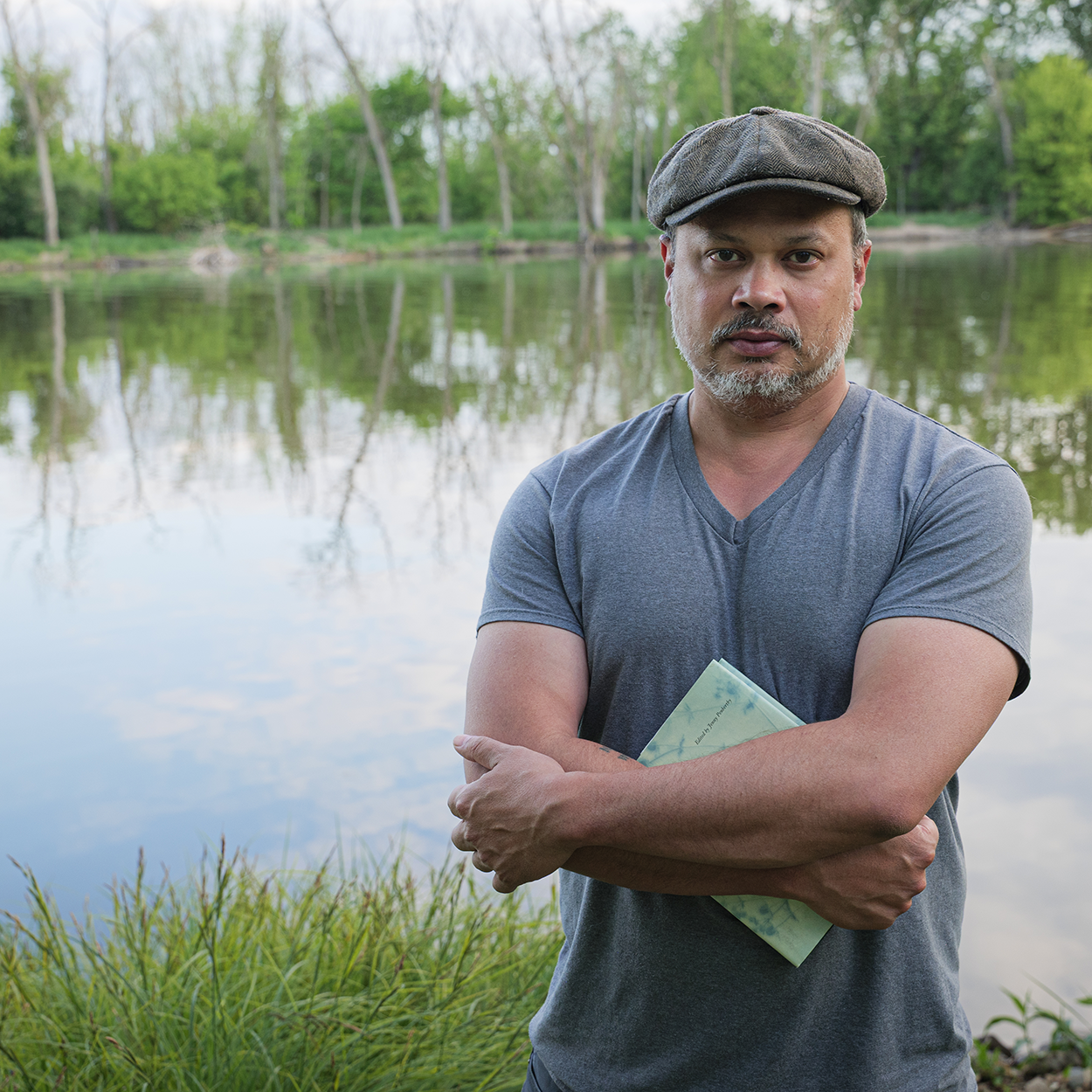
Nicholas Gulig stands on Blackhawk Island near Fort Atkinson. (Source: Colin Crowley)
A resident of Fort Atkinson himself, Gulig had recently been named to a two-year term as the Wisconsin Poet Laureate. He was taking this trip to pay homage to the late Lorine Niedecker.
Not knowing much about Niedecker, I wasn’t sure what form the documentary would take, but I was interested to go along for the ride and see what we’d find. I understood the trip would retrace the vacation route Niedecker had taken in 1966 with her husband, Al Millen – a trip which formed the basis of her poem, “Lake Superior” – but I didn’t know how we would translate this into a documentary.
Over the course of a short week, we circumnavigated the lake, retracing Niedecker’s path guided by her notes and verses. I shot hours of footage of the changing landscape of the water and the plants, rocks and freighters she mentioned in her poem. I also tried as best I could to discern the visual meaning of Gulig’s journey, but it wasn’t until the last day of our trip that I understood its fuller significance.
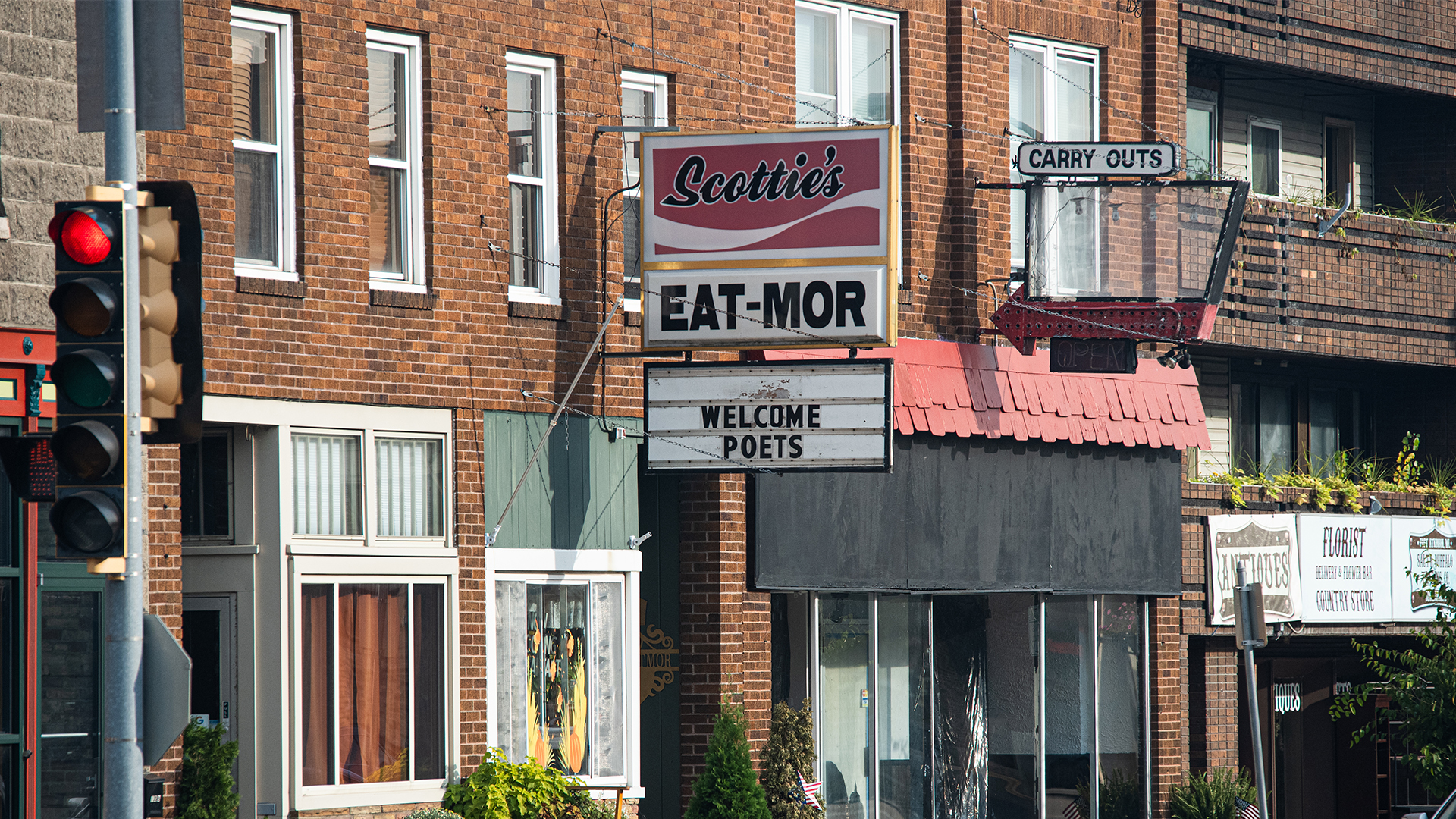
Gulig told me about the first time he ever drove into Fort Atkinson. Having spent several years living in his mother’s country, Thailand, after his father died, he decided to move back to Wisconsin in the summer of 2016, bringing his immigrant family with him. But as his car turned down Fort Atkinson’s Main Street, a sign tempered his anxiety. This sign — hanging marquee-style above the door of a small local diner — read, “Welcome Poets.” On the brick wall of that same building, the following words were laid out in a bright mural:
Fish
fowl
flood
Water lily mud
My life
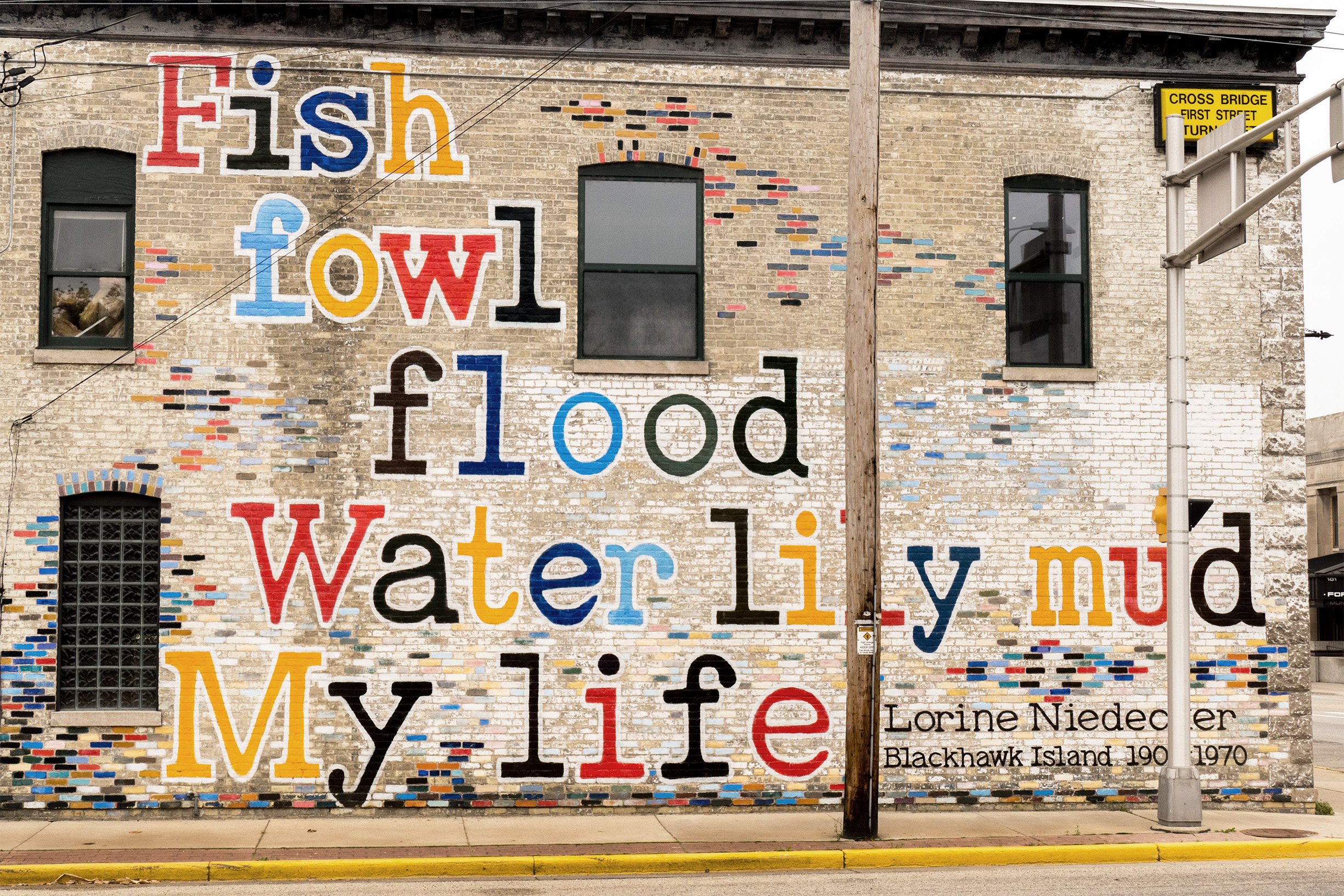
Poetry wall installed 2009 on the southeast corner of N. Main St. and Sherman Ave. in Fort Atkinson, Wis. (Source: Friends of Lorine Niedecker)
That was how Niedecker welcomed him home. Her life and work, and the ways in which the Fort Atkinson community cared for and promoted her legacy, gave Gulig the sign he needed that he and his family could start their next chapter of life here.
The trip around Lake Superior suddenly made sense. What we had just filmed wasn’t the story, it was the end of the story. And the scene that Gulig had described to me about the sign on Main Street was the beginning of that story. Our job now was to fill in the rest.
Over the course of the next year and a half, we created a multimedia project that told the stories of Gulig and Niedecker and how their work and experiences intertwined through the nexus of Fort Atkinson.
In planning this project, we had several goals and aspirations, some well-defined at the outset, others discovered along the way. We wanted to tell the story from Gulig’s point of view and express the thoughts of a contemporary poet finding his way back home. We also knew we had to show how integral Niedecker’s life and work had been for Gulig’s journey and why she matters not only to him but to generations of writers who have come after her. We wanted to tell her story in a way that allowed new audiences to understand how the words of poets can help connect us to our own place in the world. More than anything, we felt that if we were going to succeed in making a multimedia project about poets and poetry, the documentary itself had to be a form of visual poetry.
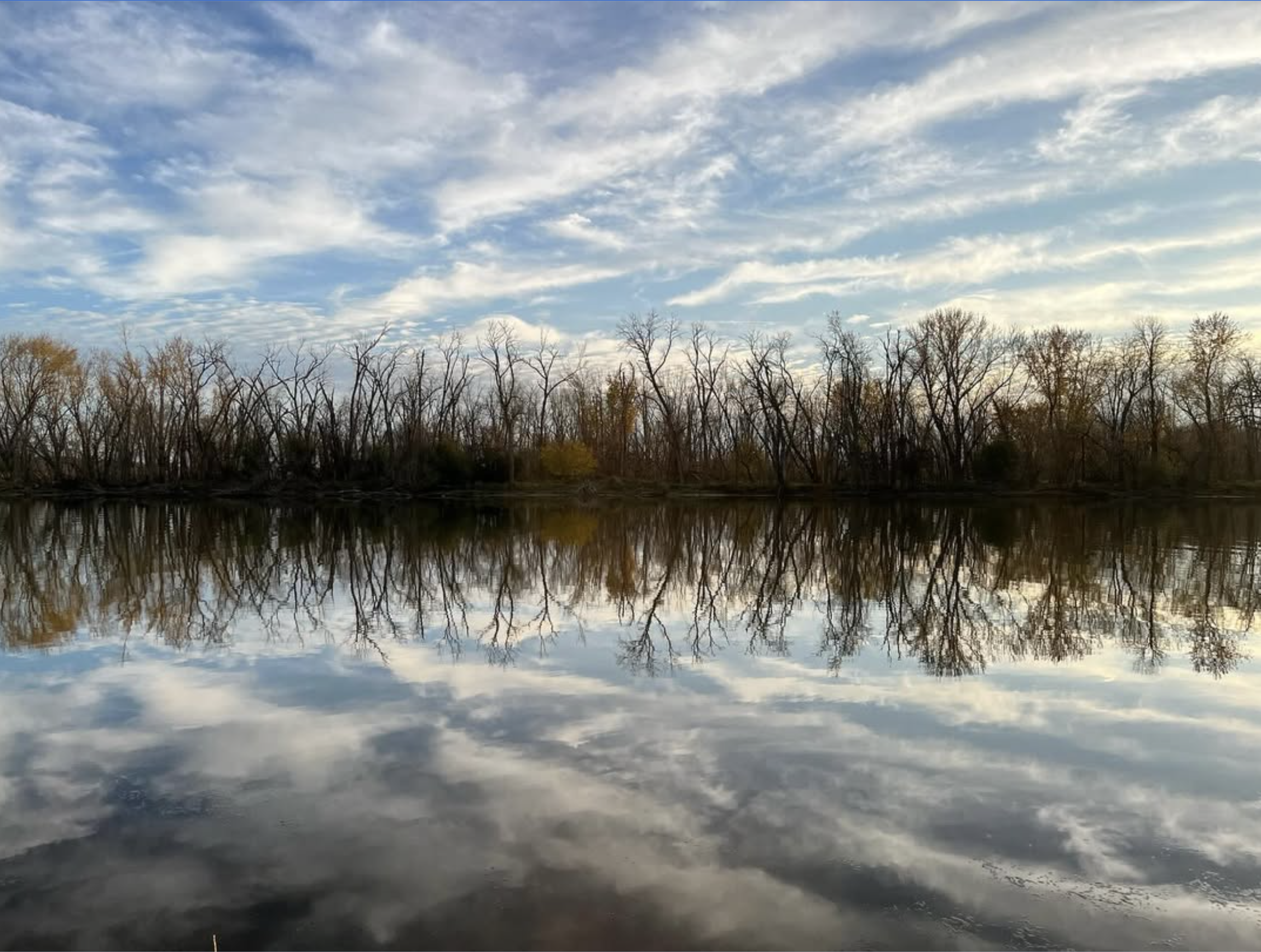
In service to this goal, we took inspiration from the physical world Niedecker inhabited during her life in Fort Atkinson. Gulig, my colleagues and I spent a great amount of time in and around Niedecker’s cabin on Blackhawk Island. Through this process, I became closer to her simply by allowing myself to observe and to exist momentarily in the same spaces where she spent her life. My strongest impressions were in the moments I spent alone on the riverbank outside Niedecker’s home. During certain hours of twilight, the river becomes still and transforms itself into a blank page where the local birds write their verses on the riverain landscape. A white pelican skimming the mirrored surface of the water, the swallows dive-bombing insects, a blue heron ascending to its perch in a treetop, and the parade of geese trumpeting through the air and across the water, all harmonized into the avian symphony that set Niedecker’s life to music every summer night. You don’t have to be a poet to understand this, but experiencing these moments helped me understand Niedecker as a poet.
Niedecker was an avid photographer who documented her surroundings not only in written verse but also through visual images. In her personal archive, the subjects of her poetry were laid out in small, square compositions she captured through the modest lens of a Kodak Instamatic camera. Here were colorful scenes of the river in its seasons, flowers gracing roadsides, trees defining riverbanks, all documented with the quiet, contemplative intention of a visual poet.
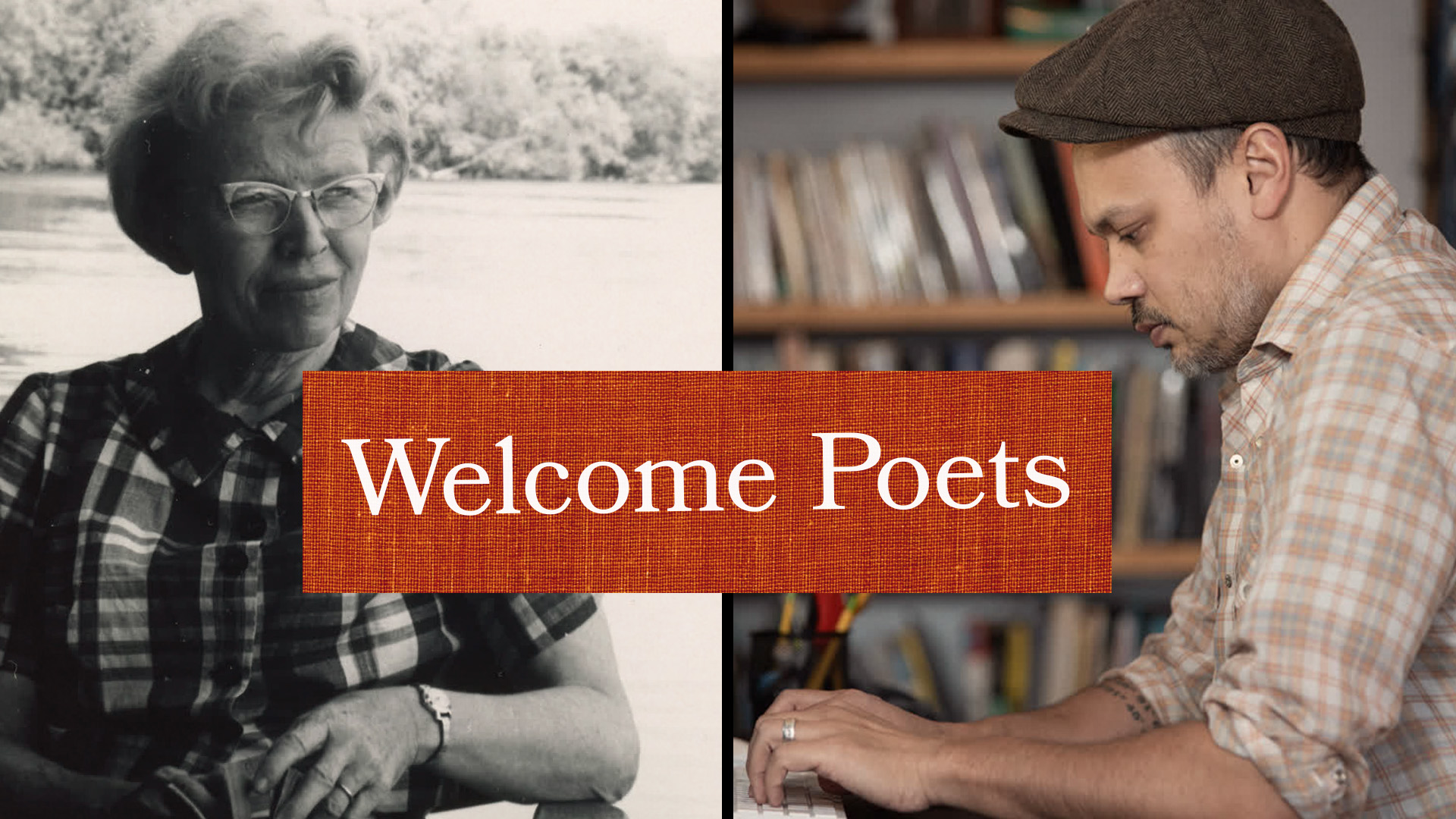
These scenes and archival images were combined with selections of Niedecker’s words, Gulig’s poetic commentary, and a host of audio, visual and musical resources woven together with the help of more people than I can name here. We dubbed the resulting web series (which we later joined into a single film), Welcome Poets, after the sign that first welcomed Gulig to Fort Atkinson. This multimedia project became a collective tribute to the role that poetry can play in our lives and the role that our lives can play in our poetry.
While the title is an obvious reference to the sign above the diner on Main Street in Fort Atkinson, a part of me hopes that viewers will also come to understand it as a quiet exhortation told in the imperative voice. These six episodes and the resulting film are about more than just telling the stories of two poets, they are an invitation for all of us to welcome poets into our own stories, our communities and our lives.
– Colin Crowley




PBS Wisconsin is a service of the Wisconsin Educational Communications Board and the University of Wisconsin-Madison. © 2026 All Rights Reserved.
What do you think?
I would love to get your thoughts, suggestions, and questions in the comments below. Thanks for sharing!
PBS Wisconsin