Before Bill Sachse created Bucky Badger and Bill Sagal first wore the headgear, Lloyd “Babe” Spencer was a University of Wisconsin student who brought a live badger mascot to football games in the early 1900s.
Catch a glimpse of Spencer in the historical documentary Bucky!
PBS Wisconsin’s historical documentary — Bucky! — includes images of the Evansville, Wisconsin native who became a beloved character on the University of Wisconsin-Madison campus in the late 1890s and early 1900s. His legacy of gregariousness and mischief is embodied by Bucky Badger today. The documentary narrated by comedian Charlie Berens is available on the free PBS app on all streaming devices and YouTube. Stream Bucky! now at pbswisconsin.org/bucky.
PBS Wisconsin caught up with Evansville historian Ruth Ann Montgomery to learn more about what made “Babe” Spencer an endearing and enduring figure.
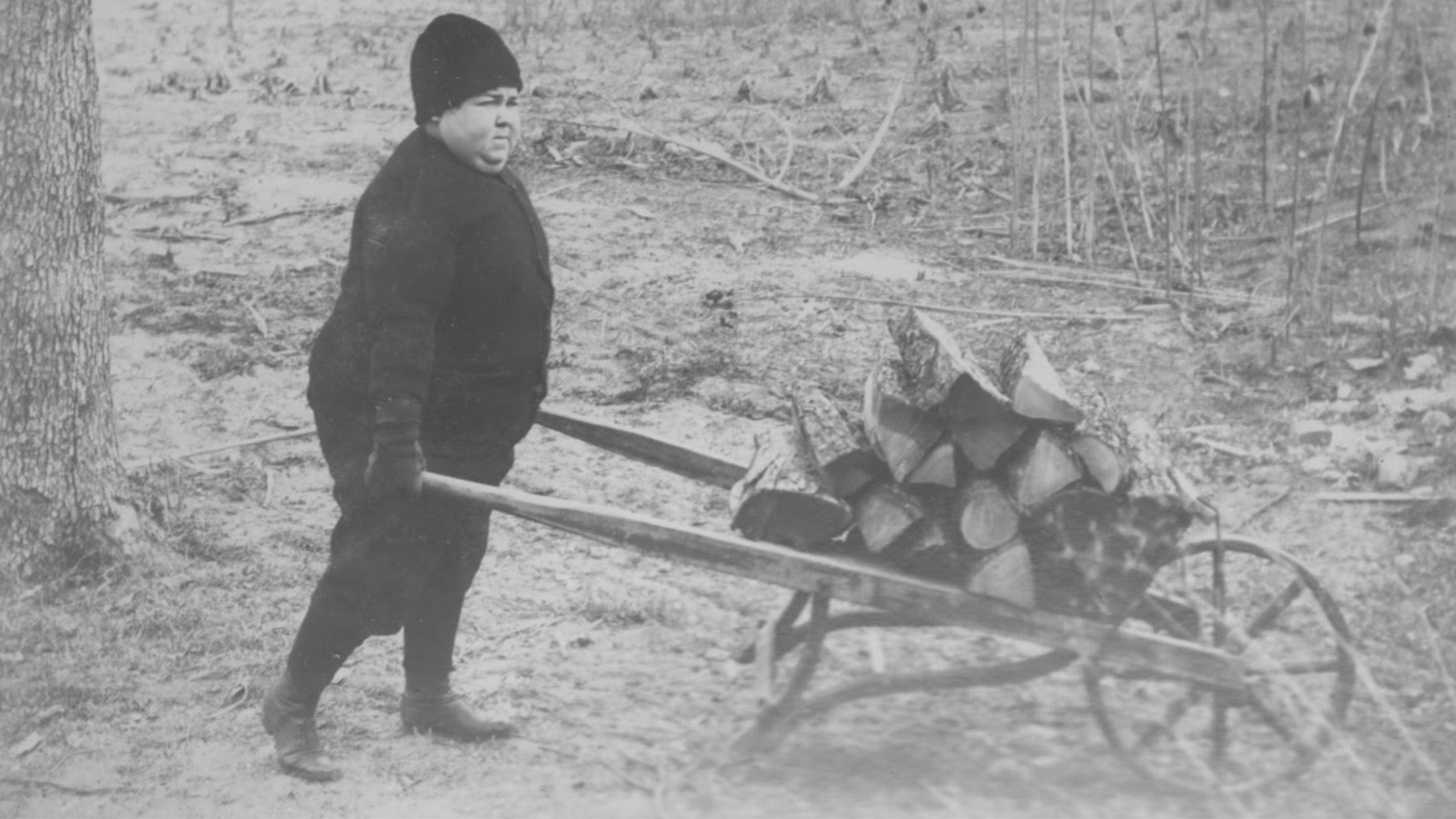
Image courtesy of the Evansville Grove Society, Ruth Ann Montgomery.
PBS Wisconsin: When did you first come across Lloyd “Babe” Spencer in your work as Evansville’s local historian?
Ruth Ann Montgomery: I have been researching Evansville history since about 1978 so it was probably about 35 to 40 years ago that I first heard of Lloyd “Babe” Spencer.
He was born and raised in Evansville so he was well known to the people [of Evansville] since he was a child. He had a childhood illness that did damage to his heart. [Due to this condition], he was a large person as a child and wasn’t able to participate in the sports that they had at the time like football or baseball. But he was known as the mascot for the local football team. He was said to have had a very nice, friendly personality. He could easily make friends and was well known as a very popular young man in Evansville.
PBS Wisconsin: How would you describe Lloyd’s personality?
Montgomery: He was so well liked as a schoolmate. Obviously, the local sports teams thought a lot of him because he was considered their mascot and was a very well-liked person.
He couldn’t participate, but he was a big fan of sports. There was easy transportation by railroad from Evansville to Madison so, like many people from Evansville, “Babe” would regularly go to the Badger games. He would’ve been very familiar with the Wisconsin football team even before he graduated from high school.
According to a newspaper article written about him when he was 19 years of age and was the mascot for the UW football team, he weighed 180 pounds as a sophomore at the university. He would’ve been very visible because of his size so he probably fit right in with the football team.
PBS Wisconsin: As mascot of the UW football team, did “Babe” really lead the UW football team onto the field with a live badger?
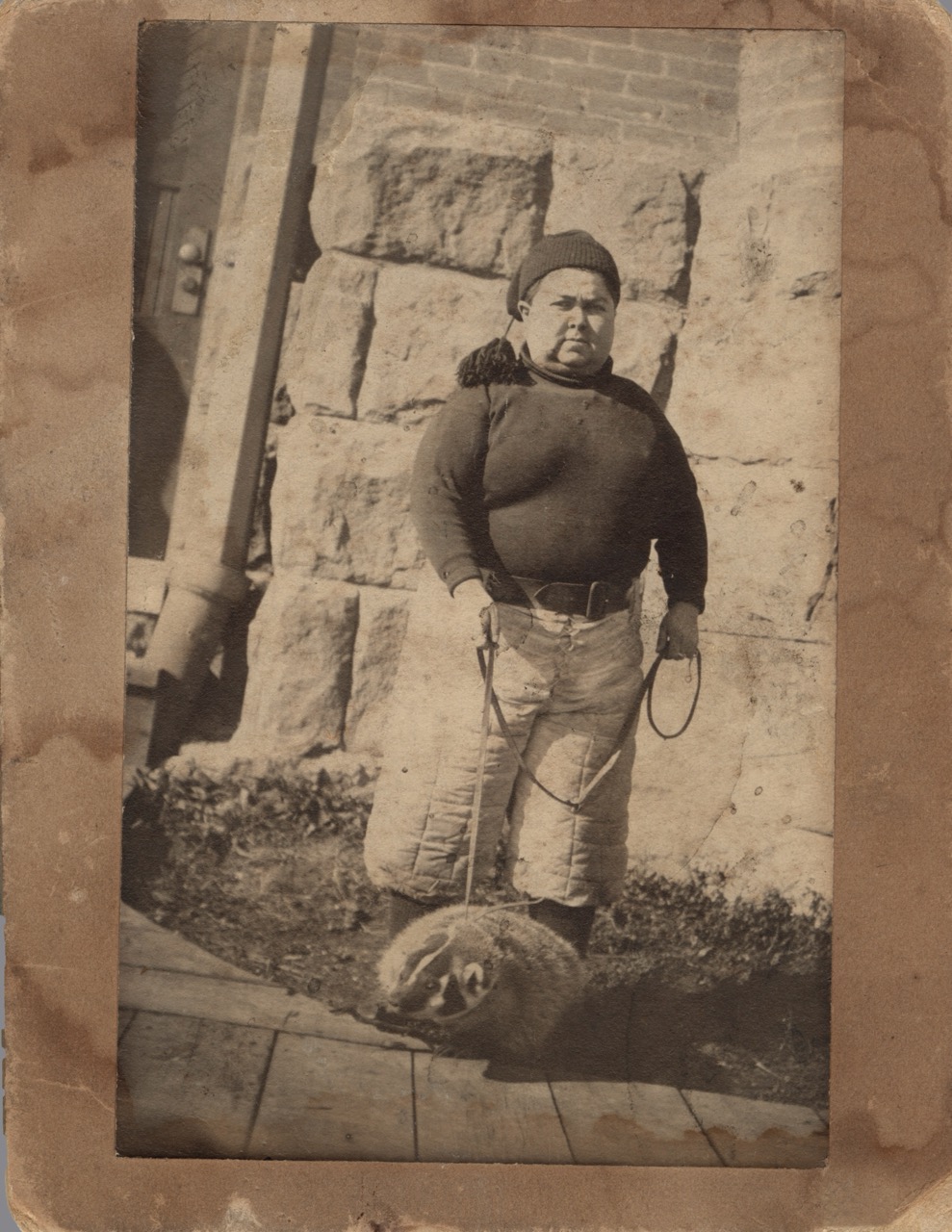
Montgomery: I had not heard about the story [of “Babe” leading the UW football team onto the field with a live badger] until I began researching a little bit about him being a mascot for the Wisconsin football team and it came up that he had this real-life badger. I was interested because we think of Badgers as being so ferocious and to think that somebody actually had a badger that he could keep on a leash. He always attended the big games and it was said that they never lost a game while he was the mascot.
PBS Wisconsin: What can you tell us about the Spencer family?
Montgomery: The Spencer family was one of the early settlers [of Evansville, Wisconsin]. [Lloyd’s] grandfather was one of five Spencer brothers who settled in the area. Members of the family were some of the more important people in Evansville. They owned a lot of property and were quite prominent in Evansville’s history. One of his uncles established the first hotel and others were very good farmers and had accumulated a lot of farming property. They were a very well-known family in the community.
Lloyd was the third generation of Spencers to live in Evansville. His mother, Hattie, became the first woman photographer in Evansville.
PBS Wisconsin: What more can you share with us about Lloyd’s mother, Hattie?
Montgomery: [Hattie] had a studio with her brother, who was a doctor. They each had an office in their home. She was responsible for family photographs and a lot of school photography. There are literally thousands of pictures taken by her in the community. When Lloyd decided to go to UW-Madison after high school, Hattie actually moved to Madison and lived with him off-campus while he was attending the school.
PBS Wisconsin: What other interests did “Babe” pursue?
Montgomery: He was a highly-praised amateur photographer. He worked in his mother’s photography studio because he was ill for the last year of his life. He was 25 years old when he passed away. Unfortunately, he didn’t have much of a chance to have a career outside of his photography.


 Passport











What do you think?
I would love to get your thoughts, suggestions, and questions in the comments below. Thanks for sharing!
Mike DeVine