
 Passport





Branching out: Farmers and scientists team up to see how trees can reshape the future
When you imagine a midwest farm, trees are probably not the first thing you think of.
04/02/26



When you imagine a midwest farm, trees are probably not the first thing you think of.
04/02/26
When you imagine a midwest farm, trees are probably not the first thing you think of. But as farmers and researchers learn more about the benefits of agroforestry – the integration of trees in food production systems – you may see trees (ahem) crop up more in agricultural landscapes.
Trees can be used to provide shade to livestock, diversify revenue streams for farmers, improve water quality and more. In an upcoming episode, PBS Wisconsin Education’s new science series Field Notes on Climate explores what scientists are learning and why more farmers are becoming interested in agroforestry.
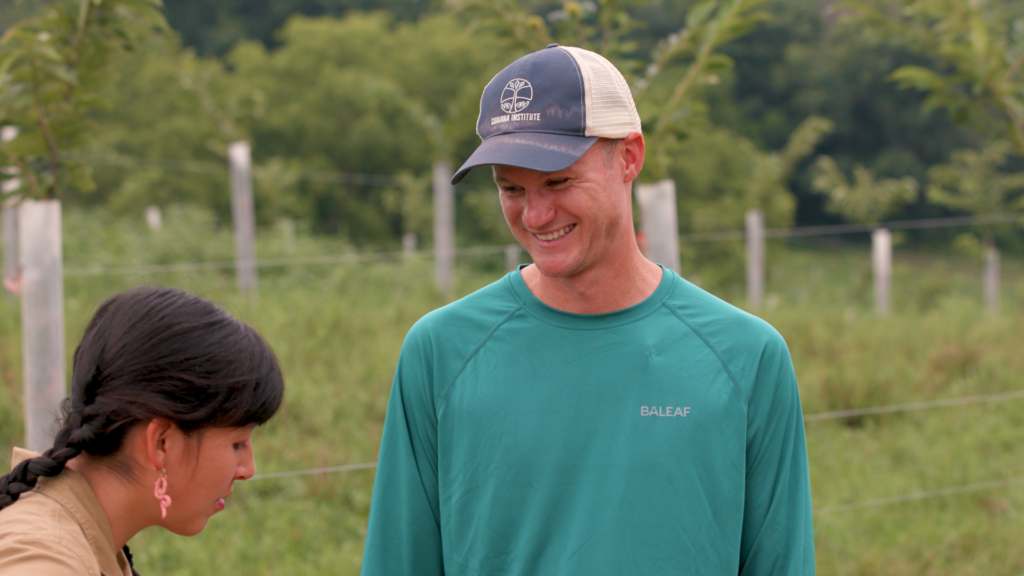
Nate Lawrence (right) with Field Notes on Climate host Ami Eckard-Lee.
Nate Lawrence is an ecosystem scientist featured in the episode. He works at the Savanna Institute, a nonprofit organization that supports the growth of agroecosystems through research, education and outreach. Lawrence specializes in researching the impacts agroforestry systems can have on the climate and water. “If we can robustly quantify how trees are improving something – let’s say maybe improving water quality – then there’s probably a way that we can plant more trees as a result of that finding,” he explained.
Lawrence primarily works with smaller farms that partner with the Savanna Institute to conduct research on their property and practices. “Our work is really highly collaborative,” he said.
One example is research done in collaborations with Bob Stehli at his family’s farm in Ohio. They had moved productions from predominantly annual crops to perennial chestnut trees. For practical reasons, they transitioned just a few acres each year. The process took over two decades.
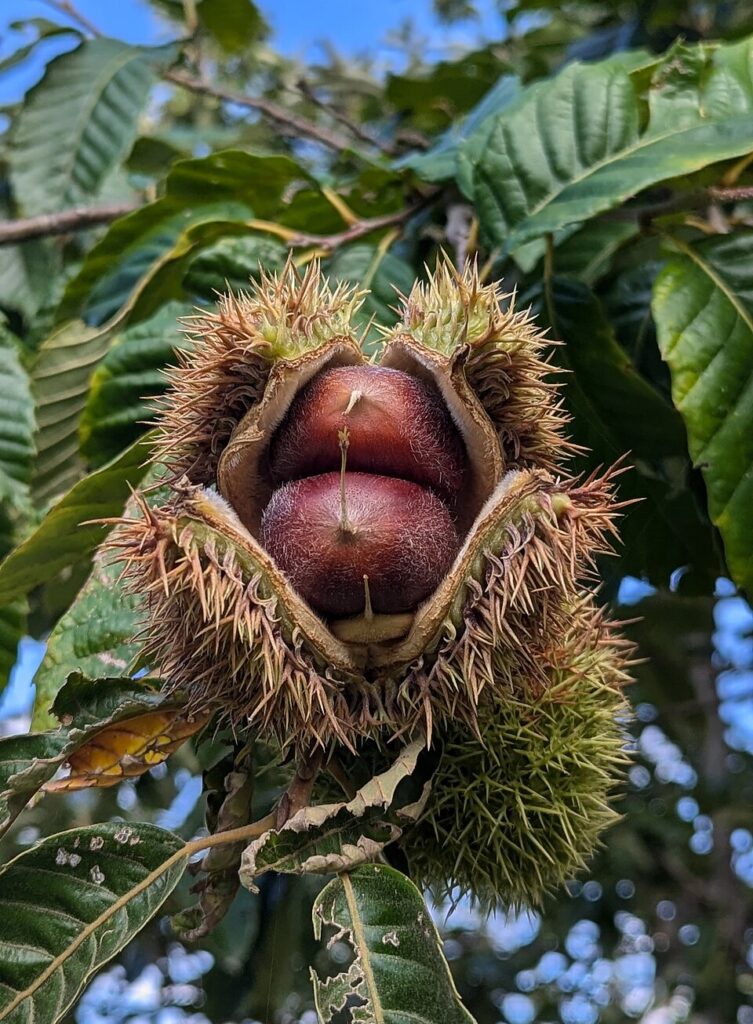
Chestnuts within burrs at harvest time. Photo courtesy of the Savanna Institute.
Stehli saw an opportunity to compare how that change had impacted the soil over various increments of time. During a single summer, Lawrence was able to gather soil samples representing over 20 years of change.
“And it worked extremely well,” he said. “We saw in the three soil health metrics we looked at, all three of them improved. We could actually see the trajectory of these different soil health practices over this 20-year timeline, looking from the youngest planting to the oldest planting.”
One of the metrics they used to test the soil is called wet aggregate stability, or how much a sample maintains its structure when submerged in water. Wet aggregate stability on the Ohio farm improved most dramatically in the first two to three years after transitioning to chestnut trees. “It’s kind of exciting,” Lawrence explained, because soil is thought to take decades or more to change. But evidence from this study may point to “at least one way that soils might improve really quickly in just a matter of two to three years.”
“It was fun to be able to call the farmer when the project was done and say, ‘Your idea worked. And here’s all the data that we have.’ I think they were pretty excited about that.” He emphasized, “It’s all credit to the farmer who planted it that way and then looked at it 20 years later and said, ‘Hey, I think there’s probably something cool that could be done here.'”
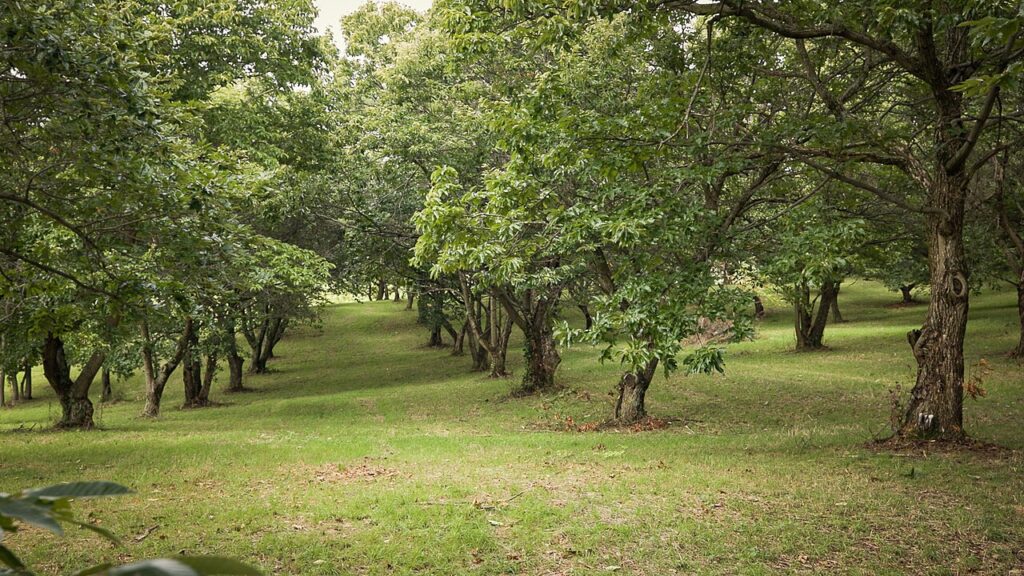
Chestnut orchard on Wintergreen Tree Farm in Mantua, Ohio. Photo courtesy of the Savanna Institute.
In other cases, the Savanna Institute’s research may lead to the adoption of agroforestry practices that can be studied during and after integration. Through a Partnership to Advance Conservation Science and Practice grant from the Allen Family Philanthropies and U.S. National Science foundation, Lawrence is studying how fungal networks support tree root health.
Fungi in the soil benefit trees, helping them absorb nutrients they may not otherwise be able to access. “Most trees grown in nursery environments are grown in conditions [where] there’s very little fungal life in the soils,” Lawrence explained. “We’re testing how trees grown in that environment differ from trees grown in an inoculated nursery environment.” He collaborates with Richard Lankau and Cassandra Allsup at the University of Wisconsin-Madison Department of Plant Pathology, who bring microbes into the nursery beds. “So when they’re going out to be planted, they already might have a head start in forming those critical relationships.” Lawrence added there may also be benefits to the soil those trees are transplanted in.
“We are going to be working with a handful of farms where we can test whether the trees grown in the sterile environment do as well as the trees grown in this inoculated environment.”
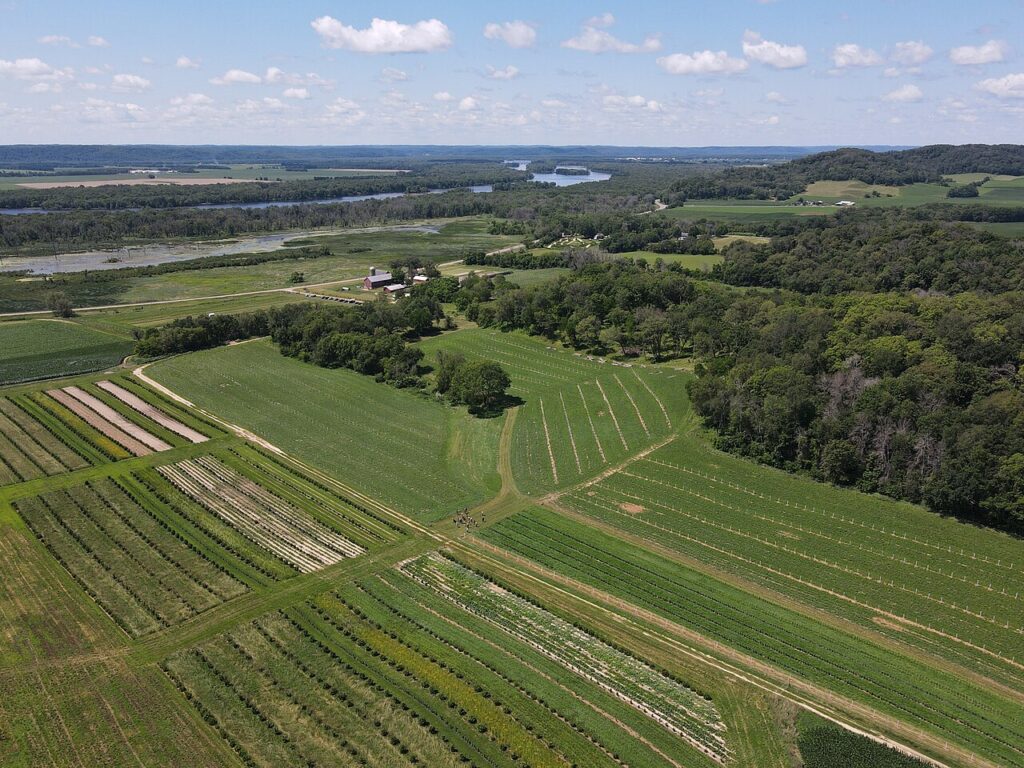
An alley cropping near the Wisconsin River. Agricultural crops are planted in alleys between rows of trees or shrubs. Photo courtesy of the Savanna Institute.
Lawrence is hopeful about the future of agriculture while acknowledging there are plenty of challenges along the way. “I think we can have a food system that doesn’t contribute to climate change the way it currently does. It’s a big, complicated, messy story.” He said there are not only big scientific questions to answer but also practical and logistical business decisions farms need to make to implement change. “Getting all of the pieces in place … is going to be a career’s worth of work for a lot of people.”
But the answers are there. The opportunities are there. I don't see anything that makes me feel like we can't do it.

Nate LawrenceEcosystem Scientist, Savanna Institute
Still, he said, “It’s amazing to see the incredible work that people are doing in all sorts of different areas of agriculture to kind of figure out how we tackle this huge challenge. But the answers are there. The opportunities are there. I don’t see anything that makes me feel like we can’t do it.”
Field Notes on Climate premieres April 22, 2026, on pbswisconsineducation.org. Educators can find additional information, extension activities, standards supported and more for grades 6-12. Catch a special broadcast premiere at 8 p.m. Monday, April 13, on PBS Wisconsin.




PBS Wisconsin is a service of the Wisconsin Educational Communications Board and the University of Wisconsin-Madison. © 2026 All Rights Reserved.
What do you think?
I would love to get your thoughts, suggestions, and questions in the comments below. Thanks for sharing!
Tawny Morrison