

 Passport





What's the Trump factor for rural Wisconsin voters in 2026?
Polls show falling support for President Donald Trump, but his influence among rural voters remains key in the 2026 vote — bellwether Sauk County offers a window into the nation's midterm politics.
By Steven Potter | Here & Now
October 2, 2026


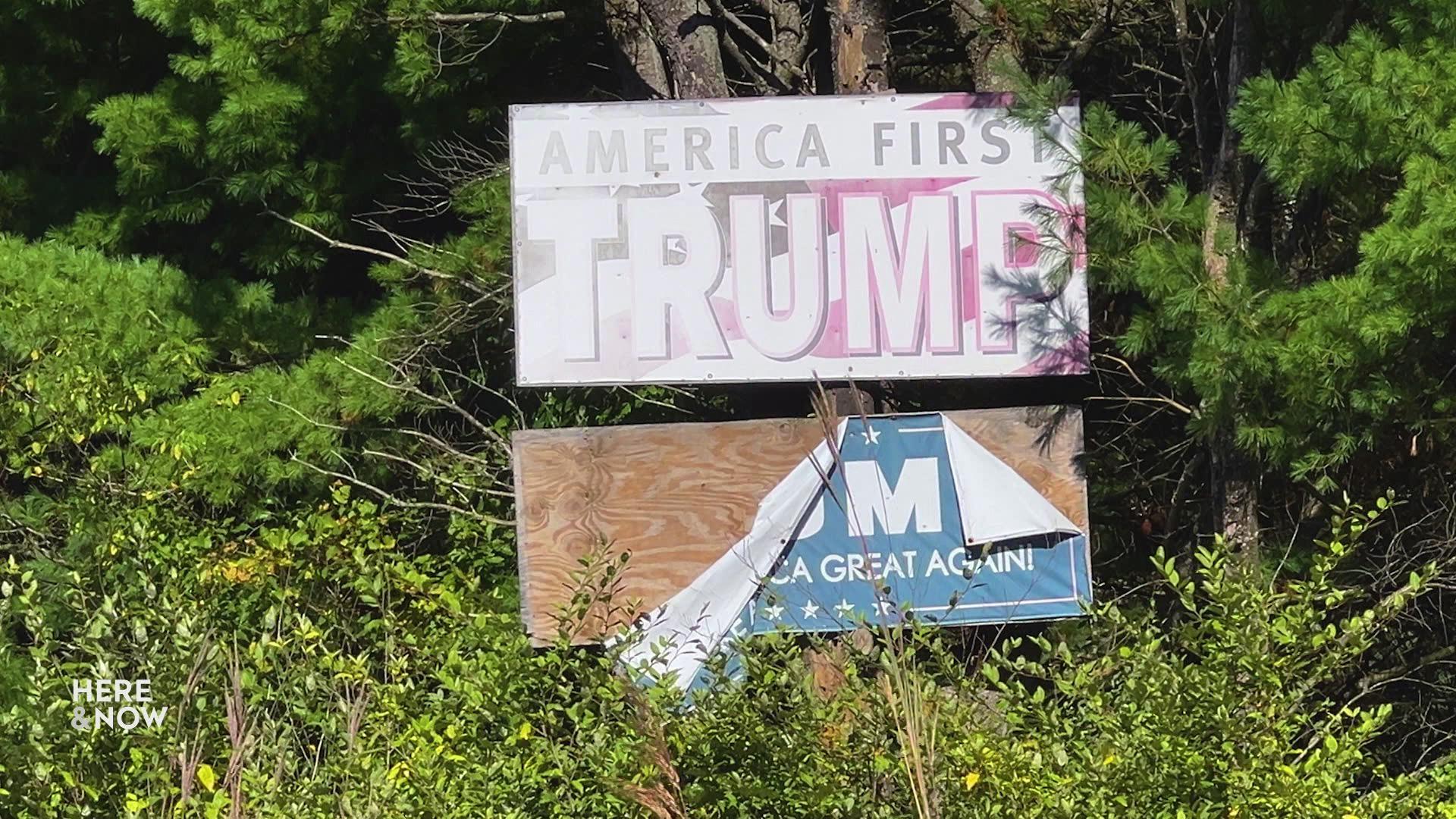
President Donald Trump's influence among rural voters remains key in the 2026 vote.
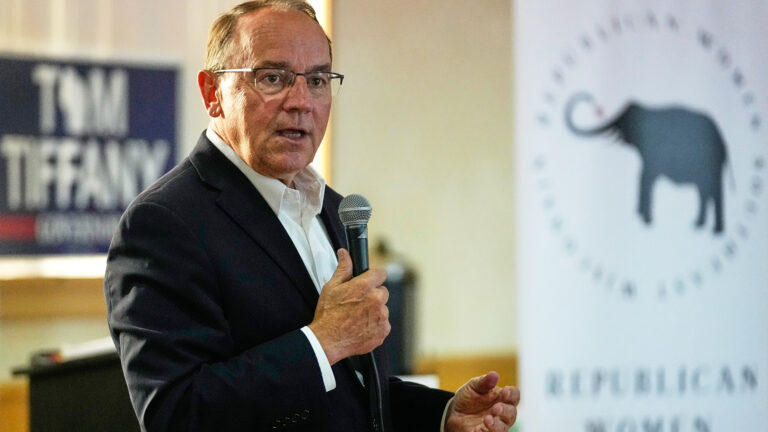
“So on Election Day — Nov. 3, you got to do me a favor,” President Donald Trump said to supporters at the 2026 Republican National Convention on Sept. 10 in Dallas. “You got to get out and vote. And you’re going to pretend I’m on the ballot, because in a way, I am on the ballot.”
There’s no denying Trump’s political power —- and his desire to snatch the spotlight — even though he’s not on the ballot in November.
“Pretend I’m on the ticket, because this is going to turn out to be one of the most important elections — it’s a midterm,” the president said on the second night of the convention.
Trump’s reasoning, he says, is to motivate voters to choose Republican candidates so his party can maintain majority control of Congress. But the president’s popularity is declining — even in rural areas.
The cost of diesel fuel is breaking records. Tariffs and trade wars are hurting crop sales, and war overseas adds to financial uncertainty.
“The great debate is will Donald Trump help Republican candidates or hurt them?” said Joe Handrick, a Republican political analyst and former Republican state lawmaker. He thinks Trump can help push people to the polls, especially in midterm elections, which have lower voter turnout than presidential years.
“I think Donald Trump is needed to help bring out those nontraditional voters that like him but who otherwise may stay at home this November,” Handrick said, describing a shift in voting patterns..
“Up until recently, Republicans always benefited from a lower turnout,” he said. “But in the last few years, that has really switched. Democratic voters are now more highly motivated to vote.”
Handrick explained the new political geography.
“They’re more regular voters. The areas of the state that have become more Republican contain more voters who are occasional voters.”
And Wisconsin’s more rural areas are decidedly Republican.
“In the Trump era, western and northern Wisconsin, particularly rural communities, have gotten very, very red,” Handrick said.
Rural Wisconsin voters are vital to the Republican election strategy, serving as a counterweight to the state’s deep-blue urban centers. Because Wisconsin is one of the nation’s most closely divided swing states, higher voter turnout in rural areas can be the deciding factor in congressional and statewide elections.
There’s one spot in rural Wisconsin that might be the best place to measure Trump’s political influence.
“Sauk County is very purple. I mean, it’s pretty much 50-50 across the board,” said Jerry Helmer.
“Our voters here have been very predictive of how elections have turned out,” said Judith Willinik Grose.
Except for one race, Sauk County has voted for the statewide winner in elections for president, U.S. Senate and governor since the year 2000. For president, that means Sauk County voted for Trump in 2016, President Joe Biden in 2020, and then again picked Trump in 2024.
“Donald Trump was such a driving force in that election. That’s why he won,” saidHelmer, who is chair of the Republican Party of Sauk County. He said Trump’s double victory here is why the Republican president could — and should — help push Republican candidates across the finish line in November.
But Helmer also remembers past elections.
“In the 2024 election, Trump just drew the young people out in droves,” he said. “And something that I saw happen in Sauk County, actually, was a lot of the younger people and people that were new to voting, they only voted for Donald Trump. They didn’t vote downballot, and that made a huge difference because we lost downballot in that election when we shouldn’t have.”
As chair of the Democratic Party of Sauk County, Grose said Trump is also a hot topic for its supporters.
“Everybody I talk to — when we have meetings, membership meetings — the comments are always, always coming back to the current administration,” said Grose.
She explained Democrats are using his unpopularity to rally and reach voters in their base.
“When candidates are out there, the whole thing about Trump is in the back of their mind,” Grose said. “When you go door to door, it always comes up too.”
But Trump may still pull in more Republican voters than he pushes away.
“He talks to people like most people talk. That’s what attracted me to him initially, was this guy talks like I do. He doesn’t hold his tongue. He says what he thinks. He’s a bit of an arrogant ass at times. But that’s who he is,” Helmer said. “Look at what he’s done with Gulf of America and now Lake America, those types of things — and maybe that’s something to be proud of if you’re a patriot and you care about this country.”
But Grose said Trump’s influence has diminished.
“His political power in rural Wisconsin, particularly with farmers, is not as strong as it was,” she said. “The actions of President Trump are helping the Democrats, because we offer a very stark contrast to what he has offered and what he has carried through on.”
David Helpap, a political science professor at the University of Wisconsin-Green Bay, is keenly watching the state’s rural voters.
“We have a president that has been very clear about making the midterm election about him,” Helpap said.
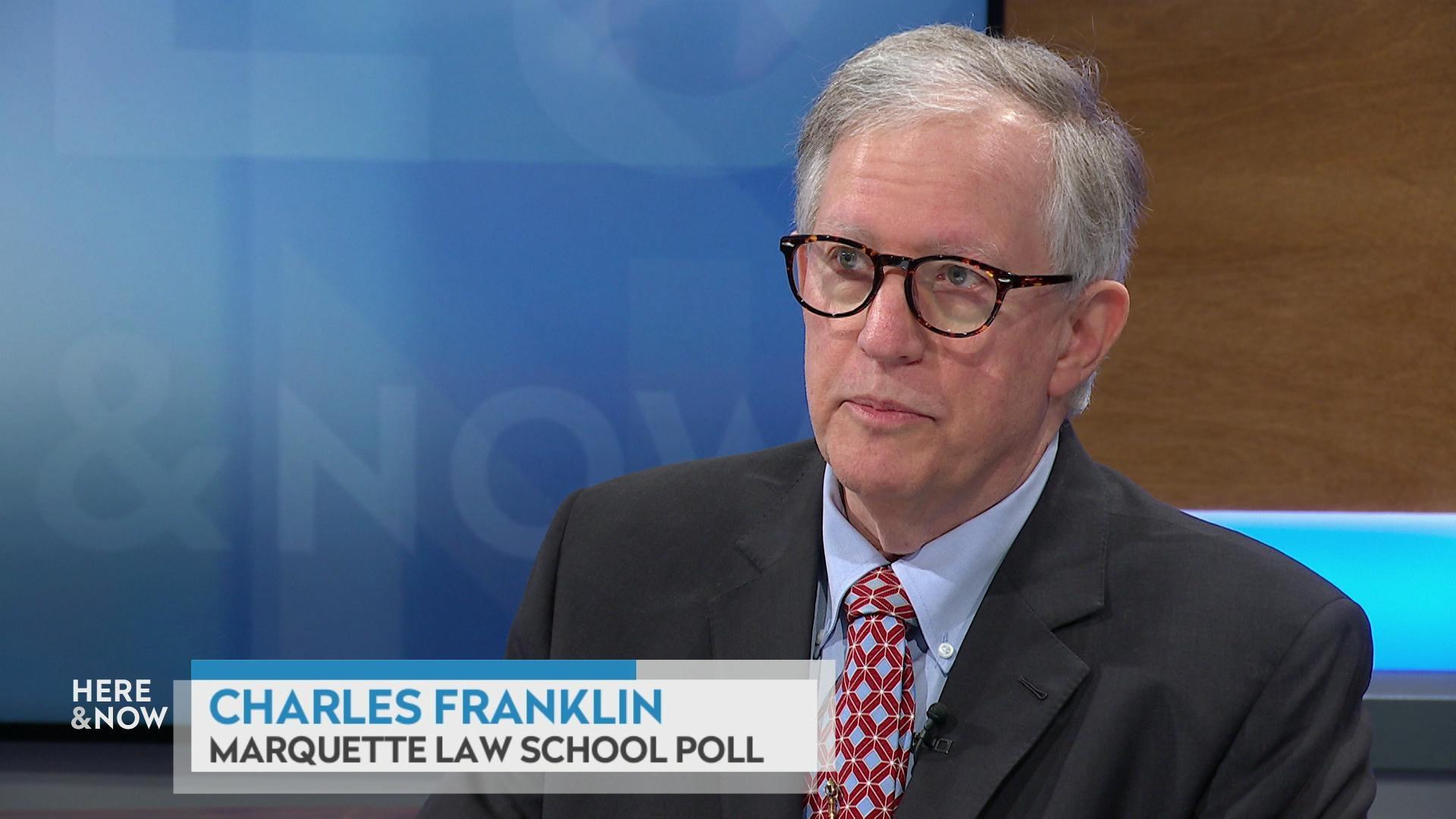
While it varies in severity from poll to poll, Trump is losing ground with rural Americans. A Reuters/IPSOS poll found only 31% of rural residents approved of the president’s handling of the economy. And a Fox News poll found Trump’s rural approval rating dropped to a record low of 44%.
Helpap said many of the issues important to rural voters are also important to urban and suburban voters.
“Rising costs, affordability issues, concerns about data centers, and concerns about foreign affairs and what that’s doing to domestic issues,” he said.
But Helpap added that some things hit harder in communities where agriculture is the primary source of income.
“Those issues are also sort of outsized in rural communities, particularly related to the cost for food, for diesel fuel, for fertilizer, because these have a big impact on rural communities,” he said.
Over the last decade, the urban-rural divide has deepened significantly. Trump won Wisconsin’s rural vote by more than 20% in 2024, showcasing how deeply anchored the Republican base has become in these communities.
“Over the last several election cycles, when President Trump hasn’t been on the ballot, turnout has been lower, particularly for typically Republican voters,” Helpap explained.
He said enthusiasm — for better or worse — could affect turnout.
“Maybe you don’t go and vote for a Democrat, but maybe you just stay home,” Helpap added.
Still, both Democrats and Republicans are using Trump to help them push people to the polls.
“I don’t know if I’ll use the phrase ‘blue wave.’ I mean, that’s very colorful and kind of exciting, but the Democratic candidates are doing well,” Grose said.
“Republicans tend to be lazy when it comes to the midterms and turning out the vote. That’s why we keep getting beat,” Helmer said. “But I don’t think it’s going to be true this time.”




Follow Us