
 Passport



How modern media production is engaging students in Wisconsin history
Through PBS Wisconsin Youth Media, high school students are exploring history through a new lens – as documentary filmmakers.



Through PBS Wisconsin Youth Media, high school students are exploring history through a new lens – as documentary filmmakers.
Through PBS Wisconsin Youth Media, high school students are exploring history through a new lens – as documentary filmmakers.
The program and curriculum were developed by PBS Wisconsin Education engagement specialist Nick Ostrem and education producer Ian Glodich. “Learners take basic principles of media production and combine them with real historical research to create their own documentaries,” Ostrem explained. “The result is a high level of student engagement and hands-on learning.”
Ostrem and Glodich train educators who participate in PBS Wisconsin Youth Media on how to use the nine-lesson curriculum. They help develop a work plan that fits class schedules, provide access to production equipment and offer feedback to students halfway through the project.
Carrie Bohman, a social studies teacher at West High School in Madison, heard about the program at a PBS Wisconsin Education workshop. A self-proclaimed Luddite, she saw the variety of ways media production can connect students to what they’re learning. “The technical skills necessary for filming, working with the documentary software and editing are 21st-century skills students will benefit from,” she said. “There is also a lot of pride in what students produce and they are willing to share their work.”
“Students have been very engaged in local history, finding photographs and background information to assist them in writing their individual stories,” Bohman added. “It also fosters collaboration between students as each brings unique skills and perspectives to writing the story as well as technical skills.” Twenty-four student groups from three different classes produced documentaries this term.
Bohman wanted to showcase the students’ work and celebrate Madison’s history, so she organized a film festival, “Our City, Our Voices.” Students voted on the top 12 short documentaries that were screened at the red carpet event on April 29, 2026.
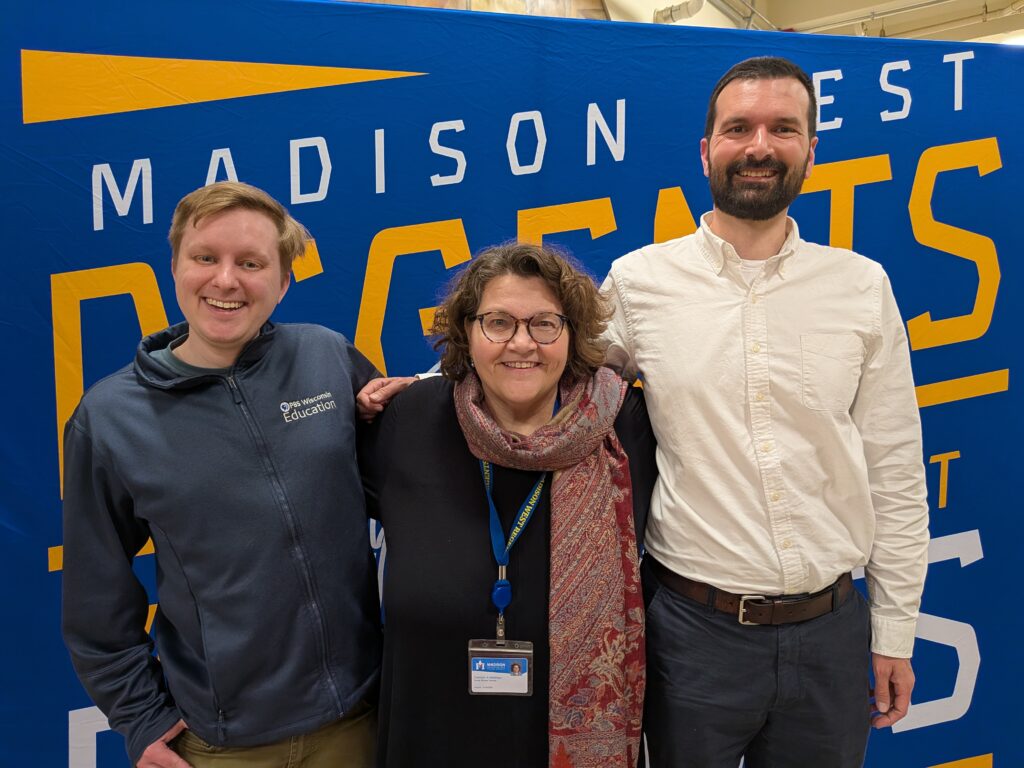
Glodich (left), Bohman (center) and Ostrem at the Our City, Our Voices film festival.
Xander is a freshman at West High School. His group chose Wisconsin architect Frank Lloyd Wright as their subject. “I had always thought that Wright would have faded into our history books as an amazing person and pioneer of architecture,” he said. But as they researched, they learned, “While the latter is true, the first part is certainly not. Wright left a negative impact on many people he crossed paths with.”
A highlight of the project was getting to speak with an expert on Wright. “One of my favorite ways to learn is talking to an expert, and this project provided an excuse to talk to a knowledgeable expert in a field I hadn’t explored before,” Xander said.
One group researched the 1970 Sterling Hall bombing at the University of Wisconsin-Madison, carried out by a small group of Vietnam War protestors dubbed the “New Year’s Gang”. River, a freshman, said the group picked Sterling Hall as a subject because, “It was an important event in the anti-war movement and people rarely talk about it.” They interviewed the lead prosecutor on the case and were surprised to learn about more violent protest attempts by the “New Year’s Gang”.
Hazel is a freshman whose group produced a film on dugout canoes recently recovered from Lake Mendota. They interviewed Tamara Thomsen, the maritime archaeologist from the Wisconsin Historical Society who recognized the canoes while scuba diving, and Sissel Schroeder, an anthropology professor at UW-Madison. “I really wanted to learn more about it because my dad’s family knows Tamara from scuba diving and my grandma lived on Lake Mendota,” Hazel said. “I’ve lived in Wisconsin for my whole life, and I feel like it’s a great thing to learn more about the history of where you live and who lived there before you.”
For educators considering PBS Wisconsin Youth Media, students say to go for it. “I personally liked this project because it was unique and I have never done anything like it before!” Hazel said. “It gives a lot of freedom to the students to choose their own topic and be the ones to actually film and interview someone who is experienced in your topic.”
Xander agrees. “This is such a unique and interesting project compared to something more standard. How often will students create their own educational films?”
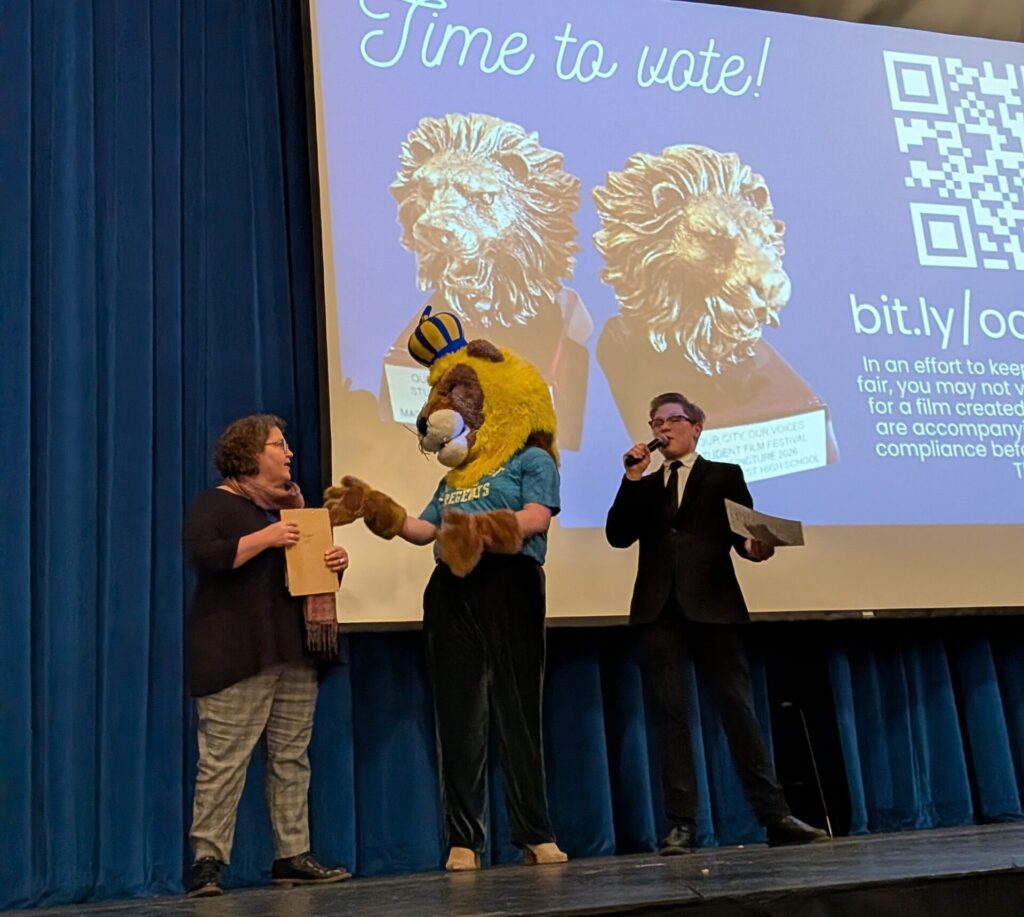
Bohman (left) with Zenon (right), a Madison West High School student and the emcee for Our City, Our Voices.
Four other schools also implemented PBS Wisconsin Youth Media this school year: Madison East High School, Schullsburg High School, Lemonweir Academy and La Crosse Polytechnic. PBS Wisconsin Education is recruiting for the 2026-27 school year. High school history teachers who would like to participate are encouraged to fill out a short interest form.




PBS Wisconsin is a service of the Wisconsin Educational Communications Board and the University of Wisconsin-Madison. © 2026 All Rights Reserved.
What do you think?
I would love to get your thoughts, suggestions, and questions in the comments below. Thanks for sharing!
Tawny Morrison