
 Passport



The Great Wisconsin Quilt Show’s 2025 Best of Show – read a Q&A with the winner
The Great Wisconsin Quilt Show is a three-day event co-presented by PBS Wisconsin and Nancy Zieman Productions that celebrates all things quilting.



The Great Wisconsin Quilt Show is a three-day event co-presented by PBS Wisconsin and Nancy Zieman Productions that celebrates all things quilting.
The Great Wisconsin Quilt Show is a three-day event co-presented by PBS Wisconsin and Nancy Zieman Productions that celebrates all things quilting. We can’t wait to bring quilters from across the Midwest and the United States to the Alliant Energy Center in Madison, Sept. 10-12, 2026!
A major highlight of this annual event is the 10-category juried and judged Quilt Contest and exhibit, and there is still time to submit entries for the 2026 Quilt Contest by June 30.
In anticipation of this year’s Great Wisconsin Quilt Show, PBS Wisconsin spoke with Sharon Engel of Greeley, Colorado, who won Best of Show in 2025 with her gorgeous quilt, “Spring Bouquet.”
PBS Wisconsin: Tell us about the techniques you used to make “Spring Bouquet.”
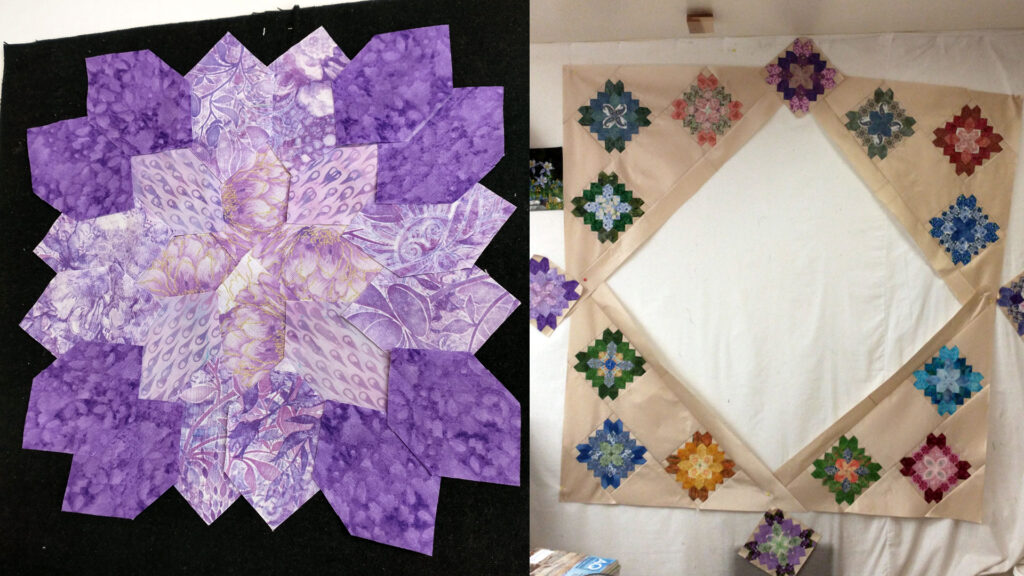
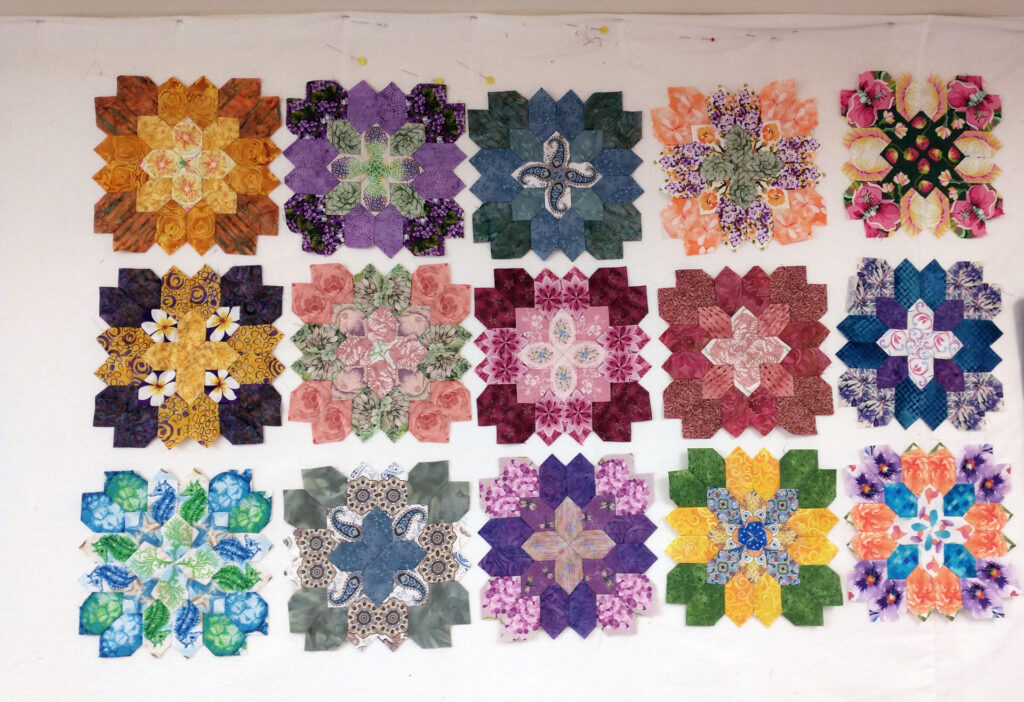
Sharon Engel: I am a huge fan of Margaret Solomon Gunn, who won Best of Show in 2024. She wrote a book called “Design Inspiration,” and there were three patterns in that book, and that quilt was one of them. I thought, “Well, I’m a good quilter, I’m gonna try it.” I like to hand sew, but I have never done hexagons. I liked her technique very much. It’s not where you have paper underneath and you have to turn them over and glue the fabric to the paper. Her technique is not that way at all.
I hand pieced the hexagons and used a lot of black embroidery thread around the pieces to set it off. I did a lot of hand appliqué in that quilt and hand piecing.
I hand-dyed fabric for the purple and blue ribbons along the bottom. So I got online — you know, good ol’ online — and I found a way that you can dye silk, and played with it on the stove. I made sure I dyed more than I needed, because I wasn’t sure how much the ribbons would take. As it turned out I had enough, but I was sweating it, because those ribbons are turned appliqué and are bigger than you realize.
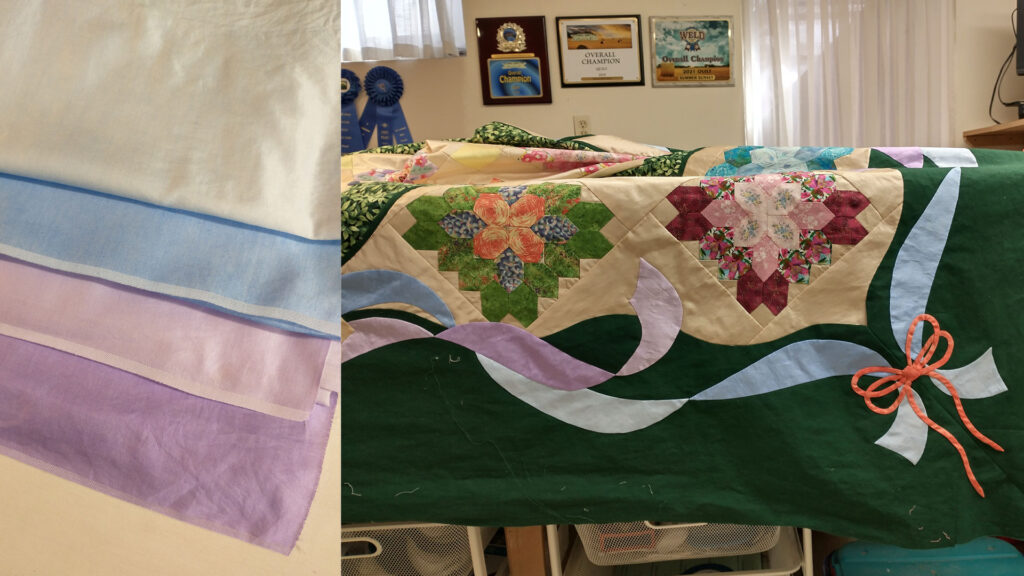
Fabric dyed for the ribbons on “Spring Bouquet.”
PBS Wisconsin: What made you want to attempt hexagons for the first time?
Engel: I don’t know [laughs]. Our daughter lives in Rhode Island and we’re retired, so we took a driving trip from Colorado to go see the fall colors. We were gone for a month and I thought, “I need something to work on while I’m gone.” So I bagged those babies up and took them with me.
To me, the paper and the turn method of hexagons … ugh, I just never wanted to try it. But this was perfect, because the way Margaret does hexagons, it’s just a little in-and-out stitch, like you’re mimicking your sewing machine. I thought her quilt was so pretty. Little did I know how involved it was! I should have known, seeing what her quilts looked like.
PBS Wisconsin: Did you enjoy doing the hexagons?
Engel: Yes, I did. But, you know, one is fun. 10 you’re getting good at it, and after you’ve done 30, you’re kind of sick ‘em [laughs].
I am very proud of this quilt and how much I learned from it and how beautiful it turned out. It was fun to take it along on our trip and I didn’t need much equipment to work on the hexagons. But it’ll be a while before I make another hexagon quilt [laughs].
PBS Wisconsin: How long have you been quilting?
Engel: Probably since about 1998. We added onto our house a big family room, and there was a portion of one of the walls that was screaming for something on it. So I started making wall hangings. The first quilt I made was a big bed quilt I made for our daughter. I used 5/8” seams. Well, I didn’t know you use 1/4”, so I wasted a lot of fabric on the inside [laughs]. I learned my lesson from that one, but she doesn’t care, she loves it.
PBS Wisconsin: Have you been sewing all your life?
Engel: All my life, yep. My mom is a sewist and she taught me, and I was in 4-H. I come from a family of sewists on both sides, my mom and my dad.
My mom did draperies and upholstering for probably 50 years and that is hard work. I used to hammer shears or draperies for her when I was in high school, because she needed help. When I had my first son, I didn’t want to go back to the job I had. So I said, “Mom, would you teach me how to make some drapes?” and I learned how to make draperies, the math of it. I made drapes and window treatments for over 40 years in my home.
That’s part of my quilting because I’m a fast sewist. If you don’t get those drapes made, you don’t get paid, you know? The customer’s kind of adamant: I want this in my home! Well, they don’t want it in six weeks, they want it yesterday. Another advantage from making draperies was having a 4′ x 10′ worktable, which now works great for quilting!
PBS Wisconsin: What is your favorite part of the quilting process?
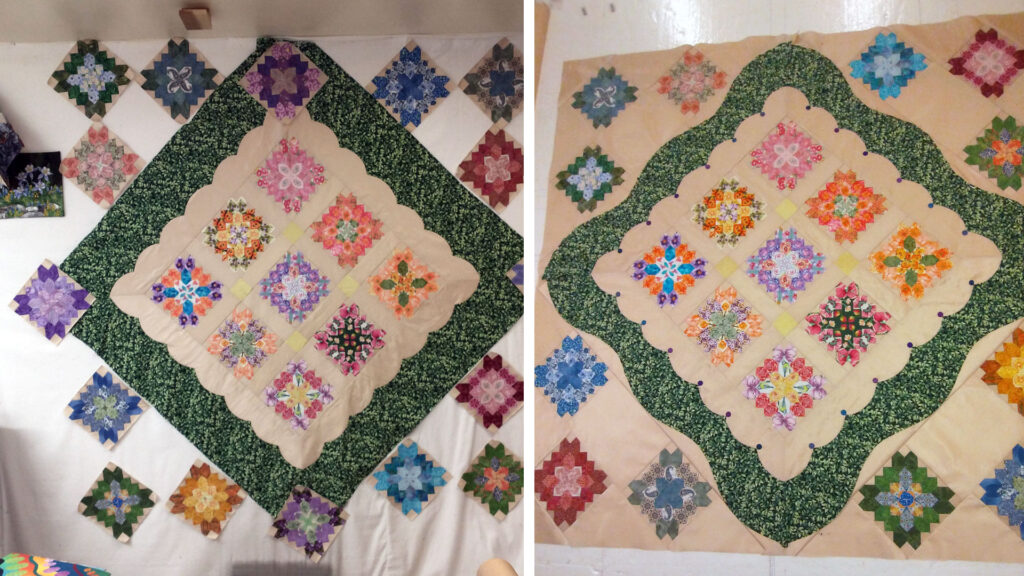
Engel: When it’s done [laughs]. I also like the piecing part, putting the puzzle together.
PBS Wisconsin: Are you one to rearrange a lot?
Engel: It depends on the pattern, but yes, I am. I think all quilters take lots of pictures, and that helps you look at it from a different perspective.
Picking out the fabric is a struggle for me. I tend to follow directions because I was taught to, and if that quilt has blue and green and yellow in it, those are the colors I choose.
But I’m so picky, and I think it goes to my drapery business. I had to be particular for them because they were spending a lot of money on a product.
I’m sure the poor girls at the quilt shop go, “Oh great, I’m spending an hour with her.” For example, I wanted a peachy-pinky, orangey color for the bows on the corners of “Spring Bouquet,” and we were pulling fabric after fabric, and guess where I found it? In my stash.
PBS Wisconsin: What’s the best piece of quilting advice you’ve ever received?
Engel: Read the directions, and if you have to read them twice, read them twice — especially if you’re using someone else’s pattern. It doesn’t mean you have to do it exactly the way they suggest, but they’re the ones who have been through the trenches of testing that pattern, and you don’t want to get halfway through and go, “Oh, now I see what they were talking about.”
Oh, and you know what? Don’t be so hard on yourself. It’s just a quilt for crying out loud. It’s not saving the world. If you’re worried that the person isn’t going to like it when you give it to them because of a mistake, don’t point out this stupid mistake to them, you know? Just give it to them!
Don't be so hard on yourself. It's just a quilt for crying out loud. It's not saving the world.
Sharon EngelBest of Show winner, 2025
PBS Wisconsin: What keeps you energized to keep quilting?
Engel: People are so thrilled when they receive a quilt. For example, my son-in-law turned 40. We live in Colorado, so I like my Denver Broncos. He loves his Kansas City Chiefs. Ugh! The inhumanity of it [laughs].
His birthday is a couple of days before Christmas, and I sent it out to him and said, “I want to see you open it on Skype.” On the label I put, “Happy 40th birthday,” and on the bottom I put, “Go Broncos!” in Bronco colors.
He opens the quilt, and he’s like, “Holy crap! I can’t believe you actually made a Chiefs quilt!” And I said, “It was very painful. Look at the label!” He said, “I’m gonna cut a hole in this quilt and take that off.” He just loves it. When he and our daughter got married, I made him a flannel quilt for his birthday, and he eventually said, “It’s getting kind of worn out. I need another one!” That’s when I decided I’d make him the Chiefs quilt.
I also just finished a Quilt of Valor for a friend, and you would have thought I’d given her a million dollars. Veterans appreciate those things, and know they’re not made by twinkling your nose like Samantha on Bewitched. They know you work hard.
Featured image of “Spring Bouquet” with ribbon by Dynae Allice Photography. All other images courtesy of Sharon Engel.
I would love to get your thoughts, suggestions, and questions in the comments below. Thanks for sharing!




PBS Wisconsin is a service of the Wisconsin Educational Communications Board and the University of Wisconsin-Madison. © 2026 All Rights Reserved.
Juanita Maiers
I would love to put a quilt in the Madison show. I have never put one in a show. What is the procedure for entering?
Tara Lovdahl
Hi Juanita,
Thanks for asking! You will find rules and entry forms at quiltshow.com/quilt-contest.
Joan Egeland
I was just wondering if she did the long arm quilting herself too or whom did?
Thanks for now
Tara Lovdahl
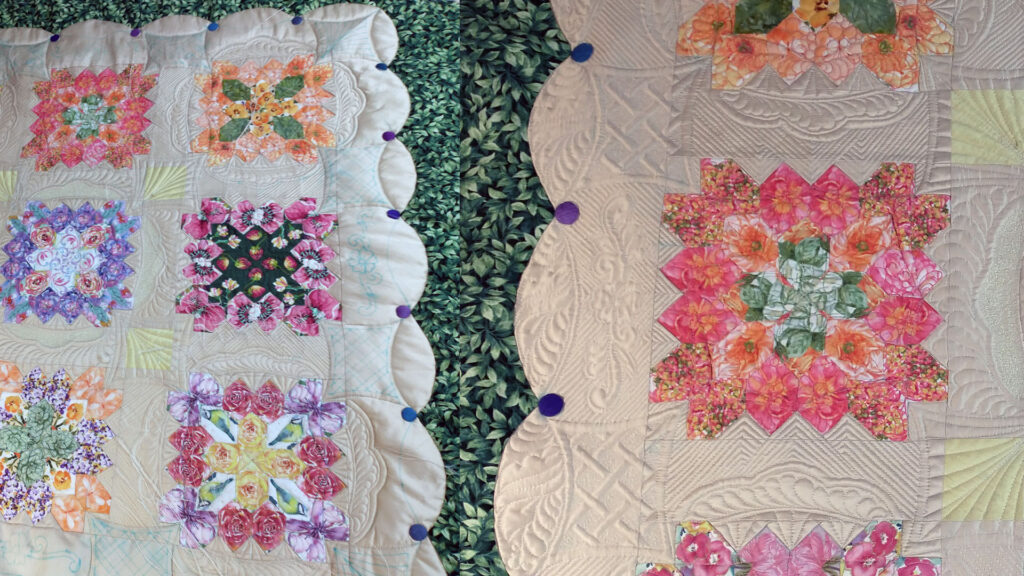
Hi Joan, thank you for your question! Sharon machine quilted “Spring Bouquet” herself. Thank you!