

 Passport






What are the track records of Tom Tiffany and David Crowley?
10/15/26 | 18m 47s | Rating: NR
The records of Republican candidate Tom Tiffany and Democratic candidate David Crowley point to their agendas if elected governor — Inside Wisconsin Politics examines the policy side of the 2026 race.


Copy and Paste the Following Code to Embed this Video:
Related Links for this Video:
What are the track records of Tom Tiffany and David Crowley?
Shawn Johnson:
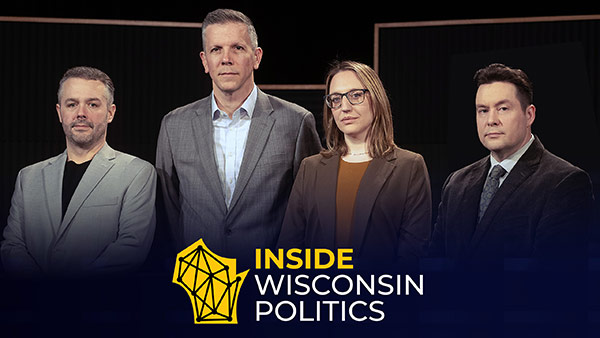
In the race for governor, the candidates are talking a lot about what they would do if elected, but Tom Tiffany and David Crowley have long records in government. Today, we talk about what they’ve done. Plus, we look at the rematch in the race for Wisconsin attorney general. This is Inside Wisconsin Politics. I’m Shawn Johnson here with my colleagues Anya van Wagtendonk, Zac Schultz and Rich Kremer in Eau Claire. Hey, everyone.
Anya van Wagtendonk:
Hey.
Zac Schultz:
Hello.
Shawn Johnson:
So, you know, in politics, we have a tendency to kind of surf from one news cycle to the next. We’re talking about what the candidates are saying about what’s happening now. We’re talking about the latest polling. We’re talking about the latest fundraising. Every now and then, it kind of helps to just step back and look at the big picture. And, Anya, it strikes me that in this race for governor, we have two candidates who have given us a pretty sizable set of breadcrumbs about how they govern because they have governed.
Anya van Wagtendonk:
Yeah. I mean, they have these kind of — they are not newcomers to politics. And so Rich and I were able to kind of go deep on both of their records in the state Legislature and Tom Tiffany’s case in Congress and David Crowley’s case, also, as Milwaukee County executive. And I think part of, a pattern does sort of start to emerge about kind of like their character as legislators and then potential executives. And so for David Crowley, for example, one thing that I saw — and I heard this also, just when I report on him in general from people — that he’s very sort of pragmatic, that his thing is all about sort of dealmaking. He’s very likable. He, you know, I’ve talked to a lot of Republicans who really like him, like working with him. And so one of his kind of signature achievements is this big — and we’ll get into this, I am sure — but this big deal in Madison that he helped negotiate essentially ended in, among many other things, a tax increase, a sales tax increase for Milwaukee and Milwaukee County. It’s a really interesting kind of thing to then run on. Tom Tiffany, by contrast, is much more sort of an ideologue. So he just has a very, very strong conservative background, supportive of Republican Party sort of politics in the state, and then now the Trump agenda in particular. And so that gives us a little bit of, like you say, these big breadcrumbs about kind of how they might helm Wisconsin state government.
Shawn Johnson:
Zac, you have covered a lot of governor’s races now. It’s not always this way. We don’t always know kind of what a candidate would do in the way that we do with, you know, Tom Tiffany and David Crowley.
Zac Schultz:
No, and all you have to do is look back at some of the most recent elections and Michaels versus Evers. I mean, Evers had been in office, but when Evers first came into office, the DPI secretary doesn’t have a long track record of setting the agenda. They can issue a budget and say please give me this money, and then they’re ignored. Michaels was a businessman. You can look into how his construction company worked, but that absolutely tells you nothing about what they would do within the Legislature. So it’s quite rare when you have these politicians that come with legislative experience, and one of the reasons for that is when you’re in office that long, you take a lot of votes that can be used against you in a future race. So sometimes politicians like Evers or Michaels look more attractive because they can’t be held against them and come up with catchy campaign commercials.
Shawn Johnson:
So you’ve all done stories on the candidates’ records recently. I encourage everyone to check out the WPR and PBS Wisconsin websites to get a real in-depth look at those, but we’re going to get into them a bit today. Rich, let’s talk about your reporting on Tom Tiffany. We sat down to talk about this Tom Tiffany record story. And I remember just for a long time, it was like, where do we begin? Because Tom Tiffany has been doing this for a while. So for someone kind of tuning in to election news now — it’s October. Big picture, who is Tom Tiffany?
Rich Kremer:
So as Anya said, Tom Tiffany, he’s a very conservative person. I think what’s interesting about Tom Tiffany is if you just hear him talk or if you see his campaign commercials, you might think, well, boy, he’s soft spoken, he might even be considered meek. But people that know him say that is not the case. He is tough as nails, and his legislative record does show that. So while he was in the Legislature, he came in with the Republican wave of 2010 — the big GOP sweep, the trifecta. You know, he was on board with all the votes on things like Act 10, voter ID, there was abortion restrictions, you name it. So that caused a big stir. But where Tiffany really stood out to me was on mining. Think of the backstory here —- the Great Recession, you know, early 2010s, job, unemployment rate was high in Wisconsin. Gov. Scott Walker at the time and Tiffany and all the Republicans were essentially — their mantra was jobs, jobs, jobs. So Tiffany took the helm on an iron mining bill that failed in one session. But when he got into the state Senate in 2013, he reintroduced it and he got it done. So this essentially rewrote some regulations to clear the way for a massive open pit mine, I think four miles wide it would have been, a very deep — I mean, I forget the exact specifications, but it was a big deal. And it caused a lot of controversy in northern Wisconsin. This would have been up in the Penokee Hills. Tribal nations were super against it. So were environmental groups. Business groups said this would create thousands of jobs. So it was a heavy lift. Tom Tiffany got it through. And he also blocked a bipartisan mining bill that would have rewritten laws too, but I don’t think the company was on board with that. And as chair of a mining committee, he blocked that bill. And when his bill came to a vote, Tiffany said on the floor that: I would have loved for this to be bipartisan, but in the future when people are cashing their checks at the mine, they’re not going to care. And another huge lift was the 2017 repeal of a mining moratorium law. This has to do with sulfide mining for minerals like copper, gold. And that was a law that was signed two decades earlier by Republican Gov. Tommy Thompson, essentially requiring companies to prove that they have examples of mines that operated for 10 years and then closed for 10 years without leaking any acid mine drainage. So Tiffany was able to get that repealed, even though there was, I think, five Republicans that defected. But the majority was large enough at the time that he was able to do that. And then in Congress, he, you know, most famously I suppose, voted to object to ballot results or presidential election results, electors in particular from Arizona and Pennsylvania. He said he was going to do the same for Wisconsin, but that didn’t happen. Of course, Jan. 6 was the day of the violent riot at the Capitol by Trump supporters. And he also signed on to a lawsuit that would have essentially thrown out Wisconsin’s results and sent the whole thing to the Legislature to decide. So, in short, Tiffany’s gone further than some other Republicans in the congressional delegation and also in the Legislature on various things he supported.
Shawn Johnson:
You know, I remember that mining debate that you mentioned, Rich, especially the one about the iron mine in 2012, because this was like a year after all the other Walker stuff had happened. The Act 10 debate, protests at the Capitol, you name it, you know, just kind of ripped through the Walker agenda. And this felt like at the time, in my memory, it was the next big thing. It was very contentious. One thing I remember about Tom Tiffany in this time, Zac, was that he was kind of a details guy. Like, you know, there were some lawmakers you can go up to and ask him about their bill, they say: Talk to my staff. Tom Tiffany knew the bill. He also was not afraid to mix it up in the Legislature with Democrats. He was not exactly the get-along guy that you see in those ads.
Zac Schultz:
Not at all. And I think Tom Tiffany came into office seeking to oust a Democrat in that seat. He came in, he rode that tea party wave. And then when it was gerrymandered to make his seat safe, that was the beginning of when the North Woods went from purplish blue to very, very red. And he represented that district all the way from the Assembly to the state Senate to Congress. That is who he represented, how he represented them. I went with him as he campaigned for state Senate, and it’s not like he had to shift to become the representative for the people in his area like you see some politicians. He was the person from that area and remains to that day. It’s the ego, the alter ego he’s presenting on TV as the shucks guy is the one that people aren’t familiar with, the ones who know him back home. Now he is very much beloved by a lot of the people up there because they wanted that quote unquote fighter in that tea party era and that Trump era. And he has represented both of those wings of conservatism, but he did not rule with the idea of let’s find consensus. The idea of bipartisanship back in the Walker era, from Republican point of view, was if Democrats want to vote for our bill, great it’s bipartisan. If you don’t, that’s fine, we’re going to pass it anyway because we have the numbers. And that’s the way he’s legislated all the way through.
Shawn Johnson:
That was bill after bill for many years. So, Anya, you recently sat down for an interview with Tom Tiffany. You know, Rich gave some of the stuff that we kind of keyed in on as we looked at his record. How does Tom Tiffany present himself when he talks about what he’s done in the state Legislature and in Congress?
Anya van Wagtendonk:
Yeah, he points to this kind of lengthy record, but as you say, he is a details guy. He really has a kind of clear understanding of the types of policies that he would sort of support as governor. And of course, I have to put on my sort of separation of powers hat and remind people that governors don’t enact policy, but you can kind of see like the values that they might espouse from the bully pulpit, for example. And so he really kind of points to a lot of those victories, especially, I think, on sort of fiscal conservatism and the way that he would be a responsible steward of state money. But he also, I think because he does have to appeal to a wider electorate, he is running at a time that Donald Trump is sort of uniquely unpopular. There was a little bit more kind of modulation on certain points. So, for example, certain issues, you know, calling for task forces, let’s study it more. So not necessarily taking such a fiery approach. And then certain things, like he voted for a much stronger limit on abortion while in Congress, but he told me that he would support Wisconsin’s existing 20-week limit. So things like that where he’s not necessarily kind of as firmly the North Woods conservative that he always has been, although, of course, that is who he is. And I don’t think he’s running away from that either.
Shawn Johnson:
OK. I want to turn to you. Since you did our coverage of David Crowley’s record also. Big picture, when you think about David Crowley, for somebody who’s just getting to know him, who is he when you look at his record?
Anya van Wagtendonk:
Yeah, I mean, as I said earlier, a word that keeps coming up no matter who I talk to is just that he’s very likable. And I remember talking to a Republican during the primary who said that he imagined Republicans would be sort of gladdest to see him as a Democrat — of all those Democratic contenders — in Madison, because he is willing to make deals, he is willing to negotiate, and he really kind of positions himself as a problem solver. And so part of what is involved in that, especially if you have divided government, is working with people who don’t necessarily see eye to eye with you. And so that’s a big part of kind of what he is running on. So I mentioned this big deal from a couple of years ago, and without getting too wonky, it was essentially about how much money Madison sends to different communities. But Milwaukee was like the big bargaining chip in many different ways, right? Many parts of Wisconsin don’t like Milwaukee. Milwaukee is also the largest kind of like provider of funds to the state…
Shawn Johnson:
Easy to run against Milwaukee in a statewide election, if you’re a Republican.
Anya van Wagtendonk:
Exactly. And so he’s, you know, carrying his Milwaukee background into this race. Of course, he’s born and bred Milwaukee. He runs Milwaukee County. He represented Milwaukee city, part of it in the Legislature. And so the way that he kind of handled that and was able to get what he wanted — I should say, along with the mayor of the city of Milwaukee — for Milwaukee from Republicans, he got Republicans to sign off on a tax raise without going to referendum, which they did not initially want to do. That is a big sort of victory that he can say: Look how I can kind of work across the aisle, work across state lines, deliver for Milwaukee, for Milwaukee County, which is more, you know, diverse, suburban and urban, and I can deliver for the state of Wisconsin.
Shawn Johnson:
Yeah, Zac, I remember when that happened. I couldn’t believe that Republicans kind of went along with letting Milwaukee raise its sales tax. It had been a priority of the business community there, so it’s not just like Democratic legislators or mayors, county executives wanted to do it. Still a big deal, and kind of his claim to fame in a way. And yet here we find ourselves in a general election and he has this big tax increase on his record. And how is that coming out in the campaign?
Zac Schultz:
Well, he’s definitely not running on the tax increase. He’s running on the bipartisan compromise, whereas the Republicans are attacking him on the tax increase, and they don’t want to talk about the bipartisan compromise. They don’t want to acknowledge the fact that Speaker Robin Vos was the one that helped push this through and it was Republican votes in both houses that got it done, because that doesn’t fit their campaign against him. I will say what’s interesting about the contrast between these two candidates — as we talked about Tiffany, his version of compromise was: If you want to vote for my bill, feel free, otherwise, you know, do whatever you want. Whereas Democrats in that era with Crowley — even with the Democratic governor — their only way to get anything done was bipartisan. They had to work across the aisle. That doesn’t mean they’re saints. If they had complete control, it might have been the reverse picture. But the only way for David Crowley to do something like that was to engage Republicans and say: What can you get, what can we get, what can we accomplish together? And so just a complete contrast between how the two parties had to try and do anything if they wanted to claim a victory in this very partisan era, where Republicans had complete control of the Legislature and ultimately complete control over whatever came to the floor.
Shawn Johnson:
All right. We have to move to this other extremely important constitutional office in a few minutes here — the race for attorney general. Zac, you just had a story that profiled the candidates there. It’s a rematch between Josh Kaul and Eric Toney. Tell us about this race.
Zac Schultz:
Well, what’s interesting about this rematch is that it is a rematch. We do not see the people that lose statewide office run again. It’s very rare. Mandela Barnes tried, couldn’t get through the primary. Russ Feingold is one of the only candidates in recent memory that has actually lost a statewide election and then come back to be the nominee. And obviously, he didn’t win his reelection effort. So for Eric Toney to come back, he really needed people to say: No, we believe that you are the one. Because he wasn’t even primaried. He had a clear walk through the Republican primary. And part of the reason I think that he got there was he is one of the only Republican attorney generals candidate that votes than the Republican candidate in that same election. He got more votes than Michaels did in the 2022 election, which is extraordinarily rare. The last time an AG candidate got more votes than the gubernatorial candidate of their own party was 2006, when J.B. Van Hollen actually won the AG race — the last time we had a split, governor from one party and an AG from the other. So it’s extraordinarily rare. He was very close to beating Josh Kaul in what was a relatively blue year of 2022. So he is a strong candidate to come back and do this again. The question is, will he have to outrun the top of the ticket again to have a chance? Or if Tom Tiffany keeps it close enough or if he wins, and it’s very likely that he defeats Josh Kaul.
Shawn Johnson:
2006 — the first of a couple big blue waves, really a two-cycle blue wave that happened back then. And there was J.B. Van Hollen, as you mentioned….
Zac Schultz:
Yeah, a lot of weird circumstances in that race, but we don’t have time to get into the details of that. But he did win that race, and the last time —- Toney is interesting in being someone who outran their own gubernatorial candidate.
Shawn Johnson:
Yeah. And, Rich, how are these candidates as they tell their stories, their records, because they have them too. How are they presenting themselves to voters here?
Rich Kremer:
Well, I just took a look at the debate between the two, the recent debate. And, you know, what stood out to me is that it was a lot about Trump. You know, so Josh Kaul is essentially saying he’s standing up to the Trump administration by signing on to all of these lawsuits filed by other states, or maybe filed by Wisconsin, but going against what he sees as administrative overreach, canceling grant funding to Wisconsin, you name it. Whereas Eric Toney says: We should be focusing on safety, public safety, not on this, not wasting our time on this. So that stood out to me because I’m thinking, well, I guess every race this year, no matter what, is about Trump to some extent. So that was the first thing that stood out. But yeah, Republicans online are very confident that Toney is going to be able to pull it off this year, maybe even more confident than in other races.
Shawn Johnson:
Yeah.
Rich Kremer:
So that’s the other thing that sticks out.
Shawn Johnson:
And real quick as we wrap up here, are we being foolish — Anya, do you think — by saying that we know how these people are going to govern? I mean, if pragmatic David Crowley has a Democratic Legislature to work with or very conservative fighter Tom Tiffany has a Democratic Legislature to work with, could that maybe affect who they are as governor?
Anya van Wagtendonk:
Yes.
Shawn Johnson:
That is the correct answer, I think, and that’s about all we have time for. Circumstances matter is the name of the day. Before we let you go, we wanted to let you know we’ve got a couple free live events coming up. You can join all four of us for an evening in Eau Claire on Tuesday, Oct. 20, or Madison on Tuesday, Oct. 27. We’ll talk about the show, this year’s campaigns and take your questions. Find the details at pbswisconsin.org/events and reserve your spot. That’s all the time we have for today. This has been Inside Wisconsin Politics. Be sure to follow us on pbswisconsin.org, wpr.org, YouTube or wherever you get your podcasts.
Search Episodes

Donate to sign up. Activate and sign in to Passport. It's that easy to help PBS Wisconsin serve your community through media that educates, inspires, and entertains.
Make your membership gift today
Only for new users: Activate Passport using your code or email address
Already a member?
Look up my account
Need some help? Go to FAQ or visit PBS Passport Help
Need help accessing PBS Wisconsin anywhere?

Online Access | Platform & Device Access | Cable or Satellite Access | Over-The-Air Access
Visit Access Guide
Need help accessing PBS Wisconsin anywhere?
Visit Our
Live TV Access Guide
Online AccessPlatform & Device Access
Cable or Satellite Access
Over-The-Air Access
Visit Access Guide


Follow Us