

 Passport



How the 2026 Democratic big blue wave washed over Wisconsin
11/05/26 | 29m 2s | Rating: NR
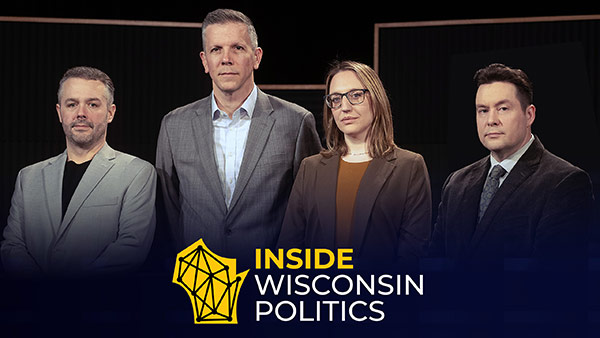
Democrats won a trifecta with the election of David Crowley as governor and majorities in both chambers of the state Legislature — Inside Wisconsin Politics explores what the big blue wave could mean.


Copy and Paste the Following Code to Embed this Video:
Related Links for this Video:
How the 2026 Democratic big blue wave washed over Wisconsin
Shawn Johnson:
If there was a winnable race on the ballot for Democrats in Tuesday’s election, they won it. We explore the results in Wisconsin and what this election means for both parties moving forward. This is Inside Wisconsin Politics. I’m Shawn Johnson, here with my colleagues Anya van Wagtendonk, Zac Schultz and Rich Kremer in Eau Claire. Hey, everyone.
Zac Schultz:
Hello.
Anya van Wagtendonk:
Hey.
Shawn Johnson:
So there are wave elections — and there are wave elections. And it just seems like this is about as big a one as any of us have experienced in the last, well, in this century, let’s say. What does it all mean when we look back at this race? Anya, when you look at this election and specifically what happened here in Wisconsin, what stands out?
Anya van Wagtendonk:
I think there are kind of two questions that, as we look more into the results and talk more to voters, we’ll get to parse a little bit more. But essentially, was this an election for Democrats or was this a repudiation of Donald Trump? And so I think Democrats also kind of need to figure that out for themselves, because Democrats here held the governorship, took the Legislature. They’re going to figure out how to govern for this pretty diverse state that is historically and still a purple state. And so figuring out kind of exactly what they are being sent to Madison to do, I think, is going to be really important if Democrats want to avoid past patterns of getting in power for about five minutes and then losing it all again.
Shawn Johnson:
Zac?
Anya van Wagtendonk:
So the stakes are high, I guess, is what I’m trying to say.
Shawn Johnson:
The stakes are high, yes. Zac, what about you?
Zac Schultz:
I think that the extra cushion that the Democrats got in the Legislature is the key thing here. We were talking in past podcasts about what happens if it’s 50-49 in the Assembly. And, you know, I said everyone’s a kingmaker. And you said everyone may be a terrorist, to use an old Robin Vos term.
Shawn Johnson:
I was quoting someone, not my term, but yeah.
Zac Schultz:
Yeah, in terms of being able to hold up or pass legislation, and the fact that Democrats get to 53 seats, that means they’ve got a few people that they can lose. And every time you have one of these waves, some people get into office who maybe didn’t think they were going to get there, but then they think: I want to be here for a while. So instead of thinking about what can we pass while we have power, they start thinking about: What do I have to do to get re-elected? Because it’s only two years away, which sounds like a long time, but in politics, they’re already thinking about it. So having that extra cushion in the Assembly, an 18 to 15 majority in the Senate, makes a big difference when it comes to them starting to strategize how aggressive and how bold can we be when you don’t have to worry about getting every single vote every single time?
Shawn Johnson:
Rich, how about you?
Rich Kremer:
It was just astonishing to see the margins, not just in Wisconsin, but nationwide. And I think Zac and Anya have great points, and I would agree. I mean, Dems can think of this as a mandate, that it was their policies that people wanted, and they could theoretically, with a trifecta in Wisconsin, could just do every wishlist thing that they wanted as fast as possible. Lord knows we saw something like that on the Republican side back in 2011 when a lot of bills moved very quickly. So, but I also talked to a state senator who was reelected — Jeff Smith here in western Wisconsin — and he said he’s been urging Democrats not to seek retribution. He said: We’ve got a big plate of things that we need to do, we owe that to people., we can’t be playing games. But I would imagine there’s others within the caucuses in both chambers that wouldn’t mind just giving the Republicans a taste of their own medicine.
Shawn Johnson:
So when it comes down to these individual races, the race for governor, David Crowley dominated. He had a more than 8% margin of victory, according to unofficial returns from the Associated Press. That’s the largest since 1998, when Tommy Thompson had a really big margin of victory. But in this era of close elections in Wisconsin, this is a blowout. He had more than 1.4 million votes, which is a record for a candidate for governor. With that on his record now, Anya, what kind of governor do you think he’s going to be? Is he going to be able to point to these election results and say: I set the tone here?
Anya van Wagtendonk:
You know, I literally just asked him basically that question, because he’s always been this kind of consensus-builder guy. And he really operates by what people kind of bring and negotiate, is something that he would support. And so he kept saying — I was just interviewing him and he kept referring everything to: We’re going to talk it out and blah, blah, blah. And so finally I said, do you not just see those huge margins as a mandate for the David Crowley agenda, and whatever David Crowley wants David Crowley gets? And he laughed, and he said no, essentially that there’s still pretty tight margins in the Legislature and that he really wants to not be this kind of polarizing figure. And so we will see. But it doesn’t sound like he is running as a partisan Democrat. And he continues to say, even after winning, that he wants to work in a bipartisan fashion. He wants to include Republicans in the Legislature. That’s another kind of question I have, is some of these patterns that we’ve seen in the Legislature of Republicans making sure that they are only kind of working with themselves. Will Democrats also need to work more, sort of bipartisanly? And part of that tone gets set from the governor’s office down.
Shawn Johnson:
Just looking a little bit more into how he did, I was struck by his margins in Dane and Milwaukee counties, which, of course, we know are going to go Democratic, but he had larger margins there, Zac, than Kamala Harris had in a presidential election in terms of the sheer vote. That is astonishing. So, I guess I wonder, did he have something to do with that? Did Tom Tiffany have something to do with that, or was this just what happens when you have a massive wave like we had?
Zac Schultz:
I think everyone’s trying to answer that question in terms of the next election. I mean, you can look back and see how did it come together? And everyone can take a little bit of credit or a little bit of blame, depending on how it goes. But obviously, we didn’t reach presidential turnout in Wisconsin. We’re estimated to be around 55%. Republicans didn’t show up in a lot of places. They were disappointed, or those rare, if Trump’s not on the ballot, they don’t come out and vote. So then Republicans have to ask themselves, well, was that Tom Tiffany’s fault or was that the environment’s fault? Does that mean we can’t run someone like that, because they had all the money in the world to get people out and vote, and they simply couldn’t do it. So they can easily just say: Well, it was the environment. we had nothing we could do to stop it, we did our best. And there are some Republicans saying: No, this was all about we screwed up on the messaging, we didn’t take advantage of everything we could have done nationally or in Wisconsin to get those people to see a vested interest in voting. And on the flip side, for Democrats, they have to wonder: OK, did we win those people permanently that did vote for us, those independents that swung heavy for Crowley, or, like we talked about at the top, were they just upset at Trump? And once Trump’s not part of the picture, they have to say: How are we going to govern for them? So that is something that I’m sure David Crowley is very aware of, because this isn’t the same framework that we saw in 2011, when Scott Walker came in with the Fitzgerald brothers, where they were very tight, on-focus, on-point the entire time, they knew exactly how to run that ship, and it was everyone swimming in the same direction. It doesn’t feel it’s, like they’re trying to work towards that, and Crowley’s history in the Legislature will probably make it easier than the last time we saw Democrats with a trifecta, where Jim Doyle was not that kind of governor. He came from the attorney general’s office. He’d always been his own person. He ran the ship at the top, and he was used to running with Republican legislatures and having to deal with them. So it was a different scenario entirely when he had Democrats underneath him that had their own ideas. He said: Hey, I built this, why are you not listening to what I want?
Shawn Johnson:
Yeah, I remember him being a little annoyed with them at times, and we should get back to that. Just to rip through some more races here. The race for attorney general, which we discussed, is kind of flying under the radar this year — still hugely important. Josh Kaul did win that race over Eric Toney. And there was some question going into that race, might he underperform the governor candidate? Might Eric Toney overperform the governor candidate? The opposite was true. Josh Kaul got more votes than David Crowley did, and Eric Toney got fewer votes than Tom Tiffany. Rich, then we had this 3rd Congressional District race that we have been watching in your part of Wisconsin, and we just assumed this was going to be a close race, because this is Wisconsin and this is considered one of the closest races in the country, we thought. It was kind of a lopsided Rebecca Cooke win. What happened there?
Rich Kremer:
Yeah, it was. I mean, Rebecca Cooke did very well in Eau Claire County and in La Crosse County. I mean, it was margins approaching 30 points. So that’s not super surprising. I mean, the spread is pretty big. But she also won other counties that are not by any means Democratic strongholds — we’re talking Crawford County, Vernon County, Richland County. That’s not to say they don’t ever go Democratic, but it’s just not a given. So she definitely did better in some of those more rural areas that don’t have a bigger city with a university in it.
Shawn Johnson:
And then the 1st Congressional District was the other race we were watching. This is down in southeast Wisconsin with Republican Bryan Steil and Democratic challenger Mitchell Berman. I feel like we’ve done a lot of stories over the years where we describe that district as being competitive in theory but not in practice, because Bryan Steil had won by 10 points and like 9 points in his last two elections. Anya — he lost.
Anya van Wagtendonk:
Yeah, that was the point of the night. You know, I was at the Crowley watch party and there were all of these returns coming in from different races across the country that indicated it was going to be a good night for Democrats, sort of nationally. But I always have this, you know, word of caution to myself about Wisconsin and Wisconsin voters are different. And it was when the Mitchell Berman victory was called that I knew something really kind of significant and unusual was happening. Not just that he won, but that he won by a fairly sizable margin. Again, we covered this race as though perhaps a Democrat could be lucky enough to give Bryan Steil a run for his money, and that’s sort of an operative phrase, because a lot of money was propelling Bryan Steil. And then all of a sudden, in the last couple of months, Mitchell Berman started getting this attention from these national groups and some influx of cash. So then Bryan Steil had to kind of meet that. It just became, itwent from being a lean Republican race forever to this much more competitive thing. And then it was not close. And so that was just a really surprising outcome in a night of pretty surprising outcomes.
Shawn Johnson:
In elections like this, these offices can kind of cascade too, because you have David Crowley at the top doing well. He kind of brings up other races. In the 1st Congressional District, you had Mitchell Berman doing well. And by the way, you had a competitive state Senate district there that included Racine County, and the Democrat won there. In fact, if you look at the state Legislature, we were watching for competitive seats in the state Senate. Democrats won all four — they flipped three seats. They have an 18 to 15 majority. You look at the state Assembly — we were watching maybe a dozen races. Democrats won them all. They flipped eight seats in the state Assembly. Zac, you already mentioned the margin there, comfortable Democratic margin there. Where does that leave us? What does it mean for the upcoming legislative session with David Crowley the governor, and Democrats in charge of the Legislature? What are we about to experience here?
Zac Schultz:
We’re going to see a rush of legislation, and we’re going to have lots of little things dripping out over the next couple of months as Democrats prepare for that open to session. They get sworn in the first Monday in January. Between now and then, David Crowley is going to assemble his cabinet. He’s going to have all the transition help in the world from lieutenant, from Gov. Evers, who is more than happy to hand over the mansion to Crowley and his family. And we’ve already spoken with Greta Neubauer and Diane Hesselbein, who will be the new power brokers in the Legislature. Should mention Greta Neubauer will be the first female Assembly speaker in state history. So another broken record, another milestone here. But looking back, I tried to look at their speeches, both in the run-up to the election and on election night — what they were talking about. And the affordability and a lot of the things that have been pretty standard, we’ve talked about. You can break that out a dozen different ways of what that means. But one issue that I heard repeatedly that they were very clear about was the abortion issue. And even though it wasn’t a big issue in this election, from the stage after Crowley had won, Neubauer was talking about, and Hesselbein were both talking about: We’re going to cement women’s access to and keep politicians out of the doctor’s office. That was something that Crowley was talking about in Milwaukee the night before the election. So that is an issue I would expect them to address immediately. David Crowley already talked about a constitutional amendment. That obviously takes two legislative cycles. I don’t think they’re going to wait to see if they maintain power for two legislative cycles. It seems like abortion is going to be pretty high on the list for them to address very early, along with the affordability package.
Shawn Johnson:
Rich, what else might we expect?
Rich Kremer:
Legal weed. It seems pretty likely that Democrats are going to go there for medical, and probably recreational, since they have the votes to do it. And, you know, it’s an issue that’s been overwhelmingly popular, per Marquette polling. So it seems like a no-brainer that they’re going to go in that direction. I have no idea when, and I could be wrong, but it just seems like the writing is on the wall with that.
Shawn Johnson:
Yeah, I was thinking about that earlier. We’re going to cover that issue like it’s a budget, you know, like that level of detail. That is kind of the bill when you have single-party control, where it can become more and more complicated because people are kind of just negotiating out in the press sometimes, and the bill just grows and grows. And it’s a fairly complicated bill — the legal weed framework — Anya, our medical cannabis and recreational cannabis correspondent for WPR.
Anya van Wagtendonk:
Well, and that, I think, also tells us something about sort of the broader challenge that Democrats have ahead of them, which is that they have been able to kind of position themselves as a relatively unified caucus the whole time that they have not been in power, because it doesn’t matter, because they don’t have to work out all of those little details and they don’t have to figure out: OK, I’m in a district where I need to make the hemp farmers happy, and I’m in a district where I need to make the local shopkeepers happy, and I need to keep the Tavern League happy, right? All of these different interests, they’re all bringing that to bear. None of that matters when you’re just sort of saying: Like, in a magical future world where I have power, I would do X, Y and Z. Now they actually have to make it happen, and that’s where things get really complicated.
Shawn Johnson:
And Zac, we remember the last time that this happened in 2009, 2010, and Democrats had all that power. I remember a lot of infighting, and I remember some indecision, too, as the session got near the end on what they really wanted to do and like who they wanted to be.
Zac Schultz:
Yeah, and part of that was them looking at the storm clouds coming in 2010.
Shawn Johnson:
Mmm-hmm.
Zac Schultz:
And obviously in retrospect, we can see what happened.
Shawn Johnson:
They were — narrator’s voice.
Zac Schultz:
That was a big storm. Yes.
Shawn Johnson:
If they were right.
Zac Schultz:
They were right.But I do remember Mark Pocan after that election saying: Gosh, if we would have known it was that bad, we would have saved a lot of money and not wasted all these campaign ads that were never going to work. They don’t know what’s going to come. So they will have to make decisions. Now, the standard logic for every new Legislature coming in — if you’re going to go bold, go early. That’s why Walker and the Republicans did Act 10 in the first few weeks. It’s because the idea is the longer it’s done and on the books, the longer that people have to get used to it, maybe see some positive results from it, and not just get scared from headlines, and forget some of the anger that they might have felt if they weren’t sure about how this was going to happen. If you remember another big policy thing, the Affordable Care Act. That took until the end of Obama’s first two years, and so it was very fresh in people’s minds. They hadn’t had any positive results from it. And then 2010 came, and Republicans were able to campaign against it. So when you go big early, you can have a bigger payoff and it gets it off the books. You have your policy wins in place, and hopefully you see some positive gains from voters and some of the negative energy diffuses. So expect a big, heavy agenda early.
Shawn Johnson:
And I also believe that there is something to a governor coming into office being able to say: I have the public on my side. And Walker certainly did that. And I think that’s what makes this upcoming session that we’re about to have different from that one in ’09-10, is that Jim Doyle was on his way out. He announced, I think in 2009, that he was not going to run again. And so then when you have a lame duck governor, it’s different than a governor who just won by 8 points and is coming into Wisconsin to start a term. I think he’ll be able to point to that and say: Follow my lead, guys.
Zac Schultz:
Well, one other major factor about ’09 is we were in the Great Recession. There was no money. The state was in a terrible fiscal situation, a massive deficit, structural deficit in place and no money coming in to rescue from the feds. Completely different from the COVID years, when we had federal money pouring in, or a surplus that exists now.
Shawn Johnson:
And I think also another factor now — an X factor — is that Donald Trump is still president. It was in ’09, you had Democrats in the White House and in Congress, and Democrats in Wisconsin. In hindsight, if they thought they were doomed, they were right. One thing I want to know, Rich, though, is like, where are Republicans going after this? Because this is about as bad as they could have expected, honestly, worse than they could have expected, iIf you look at some of the states that flipped nationally and how they did in Wisconsin. What’s their general mood?
Rich Kremer:
Well it’s not great, Shawn. So, they’ve had some big feelings about the blowout on Tuesday. But what’s been really interesting is watching to what extent they move away from President Trump or not. So yesterday, or not yesterday but this week, we saw outgoing State Treasurer John Leiber say: Well, we have to move on from Trump, this is clearly what this is about, the party has to rebuild and go in a different direction without him. And others have been saying that online. But at the same time, you’ve got this younger cohort of Republicans, conservatives — the Turning Point people, like 18 to 30-something essentially — and they are not saying that this was Trump’s fault. The theme that seems to be coming from that realm is this was about the Iran war, and it was neocons — you know, older generations of conservatives that are pro-war — that caused this, almost insinuating that Trump was tricked by these ne’er-do-wells. So it’s an interesting argument because Trump started the war. And, you know, which side prevails in terms of Republicans? I’m not sure. But it does seem like they’re grappling with whether or not they can or should move on from the Trump era, which is now, what, 10 years in the make, and, you know, all told.
Shawn Johnson:
Yeah, you know, one thing I think about whenever I experience another wave election is how, what’s stuff that happened in previous wave elections? And after the ’06 and ’08 Democratic waves, back to back, there were people talking openly about: Is the Republican Party dead, you know? And 2010 was a great year for Republicans. So I think we have just extremely short memories in you know, in the politics business. It’s just easy to forget this stuff changes so quickly. But the other thing that does stand out to me for Wisconsin Republicans specifically is how much they relied on a handful of, like, really, three billionaires to finance their campaigns this time. One thing that I just can’t get over is in the state Republican Party’s last finance report before the election — Rich will know the figure that I’m thinking about. — but there were six individual donors to the state party in that report. Diane Hendricks was basically all the money. But they only had six donors. That means six people thought: This is a party that I’m going to, they need my help now more than ever, and I’m going to send them a few bucks. People just aren’t doing that. Anya, where does that leave them? I mean, where does the party go under Bryan Schimming, or do they go in a different direction?
Anya van Wagtendonk:
Yeah, I mean, I just want to sort of put a fine point on what you just said. This was also the most expensive governor’s race in the history of Wisconsin. The most recent report right before Election Day was like $195 million. I’m sure it will top $200 million. And so it kind of raises this question of, what is the money for? Like, what did that actually sort of buy anyone? And so I don’t know that this will necessarily, again in a broad sense, lead to any type of reimagining of what our campaign finance system looks like. But I do think that it sends a lesson about, like, where kind of voter power can come from. But also that it’s not necessarily about, do you have the best ads? Do you have, like, the most presence? Like, there were other factors this year that all the ads in the world apparently could not kind of supersede. And so that is something, I think, for both parties — whichever party is sort of on the losing side of a wave election — to be thinking about: Not just, OK, how do we get more money in our bank account for next time, but where are the voters, where is the enthusiasm, and how do we make sure that we’re getting some of that?
Zac Schultz:
One of the things that was interesting about the ads, especially Tom Tiffany’s closing pitch, was almost a reversion to 2024. I mean, Shawn, you saw a lot of ads about transphobia and, like, boys in girls locker rooms, and boys in sports, and issues that if you’re in the Republican circles, yeah, they’re going to scream about it, but the rest of the people and the voters were not worried about that. They’re talking about gas prices. So it was interesting to see, like, even their messaging was trying to say: What can we do to get people’s attention? So when we talk about, you know, how much money did you spend? Well, how did you spend it? Like, what was the message you were using that money to escalate to the rest of the public?
Shawn Johnson:
Yeah, and where too, right? Is throwing all that money at broadcast and cable TV still the best bang for buck in, you know, in 2026 politics? Can you all help me make sense of the referenda results in this election? Can we kind of go through these and see if you have going theories, because this was a split decision and didn’t necessarily line up with the narrative of everything else that happened on Tuesday night. So I’ll start. The first question on the ballot was whether or not to restrict governors from using their partial veto to increase taxes, right? And it passed, even though Democrats didn’t want it to pass. It passed. Why?
Zac Schultz:
Because they didn’t put any message behind it.
Shawn Johnson:
That’s true, there was no campaign.
Zac Schultz:
There was no real effort, and sometimes that’s all it has to happen. Like, you talk to voters, and I don’t know how many times — we were at the polls on Tuesday, and you hear people say: What are these questions? They just didn’t know they were on there. And they get to the end, and no matter how clear anyone tries to make them, these questions are cumbersome if you’re not familiar with what the outcome is designed to produce. And so I’m sure for that one in particular, people are like: Well, I’ve heard of this thing, plus it says raise my taxes. So you can see how a larger number of people would say: Yeah, it doesn’t sound good, I’m not really in favor of that. As opposed to understanding the context, which is Republicans upset with Gov. Evers’ veto that allowed property taxes to be increased for school levies for the next 400 years.
Shawn Johnson:
Alright, and I will say that also voters have a history of, when you give them a chance to restrict the governor’s veto, they tend to do it. So the next one surprised me, I’ll say. This one was, should we prohibit the closure of places of worship during emergencies? So basically, if there’s another COVID, can the government come in and close your church in the name of public health? And the voters sided with public health there, said no, you shouldn’t prohibit government from doing that. I don’t know. Anyone have a theory on that one?
Anya van Wagtendonk:
I sort of wonder, again to Zac’s point, about how the wording can be kind of confusing and you don’t necessarily know sort of why. Why are they bothering to legislate around this? That everyone remembers COVID, and everyone remembers sort of what they were living through the last time the government closed down a bunch of buildings, which was COVID. And so, maybe there is kind of more of a — you can do a logical inference live in the voting booth even if you haven’t read the WPR guide to the referendums that we publish every election cycle — but you can kind of parse that one out for yourself. And so as opposed to the other ones that are a little bit more about intra-legislator infighting, you know, turned into a ballot referendum.
Zac Schultz:
I also think that that one might have passed in a different way in a couple of years ago, when we were closer to COVID, and there was a little more outrage about government shutdowns. But at this moment, when there’s a measles outbreak running around the country and there is an active movement at the national level to shut down access to vaccines, it’s not surprising to see something like that that says oh, well, this actually makes us safer or healthier, win.
Shawn Johnson:
Alright, and then the other one that passed: prohibit governmental entities from discriminating or granting preferential treatment. And that one passed, like, pretty convincingly. Rich, what’s your theory?
Rich Kremer:
Yeah. Well, that one, I mean, just my gut tells me that that makes sense. Like, a person reading that, regardless of where they are on the political spectrum, probably wouldn’t like the idea of government favoring people based on characteristics like that. So I wasn’t surprised to see that pass. I mean, it did, if I remember correctly, that was the biggest margin of victory of the three…
Shawn Johnson:
Yeah, it was almost 57.
Rich Kremer:
Wasn’t it?
Shawn Johnson:
Yep. It was around 57%.
Rich Kremer:
Yeah, that didn’t surprise me. Yeah, so you know, if they would have known, well, this is a response to, you know, this was, followed the fall of affirmative action at the U.S. Supreme Court level, and then Republicans saying that Democrats are still doing it essentially, maybe it would have been different. But you couldn’t pack any of that into question for, by any means.
Anya van Wagtendonk:
One of my sort of overarching questions, you know, it’s a little bit wonky, but about sort of the functioning of the Legislature: Part of the reason that we see so many of these referendums on our ballots is because Republicans have had control of the Legislature but they haven’t had the governor’s office, which means that Evers has been vetoing a lot of their bills. And one way to sidestep a governor’s veto is to get constitutional amendments onto the ballot. And so, you’re seeing these Republican priorities play out, is essentially what these referendums are. And so now I’m really curious. Obviously, Democrats have a trifecta. They can legislate. They don’t need to necessarily worry about a Crowley veto pen quite as much. So maybe we’ll see fewer of those. But again, for voters kind of just coming into the ballot box, they don’t necessarily know this is an extension of Republican work against DEI that they have legislated in certain ways, and that Gov. Evers really was pretty stalwart against. And so it just sort of sounds like, should the government discriminate? No.
Shawn Johnson:
Yeah. The wording is key on those.
Zac Schultz:
We’ve already seen Democrats promise one constitutional amendment if they can get it, and that being about abortion access. And one of the big questions that I have — and this is really wonky — is whether there would be a citizen ballot access available. Because during the whole abortion debate, one of the ways that Republicans tried to defuse the question about what should the government try and pass in terms of abortion restrictions after the downfall of Roe was, they kept saying: Oh, well, the voters should decide. Even up to this election, Eric Toney, the attorney general candidate, was saying: Well, I think the voters should decide not the politicians. Like, well, the voters can’t decide unless the politicians do something, which would be to give citizens the ability to put ballot questions on the ballot by allowing them to propose it and get enough signatures to put it on there. Wisconsin doesn’t have that, unlike a lot of other states where these can be initiated by the people, not just the Legislature.
Shawn Johnson:
Imagine the shows we would have to do if we had citizen ballot initiatives. Man, they’d be packed.That’s all the time we have for today. This has been Inside Wisconsin Politics. Be sure to follow us on pbswisconsin.org, wpr.org, YouTube or wherever you get your podcasts.
Search Episodes

Donate to sign up. Activate and sign in to Passport. It's that easy to help PBS Wisconsin serve your community through media that educates, inspires, and entertains.
Make your membership gift today
Only for new users: Activate Passport using your code or email address
Already a member?
Look up my account
Need some help? Go to FAQ or visit PBS Passport Help
Need help accessing PBS Wisconsin anywhere?

Online Access | Platform & Device Access | Cable or Satellite Access | Over-The-Air Access
Visit Access Guide
Need help accessing PBS Wisconsin anywhere?
Visit Our
Live TV Access Guide
Online AccessPlatform & Device Access
Cable or Satellite Access
Over-The-Air Access
Visit Access Guide


Follow Us