

 Passport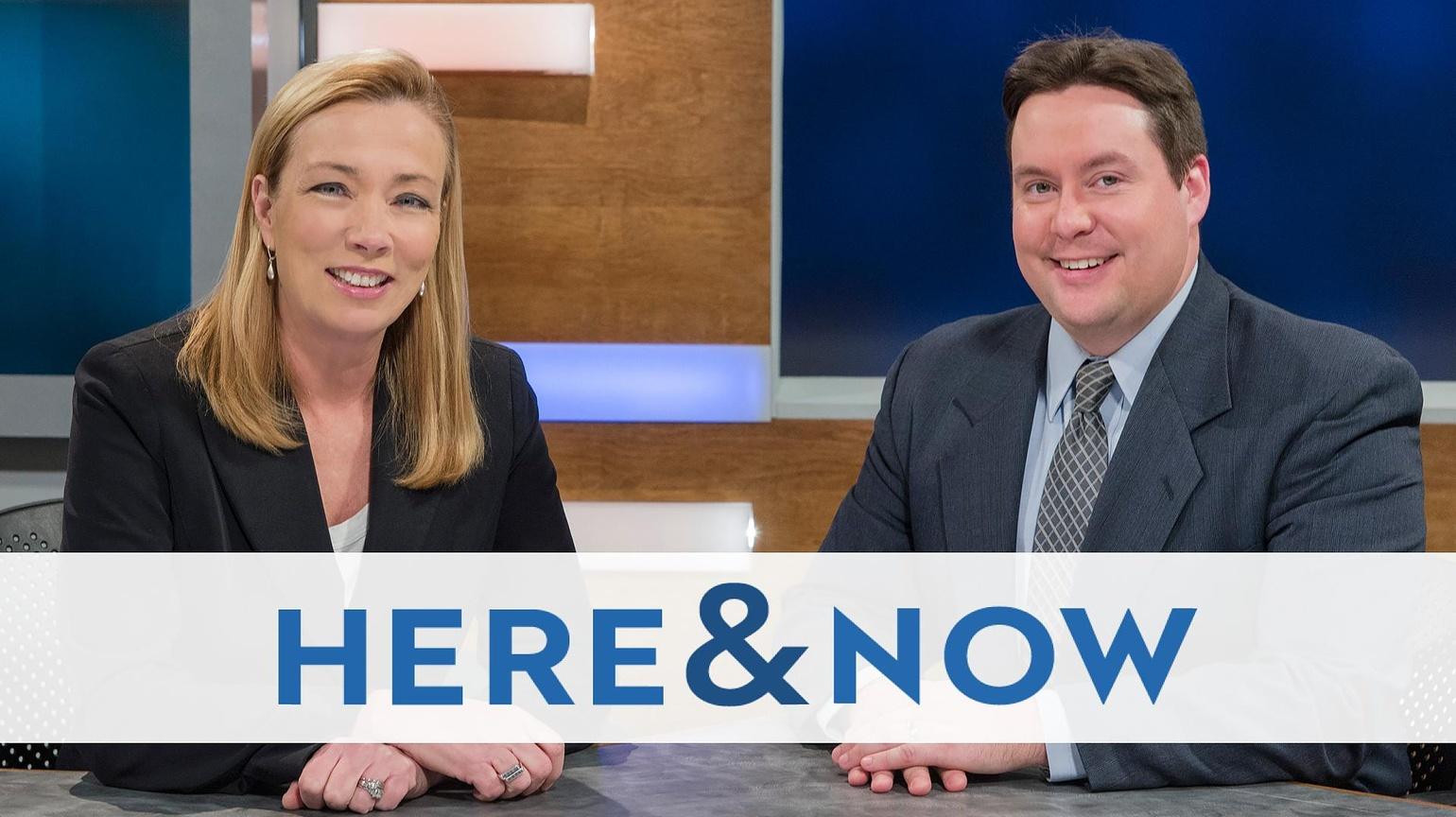








Here & Now for September 18, 2026
Announcer:
The following program is a PBS Wisconsin original production.
David Crowley:
That’s why we need a governor who’s going to stand up. Someone who’s going to bring folks from all political factions to the table.
Tom Tiffany:
The test is always what’s best for Wisconsin. And that’s what I’m going to do as governor.
Frederica Freyberg:
The candidates for governor share their positions on the big issues facing voters and fueled by global events, the price of gas rises again.
I’m Frederica Freyberg. Tonight on “Here & Now,” Tom Tiffany and David Crowley in extended interviews on their bid to be the next governor and how the transportation industry is handling record high diesel costs. It’s “Here & Now” for September 18.
Announcer:
Funding for “Here & Now” is provided by the Focus Fund for Journalism and Friends of PBS Wisconsin.
Frederica Freyberg:
Republican candidate for governor, Tom Tiffany, continues his campaign after he survived with only stitches a crash water landing into Lake Wausau when the private plane he was a passenger in lost power last Saturday. The FAA is investigating. Senior political reporter Zac Schultz tonight brings you interviews with both candidates running for governor, starting with current 7th District Congressman Tiffany. The interview was conducted days before the crash.
Zac Schultz:
Congressman Tiffany, thanks for joining us.
Tom Tiffany:
Good to join you, Zac.
Zac Schultz:
So immediately after the primary, a lot of the attention on the race seemed to be focused on data centers. But in the last few weeks, it seems like it’s shifted to traditional topics of taxes and spending and crime. Do you think that will be the standard issue that this election is decided on?
Tom Tiffany:
Yeah, I think it’s those quality of life issues. I mean, what we talk about all the time is affordability, accountability, and common sense. That’s the message that we’re delivering out there. But it is very much economic. It’s kitchen table issues. I mean, people see their budgets. They’re really stretched thin at this point. And that’s their concern. And I hear it from all the people that are out knocking doors for us. They’re like, it’s economic, kitchen table issues what people are talking about.
Zac Schultz:
Now there’s two different definitions of affordability that the parties have. Obviously, you’re talking about taxing and spending, and the budget and Democrats are talking about national tariffs and rising prices or gas prices. Which do you think impacts people more?
Tom Tiffany:
Oh, I think they both do. And, you know, gas prices are too high. And, you know, those are largely set on world markets. The thing that I’ve been focused on is what can I do as governor? Because you can flail on issues that you don’t have an impact on. I think it’s very important to have a governor that is going to be focused on the issues that you can help people out with. And so if we’re going to put more money in people’s pockets, that’s why I’ve been talking about, let’s reduce taxes and the 400-year property tax increase, the $3 billion budget surplus that we have, we should return every penny of it to the taxpayers so they have more money in their pockets. We’re going to do a 10% income tax cut for those making $150,000 and less, and no taxes on tips and overtime, just like we did federally.
Zac Schultz:
Earlier this year you had a tweet where you were in front of the gas station pumps and promises made, promises kept. Obviously, prices have gone up significantly since then. Do you regret that tweet or is it just outside of your ability to control?
Tom Tiffany:
You know, it’s outside of our control. And you know, at that time, boy, what was it like $2.35 or something like that. So gas prices had gone down. They went up as a result of the instability in the Middle East and Iran. And with the Revolutionary Guard plinking a ship every now and then in the Straits of Hormuz to keep gas prices up. And so it’s really important that we have more energy that is being produced. And that’s the thing that I’ve been focused on, both state and federally, is we have to be energy independent here in America. So what can a governor do? A governor can deal with the energy issue in regards to our utilities. We’ve seen over $2 billion of increases in utility rates here over the last eight years. The Public Service Commission here in Wisconsin has just acted as a rubber stamp for the utility rate increases. I will not do that, and we can help make life more affordable for Wisconsinites by not raising those utility rates and getting back to keeping our base load sources of power. And I think it’s time to embrace the new nuclear technologies.
Zac Schultz:
Democrats would point to your role in Congress as oversight and control of the budget over Donald Trump and tariffs and, you know, initiating the war in Iran. What do you have to say to respond about your role in Congress in that area?
Tom Tiffany:
Yeah. So, you know, if you take a look at the bill that we passed last year, no taxes on tips and overtime, as well as Social Security taxes, we eliminated them for almost everyone that’s on Social Security. We’ve put more money into people’s pockets. I would also say that by securing the border, hopefully we’re going to see the price of housing come down in some places. Because remember when 10 million people came in over the four years of President Biden that drove up the cost of housing because they had to live somewhere. So those things are really important that we deal with them. But I’m focused now on what I can do as governor, and that is reducing costs for Wisconsinites.
Zac Schultz:
One of the issues your campaign has brought up about David Crawley’s record as Milwaukee County executive has to do with crime, but crime statistics nationwide and Wisconsin are down. Is Milwaukee County a much different place than it was when, say, Scott Walker was county executive?
Tom Tiffany:
So you look at the last year and a half, violent crime has went down significantly here in America. I mean, I think about Washington, D.C. having spent some time out there serving in Congress. The streets are much safer. And that’s because of the actions that have been taken by the administration to make sure that they’re safe and to me, it sends a clear message. We’ve accepted crime here in America and in Wisconsin over the last few decades, I believe. And we don’t need to accept these high crime levels as we’re seeing them come down now. And that’s what I’ll do as governor. We’re not going to accept crime. We’re not going to take the side, like David Crowley my opponent does, of the perpetrators of crime. We’re going to look out for the victims of crime. Let’s make sure that we have safe streets in Wisconsin. That means prosecutors need to prosecute. And that means no sanctuary cities. We need to make sure that Wisconsin is a safe place for people to live.
Zac Schultz:
How much responsibility should the chief executive, either a county or a state, take when it comes to individual actions committed by individuals?
Tom Tiffany:
Well, if you listen to Judge Borowski last week in Milwaukee County, he talked about how it’s preposterous that this happened, that a violent criminal was able to reach out to his victim and communicate with him 1500 times via the tablet he was given by Milwaukee County that was signed off in 2022 by David Crowley that they get a free tablet. He renewed that once again in 2025, including after what we found out in May of this year, that there were violent criminals reaching out to their victims and messaging them 1500 times. That should have been the warning signal to the county executive. We got to take another look at that. What happens in the meantime? Now we find out a triple murderer is trying to intimidate witnesses. So a county executive or the governor has a great deal to do with safety. And I think the big thing that the governor can do in Wisconsin is set the message that we’re going to back up law enforcement. We’re going to support them. We’re going to make sure that we have safe streets here in Wisconsin.
Zac Schultz:
Would you invite Donald Trump to campaign in Wisconsin? Do you think you need him to burst — boost turnout in some of those areas?
Tom Tiffany:
I mean, the president is going to decide where he’s going to campaign here in 2026 in the balance of the election. We just go out and do our job every day. I’ve got a full schedule that’s been set in place. We’re meeting every person that we can in the state of Wisconsin, and we’re talking about the issues because, I mean, it’s much like my opponent. You hear him talk when he talks about Tom Tiffany, all he talks about is Tom Tiffany and Donald Trump. And he’s not talking about what do Wisconsinites want. So he can rail against Donald Trump. I’m fighting for Wisconsin, and that’s what I will do as governor. We’re going to make sure we do the things that are best for the state of Wisconsin. And I’ve always went about my business that way, whether I was in the state Legislature or now in Congress. The test is always what’s best for Wisconsin, and that’s what I’m going to do as governor.
Zac Schultz:
The United States Postal Service has absentee balloting rules that are currently in court and looks like they’re heading for the U.S. Supreme Court. Would you support those changes going in place even as absentee ballots are already being sent out in Wisconsin?
Tom Tiffany:
I mean that’s going to be up to the courts. It is in the courts at this point, and they’re going to decide what role is going to be able to be played there. All I know is I have confidence in clerks across the state of Wisconsin. There’s hundreds of them, and I’ve worked with them in northern Wisconsin. Regardless of what rules are put before them, they always go out and do their job, and I appreciate the work that they do.
Zac Schultz:
Do you have complete confidence that our elections in Wisconsin are free and fair and legitimate?
Tom Tiffany:
I believe that our elections are going to be done in that fashion. I mean, it should be easy to vote, but hard to cheat. Now, there’s been a couple instances. You look at Madison, they had — the city of Madison had to fire their clerk two years ago because she failed to count 197 ballots. Green Bay has had a problem two elections in a row with their clerk. I mean, we have to be vigilant also, but I just know the hundreds of clerks across the state of Wisconsin, they do the very best job that they can.
Zac Schultz:
Congressman Tiffany, thanks for your time.
Tom Tiffany:
Good to join you. Zac.
Frederica Freyberg:
Both candidates for governor were interviewed just before the U.S. Supreme Court blocked the Trump administration’s mail-in ballot plan. Here’s Zac’s interview with Democratic candidate Milwaukee County Executive David Crowley.
Zac Schultz:
David Crowley, thanks for your time.
David Crowley:
Thank you for having me. Glad to be here.
Zac Schultz:
So immediately after the primary, it seemed like a lot of the commercials, the attack ads against you were going to focus on data centers. But recently there’s been a shift to affordability or taxes or crime. Do you think that’s going to be the new standard line that this campaign is going to be waged on?
David Crowley:
Affordability is the number one issue that you hear no matter where you’re going. Whether you’re talking housing, whether you’re talking childcare, health care, you name it, families are getting squeezed in every single direction. And the problem is that even if they are making more money, they’re getting less because so much is so much more expensive nowadays. And so our plan is the Badger Basics plan to make sure that we can lower costs for our working families and give them better access to childcare and health care, which is a stark contrast when it comes down to Congressman Tom Tiffany, who has voted for the Canadian tariffs that are ravaging communities, our farmers and manufacturers all across Wisconsin.
Zac Schultz:
So when you see Tom Tiffany and his allies going after you on crime or kids running around at the state fair, is that just the same old, same old, or what’s your reaction to that?
David Crowley:
Well, I don’t trust Tom Tiffany when it comes down to public safety. I mean, we’re talking about somebody who voted against releasing the Epstein files, who voted six times to defund police here in the state of Wisconsin and quite frankly, he praised the January 6ers when they were being pardoned, with some of them actually being charged with child molestation and things of that nature. You know, when it comes down to the way that I govern, this is about making sure that we’re protecting everybody throughout the state of Wisconsin. And I’ve done it as a county executive. We’ve increased costs for our public safety, for our courts, and to make sure we’re investing upstream to stop crime from occurring in the first place.
Zac Schultz:
Republicans have made a history of attacking Milwaukee in elections when it’s necessary. It’s interesting to contrast you with the last governor from Milwaukee County, Scott Walker. How would you compare and contrast your record with his as county exec and what you might do as governor?
David Crowley:
Well, you know, they know me as the recycle man back home because we’ve picked up every single can that they’ve kicked down the road for so long. And quite frankly, I’ve had to work with the Republicans and Democrats in the state Legislature to clean up Scott Walker’s mess. And, you know, I want to make sure that we can do the exact same thing when I become governor of this great state. We’re stealing dignity and respect to our teachers who work in our public schools each and every single day, making sure we’re investing in childcare to make sure our children are getting a better foundation of learning before they enter into our public school system, and just making sure that we can coalesce, bring people to the table when it comes down to the policies that we need here in the state of Wisconsin.
Zac Schultz:
When it comes to the topic of affordability, there’s different definitions of what’s affordability between Republicans and Democrats. Republicans like Tom Tiffany want to talk about property taxes or income taxes. Democrats are talking more about spending and tariff-impacted consumer pricing. Which do you think voters will relate to more?
David Crowley:
Look, I’m a husband and a father raising three amazing girls, and I grew up in a working-class household. So I know exactly what working families are going through right now, struggling to keep a roof over their head because their property taxes or the rents continue to rise. We’ve seen many people lose their health care, mostly because, you know, Congressman Tom Tiffany voted for the big, ugly bill, which cut $1 trillion from Medicaid, Medicare and reduced subsidies for the Affordable Care Act.
Zac Schultz:
In January of this year, Tom Tiffany stood in front of a gas station and had a tweet about how low gas prices were. How does that tweet hold up today and how does that impact this race?
David Crowley:
Well, I think that tweet didn’t get — didn’t age very well because we are now seeing some of the largest increases in gas today. And that’s why I have a plan to actually eliminate the minimum markup law that we have on gas, which is increasing the prices for consumers each and every single day. And the thing about this gas tax is that it’s not supporting, you know, our small businesses or filling the potholes. This is just guaranteed profit for big oil. And I know it’s a popular thing because even Congressman Tom Tiffany stole my idea and is leading people to think that it is his. Look, at the end of the day, we have to make sure that we’re lowering our costs. And if Tom Tiffany wants to stand up, he needs to stand up to Donald Trump. Again, this is largely a result due to the war in Iran and Tom Tiffany has voted to protect this war, protect those tariffs, and we need him to act. We need him to answer as to why he isn’t fighting for Wisconsinites.
Zac Schultz:
One of the attacks that the Tiffany campaign is using now has to do with tablets being given to inmates in Milwaukee County. Explain that program and why you authorized its use again.
David Crowley:
Well, this is a program that we implemented not too long ago, and this is something that we take seriously and we’ve been working with our sheriff’s department as well. But, you know, utilizing these tablets is actually a best practice. They’re used in 48 out of 50 states. And you know, what’s unfortunate and what Tom Tiffany omitted is the fact that he actually voted for these types of iPads here in the Department of Correction during the Scott Walker era. He also admitted about the fact that Donald Trump and his administration are utilizing this same exact program, and they just started it this year, right. And so we know that we need to have the processes and the procedures in place. But, you know, Congressman Tom Tiffany, he wants to continue to divide and distract. When it comes down to public safety, you can’t trust him on it because he’s not willing to give you all the information.
Zac Schultz:
We’re still waiting to hear what the U.S. Supreme Court will do with the Postal Service rules that have been proposed by the Trump administration. But what impact would that have on Wisconsin if those went through? And what advice would you give to absentee voters about how they should handle their ballot this fall?
David Crowley:
Look, it is unfortunate seeing what Donald Trump is doing when it comes down to mail-in voting here in the state of Wisconsin. We have had the same laws on the books for decades, which have allowed people to cast their ballot by mail or to do it in person, and we’re going to continue to follow Wisconsin laws. But I want to encourage everybody. One – if you’re going to mail in your ballot, do it early, do it quickly, and do it as soon as possible. And if you feel like you’re getting close to that deadline, go visit your municipal clerk and drop that — drop your ballot off at your clerk to make sure that your voice is being heard. As the governor, it is our job to make sure that we are protecting democracy, protecting people’s ability to cast their ballot and to instill dignity, right? We have free and fair elections here in the state of Wisconsin, and I’m always going to sing and yell at the mountaintops about how I believe in our election system, but you’re not going to get that with Congressman Tom Tiffany. I mean, we’re talking about someone who voted against certifying the 2020 election for Wisconsin voters. Someone who’s not willing to stand up and say Donald Trump actually lost the 2020 election, and he’s not willing to stand up and say how these laws, these policies that Donald Trump is putting in place, how they’re going to hurt many of our rural communities. And quite frankly, they’re going to hurt not just Democrats, Republicans, independents everywhere across this state. But our administration, we’re going to continue to fight on behalf of our communities to make sure that they can cast their ballot, no matter where they are in Wisconsin.
Zac Schultz:
When we sat down with Tom Tiffany, he did not want to say the word Trump. And throughout our entire interview, when asked about that, he didn’t want to use the president’s name. We’ve looked at his website. He stripped pretty much all mentions of the president away from him. What does that say? Why would he be doing that?
David Crowley:
I think he wants to run away. You know, Congressman Tom Tiffany, he’s been the MAGA extremist and wants to run away from the fact that he has been lockstep with Trump for the past decade. He has been one of the most conservative members that we’ve had here in the state of Wisconsin, being a part of the Freedom Caucus, but also not fighting on behalf of Wisconsinites. Congressman Tom Tiffany cannot and will not defend his own actions nor defend why he’s protected this president. And that’s why we need a governor who’s going to stand up, someone who’s going to bring folks from all political factions to the table to make sure that they can live healthy lives, productive lives, and put more money and save more money in their pockets as we move forward. And that’s what you’re going to get in the next governor when I’m elected on November 3rd.
Zac Schultz:
All right. David Crowley, thanks for your time.
David Crowley:
Thank you. Thank you for having me.
Frederica Freyberg:
Filling up the gas tank in your car is increasingly costly, but if you drive a truck, diesel fuel prices have spiked sharply due to supply disruptions because of the war in Iran and are now at a record high above $6 a gallon. For all the semis crisscrossing the state carrying the goods and products we consume, sell and supply, the cost of diesel is a blow to transport companies and likely to show up downstream in the cost of things. We’re joined now by Dan Johnson, president of the Wisconsin Motor Carriers Association, and thanks very much for being here.
Dan Johnson:
Thank you for having me.
Frederica Freyberg:
So what kind of a shock are these diesel prices right now?
Dan Johnson:
Well, obviously, just like anybody else, we’re seeing the spike and it is a great concern to the trucking industry. It’s not that we haven’t been through this before, but this is clearly the highest that it’s been in record. So it’s something that our trucking companies, they’re dealing with. They have to absorb those costs in some fashion. They’re trying to mitigate as best as they possibly can. But yeah, it is a cause for concern right now with those trucking companies.
Frederica Freyberg:
What concerns do you have that those prices will just keep breaking records?
Dan Johnson:
Well, everybody has that concern. I mean, we like to see things level off and hopefully dial back quite a bit. But you know, who knows? I mean they just have to plan and prepare. One thing with the trucking industry is they’re very resilient. We’ve seen price spikes like this before back in 2022, when it got near $6 per gallon for diesel. They adjusted; they overcame. Some of them did have to step out of the industry because they couldn’t handle the expenses. And then there was a shift within the trucking industry, and the prices came back down. But now we’re back to another unfortunate record high. And they’re dealing with it as best as they can right now.
Frederica Freyberg:
Just for a sense of understanding, what does it cost now to fill up the tanks on a truck like this?
Dan Johnson:
Right, you know, they did a study. The average cost per mile for a truck – and we’re talking about also the fuel and the other expenses – it’s about $2.32 per mile that it costs them to run a truck down the road. So anytime you add that when you add another dollar to diesel prices, that’s going to add another $0.14 per mile to that truck cost. So you expand that out over thousands of miles. And we’re talking about hundreds of thousands of dollars that it’s going to cost per truck to run them either in the state or across the country.
Frederica Freyberg:
So who bears the cost at the start?
Dan Johnson:
Well, the trucking company does. They bear that cost. Now, they do have some agreements in place, perhaps with their fuel distributors for discounts. But our smaller fleets and the private carriers are probably at a disadvantage because they don’t have the opportunity to do that. And they’re probably going to be paying the retail cost for diesel prices.
Frederica Freyberg:
How might we see the downstream costs be affecting everything?
Dan Johnson:
There’s certainly the potential for consumers to see increased costs for groceries and other items, other necessities that they need. But, you know, it’s going to be up to the trucking company, the wholesaler, the distributor and the retailer to make decisions of their own, how much they potentially pass along to the consumer.
Frederica Freyberg:
So I read on your website that 95% of manufactured tonnage is transported by trucks in Wisconsin. Are some customers pulling back on orders or production because of the cost now?
Dan Johnson:
It’s very possible. We haven’t really seen any kind of hard data right now. The economy is moving at a pretty good pace. So there’s a lot of things that are — that have already been set in motion. As I mentioned previously, you know, the trucking companies, they don’t have the opportunity to stop. They have to keep moving the freight. They have to keep moving the product to market. So if there are orders in, they have to keep moving that along the supply chain and get it to its final destination.
Frederica Freyberg:
With everybody talking about this right now, the cost of gasoline and the cost of diesel, how does it kind of highlight the work that members of your association do every day and we might take for granted?
Dan Johnson:
Well, absolutely. We have 3.5 million drivers out there crisscrossing the nation, and they’re bringing us everything. Everything that you own, everything that you have at one point in time, was delivered by a truck. And there’s a man or a woman behind that wheel who is delivering those items from the producer to market or here in Wisconsin, we’re a big agriculture community, from the farmer to the consumer. And what they do every single day in all sorts of conditions, whether it’s weather, bad traffic, distracted drivers, construction zones, everything that they have to deal with every single day puts more pressure on the work that they do. And we absolutely do take it for granted unfortunately. And people really should take time to appreciate what truck drivers are doing out there to keep the economy moving, even in light of rising diesel prices.
Frederica Freyberg:
All right, Dan Johnson, thanks very much.
Dan Johnson:
Thank you so much. Appreciate it.
Frederica Freyberg:
In other news, the Wisconsin Supreme Court heard arguments this week on two high profile cases seeking new congressional voting maps in Wisconsin before the 2028 elections. The court is considering whether to allow the cases to proceed after lower court panels dismissed them this summer on procedural grounds. Both lawsuits claim gerrymandering of the districts. Opposing attorneys represent Republican congressional members and the Legislature, which passed the maps in 2011.
Justice Jill Karofsky:
The Legislature that passed those original maps wasn’t any old Legislature, right? The Legislature that passed that maps, they came from districts that many people claimed are the — were the most gerrymandered in the entire country. They were, as some say, a prime example of representatives choosing their voters rather than the other way around, rather than voters choosing their representatives. … And if I’m understanding your argument that under these change, which you’re ardently defending, those maps, the baked-in ones from the 2011 Legislature, would go forward into perpetuity indefinitely. And I don’t understand how that is not unconstitutional.
Taylor Meehan:
Whether we agree with it or not, the U.S. Constitution assigns redistricting authority to the Legislature because 250 years ago, when we declared revolution, we said the people decide through their elected representatives. And there are two solutions for that, either of which plaintiffs could pursue. First, they could lobby Congress because, of course, Congress likewise has power under the elections clause to stop what some have said should not have happened in 2011. Or, like Florida, like New York, like Ohio, plaintiffs could do the hard work of creating a constitutional amendment and saying any politics and redistricting is forbidden.
Frederica Freyberg:
For more on this and other issues facing Wisconsin, visit our website at pbswisconsin.org and then click on the news tab. That’s our program for tonight. I’m Frederica Freyberg. Have a good weekend.
Announcer:
Funding for “Here & Now” is provided by the Focus Fund for Journalism and Friends of PBS Wisconsin.
Search Episodes

Donate to sign up. Activate and sign in to Passport. It's that easy to help PBS Wisconsin serve your community through media that educates, inspires, and entertains.
Make your membership gift today
Only for new users: Activate Passport using your code or email address
Already a member?
Look up my account
Need some help? Go to FAQ or visit PBS Passport Help
Need help accessing PBS Wisconsin anywhere?

Online Access | Platform & Device Access | Cable or Satellite Access | Over-The-Air Access
Visit Access Guide
Need help accessing PBS Wisconsin anywhere?
Visit Our
Live TV Access Guide
Online AccessPlatform & Device Access
Cable or Satellite Access
Over-The-Air Access
Visit Access Guide




Follow Us