Victoria Findlay Wolfe, a New York-based, international award-winning quilt artist, fabric designer, teacher and author, will be one of the special evening event presenters at the 2026 Great Wisconsin Quilt Show.
Wolfe creates quilts with deep personal meaning and is influenced by her grandmother’s “scrappy” double-knit polyester quilts. She has been featured on the PBS series Craft in America and PBS Wisconsin’s Sewing with Nancy.
Presented by PBS Wisconsin and Nancy Zieman Productions, The Great Wisconsin Quilt Show celebrates the artistry and community of quilting. Proceeds from the event, happening Sept. 10-12 at the Alliant Energy Center in Madison, help support PBS Wisconsin programming and community outreach projects. Tickets are on sale now.
In anticipation of the event, Wolfe spoke with PBS Wisconsin about pushing artistic boundaries and honoring memories in her quilts.
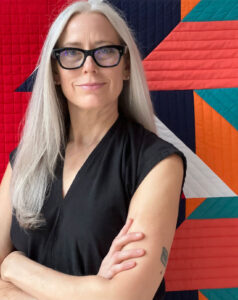
PBS Wisconsin: How did your grandmother influence your quilting?
Victoria Findlay Wolfe: Growing up on a farm in Minnesota, we slept under my grandmother’s double-knit polyester quilts. She was disabled from arthritis by the time she was 40, so my mom and her sisters would cut apart all those lovely double-knit polyester clothes that we were wearing in the 60s and 70s and put them in bags. My grandma would pull the pieces out of the bags and sort of puzzle them on top of a sheet on a card table, and she would hand-sew all of those pieces down to the sheet.
They were very inspiring to sleep under, one, because she put two layers of batting inside them. Minnesota and Wisconsin winters are kind of brutal, but you stayed very warm under a double-knit polyester quilt. And, I had sleep issues as a kid, but these quilt tops were like a puzzle, and every night I would take a different path and trace all the different patterns. I’d find a new favorite fabric, and I would appreciate all of the colors each night. So, there was great value in double-knit polyester besides sweating in it.
Her quilts are like coats of many colors. They’re everything we wore and they collected. You can find buttonholes, and maybe even some little extra patches that she’s put in there. I started making quilts when I was very young, but I started taking it more seriously when my daughter came along, and I thought that’s what you did. I thought you bought a bunch of fabric and cut it to shreds, and started sewing it back together.
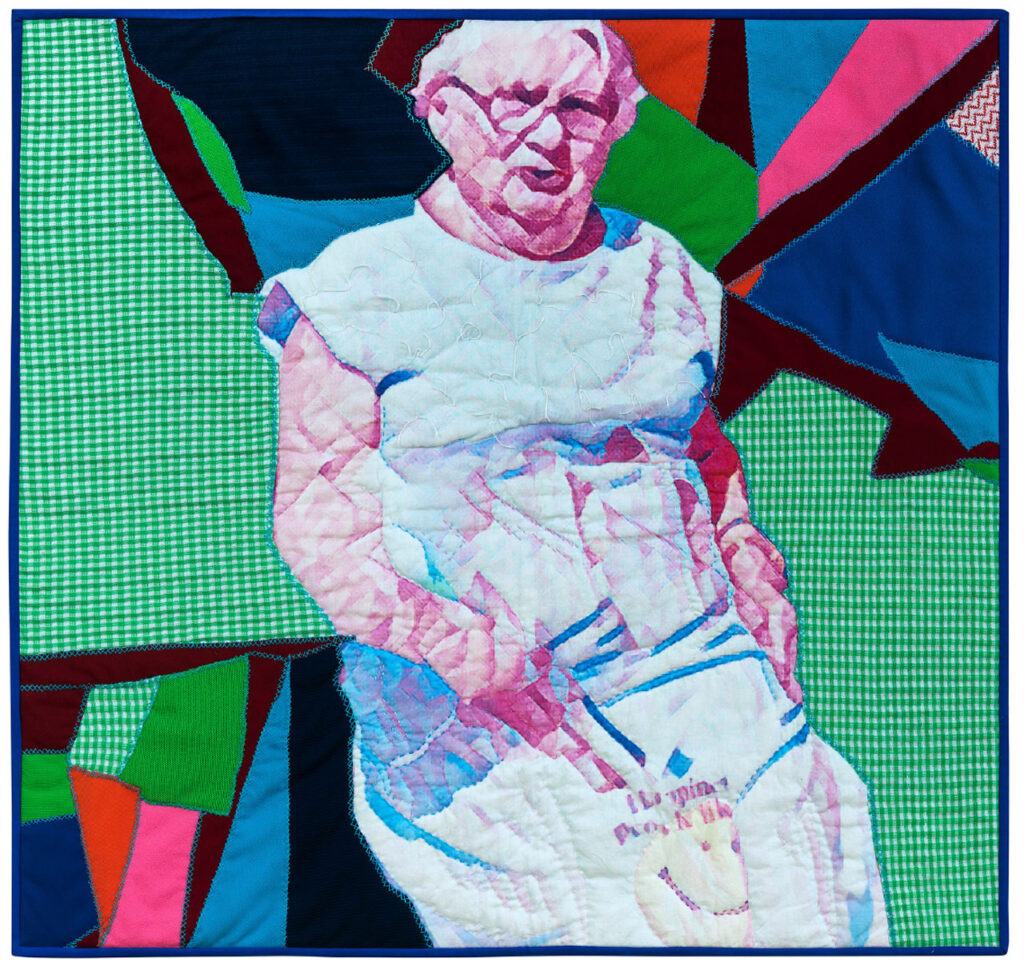
“Grandma Elda,” by Victoria Findlay Wolfe, 2020, 36″ x 34.”
PBS Wisconsin: In Craft in America, you called yourself not a modern, traditional or art quilter, but just a quilter. Can you talk about what that means to you?
Findlay Wolfe: I make all of those things, so labeling and only doing one thing doesn’t fit who I am. If I want to make an art quilt, I will. If I want to make an improv, modern or traditional quilt, I will.
Being trained as a painter, I’m always looking for the story. If I’m trying to tell a story and I need traditional fabrics, or if I want to paint on fabric, I want all of those options. That kind of goes back to the way I created as a kid: trying to do a little bit of everything.
I bring it all to the table, whether it’s printmaking, painting on fabric, embroidery or appliqué. I do a lot of the things that my grandmother was doing, and I try to always incorporate traditional skills, such as embroidery and appliqué, even if it’s on a modern quilt.
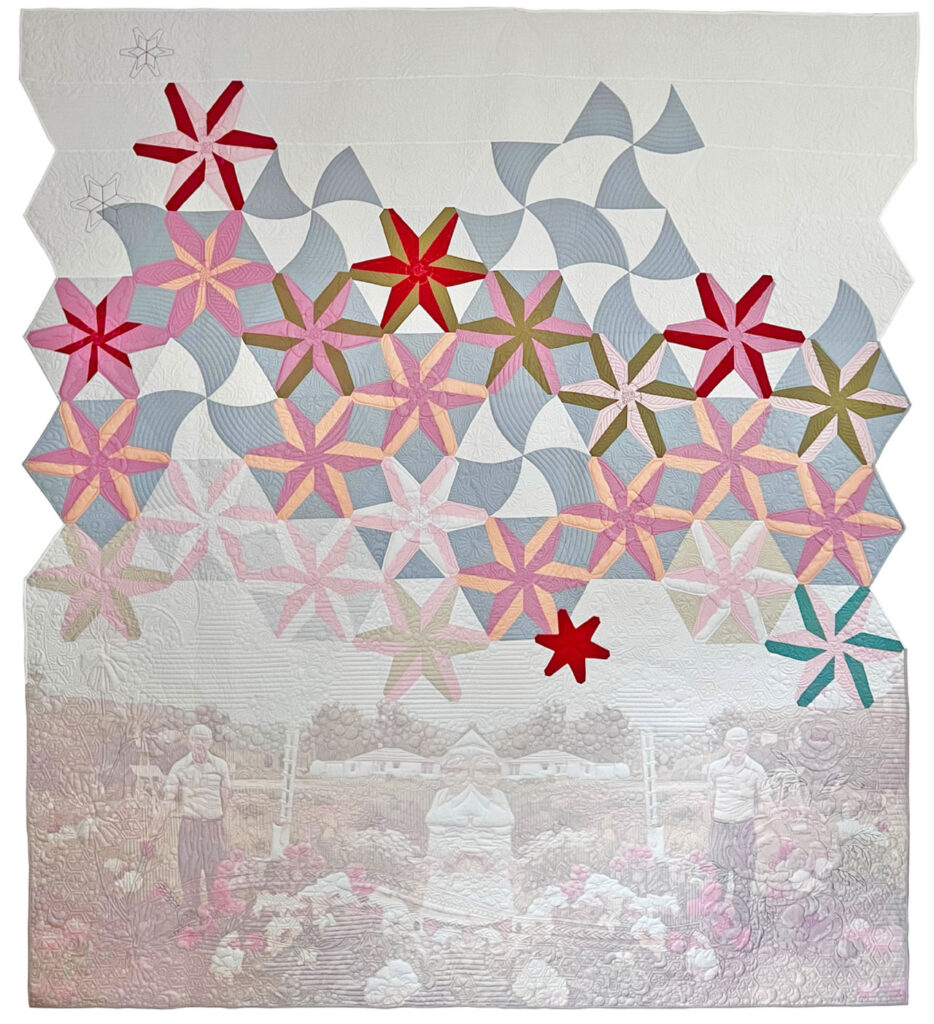
“Garden Delights,” by Victoria Findlay Wolfe, quilted by Bethanne Nemesh, 2021, 82″ x 93.”
PBS Wisconsin: Can you talk about where you find inspiration?
Findlay Wolfe: A lot of the quilts in the “Virtual Voyage” series and “Double Wedding Ring” series are all based on experiences with my grandparents. They lived in southern Minnesota, on the Mississippi River, in Wabasha, Minnesota, and I loved going there because they lived in town. We lived on a farm far away from town, so it was a whole different environment.
They grew and made everything, just like we were doing on the farm, but they had people around, paved streets — we could run to the candy store. It was a whole different experience being there and it was filled with so many happy memories.
Many of my quilts are reflecting on that time with my grandparents and the happy memories.
Victoria Findlay WolfeQuilt Artist
Many of my quilts are reflecting on that time with my grandparents and the happy memories. For instance, “Greatest Possible Trust,” is about my grandmother and if we would have ever been able to make a quilt together, because that wasn’t something we got to do together. I was combining what she did with her scrap fabric, and what I do with the Double Wedding Ring pattern. I incorporated embroidery, appliqué and her tried and true techniques into one quilt.
A few select quilts of the “Virtual Voyage: Pixels & Patchwork” series will also be displayed at The Great Wisconsin Quilt Show. “Garden Delights,” is a picture of my grandparents standing in their massive peony and iris garden. Flowers and petals are sort of flying through the air, and my grandparents are sort of ghosted out, very much like a memory. Oftentimes I think of quilts as making a physical memory. Now I have a tangible thing that I can hold onto, I can wrap myself in, they’re just really special.
Most of my work is giving back my gratitude for what they gave me as a child. I’m excited that some of these quilts will get to be shown in Wisconsin. “The River,” is a picture of the Wabasha Bridge that goes from Minnesota to Wisconsin, and as a kid growing up on a farm in Minnesota it was a really big, exciting deal to go from one state to the next, and all you had to do was drive across the bridge. We didn’t travel, so that was so exciting to me. My grandfather would drive to one side and turn around, and then he’d drive back, just because he knew it gave us such a kick.
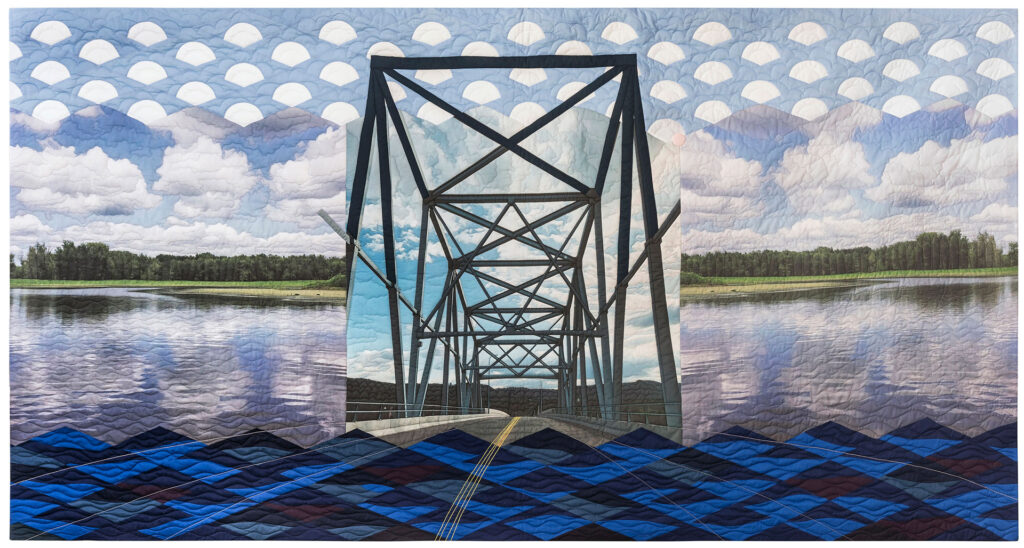
“The River,” by Victoria Findlay Wolfe, quilted by Shelly Pagliai, 2021, 114″ x 59.”
PBS Wisconsin: You’ll be giving a lecture at The Great Wisconsin Quilt Show called “Virtual Voyages” and a Sit & Sew workshop called “Loops and Lines.” What excites you about these techniques?
Findlay Wolfe: It’s watching people get the light bulb moment, that actually those things that they were told they should be afraid of are really not that hard to learn. Giving people the opportunity, 15 minutes, to learn a new technique and say, “Yes, I can sew a curve,” or “yes, I can sew a Y seam.” It’s a real treat to give people those little aha moments and then send them on their way.
The Loops and Lines block, in particular, works with very gentle curves so that people can master that easily in a classroom setting. That pattern is from my book, “The Quilting Experience,” which is what I’ll also be talking about during my special evening event on Thursday. That is a book where I put together topics we naturally talk about when we get together with other quilters like, the traditions of quilting, food, friendship, the things that we learn, aging and who we are.
Quilts just have that power. That book is really a celebration of the power of the community of textiles, how it brings people together and the memories that it holds.
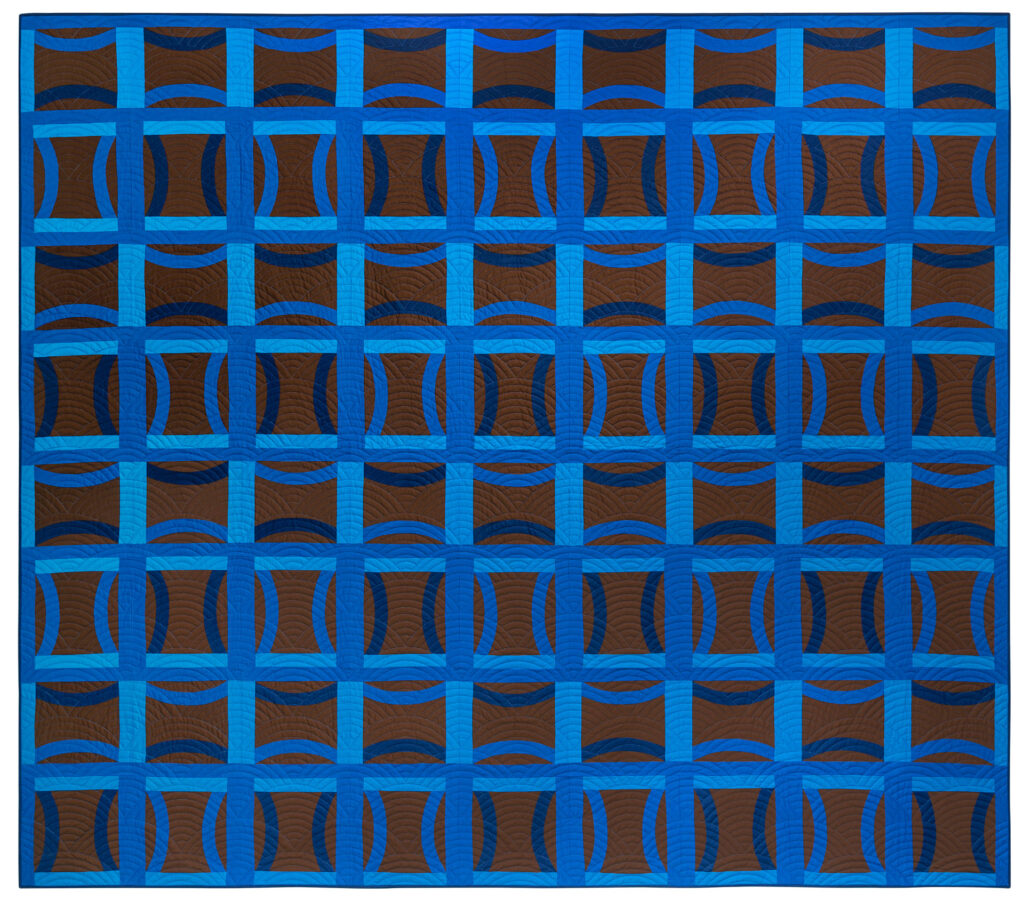
“Loops & Lines,” by Victoria Findlay Wolfe, quilted by Julie Hirt, 2023, 108″ x 96.”
PBS Wisconsin: Attendees can also visit you at your booth. What can they expect?
Findlay Wolfe: Templates and patterns from the quilts that we’re showing. I’ll have most of my Double Wedding Ring templates. There’ll be a small amount of fabric, but mostly my books and templates. I’ll also be there for people to ask questions, chat and share more stories about quilting.
PBS Wisconsin: What advice would you give to quilters who are just starting out?
Findlay Wolfe: To keep all your options open. That’s the way I learned, and it was a great gift. Don’t worry about making mistakes, because if you’re not making a mistake, you’re not learning anything. When you make a mistake, you’ll always remember how to work yourself out of it when you come across it again.
Featured image: “Loops, Lines & Dimensions,” Victoria Findlay Wolfe, quilted by Teresa Silva, 2023, 72″ x 84″
Image credits: Victoria Findlay Wolfe / vfwquilts.com


 Passport










Helen Dollar
Lovely,lovely,lovely. My grandmother began teaching me to quilt around 1955. I am now 78.
My girls,grands and great grands were never interested. So, it dies with me.
Tara Lovdahl
Thank you for sharing with us, Helen!
Doris Rindfleisch
Helen, don’t say it dies with you. I took up quilting in my 60s! You never know when they’ll get the bug.