
 Passport





Working in concert to produce “Madison Symphony at 100”
PBS Wisconsin has the best seats in the house reserved for you at the Madison Symphony Orchestra’s centennial season finale concert.



PBS Wisconsin has the best seats in the house reserved for you at the Madison Symphony Orchestra’s centennial season finale concert.
The Madison Symphony Orchestra performs with Madison Symphony Chorus during the MSO Centennial Festival Weekend Concert. (Photo Credit Hedi LaMarr Photography.)
PBS Wisconsin has the best seats in the house reserved for you at the Madison Symphony Orchestra’s centennial season finale concert.
The June 14, 2026, performance at the Overture Center for the Arts will be broadcast to viewers statewide. “Madison Symphony at 100” premieres 7 p.m. Thursday, Sept. 10, on PBS Wisconsin with an encore presentation at 5:30 p.m. Saturday, Sept 12. Before the premiere, take an inside look at how the PBS Wisconsin production team planned, recorded and edited the concert for television.
Loading video...
When PBS Wisconsin co-directors Deb Piper and John Gerbig saw the concert program, they knew the performance would appeal to viewers.
The concert featured familiar music and notable performers, including conductor John DeMain in his final appearance as music director and guest artist Julian Rhee, a violinist who won PBS Wisconsin’s “Wisconsin Young Artists Compete: The Final Forte“ twice as a student competitor.
“When we heard [Rhee] was going to be the guest artist, we knew it would be something special,” Gerbig said. “And having the opportunity to showcase Maestro DeMain’s final concert as music director – to help celebrate the MSO’s 100th anniversary – that’s a privilege all its own. Add to that a featured appearance by the Madison Symphony Chorus and guest soloists, it all added up to a performance we knew we didn’t want to miss!”
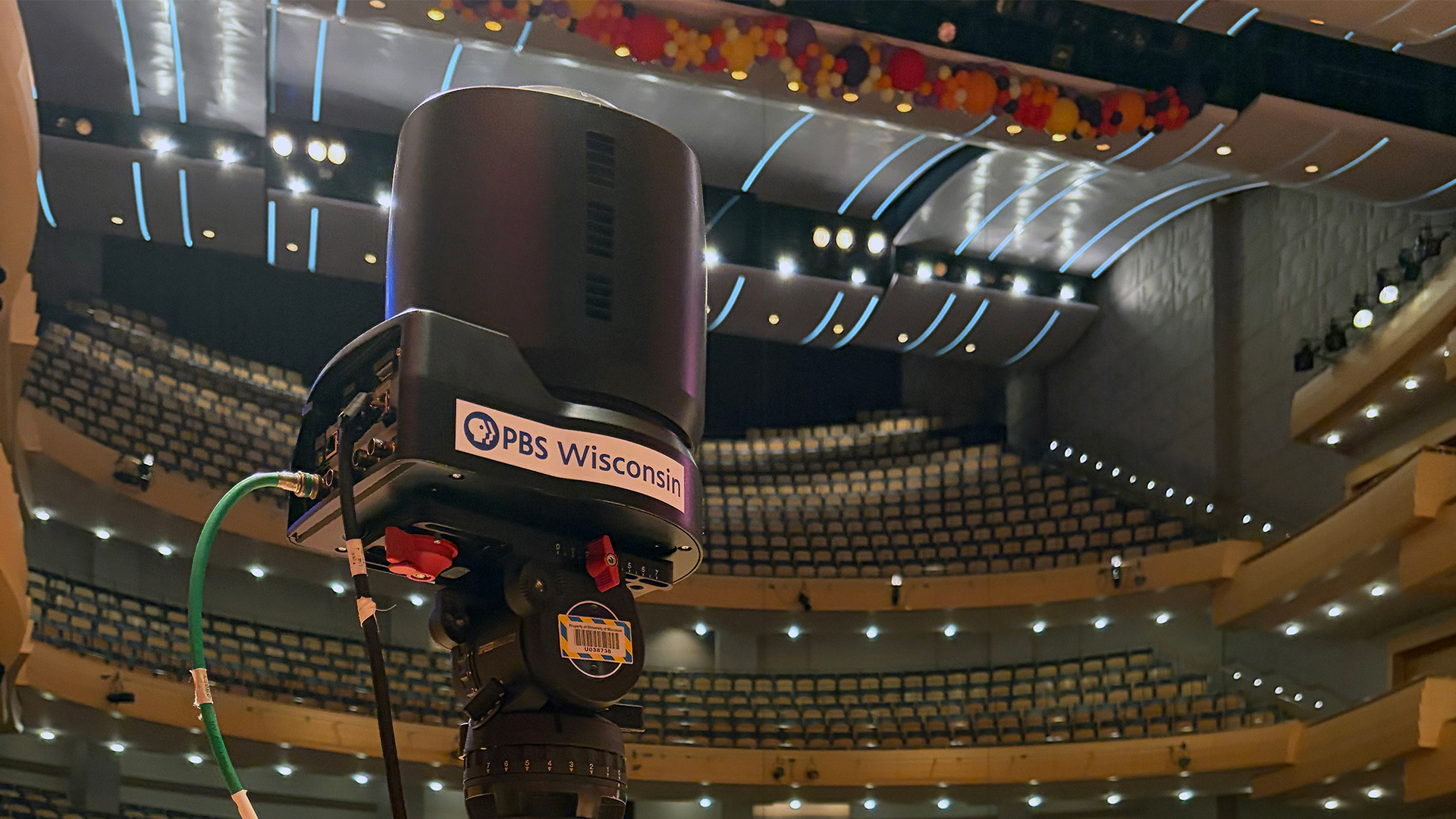
A PBS Wisconsin camera on stage at the Overture Center for the Arts.
As soon as the broadcast was approved, Piper and Gerbig familiarized themselves with the music by listening to recordings of the works performed by other orchestras. They also acquired full scores from the MSO librarian, showing the music for every instrument in the orchestra.
During a technical scout visit to the Overture Center, Piper and Gerbig worked with the seven camera operators to plan camera positions, timing and framing. They also mapped the orchestra’s stage layout and marked planned camera shots directly onto the scores.
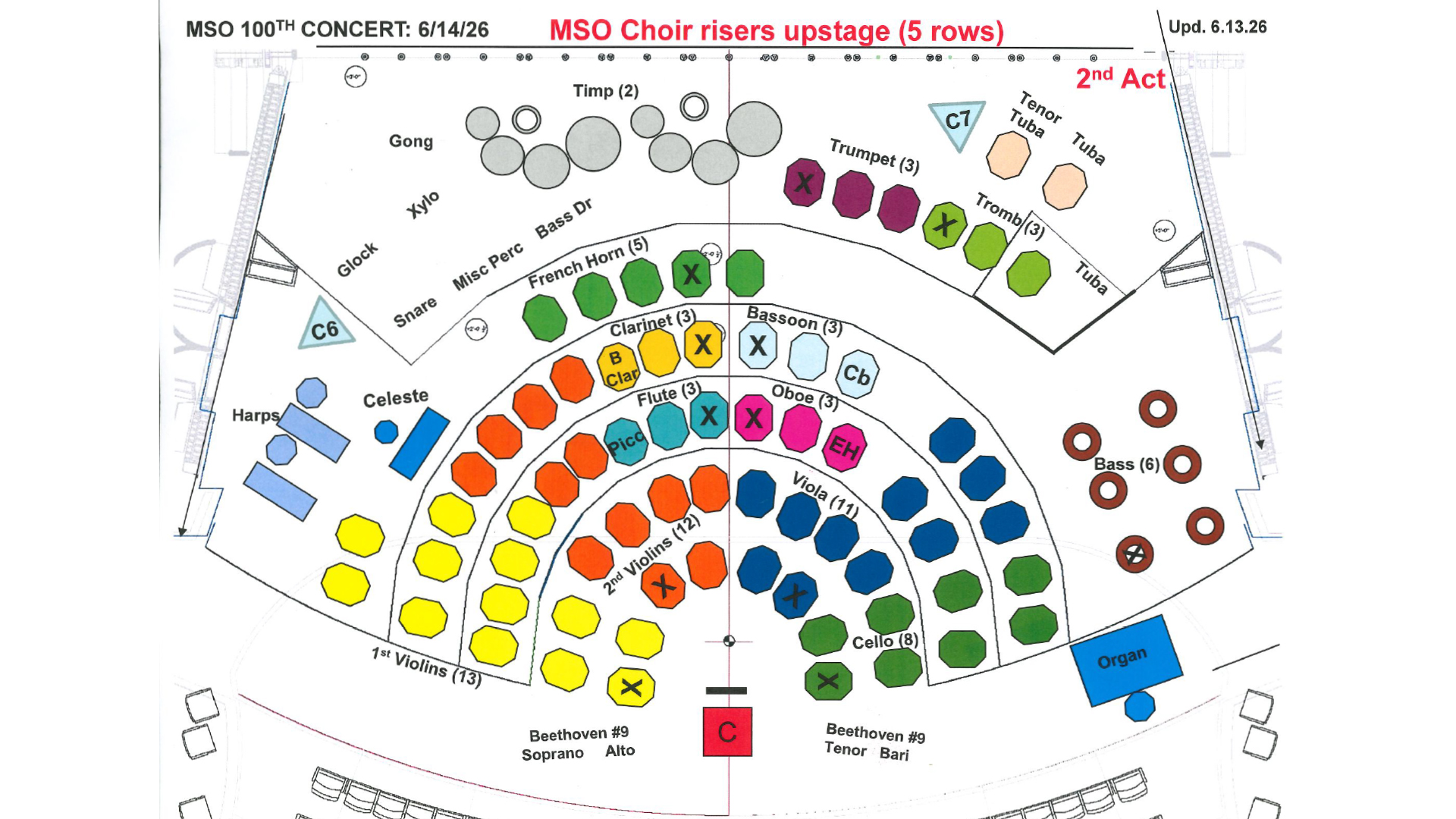
An approximate layout of the orchestra, with color codes to help camera operators identify instrument sections.
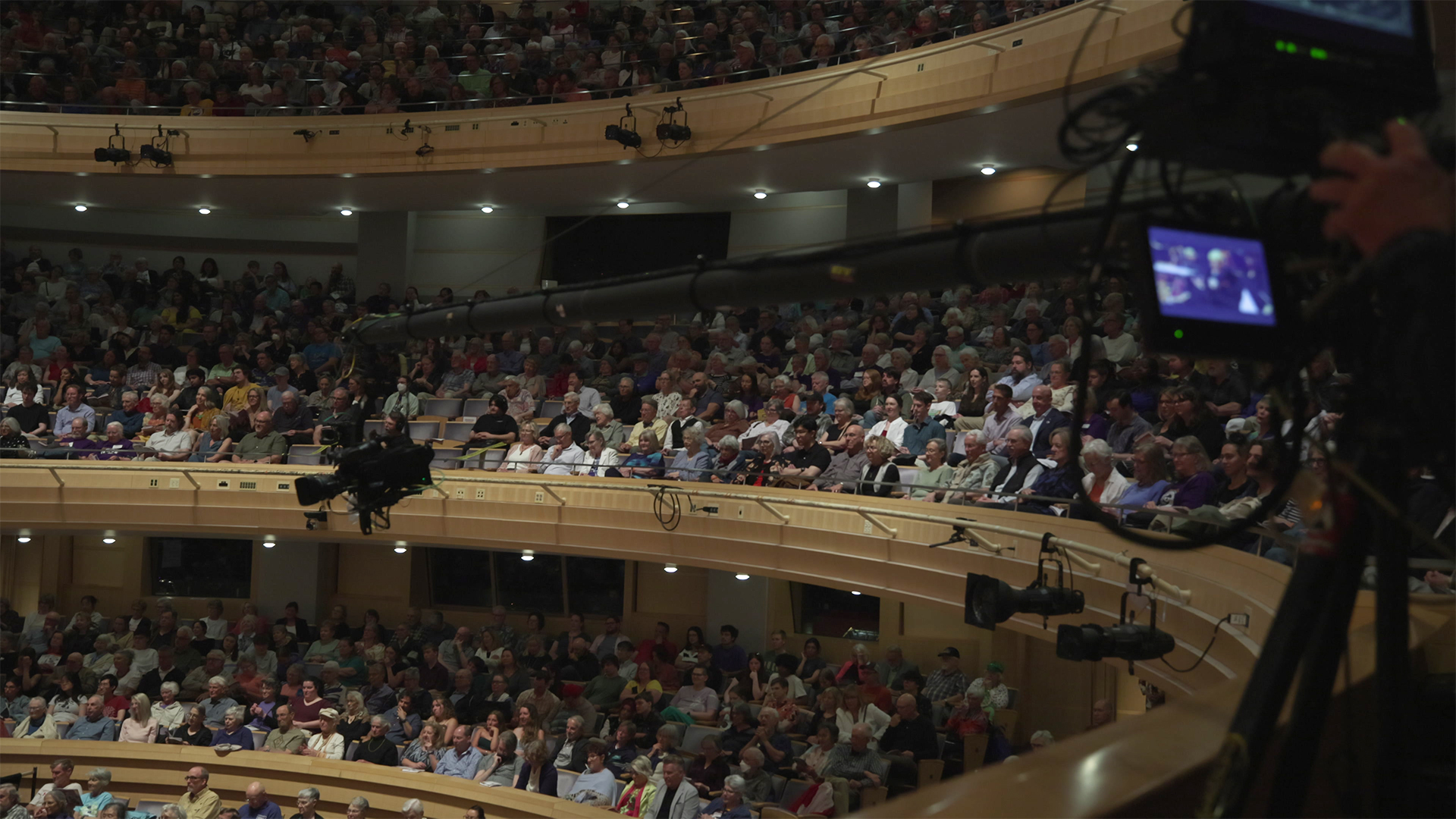
PBS Wisconsin’s jib camera records at the Madison Symphony Orchestra’s Centennial Festival Weekend Concert at the Overture Center for the Arts.
Madison area music educators joined the production crew during rehearsals and the performance to assist the co-directors in communicating with each of the camera operators.
“We had a score reader with us to make it easier to follow along,” Piper said. “Two different music teachers helped us over the weekend to help us stay in tune with all of the instruments.”
The team marked laminated music scores with camera cues. Red markings showed when the director would switch to a specific camera, while black markings helped the score reader cue camera operators for upcoming shots.
“During the performance, my job is to follow along in the music scores while the orchestra is playing, pointing to where we are, so we can tell the camera operators what to shoot next and for the director to call the camera shots on the board for the broadcast,” score reader Ryan Peterson said.
“When I’m getting my shots framed for the show, I’m listening for words like pan, tilt and zoom,” said camera operator Levi Schlimgen. “Those are the three keywords for me to hear, since those indicate where and how the director wants my camera to move. They’re usually paired with an instrument or group on stage. For example, our score reader would say ‘Camera 1, strings left, 10-second move’ and I would know that my next shot should include the left side of the strings section with some sort of slow movement.”
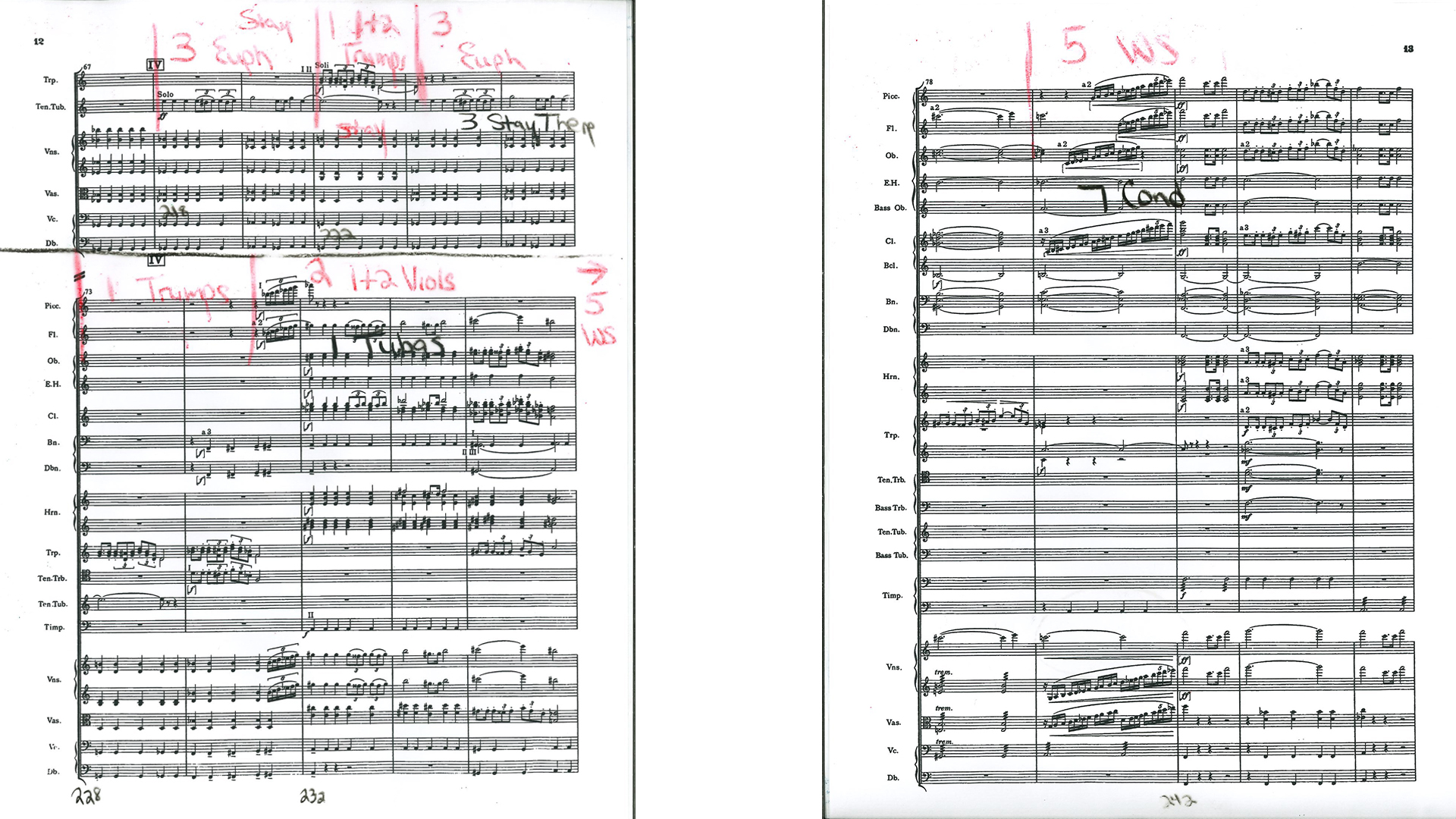
Conductor score sheets were provided by the Madison Symphony Orchestra and filled with notations and handwritten annotations.
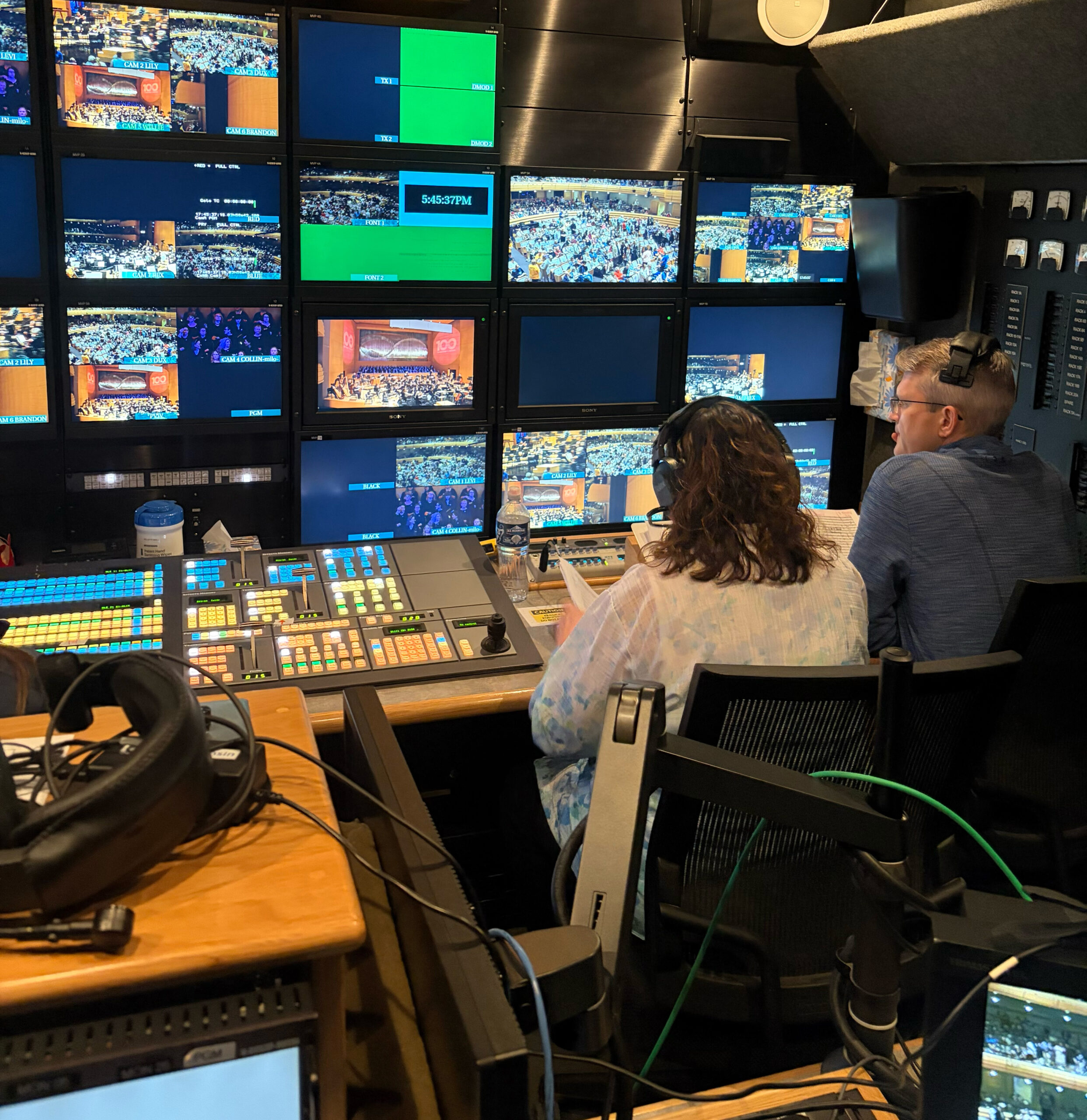
PBS Wisconsin co-director Deb Piper (left) works with score reader Ryan Peterson (right) in the mobile production unit to cue the camera operators during recording.
After rehearsals, one last push of preparation was made to fine tune the timing of the final show.
“As soon as the rehearsal the night before the show was complete, [Gerbig] and I feverishly worked that evening and the next day to update our scores based on what we learned in the rehearsal and to get everything ready for the concert the next afternoon,“ Piper said.
After recording the live concert, the remote production team received welcome news: the broadcast program was extended from 60 to 90 minutes.
“I still had to cut things from the concert,” Piper said. “Most of that first week after the concert was spent crunching the numbers and figuring out what things really had to get into this show.”
Piper, Gerbig and the production unit spent several weeks refining and calibrating the video footage with the audio before collaborating with videographer and editor Mike Baron to assemble the complete program.
The team also wove interstitial segments and performer interviews into the show between selections to provide context and help tell the story.
Because the Beethoven finale is in German, captioner Catie Pfeifer was able to draw on part of her educational background for this project.
“We were lucky to have her because she majored in German in college,” Piper said. “I gave her the lyrics and she made sure the lines came up as they should within the piece.”
“It’s always a treat when I get to use my German language skills in my role here at PBS Wisconsin,” Pfeifer said. “From spelling to timing to making sure every last umlaut is in its right place, I want to ensure the concert experience is authentic for our audience.”
Months of planning, rehearsals and coordination went into capturing the Madison Symphony Orchestra’s centennial celebration for television. Viewers can see the finished result when “Madison Symphony at 100” premieres at 7 p.m. Thursday, Sept. 10.
Shortly after the broadcast premiere, stream the full program and watch extended interviews and performances at pbswisconsin.org/mso100 and on the free PBS app.




PBS Wisconsin is a service of the Wisconsin Educational Communications Board and the University of Wisconsin-Madison. © 2026 All Rights Reserved.
What do you think?
I would love to get your thoughts, suggestions, and questions in the comments below. Thanks for sharing!
Mike DeVine